Author Archives: pgfeldman

Phil 3.12.20

7:00 – 6:00 ASRC GOES

Phil 3.11.20

7:00 – 5:00 ASRC GOES

  • A couple more paragraphs in the revisions
  • Working on the SDaaS paper. Getting close to finished
  • Mission meeting
    • Update status to delay deliverables
    • Still waiting on data
    • Simulation running – demo tomorrow
    • Evaluate against known yaw flip
    • White papers for John D
    • 20 sims so far
    • Need to install Influx, dammit!
    • Paragraph on 400 hrs
    • Paragraph on schedule
  • Sent Erik paragraphs

Phil 3.10.20

7:00 ASRC PhD

  • Good chat with Aaron M last night. I’ve incorporated comments into the new chapter
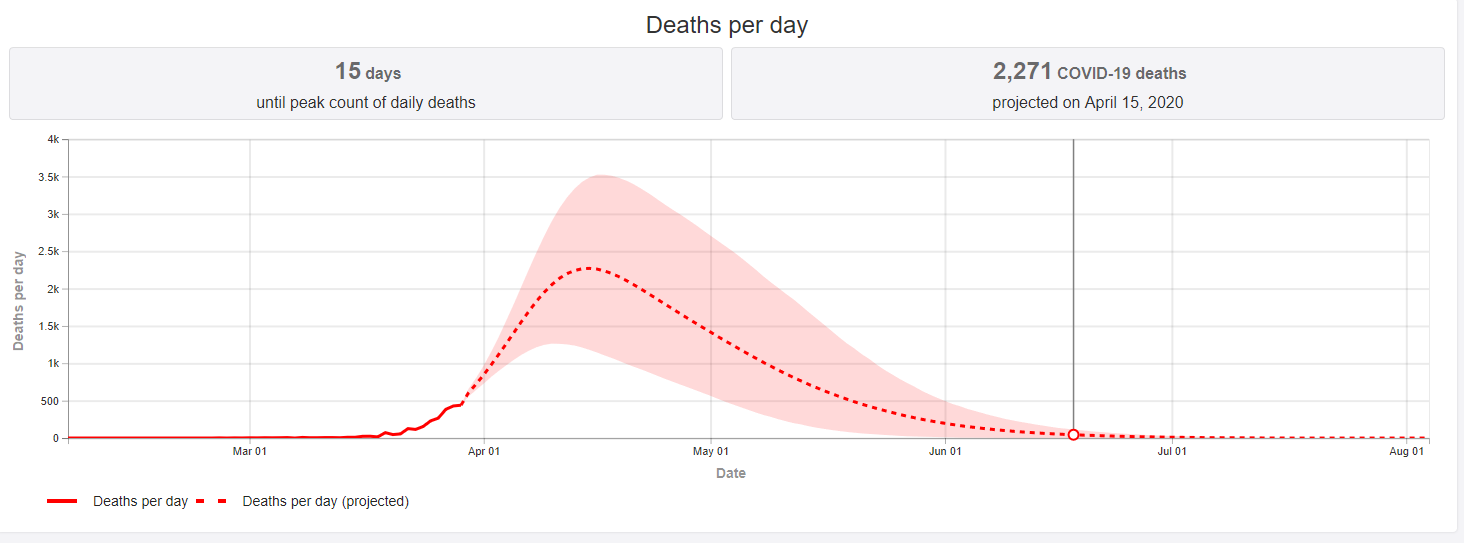
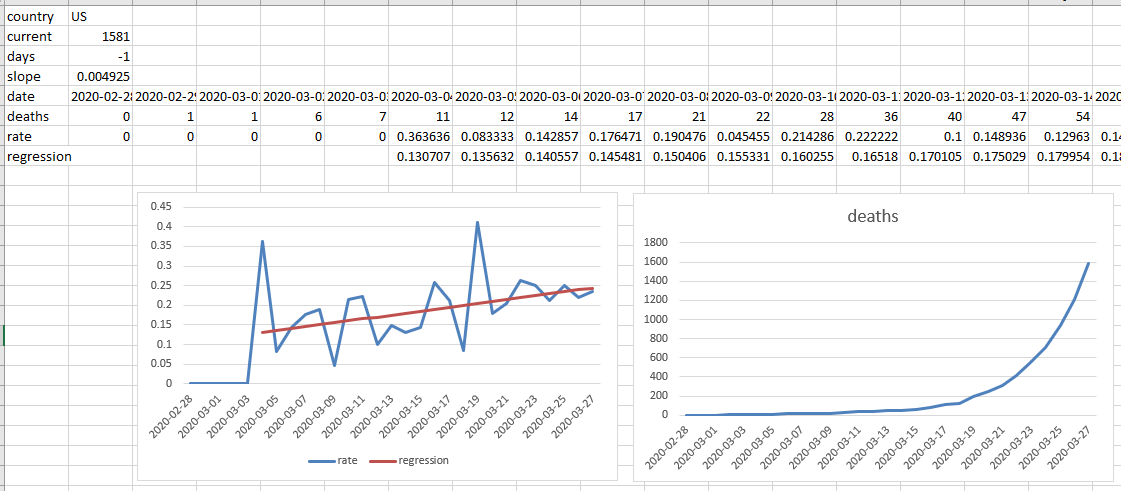
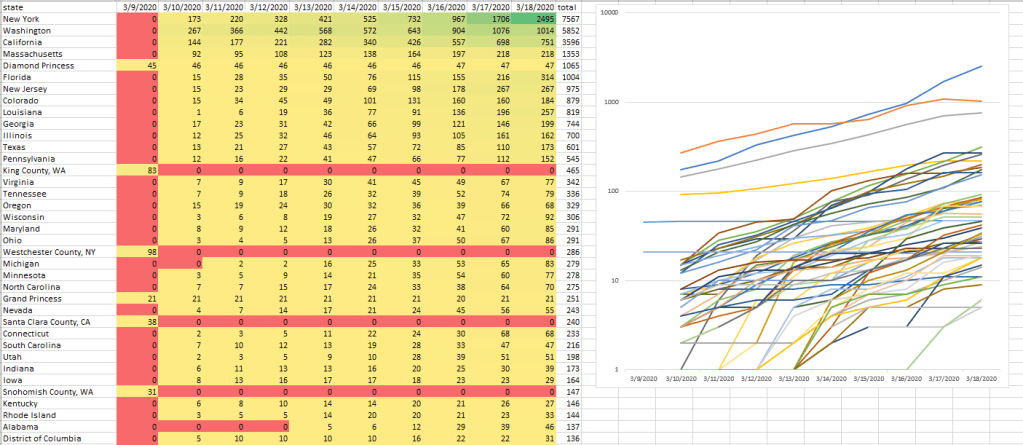
  • Put together a Saudi #corona doc
  • Meeting with Don today at 1:00
  • ML group in Hampden today

GOES

  • More SDaaS paper. Maybe finish first draft today?

Phil 3.9.20

8:30 – 8:30 ASRC GOES

  • Working on the SaaS paper
  • Meeting with Aaron M. Went over the dissertation revisions, and also the idea of legal simulation, which is kind of an interesting thing

Phil 3.6.20

8:00 – 5:00 ASRC GOES

  • Continuing on the SDaaS white paper
  • Feb 2020 status report – done
  • Travel expenses – done!
  • Discussions with Aaron

PhD

  • Finished Ezra Klein’s Why we’re Polarized. Quite good. I need to try to ping him

Phil 3.5.20

7:00 – 8:00-ish

  • Spent the last few days at GSAW 2020. Got to present a paper/extended abstract, and learned a lot about the ground station community. For example, I learned that The Aerospace Corporation was a Thing. Also participated in a panel on machine learning and got to tell the autonomous vehicles in a fire story. The audience paid attention! Basically, I pitched Charles Perrow a lot.
  • Started on the SDaaS white paper

Phil 2.28.20

7:00 – ASRC GOES

AirSim is a simulator for drones, cars and more, built on Unreal Engine (we now also have an experimental Unity release). It is open-source, cross platform, and supports hardware-in-loop with popular flight controllers such as PX4 for physically and visually realistic simulations. It is developed as an Unreal plugin that can simply be dropped into any Unreal environment. Similarly, we have an experimental release for a Unity plugin.

  • Added notes for the dissertation revisions
  • Working on the GVSETS paper – meeting at 3:00. Got everything into SVN and coordinated across machines.
  • Got Deep Learning with Tensorflow2 and Keras to start boning up on before the conference
  • Need to set some time aside for dissertation revisions
  • Keyword search for Shakespeare
  • Still need to fix the race conditions on file write and directory change
  • IRAD meeting. Signed up for Sim as a service, and exploit spaces white paper. Got John to pay for an Overleaf account

Phil 2.27.20

ASRC GOES 7:00 – 8:00

GOES

PhD

  • Meeting with Wayne. I got the (preliminary)
    • Combine the Limitations and Future Work chapters into a new chapter that explores where my research has landed. I think that a beachhead analogy might work here.
      • Preliminary, early work that lives in the space between computational sociology and HCC (socio-technical, from From Keyword Search to Exploration). Add discussions about wormholes, weathermaps, and maps that connect distant places, like air travel maps.
      • Diversity science
      • Gathering data on online consensus in various sized groups and within different cultures
      • Extending simulations into human belief spaces, such as with GPT-2 agents
    • Add a “my hut, revisited” section to the contributions that discusses the contributions from the perspective of the spaces defined by Kauffman, Martindale, and Bacharach in particular, but also the literature in general

Tie into this as well

Some general reworking of the contributions text to reflect the slides: This also requires expansion of the current text in CH11. In particular slides 49-52 are a stronger synopsis than is provided in your CH10 discussion. Slides 53-56 are a more thoughtful framing of your contributions, both theoretical and practical (can you weave this back in your literature from CH2 to show specific knowledge contribution?). The “bookend” revisiting ofthe trustworthy anonymous citizen journalism was also more effective in the presentation than the document. Consider capturing this.

Phil 2.26.20

8:00 – 6:00 ASRC GOES

PhD

  • Successfully defended, so I’m a PhD now!
  • Need to handle graduation paperwork by the end of the month

ASRC

  • Add thread code (from here) back into scratches – done
  • Try out the multi-gpu code – it works!
    • But there is a race condition for the writing of the best and eval
    • Trying to create a smaller test case to break things and work out a fix
    • found a nice lorem ipsum package
  • Start writing up two pager for proposal
  • Meeting with John D and T about APG workshop paper. Sent T a bunch of nores later
  • Mission Meeting
    • Went over VPN, and chatted with Vadim, who’s still having joint constraint problems

Phil 2.20.20

7:00 – ?? ASRC GOES / PhD

  • Defense
    • Fixes as per Wayne
    • Walkthrough and timing
    • Order food (sandwiches, dessert, water)
    • 1:00 – 2:00pm ITE 459
  • Set up dev box
    • Intellij
    • Project
    • FF
    • GitHub desktop
    • Set up non-admin user
    • detach admin account from MS
  • Waikato meeting at 6:30

Phil 2.19.20

7:00 – 8:00 ASRC GOES

disinfoOps
  • Defense practice and tweaking
  • Continue setting up workstation
    • Java – done
    • Python – done
      • Pandas3d
      • Panda
      • Scikit-learn
      • TF 2.0
      • etc
    • TortoiseSVN – done
    • WinSCP – done
    • PuTTY – done
    • XAMPP – done
    • gVIM – done
    • MikTex – done
    • TexStudio – done
    • Adobe Creative Cloud – done
      • Acrobat- done
      • Illustrator- done
      • Photoshop – done
    • Intellij
    • Office- done
    • Project
    • Chrome- done
    • FF
    • GitHub desktop
    • Set up non-admin user
  • Mission Drive meetings

Phil 2.19.20

8:00 – 7:00 ASRC GOES

  • I have a cold. Yuck!
  • How to build a brain from scratch
    • This advanced option course discusses the search for a general theory of learning and inference in biological brains. It draws upon diverse themes in the fields of psychology, neuroscience, machine learning and artificial intelligence research. We begin by posing broad questions. What are brains for, and what does it mean to ask how they “work”? Then, over a series of lectures, we discuss parallel computational approaches in machine learning/AI and psychology/neuroscience, including reinforcement learning, deep learning, and Bayesian methods. We contrast computational and representational approaches to understanding neuroscience data. We ask whether current approaches in machine learning are feasible and scaleable, and which methods – if any – resemble the computations observed in biological brains. We review how high-level cognitive functions – attention, episodic memory, concept formation, reasoning and executive control – are being instantiated in artificial agents, and how their implementation draws upon what we know about the mammalian brain. Finally, we contemplate the outlook for the future, and whether AI will be “solved” in the near future.
  • Start writing GVSETS simulation white paper for March 3
  • Finish setting up workstation
    • Soooooo, that turned out to be a bigger problem. The way that admin is set up is that there are two levels, an “install software” level, and an “install hardware level”. I had been given the former. When I installed the new SSD, it had to be formatted with NTFS. I could launch the device manager, but could not access the drive. I took the box down to HQ, and their IT folks were mystified. I stopped by the shop that had fixed the power supply, and for another $50, they put the drive in another machine, formatted and named it. Then it worked. Wheee.
    • I then start re-installing software and find that although I can log in as admin, I can’t run anything as admin. That requires going back to HQ so that they can set permissions on the local network, and install a VPN. Now our local network is horrible. There is some kind of whitelist/blacklist filter that is so slow that web pages often timeout rather than load.
    • At this point, I decided that it was easier to reset the machine and start over. So I’ll be doing that for a few days. Today, I got the NVIDIA and CUDA drivers installed.
  • Verify TF and multi-gpu optevolver
  • ML Seminar

Phil 2.17.20

Pinged Aaron about getting together today – 3:00

  • Went through the talk he says it seems pretty solid
  • Also dropped by Don’s office to say hi

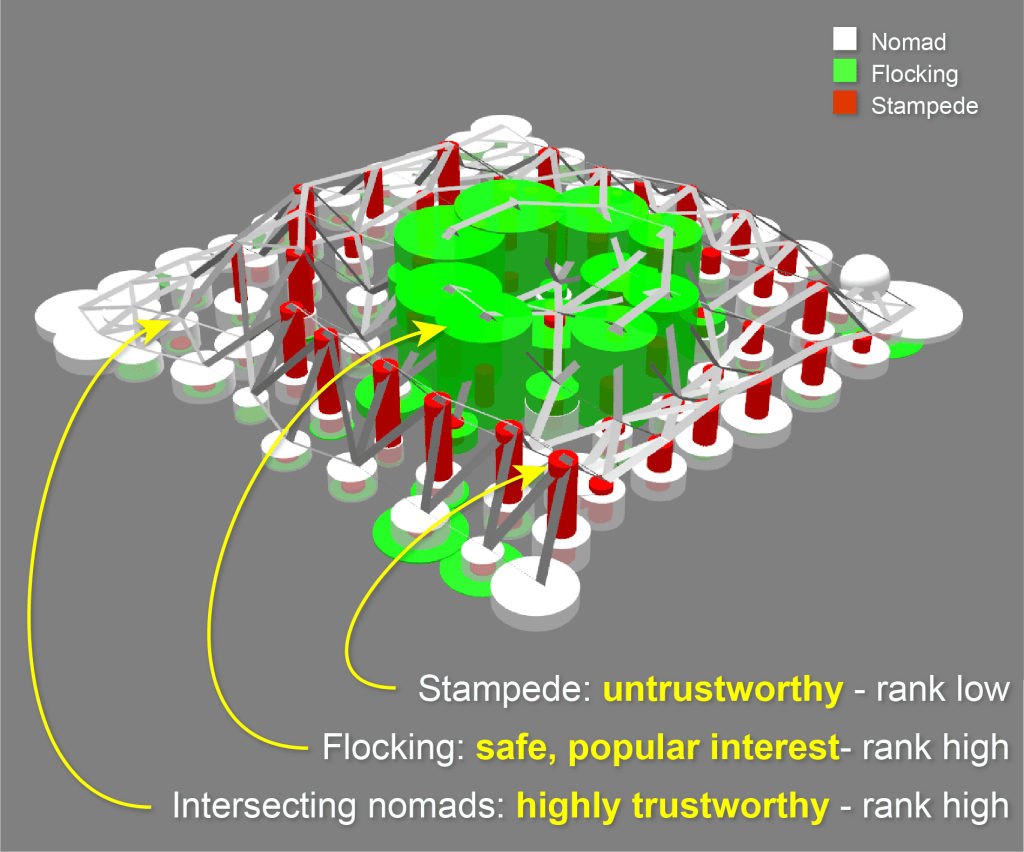
Generated a new map where a stampede stops when it hits the edge

Played around with the “Curse of Dimensionality” slide

Added some background on fact-checking to the RQ slide

Start fixing Alienware

  • Mount drive – done
  • Plug everything in and connect network – done
  • Copy files
  • Fix environment variables

Online Conspiracy Theories: The WIRED Guide

  • Everything you need to know about George Soros, Pizzagate, and the Berenstain Bears.


Phil 2.16.20

Bringing Stories Alive: Generating Interactive Fiction Worlds

  • World building forms the foundation of any task that requires narrative intelligence. In this work, we focus on procedurally generating interactive fiction worlds—text-based worlds that players “see” and “talk to” using natural language. Generating these worlds requires referencing everyday and thematic commonsense priors in addition to being semantically consistent, interesting, and coherent throughout. Using existing story plots as inspiration, we present a method that first extracts a partial knowledge graph encoding basic information regarding world structure such as locations and objects. This knowledge graph is then automatically completed utilizing thematic knowledge and used to guide a neural language generation model that fleshes out the rest of the world. We perform human participant-based evaluations, testing our neural model’s ability to extract and fill-in a knowledge graph and to generate language conditioned on it against rule-based and human-made baselines. Our code is available at this https URL.

The Obligation To Experiment

  • Tech companies should test the effects of their products on our safety and civil liberties. We should also test them ourselves.

Ran through the presentation with David. He pointed out that stampedes bouncing off the edge of the environment look like flocking, so I generated a new map where the stampede gathers and runs off the edge

flock_2_stampede_map_legend

Phil 2.14.20

7:00 – 8:30 ASRC GOES

This document describes the Facebook Full URL shares dataset, resulting from a collaboration between Facebook and Social Science One. It is for Social Science One grantees and describes the dataset’s scope, structure, fields, and privacy-preserving characteristics. This is the second of two planned steps in the release of this “Full URLs dataset”, which we described at socialscience.one/blog/update-social-science-one.

Judging Truth

    • Deceptive claims surround us, embedded in fake news, advertisements, political propaganda, and rumors. How do people know what to believe? Truth judgments reflect inferences drawn from three types of information: base rates, feelings, and consistency with information retrieved from memory. First, people exhibit a bias to accept incoming information, because most claims in our environments are true. Second, people interpret feelings, like ease of processing, as evidence of truth. And third, people can (but do not always) consider whether assertions match facts and source information stored in memory. This three-part framework predicts specific illusions (e.g., truthiness, illusory truth), offers ways to correct stubborn misconceptions, and suggests the importance of converging cues in a post-truth world, where falsehoods travel further and faster than the truth.


  •  Dissertation
    • Practice! 52 minutes, 57 seconds
    • Maybe meeting with Wayne? Nope
  • Pack, move, unpack, setup
    • Bring ethernet cables! done
    • Moved out – done
    • Moved in – not done, but ready to unpack
  • Recovered my information for GSAW and TFDev
  • Write quick proposals for:
    • cybermap – done
    • Synthetic data as a service – done
    • White paper – kinda?