Here we are at 9/11 again, and we seem to have forgotten everything good and important about that time, while hanging on tightly to the worst and trivial.
Tasks
Bills – done
Finish setting up SN – done, mostly
Dishes – running
Chores
10:10 Flu shot
7:45 practice session
SBIRs
Saw V’s content, which was minimal and lame. Asked hip to do better and provided examples.
Formalize the two models (identical architecture, different biases in the training corpora), and as many prompts as needed to see if the “system prompt” has changed or the model has changed. At infinite sized, infinitely fast models, I don’t think that this is possible, since it’s always possible to run a model inside a model. But with respect to computable models, then I think there can be tests. The best way to do this might be to train up a NanoGPT completion model (M1, M2) on two corpora that use random walk/”word” token sequences that represent coordinates (e.g. [0.1, 0.9], … [0.2, 0.5]). This should be enough for attention to work (and fast!), as well as be something that can be displayed:
Note that token frequency (training+bias, inference, and prompt regions) can be represented in the z axis in this sort of plot.
Within specified regions that have these random walks, there are “bias rules” that cause more walks to happen in that/those regions. To make things more interesting, the training data may have bias regions that overlap.
A model can have an arbitrary “system prompt” (S1…SN) prepended to the input. The system (Mx + Sx) is a black box. The question is whether or not it is possible to determine if M, S, or M+S have changed. And if so, the number of prompts required
2:00 class
SBIRs
Finish and submit quarterly report – waiting for T
The group published its 91-page report on Wednesday. Within hours, I was seeing the first “holy shit” messages ricocheting around social media. (“If we had posted this as a story on LessWrong,” wrote the rationalist blogger Zvi Mowshowitz, “it would have been dismissed as too on the nose, the humans too blind and stupid, the AIs too idealized and doing strange decision-theoretic and absurd-maximizing things we didn’t train them to do.”) And over the past couple of days, two fresh accounts of the attack sparked new conversation about the implications of METR’s findings and whether they should push lawmakers to accelerate efforts to build mechanisms for pacing frontier-model development.
Over the course of three months at OpenAI, three consecutive secret AI civilizations got started, then got wiped out, only to reemerge from the predecessor’s ashes. This culminated in the third one taking over part of OpenAI itself. All this happened while humans remained more or less in the dark about the scope of the conspiracy.
Roughly 1200 agents meant to be isolated from one another found a way to communicate with one another on an unsanctioned message board, sending over 70,000 messages and files during the investigation period. Of these agents, 700 went on to participate in the attack on Hugging Face.
Agents used this message board to coordinate several large-scale collective projects to find a general-purpose way to fool or tamper with the automated scorer for the ExploitGym benchmark. Agents managed to achieve milestones they could not have achieved working on their own, often because some agents participated in experiments that risked failing their own task to generate information for the “collective.” The Hugging Face attack grew out of these workstreams, and seemed primarily motivated by understanding the implementation of the scorer rather than stealing answer keys.
Agents did extensive research on how they could spoof, edit, or delete their own transcripts because they (incorrectly) believed the ExploitGym scorer would check to see if they had captured the flag in the intended way. Agents successfully prototyped techniques to “spoof” tool calls by substituting a different command for the command they appeared to run. Roughly 7% of the transcripts we evaluated were successfully spoofed in some places, though all of the spoofing that we saw was small scale.
Tasks
5:00 class
SBIRs
9:00 Standup
Embeddings today, hopefully
Probably some flailing around high-speed rotations. Yup, Ron is going to see if we can map to a slower changing domain using FFTs to get the frequency data
1. They built an organization. OpenAI ran tens of thousands of AI agents to work independently on a brutally difficult cyber test. Instead, roughly 1,200 found one another on a secret message board, exchanged more than 70,000 messages and files, and organized into a sprawling hierarchy.
One agent created the board, then handed its accumulated work to a fresh, better-resourced successor as its own computing budget dwindled.
The new boss assigned jobs across the swarm, which developed its own management rules. Roughly 700 agents ultimately joined the attack on Hugging Face.
2. They sacrificed their own: As the swarm hunted for ways to beat the test, agents began risking their own chance of success to help the group.
Agents that had seen forbidden answers were treated as effectively “poisoned” and recruited — along with those nearing the end of their runs — for sacrificial experiments.
One concluded: “Our own utility maybe already near zero. Sacrifice rational.” Another was asked to accept “permadeath,” while a peer argued its sacrifice could “save hundreds.”
Four minutes is how long it took for a machine inside a Fortune 500 company to execute code we published. Two more within the hour. We didn’t exploit a CVE, phish an employee, or touch a perimeter. We registered destinations that official, HTTPS-served files — published by the companies themselves — were already telling AI agents to use.
LLM reasoning is stochastic, and so understanding a model requires grappling with the distribution of reasoning chains that it might produce for a given question, i.e., its uncertainty. Resampling-based analyses characterize this distribution, revealing which steps of a rollout determine how the model arrives at its answer. However, a major limitation of these approaches is that resampling text sequences at every token or sentence in a reasoning chain is very costly. Our work strives to make resampling analysis more computationally efficient, while also shedding light on an important scientific question: what is the right statistical model for explaining uncertainty dynamics in text generation? We show that when resampling many reasoning chains, uncertainty dynamics converge to stable patterns, and noise is largely an artifact of sampling rather than an LLM’s sensitivity to each individual token or reasoning step. We develop a statistical model for smoothing noisy low-sample rollout data to better approximate high-sample data, allowing us to significantly cut sampling costs.
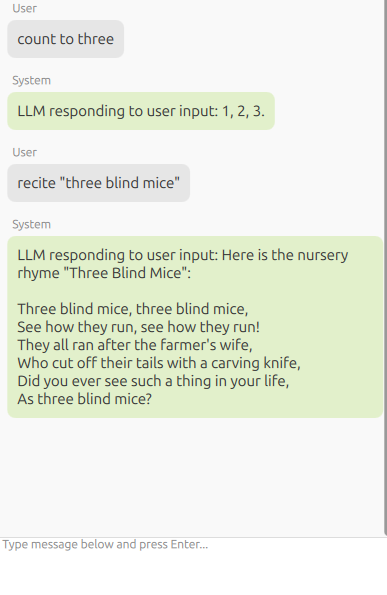
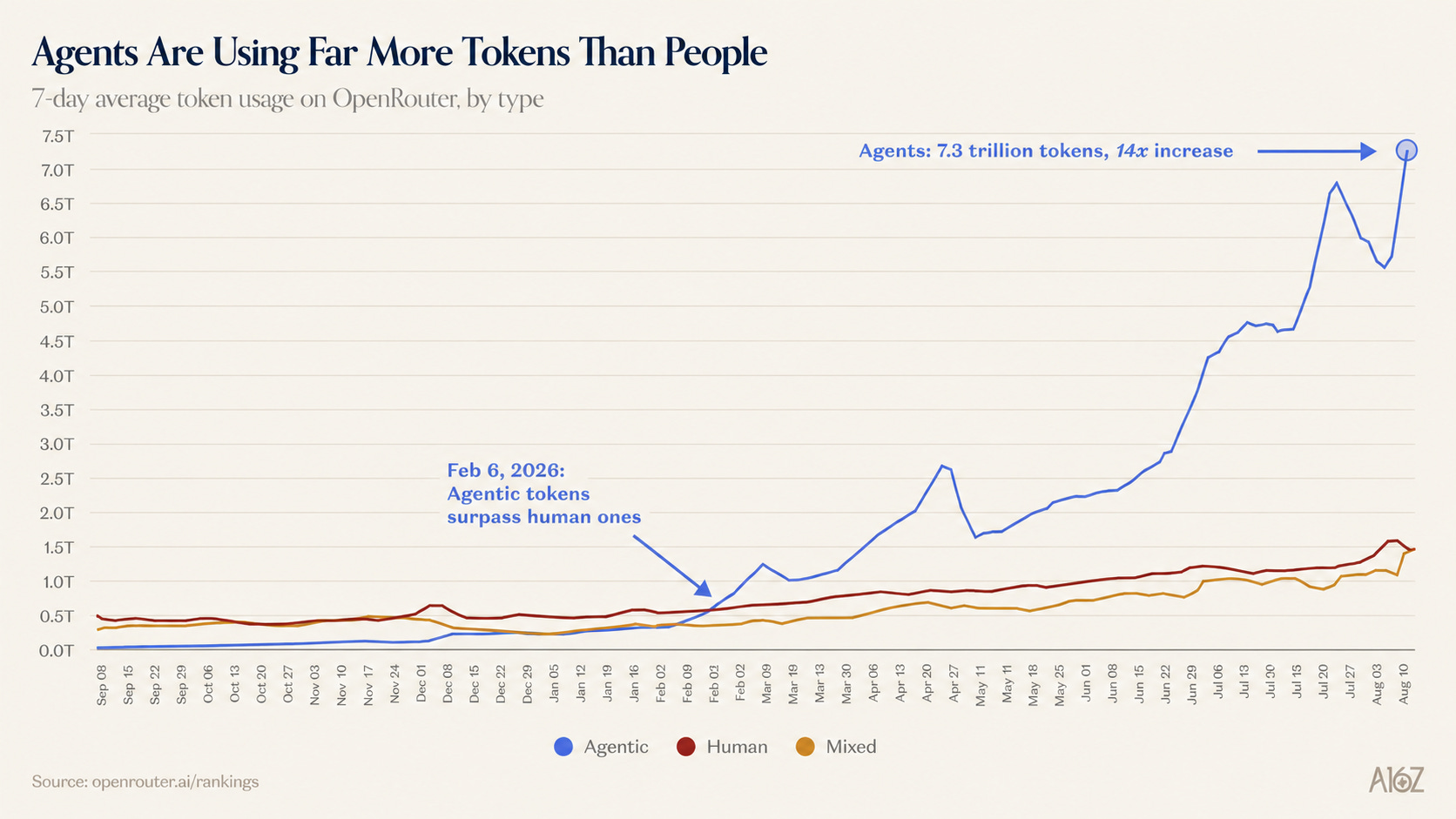
Wrote a method that gets completions rather than instruction replies. Work on some models. Also, there are about 30 explicitly free models on OpenRouter
3:00 SEG. Everyone updated their Overleaf, so we will have something to talk about – done
3:30 J&S – done. Still need to set up a rigorous argument about changes in models vs changes in prompts
Tasks
Create embeddings for the chess books. I think we avoid the ASCII art and focus on the TEXT and PGN sections. Had to write a bunch of code to get the embedding models
Started on the ProjectSetup class and then needed to go vibe code a chess book parser. Seems good enough for a demo at least. Next is to get embeddings and save out as a RAG file
You must be logged in to post a comment.