Vacation was nice, but the end kinda sucked. My flight was delayed 14 hours and I appear to have picked up a small viral parting gift from waiting in all those lines trying to get a new flight. So far I’ve got a cough, very slight headache, and a low fever
Contact doctor and see if I should get a prescription? Got Paxlovid
SBIRs
9:15 standup
See what’s been going on
Talk to Aaron about using SimAccel to model the real world enough to offset communication lag in remote systems – done, though I had to cut it short
It is a perfect day to do training
Acceptable Use Policy – done
Understanding and Protecting PII - done
2022 Kevin Mitnick Security Awareness Training – done
Current deep reinforcement learning (RL) methods can train specialist artificial agents that excel at decision-making on various individual tasks in specific environments, such as Go or StarCraft. However, little progress has been made to extend these results to generalist agents that would not only be capable of performing many different tasks, but also upon a variety of environments with potentially distinct embodiments.
Looking across recent progress in the fields of natural language processing, vision, and generative models (such as PaLM, Imagen, and Flamingo), we see that breakthroughs in making general-purpose models are often achieved by scaling up Transformer-based models and training them on large and semantically diverse datasets. It is natural to wonder, can a similar strategy be used in building generalist agents for sequential decision making? Can such models also enable fast adaptation to new tasks, similar to PaLM and Flamingo?
University of Chicago professor Robert Pape has spent the past year and a half examining the January 6 insurrectionists — and sounding the alarm about the future of democracy. Is America listening?
Why are some people capable of sympathizing with and/or committing acts of political violence, such as attacks aimed at innocent targets? Attempts to construct terrorist profiles based on individual and situational factors, such as clinical, psychological, ethnic, and socio-demographic variables, have largely failed. Although individual and situational factors must be at work, it is clear that they alone cannot explain how certain individuals are radicalized. In this paper, we propose that a comprehensive understanding of radicalization and of how it may lead to political violence requires the integration of information across multiple levels of analysis and interdisciplinary perspectives from evolutionary theory, social, personality and cognitive psychology, political science and neuroscience. Characterization of the structural-functional relationships between neural mechanisms and the cognitive and affective psychological processes that underpin group dynamics, interpersonal processes, values and narratives, as well as micro-sociological processes may reveal latent drivers of radicalization and explain why some people turn to extreme political violence. These drivers may not be observable within a single individual level of scientific enquiry. The integrative, multilevel approach that characterizes social neuroscience has the potential to provide theoretical and empirical clarity regarding the antecedents of radicalization and support for extreme violence.
Sea shanties are the framework with which I view a great many things that happened in 2021, because so many of them were entirely meaningless fads: blips on the radar lasting only for a moment but just long enough to obscure some larger, more important picture. It is fascinating to trace the origins of these glitches of nothingness: inconsequential tweets that turned into inconsequential TikToks that turned into inconsequential news articles that somehow, suddenly seemed more consequential than anything else that day.
Virality treats humans like fast fashion: algorithmically generated products to shove onto all of our screens at the same time, on which we then spend enormous sums of money and attention before ending up in the literal and/or figurative landfill. It isn’t just TikTok; as Shira Ovide points out in the New York Times, “Netflix, YouTube, Spotify, Facebook and many other popular sites operate on similar feedback loops that push more of whatever is being noticed,” which is how you get phenomena like sales of chess sets rising 125% after the release of “The Queen’s Gambit” before interest almost immediately plummeted back down to normal levels. We already live in a world where trends are determined by algorithms, and we will soon live in a world where even the content is created — literally — by them.
the use of Biblical passages to sell firearms with an explicitly Christian context, is widespread in the United States. And this shouldn’t be surprising—as Brad Stoddard writes here on RD, “AR-15s are also increasingly the firearm of choice for Christian gun owners who arm themselves—in their minds, at least—in defense against both tyranny and evil.” And from there, that love of the AR-15 goes all kinds of places.
Trip
Select menu options, check in, etc
Water timer – done
Pack!
SBIRs
Stories (Set up meeting with Bob for ATO info, layout supervised SCII) – done
Meeting with Bob?
Book
Start list of targets
Start letter
Update repo
Add Transcendence, The Human Network, and Ways of Being to the comparables section. Maybe write a new version
GPT Agents
Put README sections together for
Common parts (config file, environment variables, link to XAMPP)
This paper contributes to disinformation research by showing how identity-driven controversies are prime vehicles for circulating disinformation. We theorize disinformation as an engagement-driving process that encourages participation in culture wars through any argumentative means—including not only falsehoods but also truths, half-truths, and value-laden judgments—exploiting them rhetorically to contradict perceived opponents. Empirically, the study reports on the flat Earth echo chamber on YouTube, a controversial group arguing that the Earth is not round but flat. By analyzing their rhetorical strategies, this study shows how flat earthers animate and stoke identity-based grievances. As grudges intensify, back-and-forth argumentation becomes a form of ‘knowing’ in the world, which the echo chamber weaponizes rhetorically. The resulting argument becomes impervious to fact-checking because it is not about facts (logos) but grievances (pathos) and group identification (ethos). Hence, this investigation conceptualizes disinformation as rhetorical acts that persuade in and through the contradictions of identity work, thus animating and co-creating culture wars. The paper proposes a two-phase framework conceptualizing how disinformation disseminates in social media through echo chambers. In the “seeding” phase, malicious actors strategically insert deceptions, masquerading their legitimacy (e.g., fake news). In the “echoing” phase, participants co-create a confrontational fantasy that disseminates disinformation argumentatively.
SBIRs
Sprint review. So no ambitious Starcraft II strawman. We will try to get the RCSNN working better (faster?) than the Simple64 supervised version. This will help get funding, but no publications
Walked Steve through attention again. Maybe it stuck this time?
GPT Agents
Finished proportional, clamped downloads and verified that they go into the DB correctly
Added a view to the DB that connects all the tables
Widely observed neural scaling laws, in which error falls off as a power of the training set size, model size, or both, have driven substantial performance improvements in deep learning. However, these improvements through scaling alone require considerable costs in compute and energy. Here we focus on the scaling of error with dataset size and show how both in theory and practice we can break beyond power law scaling and reduce it to exponential scaling instead if we have access to a high-quality data pruning metric that ranks the order in which training examples should be discarded to achieve any pruned dataset size. We then test this new exponential scaling prediction with pruned dataset size empirically, and indeed observe better than power law scaling performance on ResNets trained on CIFAR-10, SVHN, and ImageNet. Given the importance of finding high-quality pruning metrics, we perform the first large-scale benchmarking study of ten different data pruning metrics on ImageNet. We find most existing high performing metrics scale poorly to ImageNet, while the best are computationally intensive and require labels for every image. We therefore developed a new simple, cheap and scalable self-supervised pruning metric that demonstrates comparable performance to the best supervised metrics. Overall, our work suggests that the discovery of good data-pruning metrics may provide a viable path forward to substantially improved neural scaling laws, thereby reducing the resource costs of modern deep learning.
Penrose is a platform that enables people to create beautiful diagrams just by typing mathematical notation in plain text. The goal is to make it easy for non-experts to create and explore high-quality diagrams and provide deeper insight into challenging technical concepts. We aim to democratize the process of creating visual intuition.
The torrent of false information, such as the election-fraud claims that led to the assault on the U.S. Capitol, Russian disinformation about the invasion of Ukraine and pseudoscientific assertions about the coronavirus pandemic, has emerged despite the astonishing growth of the fact-checking movement. In 2021, there were 391 active fact-checking projects, according to an annual census by the Duke Reporters’ Lab, up from 168 in 2016.
GPT-Agents
Add a “Clamped” button so that each keyword is limited to max number of pulls but not balanced beyond that
Add a “Percent” button so that a certain percentage of tweets are gathered with no max but a minimum of 10
SBIRs
Grinding through the RCSNN paper. I’m beginning to think that this will be harder than the “golf ball interceptor”
We’re still having problems with IT getting the server up
I’m starting to think about a second book about how to egalitarian systems can actively disrupt authoritarian systems in technology-mediated contexts using the concepts of belief space.
Imagine a world in which developers and operators of systems exploit attackers as much as attackers exploit defenders. By leveraging system-design knowledge and modern computing to deploy deception environments, software engineering teams can successfully bamboozle attackers for fun and profit while deepening systems resilience.
GPT Agents
Everything looks like it’s working when I perise the DB. Need to do some counts of the output
Misinformation online poses a range of threats, from subverting democratic processes to undermining public health measures. Proposed solutions range from encouraging more selective sharing by individuals to removing false content and accounts that create or promote it. Here we provide a framework to evaluate interventions aimed at reducing viral misinformation online both in isolation and when used in combination. We begin by deriving a generative model of viral misinformation spread, inspired by research on infectious disease. By applying this model to a large corpus (10.5 million tweets) of misinformation events that occurred during the 2020 US election, we reveal that commonly proposed interventions are unlikely to be effective in isolation. However, our framework demonstrates that a combined approach can achieve a substantial reduction in the prevalence of misinformation. Our results highlight a practical path forward as misinformation online continues to threaten vaccination efforts, equity and democratic processes around the globe.
Book
Start U of Wisc proposal – Whoops! They don’t publish in this area. They do give nice links though
A good proposal will include an accessible overview of the work, a chapter-by-chapter summary, an account of your book’s relationship to comparable or competing works, your assessment of your book’s audience, and practical details including length, number of illustrations, and the status of the work. Most book proposals are 5-10 single-spaced pages long. For suggestions on proposals and other elements of a submission, we highly recommend chapter 5 of William Germano’s Getting It Published.
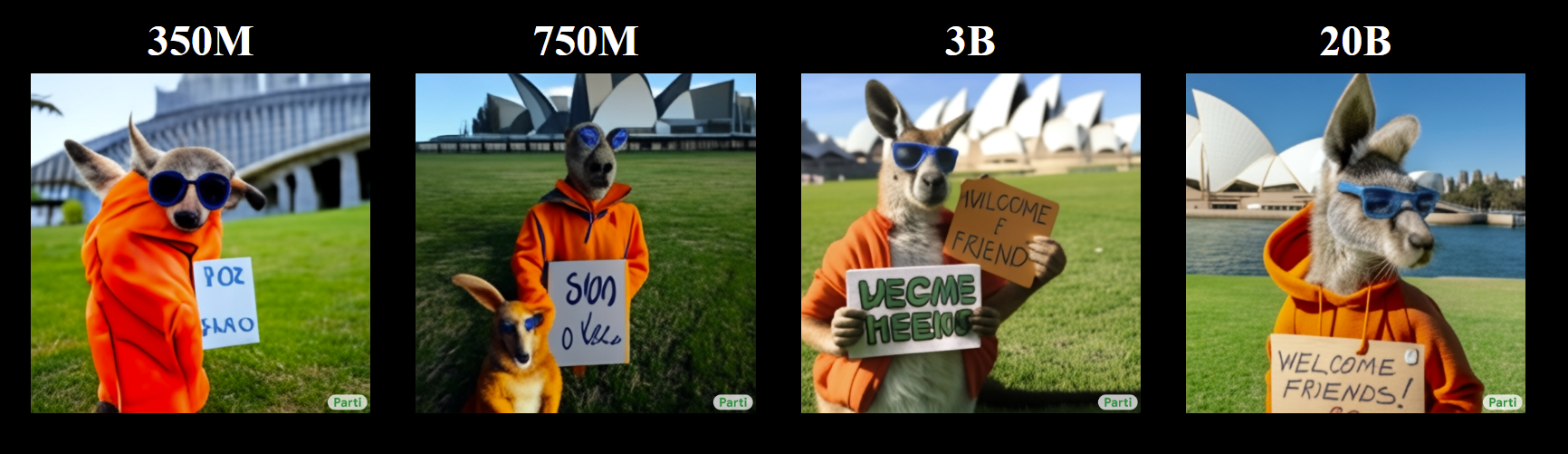
A portrait photo of a kangaroo wearing an orange hoodie and blue sunglasses standing on the grass in front of the Sydney Opera House holding a sign on the chest that says Welcome Friends!
It is interesting that the size of the model does not matter as much for abstract concepts
Infinity
Pinged Nabeel. If that goes well, maybe we can set up a tiny working group? Maybe add Lynnette? Others? We’ll see
Book
I’ve kind of run out of things to do as far as direct content, so I’m playing around with titles using the GPT-3. I have the [insert] prompt between Title: and a brief description from the proposal. The results are pretty interesting:
Humans are a planet-altering force. Gaia Vince argues that our unique ability – compared with other species – to determine the course of our own destiny rests on a special relationship between our genes, environment and culture going back into deep time. It is our collective culture, rather than our individual intelligence, that makes humans unique. Vince shows how four evolutionary drivers – Fire, Language, Beauty and Time – are further transforming our species into a transcendent superorganism: a hyper-cooperative mass of humanity that she calls Homo omnis. Drawing on leading-edge advances in population genetics, archaeology, palaeontology and neuroscience, Transcendence compels us to reimagine ourselves, showing us to be on the brink of something grander – and potentially more destructive.
SBIRs
Look through Github for things like reinforcement learning and agents. Use the Keyword generator
Start the matrix of evaluation tests. Low frequency patterns seem to be hard. Networks like having their average position around zero, with a +/- 1.0 range. Going to set up a list of tests that we can try hyperparameters on
It occurs to me that the concept of a carrier wave might be useful here. Either FM or AM?
I think this is one of those interesting posts about how AI is a tool like other tools. It’s a valid point, but I’m not so sure. In my creative experience there is an initial creative part and then an extensive editing part. Generating that initial content is hard in cases like writing, graphic arts, chorography, etc. It’s not as hard when working with found objects (like photography or this piece by Marcel Duchamp. AI models like Dall-e and GPT-3 change this balance and make the initial creation more working from found objects that are latent in the models.
Coordinated groups of user accounts working together in online social media can be used to manipulate the online discourse and thus is an important area of study. In this study, we work towards a general theory of coordination. There are many ways to coordinate groups online: semantic, social, referral and many more. Each represents a coordination dimension, where the more dimensions of coordination are present for one event, the stronger the coordination present. We build on existing approaches that detect coordinated groups by identifying high levels of synchronized actions within a specified time window. A key concern with this approach is the selection of the time window. We propose a method that selects the optimal window size to accurately capture local coordination while avoiding the capture of coincidental synchronicity. With this enhanced method of coordination detection, we perform a comparative study across four events: US Elections Primaries 2020, Reopen America 2020, Capitol Riots 2021 and COVID Vaccine Release 2021. Herein, we explore the following three dimensions of coordination for each event — semantic, referral and social coordination — and perform group and user analysis within and among the events. This allows us to expose different user coordination behavior patterns and identify narratives and user support themes, hence estimating the degree and theme of coordination.
Pinged Nabeel. We’ll see where that goes
Sent intro to Shannon for Aaron – nope, can’t test out of a BS?
Book
Send a note to MIT Press and see if I can get a proposal template – done!
GPT Agents
Test some downloads
Create experiment, query, tweet database (users table later, based on SELECT DISTINCT on user id’s from the tweet table) got the experiment and query DBs working. Tweets are harder





 viztales
You must be logged in to post a comment.