Category Archives: Paper

Phil 1.7.17

8:30 – 11:30 ASRC MKT

  • It is still waayyyyyy to cold to do much, so I’ll work on the whitepaper
  • Sent a note to Dr. desJardins about looking at the rewrite and suggesting venues
  • Finished the introduction

Phil 1.5.17

7:00 – 3:30 ASRC MKT

  • Saw the new Star Wars film. That must be the most painful franchise to direct “Here’s an unlimited amount of money. You have unlimited freedom in these areas over here, and this giant pile is canon, that you  must adhere to…”
  • Wikipedia page view tool
  • My keyboard has died. Waiting on the new one and using the laptop in the interim. It’s not quite worth setting up the dual screen display. Might go for the mouse though. On a side note, the keyboard on my Lenovo Twist is quite nice.
  • More tweaking of the paper. Finished methods, on to results
  •  Here’s some evidence that we have mapping structures in our brain: Hippocampal Remapping and Its Entorhinal Origin
      • The activity of hippocampal cell ensembles is an accurate predictor of the position of an animal in its surrounding space. One key property of hippocampal cell ensembles is their ability to change in response to alterations in the surrounding environment, a phenomenon called remapping. In this review article, we present evidence for the distinct types of hippocampal remapping. The progressive divergence over time of cell ensembles active in different environments and the transition dynamics between pre-established maps are discussed. Finally, we review recent work demonstrating that hippocampal remapping can be triggered by neurons located in the entorhinal cortex.


  • Added a little to the database section, but spent most of the afternoon updating TF and trying it out on examples

Phil 1.4.17

7:00 – 3:00 ASRC MKT

  • Confidence modulates exploration and exploitation in value-based learning
    • Uncertainty is ubiquitous in cognitive processing, which is why agents require a precise handle on how to deal with the noise inherent in their mental operations. Previous research suggests that people possess a remarkable ability to track and report uncertainty, often in the form of confidence judgments. Here, we argue that humans use uncertainty inherent in their representations of value beliefs to arbitrate between exploration and exploitation. Such uncertainty is reflected in explicit confidence judgments. Using a novel variant of a multi-armed bandit paradigm, we studied how beliefs were formed and how uncertainty in the encoding of these value beliefs (belief confidence) evolved over time. We found that people used uncertainty to arbitrate between exploration and exploitation, reflected in a higher tendency towards exploration when their confidence in their value representations was low. We furthermore found that value uncertainty can be linked to frameworks of metacognition in decision making in two ways. First, belief confidence drives decision confidence — that is people’s evaluation of their own choices. Second, individuals with higher metacognitive insight into their choices were also better at tracing the uncertainty in their environment. Together, these findings argue that such uncertainty representations play a key role in the context of cognitive control.

  • Artificial Intelligence, AI in 2018 and beyond
    • Eugenio Culurciello
    • These are my opinions on where deep neural network and machine learning is headed in the larger field of artificial intelligence, and how we can get more and more sophisticated machines that can help us in our daily routines. Please note that these are not predictions of forecasts, but more a detailed analysis of the trajectory of the fields, the trends and the technical needs we have to achieve useful artificial intelligence. Not all machine learning is targeting artificial intelligences, and there are low-hanging fruits, which we will examine here also.
  • Synthetic Experiences: How Popular Culture Matters for Images of International Relations
    • Many researchers assert that popular culture warrants greater attention from international relations scholars. Yet work regarding the effects of popular culture on international relations has so far had a marginal impact. We believe that this gap leads mainstream scholars both to exaggerate the influence of canonical academic sources and to ignore the potentially great influence of popular culture on mass and elite audiences. Drawing on work from other disciplines, including cognitive science and psychology, we propose a theory of how fictional narratives can influence real actors’ behavior. As people read, watch, or otherwise consume fictional narratives, they process those stories as if they were actually witnessing the phenomena those narratives describe, even if those events may be unlikely or impossible. These “synthetic experiences” can change beliefs, reinforce preexisting views, or even displace knowledge gained from other sources for elites as well as mass audiences. Because ideas condition how agents act, we argue that international relations theorists should take seriously how popular culture propagates and shapes ideas about world politics. We demonstrate the plausibility of our theory by examining the influence of the US novelist Tom Clancy on issues such as US relations with the Soviet Union and 9/11.
  • Continuing with paper tweaking. Added T’s comments, and finished Methods.

Phil 1.3.18

Well, it didn’t take long at all for 2018 to trend radioactive…

Jan2_2018_Trump

7:00 – 4:30 ASRC MKT

  • Behavioural and Evolutionary Theory Lab. Check the publications and the venues
  • A bit on the idea that Neural Coupling is an aspect of the Willing Suspension of Disbelief.
  • More tweaking on the paper. Waaaaaayyyyyy to many “We” in the abstract. Done through modeling.
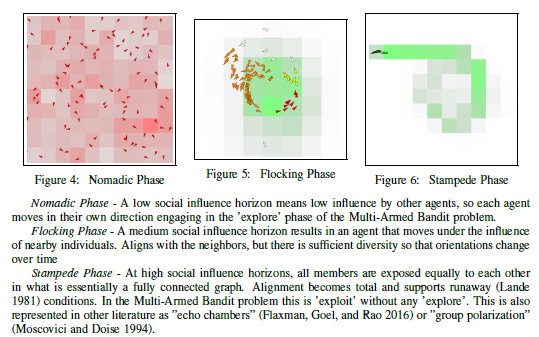
  • Need to generate nomadic, flocking, and stampede generated maps. Done! See below.
  • Redo the proposal so that the Tile View is the central navigation scheme with aspects for users, topics, ratings, etc. Done
  • Generated data for Aaron’s ML sessions. Planned upgrading my box so we can run things on the Titan card
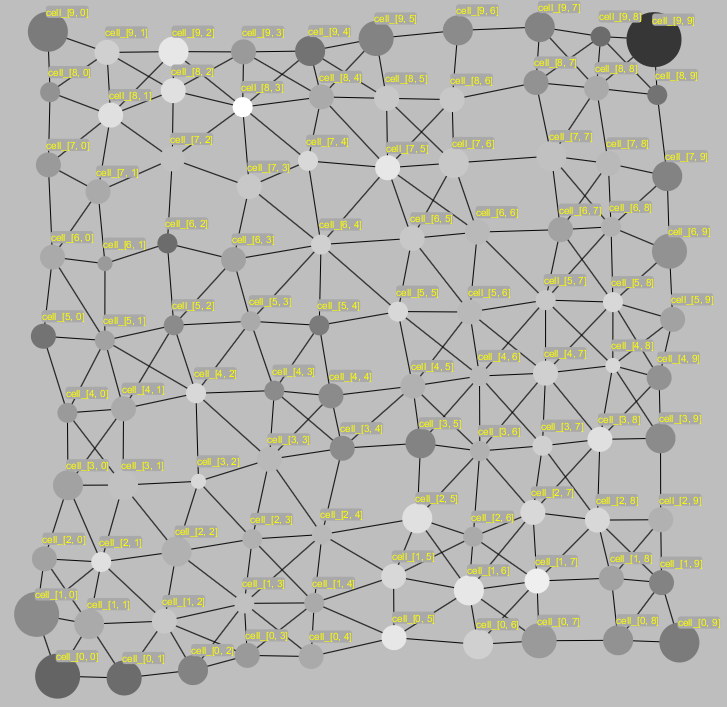
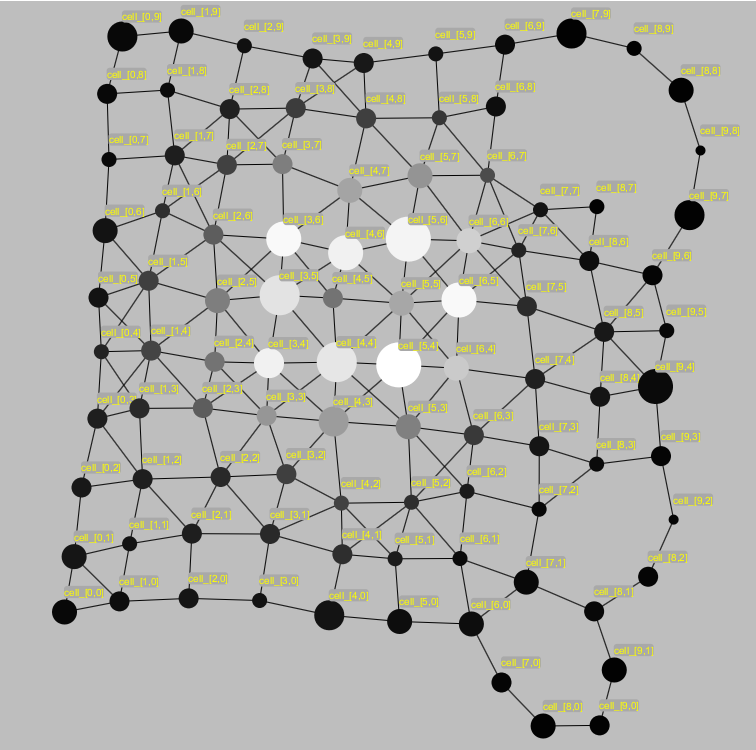
  • Some more results from the belief space mapping effort. Each map is constructed from a 100 sample run over the same 10×10 grid after the simulation stabilized:
    • Here’s a quick overview of the populations: ThreePopulations
    • Stable Nomad behavior map: nomad-stableGood overall coverage as you would expect. Some places have more visitors (the bright spots), but there are no gaps in the belief space.
    • Stable Flocking behavior map: flocking-stableWe can see gaps start to appear in the belief space, but the overall grid structure is still visible at the center of the network where the flock spent most of its time. This is also evident in the bright ring of nodes that represents the cells that the flock traversed while it was orbiting the center area.
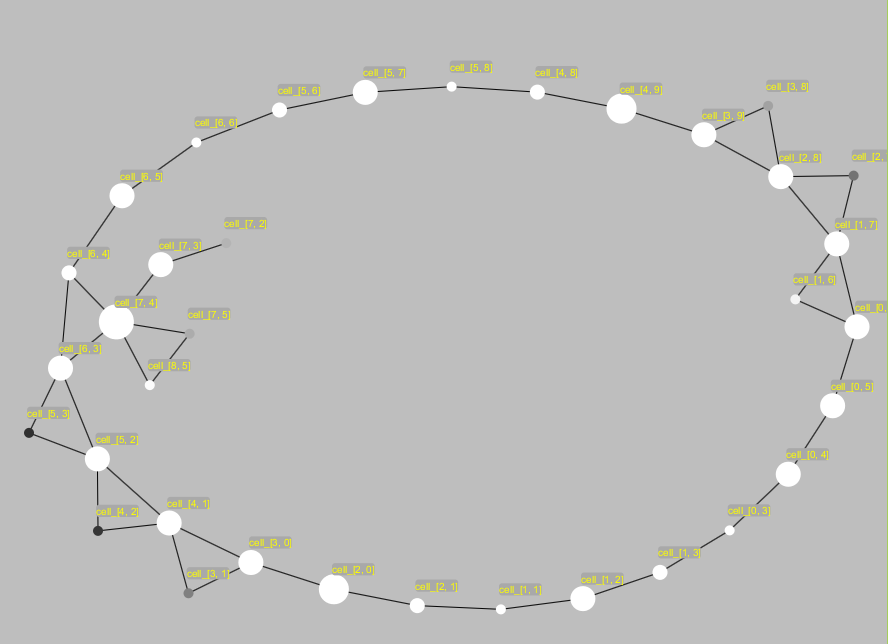
    • Stable stampede behavior map: stampede-stableHere, the relationship of the trajectories to the underlying coordinate frame is completely lost. In this case, the boundary of the simulation was reflective, so the stampede bounces around the simulation space. The reason that there is a loop rather than a line is because the tight cluster of agents crossed its path at some point.
  • What could be interesting it to overlay the other graphs on the nomad-produced map. We could see the popular (exploitable) sections of the flocking population while also seeing the areas visited by the stampede. The assumption is that the stampede is engaged in untrustworthy behavior, so those parts would be marked as ‘dangerous’, while the flocking areas would marked as a region of ‘conventional wisdom’ or normative behavior.

Phil 1.2.18

7:00 – 3:30 ASRC MKT

  • Star wars link for Thursday
  • Selective Exposure to Misinformation: Evidence from the consumption of fake news during the 2016 U.S. presidential campaign
    • Andrew M. Guess 
    • Brendan Nyhan
    • Jason Reifler
    • Though some warnings about online “echo chambers” have been hyperbolic, tendencies toward selective exposure to politically congenial content are likely to extend to misinformation and to be exacerbated by social media platforms. We test this prediction using data on the factually dubious articles known as “fake news.” Using unique data combining survey responses with individual-level web trac histories, we estimate that approximately 1 in 4 Americans visited a fake news website from October 7-November 14, 2016. Trump supporters visited the most fake news websites, which were overwhelmingly pro-Trump. However, fake news consumption was heavily concentrated among a small group — almost 6 in 10 visits to fake news websites came from the 10% of people with the most conservative online information diets. We also find that Facebook was a key vector of exposure to fake news and that fact-checks of fake news almost never reached its consumers.
  • Via Kate Starbird: The Elusive Backfire Effect: Mass Attitudes’ Steadfast Factual Adherence
    • Can citizens heed factual information, even when such information challenges their partisan and ideological attachments? The “backfire effect,” described by Nyhan and Reifler (2010), says no: rather than simply ignoring factual information, presenting respondents with facts can compound their ignorance. In their study, conservatives presented with factual information about the absence of Weapons of Mass Destruction in Iraq became more convinced that such weapons had been found. The present paper presents results from five experiments in which we enrolled more than 10,100 subjects and tested 52 issues of potential backfire. Across all experiments, we found no corrections capable of triggering backfire, despite testing precisely the kinds of polarized issues where backfire should be expected. Evidence of factual backfire is far more tenuous than prior research suggests. By and large, citizens heed factual information, even when such information challenges their ideological commitments.
  • Stanford political scientist studies apocalyptic political rhetoric <- dimension reduction
    • Stanford political scientist Alison McQueen’s research shows that apocalyptic rhetoric can make wars, natural disasters, economic collapse and even the possibility of nuclear war easier to understand. But although it can rouse people to action, apocalyptic rhetoric also carries great peril.
    • Political Realism in Apocalyptic Times
  • The Concept of Narrative as a Fundamental for Human Agent-Based Modeling
    • This paper introduces the concept of narrative and its construction into the structure of agent-based modeling, as an effective mechanism for representation of stochastic behavior by agents in the context of social phenomena that are governed by fundamental random processes. A theoretical foundation is offered, citing authorities from the narrative community and related biological, sociological and psychological fields. The fundamental properties of narratives and their relationships are described, and potentially useful lines of further research are posited.
  • Automotive Pishkin-style pileup: http://digg.com/video/thirty-car-pile-up
  • Full read-through of the edited paper. Minor edits so far.
  • Back to the Belief Space proposal

Phil 1.1.18

8:00 – 12:00 ASRC MKT

  • Here’s hoping we don’t look back with longing on 2017. I fear that 2018 could be radioactively bad.
  • Working on WSC version of the paper. Finished markup, and am now adding in the changes. Done! Currently 15 pages. Need to trim the citations and shrink some figures

Phil 12.27.17

8:00 – 4:00 ASRC MKT

  • Granted permission for the CHIIR18 DC.
  • Continuing on white paper. And we’ll see what Aaron has to say about the stampede paper today?
  • It occurs to be that it could make sense to read the trajectories in using the ARFF format. Looks straightforward, though I’d have to output each agent on an axis-by-axis basis. That would in turn mean that we’d have to save each ParticleStatement and save it out .
  • A new optimizer using particle swarm theory (1995)
    • The optimization of nonlinear functions using particle swarm methodology is described. Implementations of two paradigms are discussed and compared, including a recently developed locally oriented paradigm. Benchmark testing of both paradigms is described, and applications, including neural network training and robot task learning, are proposed. Relationships between particle swarm optimization and both artificial life and evolutionary computation are reviewed.
    • Cited by 12155

Phil 12.26.17

8:00 – 4:00 ASRC MKT

  • Gotta get a new keyboard
  • Working on the additional thoughts section. Add paragraph describing how the evolutionary benefits of groups are visible at nearly every level of interaction. However, with these benefits comes the additional burden of control. Evolution has provided mechanisms that are calibrated to match communication to the optimal(?) group behavior. This timeframe has been short-circuited by technology. Coordination based on the trust of a neighbor no longer works when the neighbor isn’t near.
    • Patchwork alignment?
    • Information and its use by animals in evolutionary ecology
      • Information is a crucial currency for animals from both a behavioural and evolutionary perspective. Adaptive behaviour relies upon accurate estimation of relevant ecological parameters; the better informed an individual, the better it can develop and adjust its behaviour to meet the demands of a variable world. Here, we focus on the burgeoning interest in the impact of ecological uncertainty on adaptation, and the means by which it can be reduced by gathering information, from both ‘passive’ and ‘responsive’ sources. Our overview demonstrates the value of adopting an explicitly informational approach, and highlights the components that one needs to develop useful approaches to studying information use by animals. We propose a quantitative framework, based on statistical decision theory, for analysing animal information use in evolutionary ecology. Our purpose is to promote an integrative approach to studying information use by animals, which is itself integral to adaptive animal behaviour and organismal biology.
    • Evolutionary Explanations for Cooperation
      • Natural selection favours genes that increase an organism’s ability to survive and reproduce. This would appear to lead to a world dominated by selfish behaviour. However, cooperation can be found at all levels of biological organisation: genes cooperate in genomes, organelles cooperate to form eukaryotic cells, cells cooperate to make multicellular organisms, bacterial parasites cooperate to overcome host defences, animals breed cooperatively, and humans and insects cooperate to build societies. Over the last 40 years, biologists have developed a theoretical framework that can explain cooperation at all these levels. Here, we summarise this theory, illustrate how it may be applied to real organisms and discuss future directions.
    • Thomas Valone (Scholar)
      • Much of Valone’s work in arid ecosystems has examined desertification and factors that affect the biodiversity. He is particularly interested in livestock effects on soil chemical and physical processes that then affect plant and animal populations. Valone’s examination of behavior is frequently centered on understanding how animals perceive their environment. Much of his behavioral work examines information use in social animals who differ from solitary individuals in that they can acquire public information to estimate the quality of resources by noting the activities of other individuals.
      • Group foraging, public information, and patch estimation
        • Public information is information about the quality of a patch that can be obtained by observing the foraging success of other individuals in that patch. I examine the influence of the use of public information on patch departure and foraging efficiency of group members. When groups depart a patch with the first individual to leave, the use of public information can prevent the underutilization of resource patches.
      • Public Information: From Nosy Neighbors to Cultural Evolution
        • Psychologists, economists, and advertising moguls have long known that human decision-making is strongly influenced by the behavior of others. A rapidly accumulating body of evidence suggests that the same is true in animals. Individuals can use information arising from cues inadvertently produced by the behavior of other individuals with similar requirements. Many of these cues provide public information about the quality of alternatives. The use of public information is taxonomically widespread and can enhance fitness. Public information can lead to cultural evolution, which we suggest may then affect biological evolution.
  • Get started on Polarization Game proposal. Include Moral Machine. Read the papers into LMN and started to poke at the structure.
  • Speaking of which, here’s a labeled map: LabeledMap
  • Which clearly provides more relational (map-ish) information than a word cloud using the same data: wordcloud

Phil 12.21.17

7:00 – 4:00 ASRC MKT

  • And now the days start to get longer!
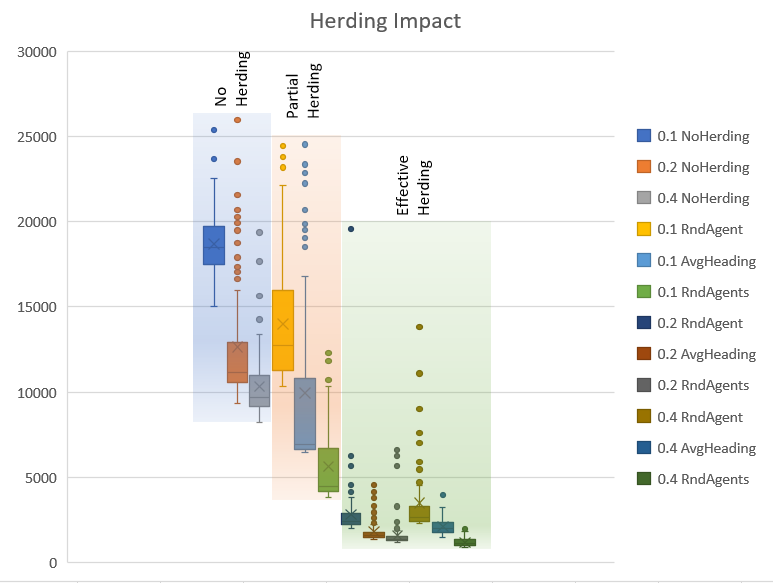
  • Working on flocking and herding paper. Adding in the adversarial herding parts. Spent a lot of time working on getting a chart that tells the herding story. I’m somewhat ok with this: HerdingImpact
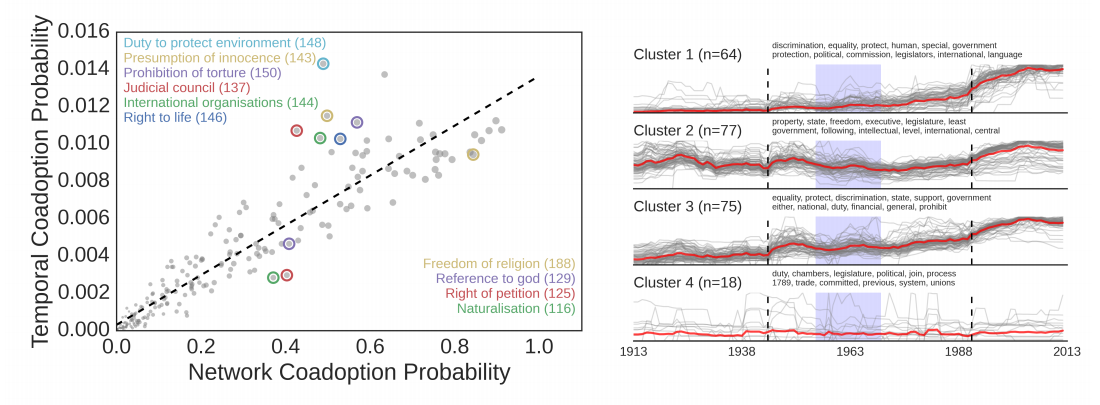
  • Some work on plotting norms using legal documents: Inferring Mechanisms for Global Constitutional Progress
    • Constitutions help define domestic political orders, but are known to be influenced by two international mechanisms: one that reflects global temporal trends in legal development, and another that reflects international network dynamics such as shared colonial history. We introduce the provision space; the growing set of all legal provisions existing in the world’s constitutions over time. Through this we uncover a third mechanism influencing constitutional change: hierarchical dependencies between legal provisions, under which the adoption of essential, fundamental provisions precedes more advanced provisions. This third mechanism appears to play an especially important role in the emergence of new political rights, and may therefore provide a useful roadmap for advocates of those rights. We further characterise each legal provision in terms of the strength of these mechanisms.
    • provisionSpace
  • A Lively Discussion, Even for KSJ: Edmond Awad on His ‘Moral Machine’
    • To collect vast amounts of data on human perspectives about such decisions, Awad and his team launched the Moral Machine website, in which visitors play an interactive game that presents them with a choice of two decisions in a variety of randomly generated crash scenarios. As in the trolley problem, the visitor must choose to swerve or stay the course, sacrificing either the people in the car or one group of pedestrians to save other pedestrians.
    • About Moral Machine
      • Recent scientific studies on machine ethics have raised awareness about the topic in the media and public discourse. This website aims to take the discussion further, by providing a platform for 1) building a crowd-sourced picture of human opinion on how machines should make decisions when faced with moral dilemmas, and 2) crowd-sourcing assembly and discussion of potential scenarios of moral consequence.
      • And this looks like it produced some really good marketing via news coverage
      • “We had four million users visit the website,” Awad said. “Three million of those actually completed the decision-making task, and they clicked on 37 million individual decisions. There’s also the survey that comes after, which is a little bit more work, and we still have over half a million survey responses.” The Scalable Cooperation group plans to publish the full results of the study in an upcoming paper.

Phil 12.20.17

7:00 – 5:00 ASRC MKT

  • Today’s Sunrise 7:23 AM and sunset 4:47 PM. Not a fan of winter.
  • Promoted the venues and journals post to its own page here.
  • Added The Emergence of Consensus: A Primer to the lit review. Nothing new in there, but it’s a fast overview with good references
  • Working on flocking and herding paper. Reasonable progress. Adding the herding parts and the self-driving car stampede. Finished first pass through methods, next is results.
  • Need to rerun the sim so that the heading and distance charts line up. Done!
  • Well, that’s pretty research-browser-ish: Inventing the “Google” for predictive analytics The company is Endor.com, and these pages are pretty informative (social physics) (jobs)
  • The Birth of A Conspiracy Theory.
    • Right after yesterday’s train derailment, a conspiracy theory was born, we tracked it in real time.

Phil 12.14.17

7:00 – 11:00 ASRC MKT

Phil 12.13.17

7:00 – 5:00 ASRC MKT

  • Schedule physical
  • Write up fire stampede. Done!
  • Continuing Consensus and Cooperation in Networked Multi-Agent Systems here
  • Would like to see how the credibility cues on the document were presented. What went right and what went wrong: Schumer calls cops after forged sex scandal charge
  • Finished linking the RB components to the use cases. Waiting on Aaron to finish SIGINT use case
  • Working on building maps from trajectories. Trying http://graphstream-project.org
    • Updating Labeled2DMatrix to read in string values. I had never finished that part! There are some issues with what to do about column headers. I think I’m going to add explicit headers for the ‘Trajectory’ sheet
  • Strategized with Aaron about how to approach the event tomorrow. And Deep Neural Network Capsules. And Social Gradient Descent Agents.
    • deep neural nets learn by back-propagation of errors over the entire network. In contrast real brains supposedly wire neurons by Hebbian principles: “units that fire together, wire together”. Capsules mimic Hebbian learning in the way that: “A lower-level capsule prefers to send its output to higher level capsules whose activity vectors have a big scalar product with the prediction coming from the lower-level capsule”
      • Sure sounds like oscillator frequency locking / flocking to me……

Phil 12.12.17

7:00 – 3:30 ASRC MKT

  • Need to make sure that an amplified agent also has amplified influence in calculating velocity – Fixed
  • Towards the end of this video is an interview with Ian Couzin talking about how mass communication is disrupting our ability to flock ‘correctly’ due to the decoupling of distance and information
  • Write up fire stampede. Backups everywhere, one hole, antennas burn so the AI keeps trust in A* but loses awareness as the antennas burn: “The Los Angeles Police Department asked drivers to avoid navigation apps, which are steering users onto more open routes — in this case, streets in the neighborhoods that are on fire.” [LA Times] Also this slow motion version of the same thing: For the Good of Society — and Traffic! — Delete Your Map App
  • First self-driving car ‘race’ ends in a crash at the Buenos Aires Formula E ePrix; two cars enter, one car survives
  • Taking a closer look at Oscillator Models and Collective Motion (178 Citations) and Consensus and Cooperation in Networked Multi-Agent Systems (6,291 Citations)
  • Consensus and Cooperation in Networked Multi-Agent Systems
    • Reza Olfati-SaberAlex Fax, and Richard M. Murray
    • We discuss the connections between consensus problems in networked dynamic systems and diverse applications including synchronization of coupled oscillators, flocking, formation control, fast consensus in small world networks, Markov processes and gossip-based algorithms, load balancing in networks, rendezvous in space, distributed sensor fusion in sensor networks, and belief propagation. We establish direct connections between spectral and structural properties of complex networks and the speed of information diffusion of consensus algorithms (Abstract)
    • In networks of agents (or dynamic systems), “consensus” means to reach an agreement regarding a certain quantity of interest that depends on the state of all agents. A “consensus algorithm” (or protocol) is an interaction rule that specifies the information exchange between an agent and all of its (nearest) neighbors on the network (pp 215)
      • In my work, this is agreement on heading and velocity
    • Graph Laplacians are an important point of focus of this paper. It is worth mentioning that the second smallest eigenvalue of graph Laplacians called algebraic connectivity quantifies the speed of convergence of consensus algorithms. (pp 216)
    • More recently, there has been a tremendous surge of interest among researchers from various disciplines of engineering and science in problems related to multi-agent networked systems with close ties to consensus problems. This includes subjects such as consensus [26]–[32], collective behavior of flocks and swarms [19], [33]–[37], sensor fusion [38]–[40], random networks [41], [42], synchronization of coupled oscillators [42]–[46], algebraic connectivity of complex networks [47]–[49], asynchronous distributed algorithms [30], [50], formation control for multi-robot systems [51]–[59], optimization-based cooperative control [60]–[63], dynamic graphs [64]–[67], complexity of coordinated tasks [68]–[71], and consensus-based belief propagation in Bayesian networks [72], [73]. (pp 216)
      • That is a dense lit review. How did they order it thematically?
    • A byproduct of this framework is to demonstrate that seemingly different consensus algorithms in the literature [10], [12]–[15] are closely related. (pp 216)
    • To understand the role of cooperation in performing coordinated tasks, we need to distinguish between unconstrained and constrained consensus problems. An unconstrained consensus problem is simply the alignment problem in which it suffices that the state of all agents asymptotically be the same. In contrast, in distributed computation of a function f(z), the state of all agents has to asymptotically become equal to f(z), meaning that the consensus problem is constrained. We refer to this constrained consensus problem as the f-consensus problem. (pp 217)
      • Normal exploring/flocking/stampeding is unconstrained. Herding adds constraint, though it’s dynamic. The variables that have to be manipulated in the case of constraint to result in the same amount of consensus are probably what’s interesting here. Examples could be how ‘loud’ does the herder have to be? Also, how ‘primed’ does the population have to be to accept herding?
    • …cooperation can be informally interpreted as “giving consent to providing one’s state and following a common protocol that serves the group objective.” (pp 217)
    • Formal analysis of the behavior of systems that involve more than one type of agent is more complicated, particularly, in presence of adversarial agents in noncooperative games [79], [80]. (pp 217)
    • The reason matrix theory [81] is so widely used in analysis of consensus algorithms [10], [12], [13], [14], [15], [64] is primarily due to the structure of P in (4) and its connection to graphs. (pp 218)
    • The role of consensus algorithms in particle based flocking is for an agent to achieve velocity matching with respect to its neighbors. In [19], it is demonstrated that flocks are networks of dynamic systems with a dynamic topology. This topology is a proximity graph that depends on the state of all agents and is determined locally for each agent, i.e., the topology of flocks is a state dependent graph. The notion of state-dependent graphs was introduced by Mesbahi [64] in a context that is independent of flocking. (pp 218)
      • They leave out heading alignment here. Deliberate? Or is heading alignment just another variant on velocity
    • Consider a network of decision-making agents with dynamics ẋi = ui interested in reaching a consensus via local communication with their neighbors on a graph G = (V, E). By reaching a consensus, we mean asymptotically converging to a one-dimensional agreement space characterized by the following equation: x1 = x2 = … = x (pp 219)
    • A dynamic graph G(t) = (V, E(t)) is a graph in which the set of edges E(t) and the adjacency matrix A(t) are time-varying. Clearly, the set of neighbors Ni(t) of every agent in a dynamic graph is a time-varying set as well. Dynamic graphs are useful for describing the network topology of mobile sensor networks and flocks [19]. (pp 219)
    • GraphLaplacianGradientDescent(pp 220)
  • algebraic connectivity of a graph: The algebraic connectivity (also known as Fiedler value or Fiedler eigenvalue) of a graph G is the second-smallest eigenvalue of the Laplacian matrix of G.[1] This eigenvalue is greater than 0 if and only if G is a connected graph. This is a corollary to the fact that the number of times 0 appears as an eigenvalue in the Laplacian is the number of connected components in the graph. The magnitude of this value reflects how well connected the overall graph is. It has been used in analysing the robustness and synchronizability of networks. (wikipedia) (pp 220)
  • According to Gershgorin theorem [81], all eigenvalues of L in the complex plane are located in a closed disk centered at delta + 0j with a radius of delta, the maximum degree of a graph (pp 220)
    • This is another measure that I can do of the nomad/flock/stampede structures combined with DBSCAN. Each agent knows what agents it is connected with, and we know how many agents there are. Each agent row should just have the number of agents it is connected to.
  • In many scenarios, networked systems can possess a dynamic topology that is time-varying due to node and link failures/creations, packet-loss [40], [98], asynchronous consensus [41], state-dependence [64], formation reconfiguration [53], evolution [96], and flocking [19], [99]. Networked systems with a dynamic topology are commonly known as switching networks. (pp 226)
  • Conclusion: A theoretical framework was provided for analysis of consensus algorithms for networked multi-agent systems with fixed or dynamic topology and directed information flow. The connections between consensus problems and several applications were discussed that include synchronization of coupled oscillators, flocking, formation control, fast consensus in small-world networks, Markov processes and gossip-based algorithms, load balancing in networks, rendezvous in space, distributed sensor fusion in sensor networks, and belief propagation. The role of “cooperation” in distributed coordination of networked autonomous systems was clarified and the effects of lack of cooperation was demonstrated by an example. It was demonstrated that notions such as graph Laplacians, nonnegative stochasticmatrices, and algebraic connectivity of graphs and digraphs play an instrumental role in analysis of consensus algorithms. We proved that algorithms introduced by Jadbabaie et al. and Fax and Murray are identical for graphs with n self-loops and are both special cases of the consensus algorithm of Olfati-Saber and Murray. The notion of Perron matrices was introduced as the discrete-time counterpart of graph Laplacians in consensus protocols. A number of fundamental spectral properties of Perron matrices were proved. This led to a unified framework for expression and analysis of consensus algorithms in both continuous-time and discrete-time. Simulation results for reaching a consensus in small-worlds versus lattice-type nearest-neighbor graphs and cooperative control of multivehicle formations were presented. (pp 231)
  • Not sure about this one. It just may be another set of algorithms to do flocking. Maybe some network implications? Flocking for Multi-Agent Dynamic Systems: Algorithms and Theory. It is one of the papers that the Consensus and Cooperation paper above leans on heavily though…
  • The Emergence of Consensus: A Primer
    • The origin of population-scale coordination has puzzled philosophers and scientists for centuries. Recently, game theory, evolutionary approaches and complex systems science have provided quantitative insights on the mechanisms of social consensus. However, the literature is vast and scattered widely across fields, making it hard for the single researcher to navigate it. This short review aims to provide a compact overview of the main dimensions over which the debate has unfolded and to discuss some representative examples. It focuses on those situations in which consensus emerges ‘spontaneously’ in absence of centralised institutions and covers topic that include the macroscopic consequences of the different microscopic rules of behavioural contagion, the role of social networks, and the mechanisms that prevent the formation of a consensus or alter it after it has emerged. Special attention is devoted to the recent wave of experiments on the emergence of consensus in social systems.
  • Critical dynamics in population vaccinating behavior
    • Complex adaptive systems exhibit characteristic dynamics near tipping points such as critical slowing down (declining resilience to perturbations). We studied Twitter and Google search data about measles from California and the United States before and after the 2014–2015 Disneyland, California measles outbreak. We find critical slowing down starting a few years before the outbreak. However, population response to the outbreak causes resilience to increase afterward. A mathematical model of measles transmission and population vaccine sentiment predicts the same patterns. Crucially, critical slowing down begins long before a system actually reaches a tipping point. Thus, it may be possible to develop analytical tools to detect populations at heightened risk of a future episode of widespread vaccine refusal.
  • For Aaron’s Social Gradient Descent Agent research (lit review)
    • On distributed search in an uncertain environment (Something like Social Gradient Descent Agents)
      • The paper investigates the case where N agents solve a complex search problem by communicating to each other their relative successes in solving the task. The problem consists in identifying a set of unknown points distributed in an n–dimensional space. The interaction rule causes the agents to organize themselves so that, asymptotically, each agent converges to a different point. The emphasis of this paper is on analyzing the collective dynamics resulting from nonlinear interactions and, in particular, to prove convergence of the search process.
    • A New Clustering Algorithm Based Upon Flocking On Complex Network (Sizing and timing for flocking systems seems to be ok?)
      • We have proposed a model based upon flocking on a complex network, and then developed two clustering algorithms on the basis of it. In the algorithms, firstly a k-nearest neighbor (knn) graph as a weighted and directed graph is produced among all data points in a dataset each of which is regarded as an agent who can move in space, and then a time-varying complex network is created by adding long-range links for each data point. Furthermore, each data point is not only acted by its k nearest neighbors but also r long-range neighbors through fields established in space by them together, so it will take a step along the direction of the vector sum of all fields. It is more important that these long-range links provides some hidden information for each data point when it moves and at the same time accelerate its speed converging to a center. As they move in space according to the proposed model, data points that belong to the same class are located at a same position gradually, whereas those that belong to different classes are away from one another. Consequently, the experimental results have demonstrated that data points in datasets are clustered reasonably and efficiently, and the rates of convergence of clustering algorithms are fast enough. Moreover, the comparison with other algorithms also provides an indication of the effectiveness of the proposed approach.
  • Done with the first draft of the white paper! And added the RFP section to the LMN productization version
  • Amazon Sage​Maker: Amazon SageMaker is a fully managed machine learning service. With Amazon SageMaker, data scientists and developers can quickly and easily build and train machine learning models, and then directly deploy them into a production-ready hosted environment. It provides an integrated Jupyter authoring notebook instance for easy access to your data sources for exploration and analysis, so you don’t have to manage servers. It also provides common machine learning algorithms that are optimized to run efficiently against extremely large data in a distributed environment. With native support for bring-your-own-algorithms and frameworks, Amazon SageMaker offers flexible distributed training options that adjust to your specific workflows. Deploy a model into a secure and scalable environment by launching it with a single click from the Amazon SageMaker console. Training and hosting are billed by minutes of usage, with no minimum fees and no upfront commitments. (from the documentation)

4:00 – 5:00 Meeting with Aaron M. to discuss Academic RB wishlist.

Phil 12.11.17

7:00 – 3:00 ASRC MKT

  • Machine learning art gallery from NIPS this year: img_20171208_212755
  • I’m reading this article on the prehistory of Bitcoin, and am realizing that there are several implications for ensuring immutability of data. For example, the entire set of records could be hashed to produce a unique has that would be disrupted if any of the records were altered.
  • Continuing Schooling as a strategy for taxis in a noisy environment here. Done! Promoted to Phlog
  • Still collecting data for web access times at work. Average time to open/finish loading a page is something around 5 seconds at work, 2 seconds at home.
  • Neural correlates of causal power judgments
    • Denise Dellarosa Cummins
    • Causal inference is a fundamental component of cognition and perception. Probabilistic theories of causal judgment (most notably causal Bayes networks) derive causal judgments using metrics that integrate contingency information. But human estimates typically diverge from these normative predictions. This is because human causal power judgments are typically strongly influenced by beliefs concerning underlying causal mechanisms, and because of the way knowledge is retrieved from human memory during the judgment process. Neuroimaging studies indicate that the brain distinguishes causal events from mere covariation, and also distinguishes between perceived and inferred causality. Areas involved in error prediction are also activated, implying automatic activation of possible exception cases during causal decision-making.
  • Writing up the Academic scenario

3:00 – 4:00 Fika – end of semester shindig

4:00 – 6:00 Meeting w/Wayne

  • Basically a status report. Maybe look at computational ecology journals if CHIIR falls through in a bad way
  • Look at workshops as well – Max Plank could be fun
  • Workshopped a workshop title with Wayne and Shimei