Category Archives: Phil

Phil 7.21.21

The Myth of Panic

  • …when cities in China, Europe, and finally the United States descended into lockdown, there was no mass panic. There was fear, yes, plenty of it—but that fear did not lead to irrational, hysterical, or violent group behavior. Our fear did not lead to looting, pogroms, or unrest. The fearful of Wuhan did not rise up in rebellion against the Communist Party; even when Italian doctors began rationing medical equipment and supplies, the fearful of Milan did not loot stores or disrupt the medical system; the fearful of New York did not duel each other to the death over toilet paper rolls.
  • I do think that panics do happen when dimensions are sufficiently reduced. We have examples of human stampedes in confined areas, as well as runaway conditions in constrained belief spaces like stock market bubbles and crashes. And lastly, there are examples of herding such as the Rwandan genocide and the current moral panic about Critical Race Theory (the most recent of many). So it is more complex. That being said, when dimensions are high, I think the article is exactly right.

GPT Agents

  • Quick meeting yesterday. We all agree that the results look good.
  • The 50k model is done. Training the 25k model now

SBIR(s)

  • A lot more writing. Need to get the proper charge number – done
  • At first complete draft except section 4
  • LAIC meeting went well too. Money will get turned on shortly?
Phil 7.20.21

Only one more thing to push out the door and then things start to settle down?

SBIR(s)

  • Sprint planning, get stories in before 9:15 (DSR 628, 629)
  • 1:30 proposal technical approach meeting
    • Install IE to handle antique version of sharepoint
  • 3:00 LAIC followup
  • 4:00 Phase 2 Tagup

GPT Agents

  • Create corpora for 50k, 25k, 12.5k and 6k rows and start training models
    • Generated corpora
    • Training 50k model
  • Meeting at 3:30?

Phil 7.18.21

Ping Andreea that I can’t make tomorrow’s meeting

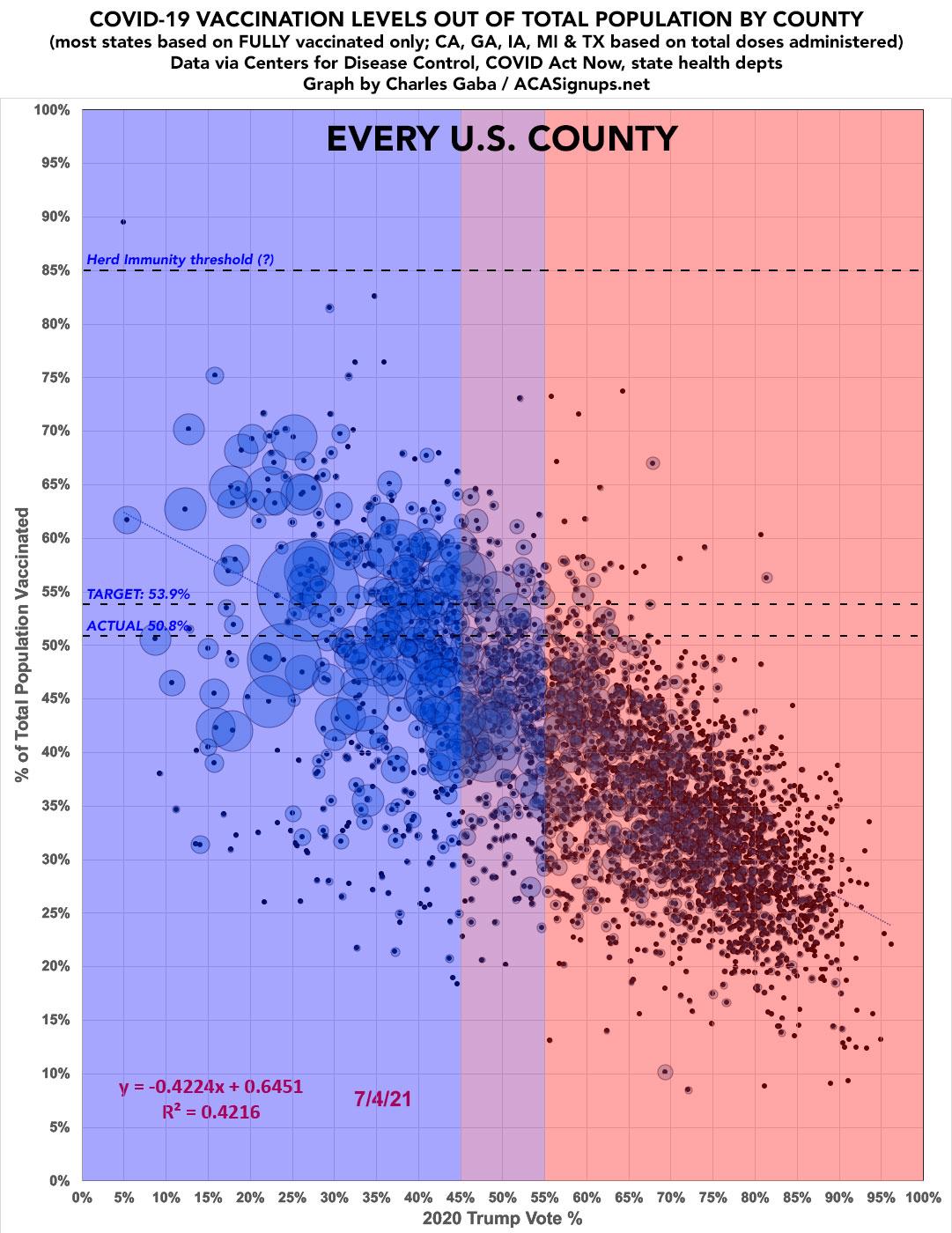
A real-world example of stampede vs. flock behavior?

https://acasignups.net/21/07/04/happy-independence-day-heres-us-covid19-vaccination-levels-county

There is also a more detailed exploration here. What I think is really important here is the idea that populations that would not normally be included in a stampede can be “pulled along” by the structure of the surrounding belief environment.

… the lower-left quadrant (counties which are deep blue politically but also have a low vaccination rate), since that would seem, on the surface, to go completely against my “Red/Blue = Vaccination Status” theme. What’s going on there? Shouldn’t these deep-blue counties have higher-than-average vaccination rates? … 62 of them are more than 40% Black (in fact, 55 of those are majority Black counties). Of the remaining 13 counties, 7 are majority Native American (over 80% of the population, in fact), while 1 in Texas (Zavala County) is “91.22% Hispanic or Latino of any race” according to Wikipedia.

SBIR(s)

  • Working on slide deck for a bit before I head home

Phil 7.15.21

Arpita’s defense is next week! Practice tomorrow

SBIR(s)

  • Chat yesterday with Aaron abut the proposal. We still don’t have Peter’s contributions. Maybe Loren can do it?
  • Had a thought about the communication without coordination concept. The simulations can be compressed using something like run-length encoding at some specified quantization level. The compressed models can be compared (maybe just as number of bytes?) to give an idea of how well they are in agreement. There should be some level of granularity that the representations (and hence the underlying models) diverge. That should be an indication of a need for how much and what kind of coordinating data.
  • Working on slides this afternoon after the ride

Phil 7.14.21

SBIR(s)

  • Working on presentation of final report. While on vacation. Sigh
  • 4:00 Skype test
    • Everything worked!
    • 1 hours worth of slides. Expect questions during

AI and Compute

  • We’re releasing an analysis showing that since 2012, the amount of compute used in the largest AI training runs has been increasing exponentially with a 3.4-month doubling time (by comparison, Moore’s Law had a 2-year doubling period).[1] Since 2012, this metric has grown by more than 300,000x (a 2-year doubling period would yield only a 7x increase). Improvements in compute have been a key component of AI progress, so as long as this trend continues, it’s worth preparing for the implications of systems far outside today’s capabilities.

Phil 7.13.21

NIST Proposes Approach for Reducing Risk of Bias in Artificial Intelligence

  • NIST outlines the approach in A Proposal for Identifying and Managing Bias in Artificial Intelligence (NIST Special Publication 1270), a new publication that forms part of the agency’s broader effort to support the development of trustworthy and responsible AI. NIST is accepting comments on the document until Sept. 10, 2021 (extended from the original deadline of Aug. 5, 2021), and the authors will use the public’s responses to help shape the agenda of several collaborative virtual events NIST will hold in coming months . This series of events is intended to engage the stakeholder community and allow them to provide feedback and recommendations for mitigating the risk of bias in AI. Comments are sought on the publication, which is part of NIST’s effort to develop trustworthy AI.

Working on slide deck

Phil 7.9.21

What Makes a Cult a Cult?

  • The silos of political groupthink created by social media have turned out to be ideal settings for the germination and dissemination of extremist ideas and alternative realities. To date, the most significant and frightening cultic phenomenon to arise from social media is QAnon. According to some observers, the QAnon movement does not qualify as a proper cult, because it lacks a single charismatic leader. Donald Trump is a hero of the movement, but not its controller. “Q,” the online presence whose gnomic briefings—“Q drops”—form the basis of the QAnon mythology, is arguably a leader of sorts, but the army of “gurus” and “promoters” who decode, interpret, and embroider Q’s utterances have shown themselves perfectly capable of generating doctrine and inciting violence in the absence of Q’s directives. (Q has not posted anything since December, but the prophecies and conspiracies have continued to proliferate.) It’s possible that our traditional definitions of what constitutes a cult organization will have to adapt to the Internet age and a new model of crowdsourced cult.

GPT Agents

  • Back up db

JuryRoom

  • More discussion with Jarod

SBIR(s)

  • Laic proposal? Take the map article and chess paper and use them as a base. Done! That was too much work

Phil 7.8.21

Evaluating Large Language Models Trained on Code

  • We introduce Codex, a GPT language model fine-tuned on publicly available code from GitHub, and study its Python code-writing capabilities. A distinct production version of Codex powers GitHub Copilot. On HumanEval, a new evaluation set we release to measure functional correctness for synthesizing programs from docstrings, our model solves 28.8% of the problems, while GPT-3 solves 0% and GPT-J solves 11.4%. Furthermore, we find that repeated sampling from the model is a surprisingly effective strategy for producing working solutions to difficult prompts. Using this method, we solve 70.2% of our problems with 100 samples per problem. Careful investigation of our model reveals its limitations, including difficulty with docstrings describing long chains of operations and with binding operations to variables. Finally, we discuss the potential broader impacts of deploying powerful code generation technologies, covering safety, security, and economics.

Apocalypse now and then: How a biblical genre shapes American politics

  • Today’s white evangelicals in the U.S.—along with many conservative white Catholics and mainline Protestants—imagine themselves to be the persecuted faithful, victims of state oppression in the mold of biblical apocalypses. While this might seem ludicrous to outsiders, it aptly captures their sense of the disorder of the last half century as they’ve been compelled to share cultural and political power with other groups. As it did centuries ago, apocalypse channels the persecuted group’s fear, focusing their resentment and properly directing their anger. Apocalypse’s crucial component for U.S. politics today is this extreme moral dualism, not the imminent End Times.

GPT Agents

  • Sent a note with preliminary results to the team
  • Back up db

JuryRoom

  • Put some text together for Jarod’s proposal – done

SBIR

  • Set up technical meeting for the 20th – done
  • More writing Got through section 3

Phil 7.7.21

Alien Dreams: An Emerging Art Scene

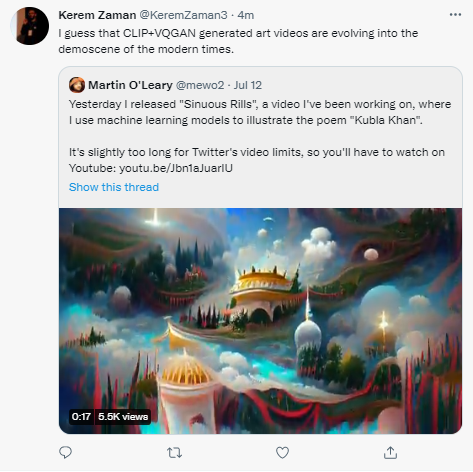
  • Ever since OpenAI released the weights and code for their CLIP model, various hackers, artists, researchers, and deep learning enthusiasts have figured out how to utilize CLIP as a an effective “natural language steering wheel” for various generative models, allowing artists to create all sorts of interesting visual art merely by inputting some text – a caption, a poem, a lyric, a word – to one of these models.

Prompting: Better Ways of Using Language Models for NLP Tasks

  • So what is a prompt? A prompt is a piece of text inserted in the input examples, so that the original task can be formulated as a (masked) language modeling problem. For example, say we want to classify the sentiment of the movie review “No reason to watch”, we can append a prompt “It was” to the sentence, getting No reason to watch. It was ____”. It is natural to expect a higher probability from the language model to generate “terrible” than “great”. This piece reviews of recent advances in prompts in large language models.

Towards Hate Speech Detection at Large via Deep Generative Modeling (also https://arxiv.org/abs/2005.06370)

  • Hate speech detection is a critical problem in social media, being often accused for enabling the spread of hatred and igniting violence. Hate speech detection requires overwhelming computing resources for online monitoring as well as thousands of human experts for daily screening of suspected posts or tweets. Recently, deep learning (DL)-based solutions have been proposed for hate speech detection, using modest-sized datasets of few thousands of sequences. While these methods perform well on the specific datasets, their ability to generalize to new hate speech sequences is limited. Being a data-driven approach, it is known that DL surpasses other methods whenever scale-up in trainset size and diversity is achieved. Therefore, we first present a dataset of 1 million hate and nonhate sequences, produced by a deep generative model. We further utilize the generated data to train a well-studied DL detector, demonstrating significant performance improvements across five hate speech datasets.

The Zipp warranty worked! Dinged rim replaced for free!

SBIR(s)

  • Start adding initial text
  • 10:00 Tagup?
  • 4:00 Tagup

Book

  • 4:00 Meeting with Michelle

GPT-Agents

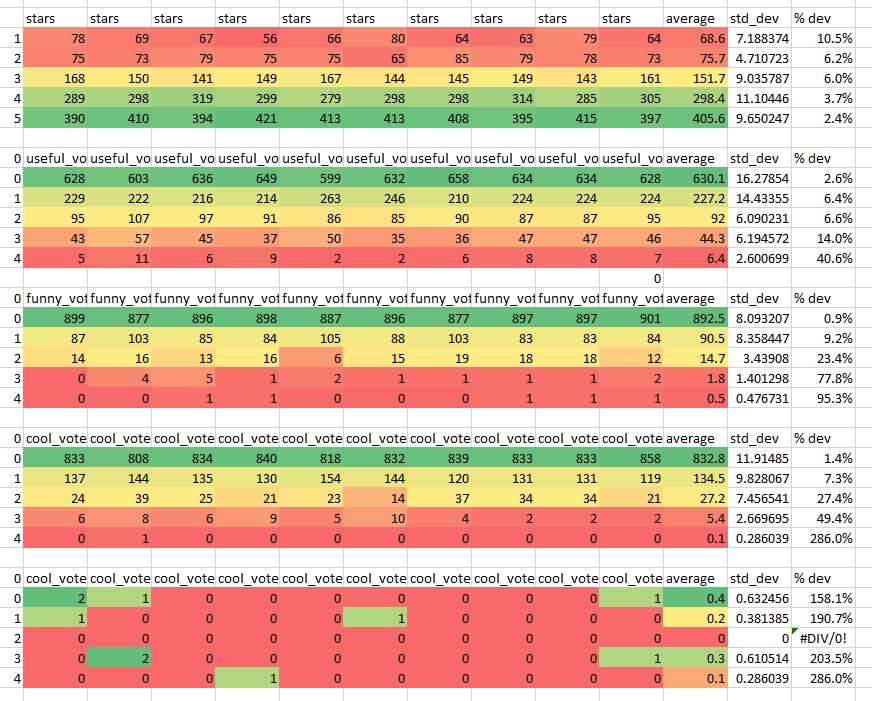
  • Write code to do the database pulls to count stars and votes
  • Important to avoid NaNs in the dataframe which xlsxwriter can’t handle:
for t in tag_list:
    ws = worksheet_dict[t]
    l = combined_dict[t]
    df = pd.DataFrame(l)
    df = df.fillna(0) <------ THIS
    stx.write_dataframe(ws, df, row=1, avg=True)
  • This looks promising!

Phil 7.6.21

The idea of the Western construct of time as a source of neurosis came up yesterday. I found this, which kind of supports the idea. It also ties into the thing that we’re trying to work out with indigenous software practices, that might not have the same focus on scheduling and individual adherence to a schedule?

  • Temporal experience as a core quality in mental disorders
    • The goal of this paper is to introduce Phenomenology and the Cognitive Sciences’ thematic issue on disordered temporalities. The authors begin by discussing the main reason for the neglect of temporal experience in present-day psychiatric nosologies, mainly, its reduction to clock time. Methodological challenges facing research on temporal experience include addressing the felt sense of time, its structure, and its pre-reflective aspects in the life-world setting. In the second part, the paper covers the contributions to the thematic issue concerning temporal experience in anxiety, depression, mania, addiction, post-traumatic stress disorder, autism, and in recovery from psychosis. The authors argue in favor of integrative and cross-disciplinary approaches. In conclusion, they present time as a significant aspect of human suffering.

GPT-Agents

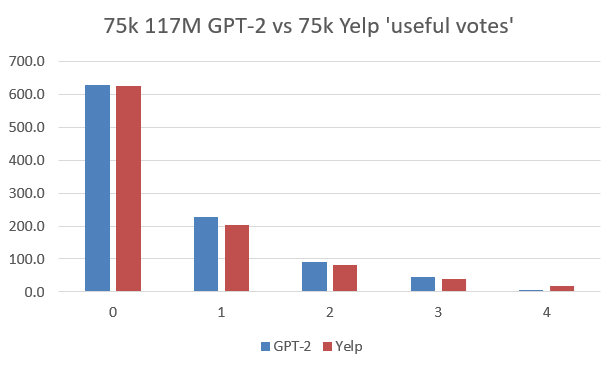
  • The model finished training on Thursday, and I got the model putting values into table_synth_review, with an entry in the experiment table as well
  • Today, do ten 1,000 review runs and compare. Then compare to the actual data
  • Got some nice internally consistent runs!
  • 3:00 Meeting
    • Sentiment analyzer on actual data. Test whether predict whether predicted sentiment matches stars
    • Binary threshold accuracy?
    • Correlation analysis of confidence vs stars?
    • Does the sentiment analyzer work? Evaluate sentiment analyzer vs star ratings?
    • Does ground truth sentiment distribution in GPT data match ground distribution in the data?
    • Does predicted sentiment distribution in GPT data match ground distribution in the data?
    • Does predicted sentiment distribution in GPT data match predicted distribution in the data?
  • Here’s more data:
https://viztales.com/wp-content/uploads/2021/07/image-1.png

SBIR

  • 9:00 Sprint review (slides!) – done
  • Phase 2 proposal – updated. Now I need to fill in some initial working text
  • 4:00 Tagup

Phil 7.5.21

After sprinting to finish a pile of writing, and before the next sprint, I took a looooong weekend!

DIGITAL VIOLENCE: HOW THE NSO GROUP ENABLES STATE TERROR (https://forensic-architecture.org/)

  • First detected in 2015, the NSO Group’s Pegasus malware has reportedly been used in at least 45 countries worldwide to infect the phones of activists, journalists and human rights defenders. Having learnt that our former collaborators and close associates were hacked by Pegasus, Forensic Architecture undertook 15 months of extensive open-source research, interviews assisted by Laura Poitras, and developed bespoke software to present this data as an interactive 3D platform, along with video investigations narrated by Edward Snowden to tell the stories of the individuals targeted and the web of corporate affiliations within which NSO is nested. Supported by Amnesty International and the Citizen Lab, our analysis reveals relations and patterns between separate incidents in the physical and digital sphere, demonstrating how infections are entangled with real world violence, and extend within the professional and personal networks of civil society actors worldwide.

Phil 6.30.21

DROP WHEEL OFF!!!!! DONE!!!

Nice day at the TdF yesterday! (cyclingtips.com/2021/06/reactions-the-peloton-congratulates-cavendish/)

SBIR(s)

  • Roll in Clay’s last-minute changes
\caption[position=bottom]{Title of Figure\label{fig:F1}}
  • Submit!

Book

  • Keep on adding content to new project

GPT Agents

  • Getting started with the Twitter API v2 for academic research
    • Welcome to this ‘101 course’ on getting started with academic research using the Twitter API. The objective of this course is to help academic researchers learn how to get Twitter data using the new Twitter API v2.
  • Meaningful measures of human society in the twenty-first century
    • Science rarely proceeds beyond what scientists can observe and measure, and sometimes what can be observed proceeds far ahead of scientific understanding. The twenty-first century offers such a moment in the study of human societies. A vastly larger share of behaviours is observed today than would have been imaginable at the close of the twentieth century. Our interpersonal communication, our movements and many of our everyday actions, are all potentially accessible for scientific research; sometimes through purposive instrumentation for scientific objectives (for example, satellite imagery), but far more often these objectives are, literally, an afterthought (for example, Twitter data streams). Here we evaluate the potential of this massive instrumentation—the creation of techniques for the structured representation and quantification—of human behaviour through the lens of scientific measurement and its principles. In particular, we focus on the question of how we extract scientific meaning from data that often were not created for such purposes. These data present conceptual, computational and ethical challenges that require a rejuvenation of our scientific theories to keep up with the rapidly changing social realities and our capacities to capture them. We require, in other words, new approaches to manage, use and analyze data.
  • Start testing model when its ready
  • Still chunking along:

Phil 6.29.21

Put out soaker hose! – Done!

Stewardship of Ourselves

  • The first (and perhaps foremost) of my concerns is the impact that the perturbation of our social dynamics may have on our collective cognitive abilities. In Cognitive Democracy, Henry Farrell and Cosma Shalizi make the (credible) case that democracy is intrinsically better at solving complex problems (of the kind that have rugged solution landscapes) than markets or hierarchies/bureaucracies.
  • I am far more concerned with how uniform these algorithms are across huge populations. The underlying insight that explains why diverse groups are better at complex problems is that a diverse set of intellectual tools and viewpoints will be better at finding solutions on a rugged landscape. In mediating so much of humankind’s discovery through the tiny funnel of a handful of systems, we are creating an unprecedented impoverishment of our intellectual toolbox. I am far less concerned about filter bubbles than I am about turning a complex, likely scale-free network of discovery into a fully-mediated hub-and-spokes structure in which everything flows through a system of very limited variety.

SBIR

  • Roll in Clay’s changes today!
  • Done????

Book

  • Start putting all the chapters in the same place. Take out all the placeholders and let’s see what we have

GPT Agents

  • Start training
    • yelp_American: started 7:55
  • 3:00 Meeting

Phil 6.28.21

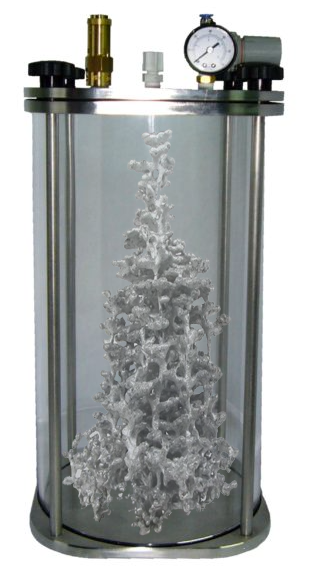
I had a pretty wild dream last night. I was working at Google building physical neural networks. I think we were precipitating them out of a metallic semiconductor solution. My sense is that it was something where the input buffer was the cathode and the output was the anode. The finished systems were placed in mineral oil tanks, so they were basically artificial brains in a bucket. They looked something like this:

Google Brain?

Netron is a viewer for neural network, deep learning and machine learning models.

Sentence Transformers in the Hugging Face Hub

  • Sentence Transformers is a framework for sentence, paragraph and image embeddings. This allows to derive semantically meaningful embeddings (1) which is useful for applications such as semantic search or multi-lingual zero shot classification. As part of Sentence Transformers v2 release, there are a lot of cool new features:

RAM ProMaster Lift Kit (2014-2020)

Start enjoying those backcountry roads with the OHV 3″ lift kit engineered specifically for the RAM ProMaster chassis. Out of the factory, the van is naturally lower on the front end, a 3″ lift on the front axle, and a 2.25″ lift in the rear helps level out the vehicle. In addition to greater clearance, the lift kit also increases protection for any gear you may have mounted underneath. The ProMaster lift kit is truly designed to let you go anywhere.

GPT Agents

  • Create a view for reviews and businesses. Done
  • Search for types and start pulling out reviews + stars. Done. Here’s the estimate of the number of rows based on the number of rows it takes to get to 100 samples:

The same info as a chart:

  • Once I figure that out start making training corpora. I think I’ll stick to those cuisines that have more than 100k estimated reviews – code is done, running the queries and creating the test/train corpora. I’m adding useful_votes, funny_votes, and cool_votes for some more ground truth numbers to look at. The format should work for Excel too, so the stats can be computed from there

Book

  • Roll in Upendra’s changes
  • Start updating Overleaf

SBIR

  • 4:00 Tagup. Ping Andreea