Phil 1.4.17

7:00 – 3:00 ASRC MKT

  • Confidence modulates exploration and exploitation in value-based learning
    • Uncertainty is ubiquitous in cognitive processing, which is why agents require a precise handle on how to deal with the noise inherent in their mental operations. Previous research suggests that people possess a remarkable ability to track and report uncertainty, often in the form of confidence judgments. Here, we argue that humans use uncertainty inherent in their representations of value beliefs to arbitrate between exploration and exploitation. Such uncertainty is reflected in explicit confidence judgments. Using a novel variant of a multi-armed bandit paradigm, we studied how beliefs were formed and how uncertainty in the encoding of these value beliefs (belief confidence) evolved over time. We found that people used uncertainty to arbitrate between exploration and exploitation, reflected in a higher tendency towards exploration when their confidence in their value representations was low. We furthermore found that value uncertainty can be linked to frameworks of metacognition in decision making in two ways. First, belief confidence drives decision confidence — that is people’s evaluation of their own choices. Second, individuals with higher metacognitive insight into their choices were also better at tracing the uncertainty in their environment. Together, these findings argue that such uncertainty representations play a key role in the context of cognitive control.

  • Artificial Intelligence, AI in 2018 and beyond
    • Eugenio Culurciello
    • These are my opinions on where deep neural network and machine learning is headed in the larger field of artificial intelligence, and how we can get more and more sophisticated machines that can help us in our daily routines. Please note that these are not predictions of forecasts, but more a detailed analysis of the trajectory of the fields, the trends and the technical needs we have to achieve useful artificial intelligence. Not all machine learning is targeting artificial intelligences, and there are low-hanging fruits, which we will examine here also.
  • Synthetic Experiences: How Popular Culture Matters for Images of International Relations
    • Many researchers assert that popular culture warrants greater attention from international relations scholars. Yet work regarding the effects of popular culture on international relations has so far had a marginal impact. We believe that this gap leads mainstream scholars both to exaggerate the influence of canonical academic sources and to ignore the potentially great influence of popular culture on mass and elite audiences. Drawing on work from other disciplines, including cognitive science and psychology, we propose a theory of how fictional narratives can influence real actors’ behavior. As people read, watch, or otherwise consume fictional narratives, they process those stories as if they were actually witnessing the phenomena those narratives describe, even if those events may be unlikely or impossible. These “synthetic experiences” can change beliefs, reinforce preexisting views, or even displace knowledge gained from other sources for elites as well as mass audiences. Because ideas condition how agents act, we argue that international relations theorists should take seriously how popular culture propagates and shapes ideas about world politics. We demonstrate the plausibility of our theory by examining the influence of the US novelist Tom Clancy on issues such as US relations with the Soviet Union and 9/11.
  • Continuing with paper tweaking. Added T’s comments, and finished Methods.

Phil 1.3.18

Well, it didn’t take long at all for 2018 to trend radioactive…

Jan2_2018_Trump

7:00 – 4:30 ASRC MKT

  • Behavioural and Evolutionary Theory Lab. Check the publications and the venues
  • A bit on the idea that Neural Coupling is an aspect of the Willing Suspension of Disbelief.
  • More tweaking on the paper. Waaaaaayyyyyy to many “We” in the abstract. Done through modeling.
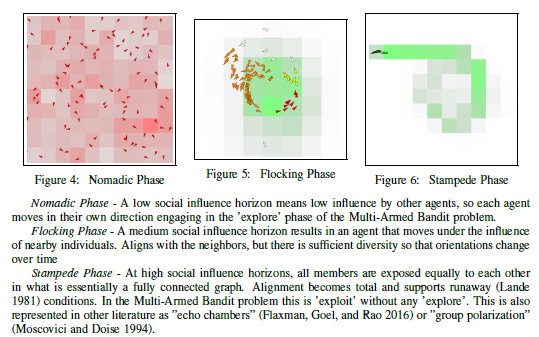
  • Need to generate nomadic, flocking, and stampede generated maps. Done! See below.
  • Redo the proposal so that the Tile View is the central navigation scheme with aspects for users, topics, ratings, etc. Done
  • Generated data for Aaron’s ML sessions. Planned upgrading my box so we can run things on the Titan card
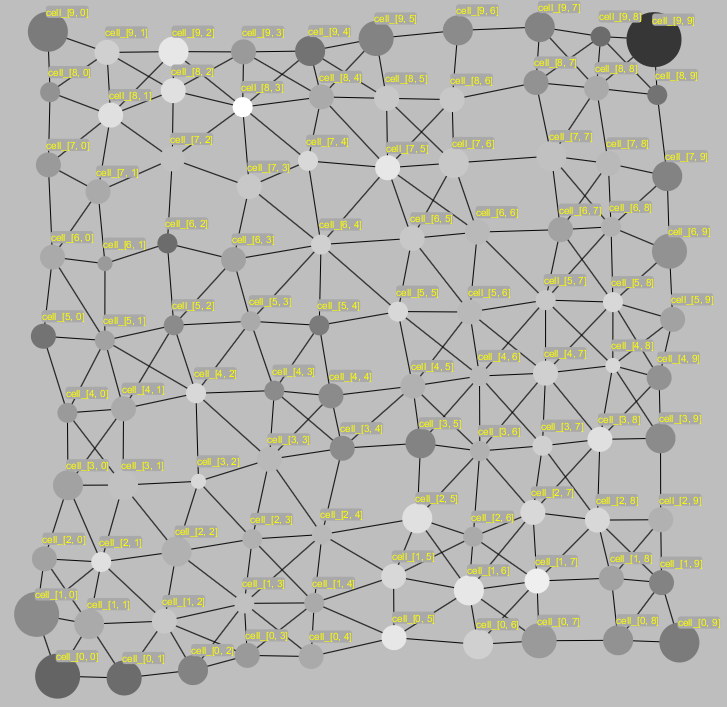
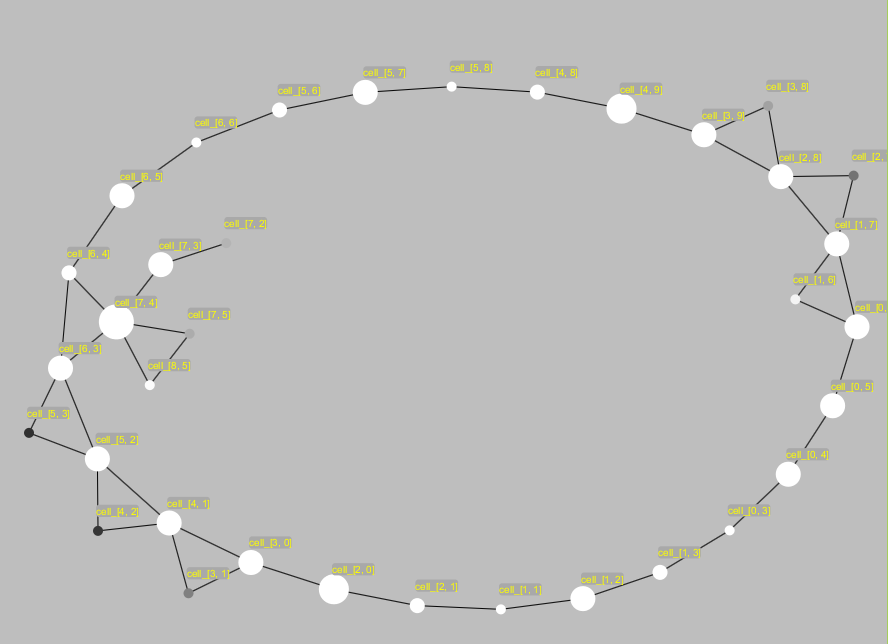
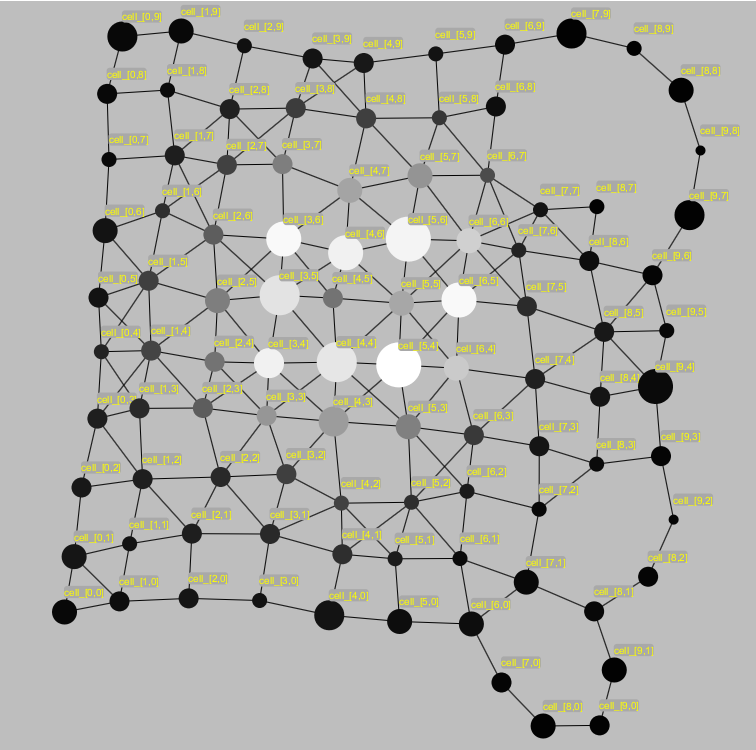
  • Some more results from the belief space mapping effort. Each map is constructed from a 100 sample run over the same 10×10 grid after the simulation stabilized:
    • Here’s a quick overview of the populations: ThreePopulations
    • Stable Nomad behavior map: nomad-stableGood overall coverage as you would expect. Some places have more visitors (the bright spots), but there are no gaps in the belief space.
    • Stable Flocking behavior map: flocking-stableWe can see gaps start to appear in the belief space, but the overall grid structure is still visible at the center of the network where the flock spent most of its time. This is also evident in the bright ring of nodes that represents the cells that the flock traversed while it was orbiting the center area.
    • Stable stampede behavior map: stampede-stableHere, the relationship of the trajectories to the underlying coordinate frame is completely lost. In this case, the boundary of the simulation was reflective, so the stampede bounces around the simulation space. The reason that there is a loop rather than a line is because the tight cluster of agents crossed its path at some point.
  • What could be interesting it to overlay the other graphs on the nomad-produced map. We could see the popular (exploitable) sections of the flocking population while also seeing the areas visited by the stampede. The assumption is that the stampede is engaged in untrustworthy behavior, so those parts would be marked as ‘dangerous’, while the flocking areas would marked as a region of ‘conventional wisdom’ or normative behavior.

Phil 1.2.18

7:00 – 3:30 ASRC MKT

  • Star wars link for Thursday
  • Selective Exposure to Misinformation: Evidence from the consumption of fake news during the 2016 U.S. presidential campaign
    • Andrew M. Guess 
    • Brendan Nyhan
    • Jason Reifler
    • Though some warnings about online “echo chambers” have been hyperbolic, tendencies toward selective exposure to politically congenial content are likely to extend to misinformation and to be exacerbated by social media platforms. We test this prediction using data on the factually dubious articles known as “fake news.” Using unique data combining survey responses with individual-level web trac histories, we estimate that approximately 1 in 4 Americans visited a fake news website from October 7-November 14, 2016. Trump supporters visited the most fake news websites, which were overwhelmingly pro-Trump. However, fake news consumption was heavily concentrated among a small group — almost 6 in 10 visits to fake news websites came from the 10% of people with the most conservative online information diets. We also find that Facebook was a key vector of exposure to fake news and that fact-checks of fake news almost never reached its consumers.
  • Via Kate Starbird: The Elusive Backfire Effect: Mass Attitudes’ Steadfast Factual Adherence
    • Can citizens heed factual information, even when such information challenges their partisan and ideological attachments? The “backfire effect,” described by Nyhan and Reifler (2010), says no: rather than simply ignoring factual information, presenting respondents with facts can compound their ignorance. In their study, conservatives presented with factual information about the absence of Weapons of Mass Destruction in Iraq became more convinced that such weapons had been found. The present paper presents results from five experiments in which we enrolled more than 10,100 subjects and tested 52 issues of potential backfire. Across all experiments, we found no corrections capable of triggering backfire, despite testing precisely the kinds of polarized issues where backfire should be expected. Evidence of factual backfire is far more tenuous than prior research suggests. By and large, citizens heed factual information, even when such information challenges their ideological commitments.
  • Stanford political scientist studies apocalyptic political rhetoric <- dimension reduction
    • Stanford political scientist Alison McQueen’s research shows that apocalyptic rhetoric can make wars, natural disasters, economic collapse and even the possibility of nuclear war easier to understand. But although it can rouse people to action, apocalyptic rhetoric also carries great peril.
    • Political Realism in Apocalyptic Times
  • The Concept of Narrative as a Fundamental for Human Agent-Based Modeling
    • This paper introduces the concept of narrative and its construction into the structure of agent-based modeling, as an effective mechanism for representation of stochastic behavior by agents in the context of social phenomena that are governed by fundamental random processes. A theoretical foundation is offered, citing authorities from the narrative community and related biological, sociological and psychological fields. The fundamental properties of narratives and their relationships are described, and potentially useful lines of further research are posited.
  • Automotive Pishkin-style pileup: http://digg.com/video/thirty-car-pile-up
  • Full read-through of the edited paper. Minor edits so far.
  • Back to the Belief Space proposal

Phil 1.1.18

8:00 – 12:00 ASRC MKT

  • Here’s hoping we don’t look back with longing on 2017. I fear that 2018 could be radioactively bad.
  • Working on WSC version of the paper. Finished markup, and am now adding in the changes. Done! Currently 15 pages. Need to trim the citations and shrink some figures

Phil 12.29.17

8:30 – 4:30 ASRC MKT

  • A spiffy blog that covers many of the things that I’m interested in, including knowledge diagramsthe scottbot irregular
  • News media literacy and conspiracy theory endorsement
    • Conspiracy theories flourish in the wide-open media of the digital age, spurring concerns about the role of misinformation in influencing public opinion and election outcomes. This study examines whether news media literacy predicts the likelihood of endorsing conspiracy theories and also considers the impact of literacy on partisanship. A survey of 397 adults found that greater knowledge about the news media predicted a lower likelihood of conspiracy theory endorsement, even for conspiracy theories that aligned with their political ideology.
  • Folding in Aaron’s comments – Done! Need to send a copy of the first draft to Wayne

Phil 12.28.12

8:30 – 4:30 ASRC MKT

  • Still sick. Nearing bronchitis?
  • Confessions of a Digital Nazi Hunter
  • Phenotyping of Clinical Time Series with LSTM Recurrent Neural Networks
    • We present a novel application of LSTM recurrent neural networks to multi label classification of diagnoses given variable-length time series of clinical measurements. Our method outperforms a strong baseline on a variety of metrics.
    • Scholar Cited by
      • Mapping Patient Trajectories using Longitudinal Extraction and Deep Learning in the MIMIC-III Critical Care Database
        • Electronic Health Records (EHRs) contain a wealth of patient data useful to biomedical researchers. At present, both the extraction of data and methods for analyses are frequently designed to work with a single snapshot of a patient’s record. Health care providers often perform and record actions in small batches over time. By extracting these care events, a sequence can be formed providing a trajectory for a patient’s interactions with the health care system. These care events also offer a basic heuristic for the level of attention a patient receives from health care providers. We show that is possible to learn meaningful embeddings from these care events using two deep learning techniques, unsupervised autoencoders and long short-term memory networks. We compare these methods to traditional machine learning methods which require a point in time snapshot to be extracted from an EHR.
  • Continuing on white paper
  • Moved the Flocking and Herding paper over to the WSC17 format for editing. Will need to move to the WSC18 format when that becomes available

Phil 12.27.17

8:00 – 4:00 ASRC MKT

  • Granted permission for the CHIIR18 DC.
  • Continuing on white paper. And we’ll see what Aaron has to say about the stampede paper today?
  • It occurs to be that it could make sense to read the trajectories in using the ARFF format. Looks straightforward, though I’d have to output each agent on an axis-by-axis basis. That would in turn mean that we’d have to save each ParticleStatement and save it out .
  • A new optimizer using particle swarm theory (1995)
    • The optimization of nonlinear functions using particle swarm methodology is described. Implementations of two paradigms are discussed and compared, including a recently developed locally oriented paradigm. Benchmark testing of both paradigms is described, and applications, including neural network training and robot task learning, are proposed. Relationships between particle swarm optimization and both artificial life and evolutionary computation are reviewed.
    • Cited by 12155

Phil 12.26.17

8:00 – 4:00 ASRC MKT

  • Gotta get a new keyboard
  • Working on the additional thoughts section. Add paragraph describing how the evolutionary benefits of groups are visible at nearly every level of interaction. However, with these benefits comes the additional burden of control. Evolution has provided mechanisms that are calibrated to match communication to the optimal(?) group behavior. This timeframe has been short-circuited by technology. Coordination based on the trust of a neighbor no longer works when the neighbor isn’t near.
    • Patchwork alignment?
    • Information and its use by animals in evolutionary ecology
      • Information is a crucial currency for animals from both a behavioural and evolutionary perspective. Adaptive behaviour relies upon accurate estimation of relevant ecological parameters; the better informed an individual, the better it can develop and adjust its behaviour to meet the demands of a variable world. Here, we focus on the burgeoning interest in the impact of ecological uncertainty on adaptation, and the means by which it can be reduced by gathering information, from both ‘passive’ and ‘responsive’ sources. Our overview demonstrates the value of adopting an explicitly informational approach, and highlights the components that one needs to develop useful approaches to studying information use by animals. We propose a quantitative framework, based on statistical decision theory, for analysing animal information use in evolutionary ecology. Our purpose is to promote an integrative approach to studying information use by animals, which is itself integral to adaptive animal behaviour and organismal biology.
    • Evolutionary Explanations for Cooperation
      • Natural selection favours genes that increase an organism’s ability to survive and reproduce. This would appear to lead to a world dominated by selfish behaviour. However, cooperation can be found at all levels of biological organisation: genes cooperate in genomes, organelles cooperate to form eukaryotic cells, cells cooperate to make multicellular organisms, bacterial parasites cooperate to overcome host defences, animals breed cooperatively, and humans and insects cooperate to build societies. Over the last 40 years, biologists have developed a theoretical framework that can explain cooperation at all these levels. Here, we summarise this theory, illustrate how it may be applied to real organisms and discuss future directions.
    • Thomas Valone (Scholar)
      • Much of Valone’s work in arid ecosystems has examined desertification and factors that affect the biodiversity. He is particularly interested in livestock effects on soil chemical and physical processes that then affect plant and animal populations. Valone’s examination of behavior is frequently centered on understanding how animals perceive their environment. Much of his behavioral work examines information use in social animals who differ from solitary individuals in that they can acquire public information to estimate the quality of resources by noting the activities of other individuals.
      • Group foraging, public information, and patch estimation
        • Public information is information about the quality of a patch that can be obtained by observing the foraging success of other individuals in that patch. I examine the influence of the use of public information on patch departure and foraging efficiency of group members. When groups depart a patch with the first individual to leave, the use of public information can prevent the underutilization of resource patches.
      • Public Information: From Nosy Neighbors to Cultural Evolution
        • Psychologists, economists, and advertising moguls have long known that human decision-making is strongly influenced by the behavior of others. A rapidly accumulating body of evidence suggests that the same is true in animals. Individuals can use information arising from cues inadvertently produced by the behavior of other individuals with similar requirements. Many of these cues provide public information about the quality of alternatives. The use of public information is taxonomically widespread and can enhance fitness. Public information can lead to cultural evolution, which we suggest may then affect biological evolution.
  • Get started on Polarization Game proposal. Include Moral Machine. Read the papers into LMN and started to poke at the structure.
  • Speaking of which, here’s a labeled map: LabeledMap
  • Which clearly provides more relational (map-ish) information than a word cloud using the same data: wordcloud

Phil 12.25.17

Was listening to On Being yesterday morning, where Krista Tippet was interviewing David Steindl-Rast. He made some interesting points about power hierarchies devolving into networks. But it also maid me wonder whether the terms for Trust and Awareness are being overloaded with meanings that we used to ascribe to Faith and Doubt. Need to look into that some more.

Detecting Bots on Russian Political Twitter

  • Automated and semiautomated Twitter accounts, bots, have recently gained significant public attention due to their potential interference in the political realm. In this study, we develop a methodology for detecting bots on Twitter using an ensemble of classifiers and apply it to study bot activity within political discussions in the Russian Twittersphere. We focus on the interval from February 2014 to December 2015, an especially consequential period in Russian politics. Among accounts actively Tweeting about Russian politics, we find that on the majority of days, the proportion of Tweets produced by bots exceeds 50%. We reveal bot characteristics that distinguish them from humans in this corpus, and find that the software platform used for Tweeting is among the best predictors of bots. Finally, we find suggestive evidence that one prominent activity that bots were involved in on Russian political Twitter is the spread of news stories and promotion of media who produce them.

Phil 12.22.17

7:00 – 4:000 ASRC MKT

  • Working on flocking and herding paper. I could be done with the first draft? Switched the format to ACM Journal.
  • Positive laws in constitutional government are designed to erect boundaries and establish channels of communication between men whose community is continually endangered by the new men born into it. With each new birth, a new beginning is born into the world, a new world has potentially come into being. The stability of the laws corresponds to the constant motion of all human affairs, a motion which can never end as long as men are born and die. The laws hedge in each new beginning and at the same time assure its freedom of movement, the potentiality of something entirely new and unpredictable; the boundaries of positive laws are for the political existence of man what memory is for his historical existence: they guarantee the pre-existence of a common world, the reality of some continuity which transcends the individual life span of each generation, absorbs all new origins and is nourished by them.Arendt, Hannah. The Origins of Totalitarianism (Harvest Book, Hb244) (p. 465). Houghton Mifflin Harcourt. Kindle Edition.

Phil 12.21.17

7:00 – 4:00 ASRC MKT

  • And now the days start to get longer!
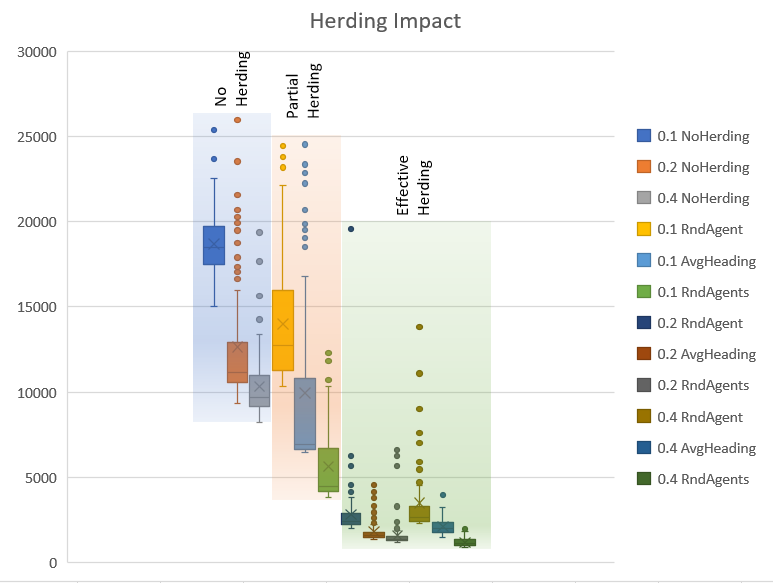
  • Working on flocking and herding paper. Adding in the adversarial herding parts. Spent a lot of time working on getting a chart that tells the herding story. I’m somewhat ok with this: HerdingImpact
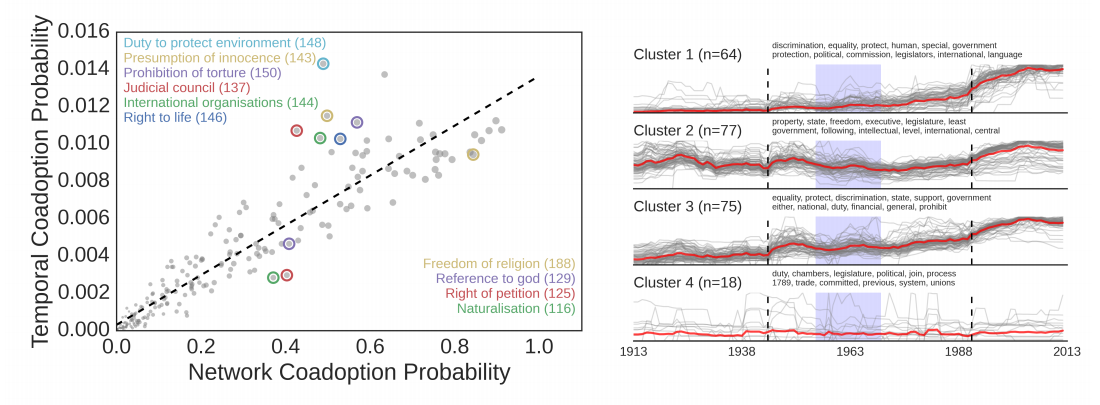
  • Some work on plotting norms using legal documents: Inferring Mechanisms for Global Constitutional Progress
    • Constitutions help define domestic political orders, but are known to be influenced by two international mechanisms: one that reflects global temporal trends in legal development, and another that reflects international network dynamics such as shared colonial history. We introduce the provision space; the growing set of all legal provisions existing in the world’s constitutions over time. Through this we uncover a third mechanism influencing constitutional change: hierarchical dependencies between legal provisions, under which the adoption of essential, fundamental provisions precedes more advanced provisions. This third mechanism appears to play an especially important role in the emergence of new political rights, and may therefore provide a useful roadmap for advocates of those rights. We further characterise each legal provision in terms of the strength of these mechanisms.
    • provisionSpace
  • A Lively Discussion, Even for KSJ: Edmond Awad on His ‘Moral Machine’
    • To collect vast amounts of data on human perspectives about such decisions, Awad and his team launched the Moral Machine website, in which visitors play an interactive game that presents them with a choice of two decisions in a variety of randomly generated crash scenarios. As in the trolley problem, the visitor must choose to swerve or stay the course, sacrificing either the people in the car or one group of pedestrians to save other pedestrians.
    • About Moral Machine
      • Recent scientific studies on machine ethics have raised awareness about the topic in the media and public discourse. This website aims to take the discussion further, by providing a platform for 1) building a crowd-sourced picture of human opinion on how machines should make decisions when faced with moral dilemmas, and 2) crowd-sourcing assembly and discussion of potential scenarios of moral consequence.
      • And this looks like it produced some really good marketing via news coverage
      • “We had four million users visit the website,” Awad said. “Three million of those actually completed the decision-making task, and they clicked on 37 million individual decisions. There’s also the survey that comes after, which is a little bit more work, and we still have over half a million survey responses.” The Scalable Cooperation group plans to publish the full results of the study in an upcoming paper.

Phil 12.20.17

7:00 – 5:00 ASRC MKT

  • Today’s Sunrise 7:23 AM and sunset 4:47 PM. Not a fan of winter.
  • Promoted the venues and journals post to its own page here.
  • Added The Emergence of Consensus: A Primer to the lit review. Nothing new in there, but it’s a fast overview with good references
  • Working on flocking and herding paper. Reasonable progress. Adding the herding parts and the self-driving car stampede. Finished first pass through methods, next is results.
  • Need to rerun the sim so that the heading and distance charts line up. Done!
  • Well, that’s pretty research-browser-ish: Inventing the “Google” for predictive analytics The company is Endor.com, and these pages are pretty informative (social physics) (jobs)
  • The Birth of A Conspiracy Theory.
    • Right after yesterday’s train derailment, a conspiracy theory was born, we tracked it in real time.

Phil 12.19.17

7:00 – 5:00 ASRC MKT

  • Trust, Identity Politics and the Media
    • Essential to a free and functioning democracy is an independent press, a crucial civil society actor that holds government to account and provides citizens access to the impartial information they need to make informed judgments, reason together, exercise their rights and responsibilities, and engage in collective action. In times of crisis, the media fulfills the vital role of alerting the public to danger and connecting citizens to rescue efforts, as Ushahidi has done in Kenya. Or, it can alert the international community to human rights abuses as does Raqqa is Being Slaughtered Silently. But, the very capabilities that allow the media to alert and inform, also allow it to sow division – as it did in Rwanda leading up to and during the genocide– by spreading untruths, and, through “dog whistles,” targeting ethnic groups and inciting violence against them. This panel will focus on two topics: the role of media as a vehicle for advancing or undermining social cohesion, and the use of media to innovate, organize and deepen understanding, enabling positive collective action.
      • Abdalaziz Alhamza, Co-Founder, Raqqa is Being Slaughtered Silently
      • Uzodinma Iweala, CEO and Editor-in-Chief, Ventures Africa; Author, Beasts of No Nation; Producer, Waiting for Hassana (moderator)
      • Ben Rattray, Founder and CEO, Change.org
      • Malika Saada Saar, Senior Counsel on Civil and Human Rights, Google
  • Continuing Consensus and Cooperation in Networked Multi-Agent Systems here Done! Promoted to phlog.
  • An Agent-Based Model of Indirect Minority Influence on Social Change and Diversity
    • The present paper describes an agent-based model of indirect minority influence. It examines whether indirect minority influence can lead to social change as a function of cognitive rebalancing, a process whereby related attitudes are affected when one attitude is changed. An attitude updating algorithm was modelled with minimal assumptions drawing on social psychology theories of indirect minority influence. Results revealed that facing direct majority influence, indirect minority influence along with cognitive rebalancing is a recipe for social change. Furthermore, indirect minority influence promotes and maintains attitudinal diversity in local ingroups and throughout the society. We discuss the findings in terms of social influence theories and suggest promising avenues for model extensions for theory building in minority influence and social change.
  • Ok, time to switch gears and start on the flocking paper. And speaking of which, is this a venue?
    • Winter Simulation Conference 2017 – INFORMS Meetings Browser times out right now, so is it still valid?
    • Created a new LaTex project, since this is a modification of the CHIIR paper and started to slot pieces in. It is *hard* switching gears. Leaving it in the sigchi format for now.
    • I went to change out the echo chamber distance from average with heading from average (which looks way better), but everything was zero in the spreadsheet. After poking around a bit, I was “fixing” the angle cosine to lie on (-1, 1), by forcing it to be 1.0 all the time. Fixed. EchoChamberAngle
  • Sprint planning. I’m on the hook for writing up the mapping white paper and strawman design

Phil 12.18.17

7:15 – 4:15 ASRC MKT

  • I’m having old iPhone problems. Trying a wipe and restart.
  • Exploring the ChestXray14 dataset: problems
    • Interesting article on using tagged datasets. What if the tags are wrong? Something to add to the RB is a random re-introduction of a previously tagged item to see if tagging remains consistent.
  • Continuing Consensus and Cooperation in Networked Multi-Agent Systems here
  • Visualizing the Temporal Evolution of Dynamic Networks (ACM MLG 2011)
    • Many developments have recently been made in mining dynamic networks; however, effective visualization of dynamic networks remains a significant challenge. Dynamic networks are typically visualized via a sequence of static graph layouts. In addition to providing a visual representation of the network topology at each time step, the sequence should preserve the “mental map” between layouts of consecutive time steps to allow a human to interpret the temporal evolution of the network and gain valuable insights that are difficult to convey by summary statistics alone. We propose two regularized layout algorithms for visualizing dynamic networks, namely dynamic multidimensional scaling (DMDS) and dynamic graph Laplacian layout (DGLL). These algorithms discourage node positions from moving drastically between time steps and encourage nodes to be positioned near other members of their group. We apply the proposed algorithms on several data sets to illustrate the benefit of the regularizers for producing interpretable visualizations.
    • These look really straightforward to implement. May be handy in the new flocking paper
  • Opinion and community formation in coevolving networks (Phys Review E)
    • In human societies, opinion formation is mediated by social interactions, consequently taking place on a network of relationships and at the same time influencing the structure of the network and its evolution. To investigate this coevolution of opinions and social interaction structure, we develop a dynamic agent-based network model by taking into account short range interactions like discussions between individuals, long range interactions like a sense for overall mood modulated by the attitudes of individuals, and external field corresponding to outside influence. Moreover, individual biases can be naturally taken into account. In addition, the model includes the opinion-dependent link-rewiring scheme to describe network topology coevolution with a slower time scale than that of the opinion formation. With this model, comprehensive numerical simulations and mean field calculations have been carried out and they show the importance of the separation between fast and slow time scales resulting in the network to organize as well-connected small communities of agents with the same opinion.
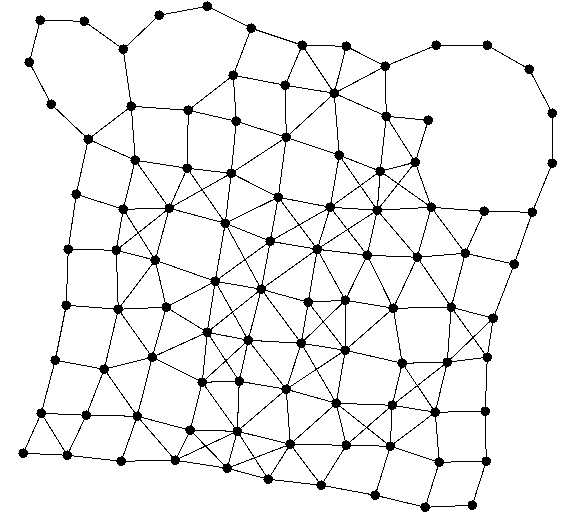
  • I can build maps from trajectories of agents through a labeled belief space: mapFromTrajectories
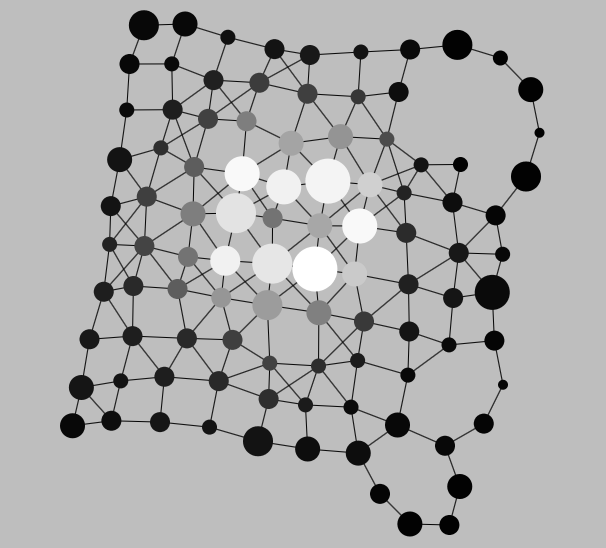
    • This would be analogous to building a map based on terms or topics used by people during multiple group polarization discussion. Densely connected central area where all the discussions begin, sparse ‘outer region’ where the poles live. In this case, you can clearly see the underlying grid that was used to generate the ‘terms’
  • Progress for today. Size is the average time spent ‘over’ a topic/term. Brightness is the number of distinct visitors: mapFromTrajectories2

Phil 12.17.17

Got accepted for the CHIIR DC but the paper was turned down. Overall good numbers (4-5) on the paper quality, but 3 on appropriateness. Basically, no one is interested in the study until there are human results. I think this line sums it up best:

  • I think the paper could have been rewritten as a shorter perspective or position paper if and only if the boids flocking model was left out.
  • Final Disposition: Weak reject because the lack of connection between model and reality
  • And really – this is a thing to pick at? I agree with a lot of the paper’s views, but I do not think Scott died because of an echo chamber. Scott’s death appears to have been the result of his failure to plan and prepare appropriately for arctic exploration. To which my response is ‘why was he not prepared?’

So, looking for venues/journals to publish the updated herding paper:

  • Journal of Computational Social Science
  • Ecosphere
    • The scope of Ecosphere is as broad as the science of ecology itself. The journal welcomes submissions from all sub-disciplines of ecological science, as well as interdisciplinary studies relating to ecology. The journal’s goal is to provide a rapid-publication, online-only, open-access alternative to ESA’s other journals, while maintaining the rigorous standards of peer review for which ESA publications are renowned.
  • Chaos: An Interdisciplinary Journal of Nonlinear Science is a peer-reviewed journal devoted to increasing the understanding of nonlinear phenomena and describing the manifestations in a manner comprehensible to researchers from a broad spectrum of disciplines. Chaos welcomes submission of original manuscripts on the full range of topics in the broadly interdisciplinary area of nonlinear science
  • Online Social Networks and Media
    • OSNEM is a peer-reviewed international journal that publishes high-quality scientific articles (both theoretical and experimental) and survey papers covering all aspects of OSNEM: from OSNEM protocols and applications to the use of data mined from OSNEM for modeling and understanding the human behavior in the cyber-physical world.
  • Physica A publishes research in the field of statistical mechanics and its applications.
    • Statistical mechanics sets out to explain the behaviour of macroscopic systemsby studying the statistical properties of their microscopic constituents. Applications of the techniques of statistical mechanics are widespread, and include: applications to physical systems such as solids, liquids and gases; applications to chemical and biological systems (colloids, interfaces, complex fluids, polymers and biopolymers, cell physics); and other interdisciplinary applications to for instance biological, economical and sociological systems.
  • Physical Review Letters
    • The world’s premier physics letter journal. It publishes short, high quality reports of significant and notable results in the full arc of fundamental and interdisciplinary physics research. PRL provides readers with the most influential developments and transformative ideas in physics with the goal of moving physics forward. We are the most cited physics journal — every two minutes someone cites a PRL. Authors gain high visibility, rapid publication, and broad dissemination of their work.
    • Found this by looking at the work of Andrea Baronchelli, who’s published some ABS work there
  • The ICPPMAS 2018: 20th International Conference on Principles and Practice of Multi-Agent Systems aims to bring together leading academic scientists, researchers and research scholars to exchange and share their experiences and research results on all aspects of Principles and Practice of Multi-Agent Systems. It also provides a premier interdisciplinary platform for researchers, practitioners and educators to present and discuss the most recent innovations, trends, and concerns as well as practical challenges encountered and solutions adopted in the fields of Principles and Practice of Multi-Agent Systems
    • Call for Papers
    • Abstracts/Full-Text Paper Submission Deadline: December 31, 2017
  • This looks promising: Winter Simulation Conference 2018 December 9-12 Göteborg Sweden
    • Conference Theme: Simulation for a Noble Cause. Simulation has been found useful for a range of scientific, engineering and business applications as evident by the papers presented at Winter Simulation Conferences over the past 50 years. Simulation has been employed to help noble causes too over the recent past but such efforts have received limited attention. The 2018 conference seeks to highlight applications of simulation for noble causes in addition to continuing to report leading developments and applications in other fields. We especially invite papers describing uses of simulation in efforts analyzing and addressing issues facing humanity including, but not limited to, reducing poverty and world hunger, social causes, social problems, improving natural environment, and disaster response.