Category Archives: Paper

Phil 2.13.19

7:00 – 7:00 ASRC IRAD TL

  • The Digital Clockwork Muse: A Computational Model of Aesthetic Evolution
    • This paper presents a computational model of creativity that attempts to capture within a social context an important aspect of the art and design process: the search for novelty. The computational model consists of multiple novelty-seeking agents that can assess the interestingness of artworks. The agents can communicate to particularly interesting artworks to others. Agents can also communicate to reward other agents for finding interesting artworks. We present the results from running experiments to investigate the effects of searching for different degrees of novelty on the artworks produced and the social organisation of the agents.
  • Upload the rest of Slack Tymora.
  • Create some txt files and feed into LMN. I’m thinking of by player and then by slice. Do this for both PHPBB and Slack data. Other ideas
    • Look into coherence measures
    • Are there economic models of attention? (ArXive)
    • TAACO is an easy to use tool that calculates 150 indices of both local and global cohesion, including a number of type-token ratio indices (including specific parts of speech, lemmas, bigrams, trigrams and more), adjacent overlap indices (at both the sentence and paragraph level), and connectives indices.
    • CRAT is an easy to use tool that includes over 700 indices related to lexical sophistication, cohesion and source text/summary text overlap. CRAT is particularly well suited for the exploration of writing quality as it relates to summary writing.
    •  TAALED is an analysis tool designed to calculate a wide variety of lexical diversity indices. Homographs are disambiguated using part of speech tags, and indices are calculated using lemma forms. Indices can also be calculated using all lemmas, content lemmas, or function lemmas. Also available is diagnostic output which allows the user to see how TAALED processed each word.
    • TAALES is a tool that measures over 400 classic and new indices of lexical sophistication, and includes indices related to a wide range of sub-constructs.  TAALES indices have been used to inform models of second language (L2) speaking proficiency, first language (L1) and L2 writing proficiency, spoken and written lexical proficiency, genre differences, and satirical language.
    • SEANCE is an easy to use tool that includes 254 core indices and 20 component indices based on recent advances in sentiment analysis. In addition to the core indices, SEANCE allows for a number of customized indices including filtering for particular parts of speech and controlling for instances of negation.
    • TAASSC is an advanced syntactic analysis tool. It measures a number of indices related to syntactic development. Included are classic indices of syntactic complexity (e.g., mean length of T-unit) and fine-grained indices of phrasal (e.g., number of adjectives per noun phrase) and clausal (e.g., number of adverbials per clause) complexity. Also included are indices that are grounded in usage-based perspectives to language acquisition that rely on frequency profiles of verb argument constructions.
    • GAMET is an easy to use tool that provides incidence counts for structural and mechanics errors in texts including grammar, spelling, punctuation, white space, and repetition errors. The tool also provides line output for the errors flagged in the text.
    • Comparison of Top 6 Python NLP Libraries
      • NLTK (Natural Language Toolkit) is used for such tasks as tokenization, lemmatization, stemming, parsing, POS tagging, etc. This library has tools for almost all NLP tasks.
      • Spacy is the main competitor of the NLTK. These two libraries can be used for the same tasks.
      • Scikit-learn provides a large library for machine learning. The tools for text preprocessing are also presented here.
      • Gensim is the package for topic and vector space modeling, document similarity.
      • The general mission of the Pattern library is to serve as the web mining module. So, it supports NLP only as a side task.
      • Polyglot is the yet another python package for NLP. It is not very popular but also can be used for a wide range of the NLP tasks.
  • Continuing writing Clockwork Muse review
  • Reading Attachment 1 to BAA FA8750-18-S-7014. “While white papers will be considered if received prior to 6:00 PM Eastern Standard Time (EST) on 30 Sep 2022, the following submission dates are suggested to best align with projected funding:” 
    • FY20 – 15 April 2019
  • AIMS/ML Meeting. Not sure what the outcome was, other than folks are covered for this quarter?
  • Long, wide ranging meeting with Wayne at Frisco’s. Gave him an account on Antibubbles.com. And it seems like we won first place for Blue Sky papers?
Phil 2.12.19

7:00 – 4:30 ASRC IRAD

  • Talked with Eric yesterday. going to write up a white paper about teachable AI. Two-three week effort
  • Speaking of which, The Evolved Transformer
    • Recent works have highlighted the strengths of the Transformer architecture for dealing with sequence tasks. At the same time, neural architecture search has advanced to the point where it can outperform human-designed models. The goal of this work is to use architecture search to find a better Transformer architecture. We first construct a large search space inspired by the recent advances in feed-forward sequential models and then run evolutionary architecture search, seeding our initial population with the Transformer. To effectively run this search on the computationally expensive WMT 2014 English-German translation task, we develop the progressive dynamic hurdles method, which allows us to dynamically allocate more resources to more promising candidate models. The architecture found in our experiments – the Evolved Transformer – demonstrates consistent improvement over the Transformer on four well-established language tasks: WMT 2014 English-German, WMT 2014 English-French, WMT 2014 English-Czech and LM1B. At big model size, the Evolved Transformer is twice as efficient as the Transformer in FLOPS without loss in quality. At a much smaller – mobile-friendly – model size of ~7M parameters, the Evolved Transformer outperforms the Transformer by 0.7 BLEU on WMT’14 English-German.
  • Finished running Tymora1 on Slack. Downloaded, though the download didn’t include research_notes. Hmmm. Looks like I can’t make it public, either.
  • Thinking about writing a tagging app, possibly with a centrality capability.
  • Started on the Teachable AI paper. The rough outline is there, and I have a good set of references.

Phil 11.13.18

7:00 – 4:30

  • Bills
  • Get oil change kit from Bob’s
  • Antonio paper – done first complete pass
  • Sent Wayne a note to see if he knows of any online D&D research. My results are thin (see below)
  • Nice chat with Aaron about mapping in the D&D space. We reiterated that the goal of the first paper should be able to do the following:
    • map a linear dungeon
    • map the belief space adjacent to the dungeon (PC debates to consensus on how to proceed)
    • map the space in an open dungeon
    • map the belief space adjacent to an open dungeon
    • Additionally, we should be able to show that diversity (or lack of it) is recognizable. A mixed party should have a broader lexical set than a party of only fighters
    • We also realized that mapping could be a very good lens for digital anthropology. An interesting follow on paper could be an examination of how users run through a known dungeon, such as The Tomb of Horrors to see how the map generates, and to compare that to a version where the names of the items have been disguised so it’s not obvious that it’s the same game
  • Ordered these books. There doesn’t seem to be much else in the space, so I’m curious about the reference section
    • Second Person: Role-Playing and Story in Games and Playable Media (MIT Press)
      • Games and other playable forms, from interactive fictions to improvisational theater, involve role playing and story—something played and something told. In Second Person, game designers, authors, artists, and scholars examine the different ways in which these two elements work together in tabletop role-playing games (RPGs), computer games, board games, card games, electronic literature, political simulations, locative media, massively multiplayer games, and other forms that invite and structure play.  Second Person—so called because in these games and playable media it is “you” who plays the roles, “you” for whom the story is being told—first considers tabletop games ranging from Dungeons & Dragons and other RPGs with an explicit social component to Kim Newman’s Choose Your Own Adventure-style novel Life’s Lottery and its more traditional author-reader interaction. Contributors then examine computer-based playable structures that are designed for solo interaction—for the singular “you”—including the mainstream hit Prince of Persia: The Sands of Time and the genre-defining independent production Façade. Finally, contributors look at the intersection of the social spaces of play and the real world, considering, among other topics, the virtual communities of such Massively Multiplayer Online Role Playing Games (MMORPGs) as World of Warcraft and the political uses of digital gaming and role-playing techniques (as in The Howard Dean for Iowa Game, the first U.S. presidential campaign game).
    • Third Person: Authoring and Exploring Vast Narratives (The MIT Press)
      • The ever-expanding capacities of computing offer new narrative possibilities for virtual worlds. Yet vast narratives—featuring an ongoing and intricately developed storyline, many characters, and multiple settings—did not originate with, and are not limited to, Massively Multiplayer Online Games. Thomas Mann’s Joseph and His Brothers, J. R. R. Tolkien’s Lord of the Rings, Marvel’s Spiderman, and the complex stories of such television shows as Dr. Who, The Sopranos, and Lost all present vast fictional worlds. Third Person explores strategies of vast narrative across a variety of media, including video games, television, literature, comic books, tabletop games, and digital art. The contributors—media and television scholars, novelists, comic creators, game designers, and others—investigate such issues as continuity, canonicity, interactivity, fan fiction, technological innovation, and cross-media phenomena. Chapters examine a range of topics, including storytelling in a multiplayer environment; narrative techniques for a 3,000,000-page novel; continuity (or the impossibility of it) in Doctor Who; managing multiple intertwined narratives in superhero comics; the spatial experience of the Final Fantasy role-playing games; World of Warcraft adventure texts created by designers and fans; and the serial storytelling of The Wire. Taken together, the multidisciplinary conversations in Third Person, along with Harrigan and Wardrip-Fruin’s earlier collections First Person and Second Person, offer essential insights into how fictions are constructed and maintained in very different forms of media at the beginning of the twenty-first century.
  • A Support System to Accumulate Interpretations of Multiple Story Timelines
    • The story base interpretation is subjectively summarised and segmented from the first-person viewpoint. However, we often need to objectively represent an entire image by integrated knowledge. Yet, this is a difficult task. We proposed a novel approach, named the synthetic evidential study (SES), for understanding and augmenting collective thought processes through substantiated thought by interactive media. In this study, we investigated the kind of data that can be obtained through the SES sessions as interpretation archives and whether the database is useful to understand multiple story timelines. For the purpose, we designed a machine-readable interpretation data format and developed support systems to create and provide data that are easy to understand. We conducted an experiment using the simulation of the projection phase in SES sessions. From the results, we suggested that a “meta comment” which was deepened interpretation comment by the others in the interpretation archives to have been posted when it was necessary to consider other participants’ interpretation to broaden their horizons before posting the comment. In addition, the construction of networks to represent the relationships between the interpretation comments enabled us to suggest the important comments by using the degree centrality.

Phil 11.12.18

7:00 – 7:00 ASRC PhD

  • Call Tim Ellis – done
  • Tags – done
  • Bills – nope, including MD EV paperwork -done
  • Get oil change kit from Bob’s – closed
  • Fika – done
  • Finish Similar neural responses predict friendship – Done!
  • Discrete hierarchical organization of social group sizes
    • The ‘social brain hypothesis’ for the evolution of large brains in primates has led to evidence for the coevolution of neocortical size and social group sizes, suggesting that there is a cognitive constraint on group size that depends, in some way, on the volume of neural material available for processing and synthesizing information on social relationships. More recently, work on both human and non-human primates has suggested that social groups are often hierarchically structured. We combine data on human grouping patterns in a comprehensive and systematic study. Using fractal analysis, we identify, with high statistical confidence, a discrete hierarchy of group sizes with a preferred scaling ratio close to three: rather than a single or a continuous spectrum of group sizes, humans spontaneously form groups of preferred sizes organized in a geometrical series approximating 3–5, 9–15, 30–45, etc. Such discrete scale invariance could be related to that identified in signatures of herding behaviour in financial markets and might reflect a hierarchical processing of social nearness by human brains.
  • Work on Antonio’s paper – good progress
  • Aaron added a lot of content to Belief Spaces, and we got together to discuss. Probably the best thing to come out of the discussion was an approach to the dungeons that at one end is an acyclic, directed, linear graph of connected nodes. The map will be a line, with any dilemma discussions connected with the particular nodes. At the other end is an open environment. In between are various open and closed graphs that we can classify with some level of complexity.
  • One of the things that might be interesting to examine is the distance between nodes, and how that affects behavior
  • Need to mention that D&D are among the oldest “digital residents” of the internet, with decades-old artifacts.

Phil 10.29.18

7:00 – 5:00 ASRC PhD

  • This looks like a Big Deal from Google – Working together to apply AI for social good
    • Google.org is issuing an open call to organizations around the world to submit their ideas for how they could use AI to help address societal challenges. Selected organizations will receive support from Google’s AI experts, Google.org grant funding from a $25M pool, credit and consulting from Google Cloud, and more.
    • We look forward to receiving your application on or before 11:59 p.m. PT on January 22, 2019, and we encourage you to apply early given that we expect high volume within the last few hours of the application window. Thank you!
    • Application Guide
    • Application form (can’t save, compose offline using guide, above)
  • Finished my writeup on Meltdown
  • Waiting for a response from Antonio
  • Meeting with Don at 9:00 to discuss BAA partnership.
    • Don is comfortable with being PI or co-PI, whichever works best. When we call technical POCs, we speak on his behalf
    • We discussed how he could participate with the development of theoretical models based on signed graph Laplacians creating structures that can move in belief space. He thinks the idea has merit, and can put in up to 30% of his time on mathematical models and writing
    • ASRC has already partnered with UMBC. ASRC would sub to UMBC
    • Ordinarily, IP is distributed proportional to the charged hours
    • Don has access to other funding vehicles that can support the Army BAA, but this would make things more complicated. These should be discussed if we can’t make a “clean” agreement that meets our funding needs
  • Pinged Brian about his defense.
  • Some weekend thoughts
    • Opinion dynamics systems describe how communication within a network occurs, but disregards the motion of the network as a whole. In cases when the opinions converge, the network is stiff.
    • Graph laplacians could model “othering” by having negative weights. It looks like these are known as signed laplacians, and useful to denote difference. The trick is to discover the equations of motion. How do you model a “social particle”?
  • Just discovered the journal Swarm Intelligence
    • Swarm Intelligence is the principal peer reviewed publication dedicated to reporting research and new developments in this multidisciplinary field. The journal publishes original research articles and occasional reviews on theoretical, experimental, and practical aspects of swarm intelligence. It offers readers reports on advances in the understanding and utilization of systems that are based on the principles of swarm intelligence. Emphasis is given to such topics as the modeling and analysis of collective biological systems; application of biological swarm intelligence models to real-world problems; and theoretical and empirical research in ant colony optimization, particle swarm optimization, swarm robotics, and other swarm intelligence algorithms. Articles often combine experimental and theoretical work.
  • I think it’s time to start ramping up on the text generation!
      • Updated my home box to tensorflow 1.11.0. Testing to see if it still works using the Deep Learning with Keras simple_nueral_net.py example. Hasn’t broken (yet…), but is taking a long time… Worked! And it’s much faster the second time. Don’t know why that is and can’t find anything online that talks to that.
        Loss: 0.5043802047491074
        Accuracy: 0.8782
        Time =  211.42629722093085
      • Found this keras example for generating Nietsche


    • Trying it out. This may be a overnight run… But it is running.
  • Had a good discussion with Aaron about how mapmaking could be framed as an ML problem. More writeup tomorrow.

Phil 10.25.18

7:00 – 5:00 ASRC PhD

  • Two unrelated thoughts.
    • A tangle could be made to heal if each transaction kept track of the transaction that verified it. If that transaction became unreachable for more than N heartbeats, then the transaction becomes unverified again. Not sure if the verifying transaction needs to track the other way. Being able to query the tangle for these “scars” seems like it should be useful.
    • A death threat is a unique form of dimension reduction, and should probably be tracked/tagged using both emergent topic modeling and hand-tuned heuristics
  • Tim Berners-Lee on the huge sociotechnical design challenge
    • “We must consciously decide on both of these, both the social side and the technical side,” he said. “[These platforms are] anthropogenic, made by people… Facebook and Twitter are anthropogenic. They’re made by people. They’ve coded by people. And the people who code them are constantly trying to figure out how to make them better.”
  • Antonio workshop paper
    • Today– Finished hierarchy section, didn’t start Black swan section
    • Took out the hybrid section and used Aaron’s writeup on research opportunities to set up the ensemble of hierarchies parts that Antonio is writing.
    • Tonight, send note to Antonio with thoughts on introduction and Hybrid section. Done. He’s taking a look.

Phil 10.24.18

7:00 – 6:00 ASRC PhD

  • So the BAA is only for academic work, which means partnering with UMD/UMBC. Need to talk to Don about setting this up. Some email this morning about how an NDA would be needed. I’m thinking that it would be restricted to A2P.
  • Inside the Moral Machine : When your experiment survey becomes reaction video material
    • On June 23rd, 2016, we deployed Moral Machine. The website was intended to be a mere companion survey to a paper being published that day. Thirty minutes later, it crashed.
    • Read this to see if there are ways of making JuryRoom go viral in similar ways
  • Respond to the Collective Intelligence journal proposal – done
  • Antonio workshop paper
    • Today – Finish market section – done
    • Thursday – Start hierarchy section, start Black swan section
      • Thursday night, send note to Antonio with thoughts on introduction and Hybrid section.
    • Friday – Hybrid section?
  • Hello, CoLa!
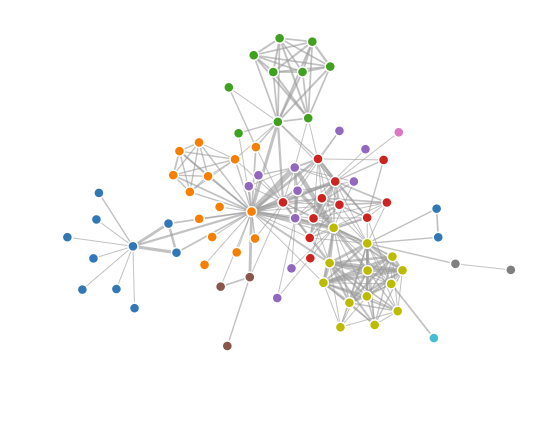
    • This network of character co-occurence in Les Misérables is positioned by constraint-based optimization using WebCoLa. Compare to d3-force.
    • This should be better than mass-spring-damper systems for building maps. Cola

Phil 10.23.18

7:00 – 4:30 ASRC PhD

  • Respond to the Collective Intelligence journal proposal
  • Antonio workshop paper
    • Today – Introduction, TaaS as a spectrum, part of the Market section
    • Wednesday – Hierarchy section
    • Thursday – Black swan section
      • Thursday night, send note to Antonio with thoughts on introduction and Hybrid section.
    • Friday – Hybrid section?
  • LSTM Encoder-Decoder with Adversarial Network for Text Generation from Keyword
    • Natural Language Generation (NLG), one of the areas of Natural Language Processing (NLP), is a difficult task, but it is also important because it applies to our lives. So far, there have been various approaches to text generation, but in recent years, approaches using artificial neural networks have been used extensively. We propose a model for generating sentences from keywords using Generative Adversarial Network (GAN) composed of a generator and a discriminator among these artificial neural networks. Specifically, the generator uses the Long Short-Term Memory (LSTM) Encoder-Decoder structure, and the discriminator uses the bi-directional LSTM with self-attention. Also, the keyword for input to the encoder of the generator is input together with two words similar to oneself. This method contributes to the creation of sentences containing words that have similar meanings to the keyword. In addition, the number of unique sentences generated increases and diversity can be increased. We evaluate our model with BLEU Score and loss value. As a result, we can see that our model improves the performance compared to the baseline model without an adversarial network.

Phil 10.22.18

7:00 – 5:30 ASRC PhD

      • Need to finish workshop paper this week
      • Jeff Atwood said I should look at 10 year old code to frighten myself and found a permuter class that could be used for hyperparameter tuning! It’s here:
        trunk/Java_folders/Projects/EntryRelationDb/src/main/java/com/edgeti/EntryRelationDb/Permutations.java
      • Fika
      • Meeting with Wayne.
        • We have a 12% chance of getting in the iConference, so don’t expect much. On the other hand, that opens up content for Antonio’s paper?


Phil 10.19.18

Phil 7:00 – 3:30 ASRC PhD

  • Sprint review
  • Reading Meltdown: Why our systems fail and What we can do about it, and I found some really interesting work that relates to social conformity, flocking, stampeding and nomadic behaviors:
    • We show that a deviation from the group opinion is regarded by the brain as a punishment,” said the study’s lead author, Vasily Klucharev. And the error message combined with a dampened reward signal produces a brain impulse indicating that we should adjust our opinion to match the consensus. Interestingly, this process occurs even if there is no reason for us to expect any punishment from the group. As Klucharev put it, “This is likely an automatic process in which people form their own opinion, hear the group view, and then quickly shift their opinion to make it more compliant with the group view.” (Page 154)
      • Reinforcement Learning Signal Predicts Social Conformity
        • Vasily Klucharev
        • We often change our decisions and judgments to conform with normative group behavior. However, the neural mechanisms of social conformity remain unclear. Here we show, using functional magnetic resonance imaging, that conformity is based on mechanisms that comply with principles of reinforcement learning. We found that individual judgments of facial attractiveness are adjusted in line with group opinion. Conflict with group opinion triggered a neuronal response in the rostral cingulate zone and the ventral striatum similar to the “prediction error” signal suggested by neuroscientific models of reinforcement learning. The amplitude of the conflict-related signal predicted subsequent conforming behavioral adjustments. Furthermore, the individual amplitude of the conflict-related signal in the ventral striatum correlated with differences in conforming behavior across subjects. These findings provide evidence that social group norms evoke conformity via learning mechanisms reflected in the activity of the rostral cingulate zone and ventral striatum.
    • When people agreed with their peers’ incorrect answers, there was little change in activity in the areas associated with conscious decision-making. Instead, the regions devoted to vision and spatial perception lit up. It’s not that people were consciously lying to fit in. It seems that the prevailing opinion actually changed their perceptions. If everyone else said the two objects were different, a participant might have started to notice differences even if the objects were identical. Our tendency for conformity can literally change what we see. (Page 155)
      • Gregory Berns
        • Dr. Berns specializes in the use of brain imaging technologies to understand human – and now, canine – motivation and decision-making.  He has received numerous grants from the National Institutes of Health, National Science Foundation, and the Department of Defense and has published over 70 peer-reviewed original research articles.
      • Neurobiological Correlates of Social Conformity and Independence During Mental Rotation
        • Background

          When individual judgment conflicts with a group, the individual will often conform his judgment to that of the group. Conformity might arise at an executive level of decision making, or it might arise because the social setting alters the individual’s perception of the world.

          Methods

          We used functional magnetic resonance imaging and a task of mental rotation in the context of peer pressure to investigate the neural basis of individualistic and conforming behavior in the face of wrong information.Results

          Conformity was associated with functional changes in an occipital-parietal network, especially when the wrong information originated from other people. Independence was associated with increased amygdala and caudate activity, findings consistent with the assumptions of social norm theory about the behavioral saliency of standing alone.

          Conclusions

          These findings provide the first biological evidence for the involvement of perceptual and emotional processes during social conformity.

        • The Pain of Independence: Compared to behavioral research of conformity, comparatively little is known about the mechanisms of non-conformity, or independence. In one psychological framework, the group provides a normative influence on the individual. Depending on the particular situation, the group’s influence may be purely informational – providing information to an individual who is unsure of what to do. More interesting is the case in which the individual has definite opinions of what to do but conforms due to a normative influence of the group due to social reasons. In this model, normative influences are presumed to act through the aversiveness of being in a minority position
      • A Neural Basis for Social Cooperation
        • Cooperation based on reciprocal altruism has evolved in only a small number of species, yet it constitutes the core behavioral principle of human social life. The iterated Prisoner’s Dilemma Game has been used to model this form of cooperation. We used fMRI to scan 36 women as they played an iterated Prisoner’s Dilemma Game with another woman to investigate the neurobiological basis of cooperative social behavior. Mutual cooperation was associated with consistent activation in brain areas that have been linked with reward processing: nucleus accumbens, the caudate nucleus, ventromedial frontal/orbitofrontal cortex, and rostral anterior cingulate cortex. We propose that activation of this neural network positively reinforces reciprocal altruism, thereby motivating subjects to resist the temptation to selfishly accept but not reciprocate favors.
  • Working on Antonio’s paper. I think I’ve found the two best papers to use for the market system. It turns out that freight has been doing this for about 20 years. Agent simulation and everything

Phil 10.18.18

7:00 – 9:00, 12:00 – ASRC PhD

  • Reading the New Yorker piece How Russia Helped Swing the Election for Trump, about Kathleen Hall Jamieson‘s book Cyberwar: How Russian Hackers and Trolls Helped Elect a President—What We Don’t, Can’t, and Do Know. Some interesting points with respect to Adversarial Herding:
    • Jamieson’s Post article was grounded in years of scholarship on political persuasion. She noted that political messages are especially effective when they are sent by trusted sources, such as members of one’s own community. Russian operatives, it turned out, disguised themselves in precisely this way. As the Times first reported, on June 8, 2016, a Facebook user depicting himself as Melvin Redick, a genial family man from Harrisburg, Pennsylvania, posted a link to DCLeaks.com, and wrote that users should check out “the hidden truth about Hillary Clinton, George Soros and other leaders of the US.” The profile photograph of “Redick” showed him in a backward baseball cap, alongside his young daughter—but Pennsylvania records showed no evidence of Redick’s existence, and the photograph matched an image of an unsuspecting man in Brazil. U.S. intelligence experts later announced, “with high confidence,” that DCLeaks was the creation of the G.R.U., Russia’s military-intelligence agency.
    • Jamieson argues that the impact of the Russian cyberwar was likely enhanced by its consistency with messaging from Trump’s campaign, and by its strategic alignment with the campaign’s geographic and demographic objectives. Had the Kremlin tried to push voters in a new direction, its effort might have failed. But, Jamieson concluded, the Russian saboteurs nimbly amplified Trump’s divisive rhetoric on immigrants, minorities, and Muslims, among other signature topics, and targeted constituencies that he needed to reach. 
  • Twitter released IRA dataset (announcement, archive), and Kate Starbird’s group has done some preliminary analysis
  • Need to do something about the NESTA Call for Ideas, which is due “11am on Friday 9th November
  • Continuing with Market-Oriented Programming
    • Some thoughts on what the “cost” for a trip can reference
      • Passenger
        • Ticket price
          • provider: Current price, refundability, includes taxes
            • carbon
            • congestion
            • other?
          • consumer: Acceptable range
        • Travel time
        • Departure time
        • Arrival time (plus arrival time confidence)
        • comfort (legroom, AC)
        • Number of stops (related to convenience)
        • Number of passengers
        • Time to wait
        • Externalities like airport security, which adds +/- 2 hours to air travel
      • Cargo
        • Divisibility (ship as one or more items)
        • Physical state for shipping (packaged, indivisible solid, fluid, gas)
          • Waste to food grade to living (is there a difference between algae and cattle? Pets? Show horses?
          • Refrigerated/heated
          • Danger
          • Stability/lifespan
          • weight
      • Aggregators provide simpler combinations of transportation options
    • Any exchange that supports this format should be able to participate. Additionally, each exchange should contain a list of other exchanges that a consumer can request, so we don’t need another level of hierarchy. Exchanges could rate other exchanges as a quality measure
      • It also occurs to me that there could be some kind of peer-to-peer or mesh network for degraded modes. A degraded mode implies a certain level of emergency, which would affect the (now small-scale) allocation of resources.
    • Some stuff about Mobility as a Service. Slide deck (from Canada Intelligent Transportation Service), and an app (Whim)
  • PSC AI/ML working group 9:00 – 12:00, plus writeup
    • PSC will convene a working group meeting on Thursday, Oct. 18 from 9am – 10am to identify actions and policy considerations related to advancing the use of AI solutions in government. Come prepared to share your ideas and experience. We would welcome your specific feedback on these questions:
      • How can PSC help make the government a “smarter buyer” when it comes to AI/ML?
      • How are agencies effectively using AI/ML today?
      • In what other areas could these technologies be deployed in government today?
        • Looking for bad sensors on NOAA satellites
      • What is the current federal market and potential future market for AI/ML?
      • Notes:
        • How to help our members – federal contracts. Help make the federal market frictionless
        • Kevin – SmartForm? What are the main gvt concerns? Is it worry about False positives?
          • Competitiveness – no national strategy
          • Appropriate use, particularly law enforcement
          • Robotic Process Automation (RPA) Security, Compliancy, and adoption. Compliancy testing.
          • Data trust. Humans make errors. When ML makes the same errors, it’s worse.
        • A system that takes time to get accurate watching people perform is not the kind of system that the government can buy.
          • This implies that there has to be immediate benefit, and can have the possibility of downstream benefit.
        • Dell would love to participate (in what?) Something about cloud
        • Replacing legacy processes with better approaches
        • Fedramp-like compliance mechanism for AI. It is a requirement if it is a cloud service.
        • Perceived, implicit bias is the dominant narrative on the government side. Specific applications like facial recognition
        • Take a look at all the laws that might affect AI, to see how the constraints are affecting adoption/use with an eye towards removing barriers
        • Chris ?? There isn’t a very good understanding or clear linkage between the the promise and the current problems, such as staffing, tagged data, etc
        • What does it mean to be reskilled and retrained in an AI context?
        • President’s Management Agenda
        • The killer app is cost savings, particularly when one part of government is getting a better price than another part.
        • Federal Data Strategy
        • Send a note to Kevin about data availability. The difference between NOAA sensor data (clean and abundant), vs financial data, constantly changing spreadsheets that are not standardized. Maybe the creation of tools that make it easier to standardize data than use artisanal (usually Excel-based) solutions. Wrote it up for Aaron to review. It turned out to be a page.

Phil 10.17.18

7:00 – 4:00 Antonio Workshop

Phil 10.9.18

7:00 – 4:00 ASRC BD

  • Drive to work in Tesla. Ride to pick up Porsche lunch-ish. Drive home with bike. Ride to work. Drive home with bike. Who knew that the Towers of Hanoi would be such practical training?
  • Finish Antonio response and send it off. I think it needs a discussion of the structure of the paper and who is responsible for which section to be complete.
  • Artificial Intelligence and Social Simulation: Studying Group Dynamics on a Massive Scale
    • Recent advances in artificial intelligence and computer science can be used by social scientists in their study of groups and teams. Here, we explain how developments in machine learning and simulations with artificially intelligent agents can help group and team scholars to overcome two major problems they face when studying group dynamics. First, because empirical research on groups relies on manual coding, it is hard to study groups in large numbers (the scaling problem). Second, conventional statistical methods in behavioral science often fail to capture the nonlinear interaction dynamics occurring in small groups (the dynamics problem). Machine learning helps to address the scaling problem, as massive computing power can be harnessed to multiply manual codings of group interactions. Computer simulations with artificially intelligent agents help to address the dynamics problem by implementing social psychological theory in data-generating algorithms that allow for sophisticated statements and tests of theory. We describe an ongoing research project aimed at computational analysis of virtual software development teams.
    • This appears to be a simulation/real world project that models GitHub groups
  • Continue BAA work? I need to know what Matt’s found out about the topic.
    • Some good discussion. Got his email of notes from his meeting with Steve
    • Created a “Disruptioneering technical” template
    • Copied template and stated filling in sections for technical
  • DARPA announced its new initiative, AI Next, which will invest $2 billion in AI R&D to explore how machines can acquire human-like communication and reasoning capabilities, with the ability to recognize new situations and environments and adapt to them.” Since fiscal 2017, DARPA has stepped up its investment in artificial intelligence by almost 50 percent, from $307 million to $448 million.
  • DARPA’s move follows the Pentagon’s June decision to launch a $1.7 billion Joint Artificial Intelligence Center, or JAIC (pronounced “Jake”), to promote collaboration on AI-related R&D among military service branches, the private sector, and academia. The challenge is to transform relatively smaller contracts and some prototype systems development into large scale field deployment.

Phil 10.8.18

7:00 – 12:00, 2:00 – 5:00 ASRC Research

  • Finish up At Home in the Universe notes – done!
  • Get started on framing out Antonio’s paper – good progress!
    • Basically, Aaron and I think there is a spectrum of interaction that can occur in these systems. At one end is some kind of market, where communication is mediated through price, time, and convenience to the transportation user. At the other is a more top down, control system way of dealing with this. NIST RCS would be an example of this. In between these two extremes are control hierarchies that in turn interact through markets
  • Wrote up some early thoughts on how simulation and machine learning can be a thinking fast and slow solution to understandable AI