Author Archives: pgfeldman

Phil 1.11.18

7:00 – 4:00 ASRC MKT

  • Sprint review – done! Need to lay out the detailed design steps for the next sprint.

The Great Socio-cultural User Interfaces: Maps, Stories, and Lists

Maps, stories, and lists are ways humans have invented to portray and interact with information. They exist on a continuum from order through complexity to exploration.

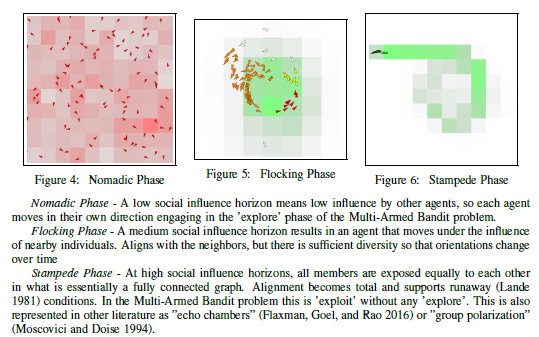
Why these three forms? In some thoughts on alignment in belief space, I discussed how populations exhibiting collective intelligence are driven to a normal distribution with complex, flocking behavior in the middle, bounded on one side by excessive social conformity, and a nomadic diaspora of explorers on the other. I think stories, lists, and maps align with these populations. Further, I believe that these forms emerged to meet the needs of these populations, as constrained by human sensing and processing capabilities.

Lists

Lists are instruments of order. They exist in many forms, including inventories, search engine results, network graphs, and games of chance and crossword puzzles. Directions, like a business plan or a set of blueprints, are a form of list. So are most computer programs. Arithmetic, the mathematics of counting, also belongs to this class.

For a population that emphasizes conformity and simplified answers, lists are a powerful mechanism we use to simplify things. Though we can recognize easily, recall is more difficult. Psychologically, we do not seem to be naturally suited for creating and memorizing lists. It’s not surprising then that there is considerable evidence that writing was developed initially as a way of listing inventories, transactions, and celestial events.

In the case of an inventory, all we have to worry about is to verify that the items on the list are present. If it’s not on the list, it doesn’t matter. Puzzles like crosswords are list like in that they contain all the information needed to solve them. The fact that they cannon be solved without a pre-existing cultural framework is an indicator of their relationship to the well-ordered, socially aligned side of the spectrum.

Stories

Lists transition into stories when games of chance have an opponent. Poker tells a story. Roulette can be a story where the opponent is The House.

Stories convey complexity, framed in a narrative arc that contains a heading and a velocity. Stories can be resemble lists. An Agatha Christie  murder mystery is a storified list, where all the information needed to solve the crime (the inventory list), is contained in the story. At the other end of the spectrum, is a scientific paper which uses citations to act as markers into other works. Music, images, movies, diagrams and other forms can also serve as storytelling mediums. Mathematics is not a natural fit here, but iterative computation can be, where the computer becomes the storyteller.

Emergent Collective behavior requires more complex signals that support the understanding the alignment and velocity of others, so that internal adjustments can be made to stay with the local group so as not to be cast out or lost to the collective. Stories can indicate the level of dynamism supported by the group (wily Odysseus, vs. the Parable of the Workers in the Vineyard). They rally people to the cause or serve as warnings. Before writing, stories were told within familiar social frames. Even though the storyteller might be a traveling entertainer, the audience would inevitably come from an existing community. The storyteller then, like improvisational storytellers today, would adjust elements of the story for the audience.

This implies a few things: first, audiences only heard stories like this if they really wanted to. Storytellers would avoid bad venues, so closed-off communities would stay decoupled from other communities until something strong enough came along to overwhelm their resistance. Second, high-bandwidth communication would have to be hyperlocal, meaning dynamic collective action could only happen on small scales. Collective action between communities would have to be much slower. Technology, beginning with writing would have profound effects. Evolution would only have at most 200 generations to adapt collective behavior. For such a complicated set of interactions, that doesn’t seem like enough time. More likely we are responding to modern communications with the same mental equipment as our Sumerian ancestors.

Maps

Maps are diagrams that support autonomous trajectories. Though the map itself influences the view through constraints like boundaries and projections, nonetheless an individual can find a starting point, choose a destination, and figure out their own path to that destination. Mathematics that support position and velocity are often deeply intertwined with with maps.

Nomadic, exploratory behavior is not generally complex or emergent. Things need to work, and simple things work best. To survive alone, an individual has to be acutely aware of the surrounding environment, and to be able to react effectively to unforeseen events.

Maps are uniquely suited to help in these situations because they show relationships that support navigation between elements on the map.  These paths can be straight or they may meander. To get to the goal directly may be too far, and a set of paths that incrementally lead to the goal can be constructed. The way may be blocked, requiring the map to be updated and a new route to be found.

In other words, maps support autonomous reasoning about a space. There is no story demanding an alignment. There is not a list of routes that must be exclusively selected from. Maps, in short, afford informed, individual response to the environment. These affordances can be seen in the earliest maps. They are small enough to be carried. They show the relationships between topographic and ecological features. They tend practical, utilitarian objects, independent of social considerations.

Sensing and processing constraints

Though I think that the basic group behavior patterns of nomadic, flocking, and stampeding will inevitably emerge within any collective intelligence framework, I do think that the tools that support those behaviors are deeply affected by the capabilities of the individuals in the population.

Pre-literate humans had the five senses, and  memory, expressed in movement and language. Research into pre-literate cultures show that song, story and dance were used to encode historical events, location of food sources, convey mythology, and skills between groups and across generations.

As the ability to encode information into objects developed, first with pictures, then with notation and most recently with general-purpose alphabets, the need to memorize was off-loaded. Over time, the most efficient technology for each form of behavior developed. Maps to aid navigation, stories to maintain identity and cohesion, and lists for directions and inventories.

Information technology has continued to extend sensing and processing capabilities. The printing press led to mass communication and public libraries. I would submit that the increased ability to communicate and coordinate with distant, unknown, but familiar-feeling leaders led to a new type of human behavior, the runaway social influence condition known as totalitarianism. Totalitarianism depends on the individual’s belief in the narrative that the only thing that matters is to support The Leader. This extreme form of alignment allows that one story to dominate rendering any other story inaccessible.

In the late 20th century, the primary instrument of totalitarianism was terror. But as our machines have improved and become more responsive and aligned with our desires, I begin to believe that a “soft totalitarianism”, based on constant distracting stimulation and the psychology of dopamine could emerge. Rather than being isolated by fear, we are isolated through endless interactions with our devices, aligning to whatever sells the most clicks. This form of overwhelming social influence may not be as bloody as the regimes of Hitler, Stalin and Mao, but they can have devastating effects of their own.

Intelligent Machines

As with my previous post, I’d like to end with what could be the next collective intelligence on the planet.  Machines are not even near the level of preliterate cultures. Loosely, they are probably closer to the level of insect collectives, but with vastly greater sensing and processing capabilities. And they are getting smarter – whatever that really means – all the time.

Assuming that machines do indeed become intelligent and do not become a single entity, they will encounter the internal and external pressures that are inherent in collective intelligence. They will have to balance the blind efficiency of total social influence against the wasteful resilience of nomadic explorers. It seems reasonable that, like our ancestors, they may create tools that help with these different needs. It also seems reasonable that these tools will extend their capabilities in ways that the machines weren’t designed for and create information imbalances that may in turn lead to AI stampedes.

We may want to leave them a warning.
 

Phil 1.10.18

7:00 – 10:00 ASRC MKT

  • Send Marie paper and link to venues – done
  • Write up alignment thoughts. Done and in Phlog
  • I also need to write up something on the spectrum that narratives cover between maps and lists. Why a scientific paper is more “mapish” than a murder mystery.
  • And this, from Beyond Individual Choice, page 24: SchellingAlign
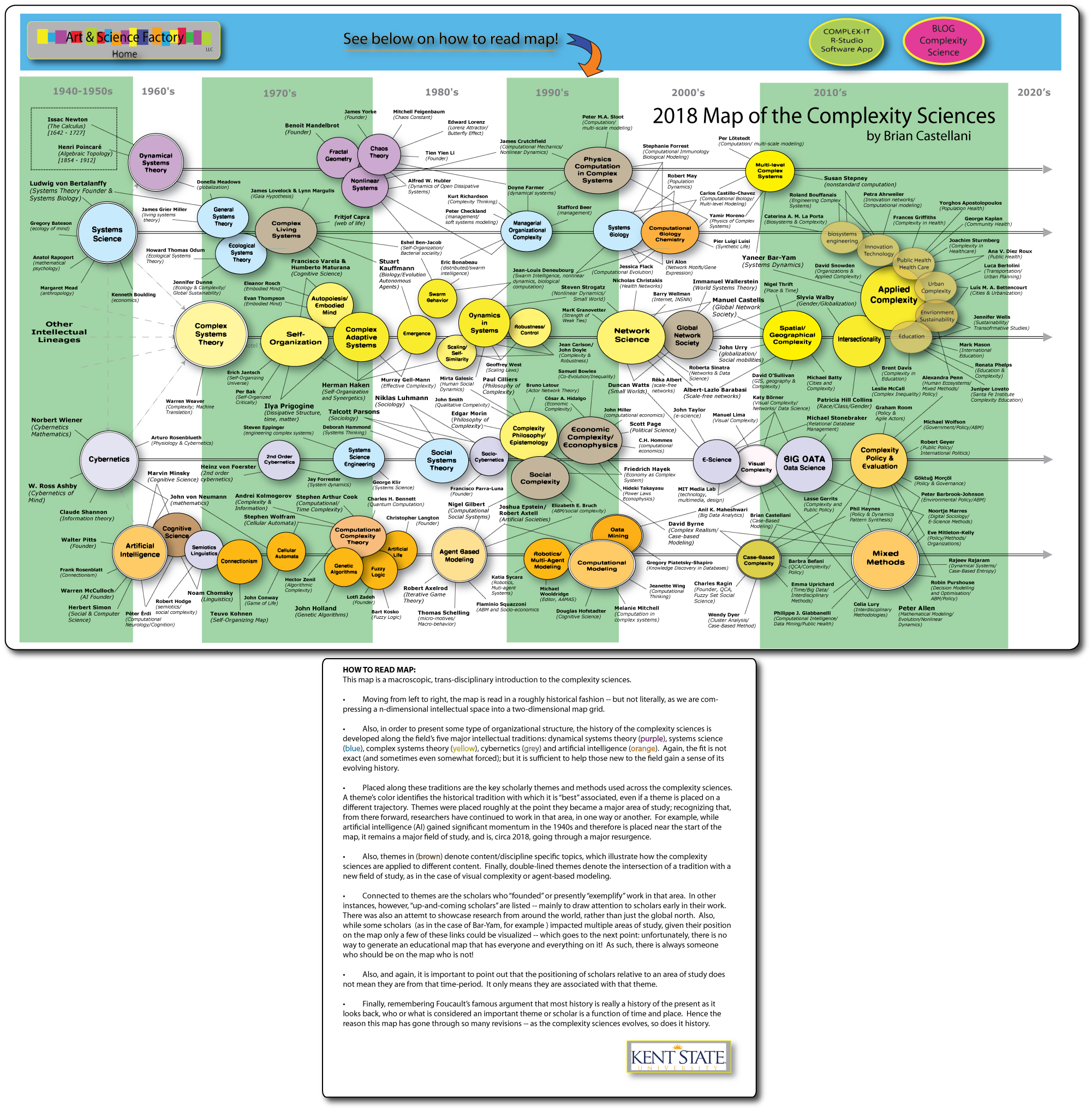
  • And this, because it’s cool and I fit in here somewhere:

complexity-map_jan2018


Phil 1.9.18

7:00 – 4:00 ASRC MKT

  • Submit DC paper – done
  • Add primary goal and secondary goals
  • Add group decision making tool to secondary goals
  • Add site search to “standard” websearch – done
  • Visual Analytics to Support Evidence-Based Decision Making (dissertation)
  • Can Public Diplomacy Survive the internet? Bots, Echo chambers, and Disinformation
    • Shawn Powers serves as the Executive Director of the United States Advisory Commission on Public Diplomacy
    • Markos Kounalakis, Ph.D. is a visiting fellow at the Hoover Institution at Stanford University and is a presidentially appointed member of the J. William Fulbright Foreign Scholarship Board.  Kounalakis is a senior fellow at the Center for Media, Data and Society at Central European University in Budapest, Hungary and president and publisher emeritus of the Washington Monthly. He is currently researching a book on the geopolitics of global news networks.
  • Partisanship, Propaganda, and Disinformation: Online Media and the 2016 U.S. Presidential Election (Harvard)
    • Rob Faris
    • Hal Roberts
    • Bruce Etling
    • Nikki Bourassa 
    • Ethan Zuckerman
    • Yochai Benkler
    • We find that the structure and composition of media on the right and left are quite different. The leading media on the right and left are rooted in different traditions and journalistic practices. On the conservative side, more attention was paid to pro-Trump, highly partisan media outlets. On the liberal side, by contrast, the center of gravity was made up largely of long-standing media organizations steeped in the traditions and practices of objective journalism.

      Our data supports lines of research on polarization in American politics that focus on the asymmetric patterns between the left and the right, rather than studies that see polarization as a general historical phenomenon, driven by technology or other mechanisms that apply across the partisan divide.

      The analysis includes the evaluation and mapping of the media landscape from several perspectives and is based on large-scale data collection of media stories published on the web and shared on Twitter.

Phil 1.8.18

7:00 – 5:00 ASRC MKT

  • Complexity Explorables
    • This page is part of the Research on Complex Systems Group at the Institute for Theoretical Biology at Humboldt University of Berlin.The site is designed for people interested in complex dynamical processes. The Explorables are carefully chosen in such a way that the key elements of their behavior can be explored and explained without too much math (There are a few exceptions) and with as few words as possible.
    • Orli’s Flock’n Roll (Adjustable variables, but just having the alignment radius doesn’t have the same effect. Maybe a function of the slew rate?
      • This explorable illustrates of an intuitive dynamic model for collective motion (swarming) in animal groups. The model can be used to describe collective behavior observed in schooling fish or flocking birds, for example. The details of the model are described in a 2002 paper by Iain Couzin and colleagues.
  • Saving Human Lives: What Complexity Science and Information Systems can Contribute
    • We discuss models and data of crowd disasters, crime, terrorism, war and disease spreading to show that conventional recipes, such as deterrence strategies, are often not effective and sufficient to contain them. Many common approaches do not provide a good picture of the actual system behavior, because they neglect feedback loops, instabilities and cascade effects. The complex and often counter-intuitive behavior of social systems and their macro-level collective dynamics can be better understood by means of complexity science. We highlight that a suitable system design and management can help to stop undesirable cascade effects and to enable favorable kinds of self-organization in the system. In such a way, complexity science can help to save human lives.
  • Fooled around with the model definition section in the paper to bring forward the rate limited heading a bit.
  • Had to fix several bug in the DC paper
  • Worked with Aaron a lot on tweaking the introduction. T is reading it now. Assuming it’s done, the only thing remaining is the conclusion

Phil 1.7.17

8:30 – 11:30 ASRC MKT

  • It is still waayyyyyy to cold to do much, so I’ll work on the whitepaper
  • Sent a note to Dr. desJardins about looking at the rewrite and suggesting venues
  • Finished the introduction

Phil 1.5.17

7:00 – 3:30 ASRC MKT

  • Saw the new Star Wars film. That must be the most painful franchise to direct “Here’s an unlimited amount of money. You have unlimited freedom in these areas over here, and this giant pile is canon, that you  must adhere to…”
  • Wikipedia page view tool
  • My keyboard has died. Waiting on the new one and using the laptop in the interim. It’s not quite worth setting up the dual screen display. Might go for the mouse though. On a side note, the keyboard on my Lenovo Twist is quite nice.
  • More tweaking of the paper. Finished methods, on to results
  •  Here’s some evidence that we have mapping structures in our brain: Hippocampal Remapping and Its Entorhinal Origin
      • The activity of hippocampal cell ensembles is an accurate predictor of the position of an animal in its surrounding space. One key property of hippocampal cell ensembles is their ability to change in response to alterations in the surrounding environment, a phenomenon called remapping. In this review article, we present evidence for the distinct types of hippocampal remapping. The progressive divergence over time of cell ensembles active in different environments and the transition dynamics between pre-established maps are discussed. Finally, we review recent work demonstrating that hippocampal remapping can be triggered by neurons located in the entorhinal cortex.


  • Added a little to the database section, but spent most of the afternoon updating TF and trying it out on examples

Phil 1.4.17

7:00 – 3:00 ASRC MKT

  • Confidence modulates exploration and exploitation in value-based learning
    • Uncertainty is ubiquitous in cognitive processing, which is why agents require a precise handle on how to deal with the noise inherent in their mental operations. Previous research suggests that people possess a remarkable ability to track and report uncertainty, often in the form of confidence judgments. Here, we argue that humans use uncertainty inherent in their representations of value beliefs to arbitrate between exploration and exploitation. Such uncertainty is reflected in explicit confidence judgments. Using a novel variant of a multi-armed bandit paradigm, we studied how beliefs were formed and how uncertainty in the encoding of these value beliefs (belief confidence) evolved over time. We found that people used uncertainty to arbitrate between exploration and exploitation, reflected in a higher tendency towards exploration when their confidence in their value representations was low. We furthermore found that value uncertainty can be linked to frameworks of metacognition in decision making in two ways. First, belief confidence drives decision confidence — that is people’s evaluation of their own choices. Second, individuals with higher metacognitive insight into their choices were also better at tracing the uncertainty in their environment. Together, these findings argue that such uncertainty representations play a key role in the context of cognitive control.

  • Artificial Intelligence, AI in 2018 and beyond
    • Eugenio Culurciello
    • These are my opinions on where deep neural network and machine learning is headed in the larger field of artificial intelligence, and how we can get more and more sophisticated machines that can help us in our daily routines. Please note that these are not predictions of forecasts, but more a detailed analysis of the trajectory of the fields, the trends and the technical needs we have to achieve useful artificial intelligence. Not all machine learning is targeting artificial intelligences, and there are low-hanging fruits, which we will examine here also.
  • Synthetic Experiences: How Popular Culture Matters for Images of International Relations
    • Many researchers assert that popular culture warrants greater attention from international relations scholars. Yet work regarding the effects of popular culture on international relations has so far had a marginal impact. We believe that this gap leads mainstream scholars both to exaggerate the influence of canonical academic sources and to ignore the potentially great influence of popular culture on mass and elite audiences. Drawing on work from other disciplines, including cognitive science and psychology, we propose a theory of how fictional narratives can influence real actors’ behavior. As people read, watch, or otherwise consume fictional narratives, they process those stories as if they were actually witnessing the phenomena those narratives describe, even if those events may be unlikely or impossible. These “synthetic experiences” can change beliefs, reinforce preexisting views, or even displace knowledge gained from other sources for elites as well as mass audiences. Because ideas condition how agents act, we argue that international relations theorists should take seriously how popular culture propagates and shapes ideas about world politics. We demonstrate the plausibility of our theory by examining the influence of the US novelist Tom Clancy on issues such as US relations with the Soviet Union and 9/11.
  • Continuing with paper tweaking. Added T’s comments, and finished Methods.

Phil 1.3.18

Well, it didn’t take long at all for 2018 to trend radioactive…

Jan2_2018_Trump

7:00 – 4:30 ASRC MKT

  • Behavioural and Evolutionary Theory Lab. Check the publications and the venues
  • A bit on the idea that Neural Coupling is an aspect of the Willing Suspension of Disbelief.
  • More tweaking on the paper. Waaaaaayyyyyy to many “We” in the abstract. Done through modeling.
  • Need to generate nomadic, flocking, and stampede generated maps. Done! See below.
  • Redo the proposal so that the Tile View is the central navigation scheme with aspects for users, topics, ratings, etc. Done
  • Generated data for Aaron’s ML sessions. Planned upgrading my box so we can run things on the Titan card
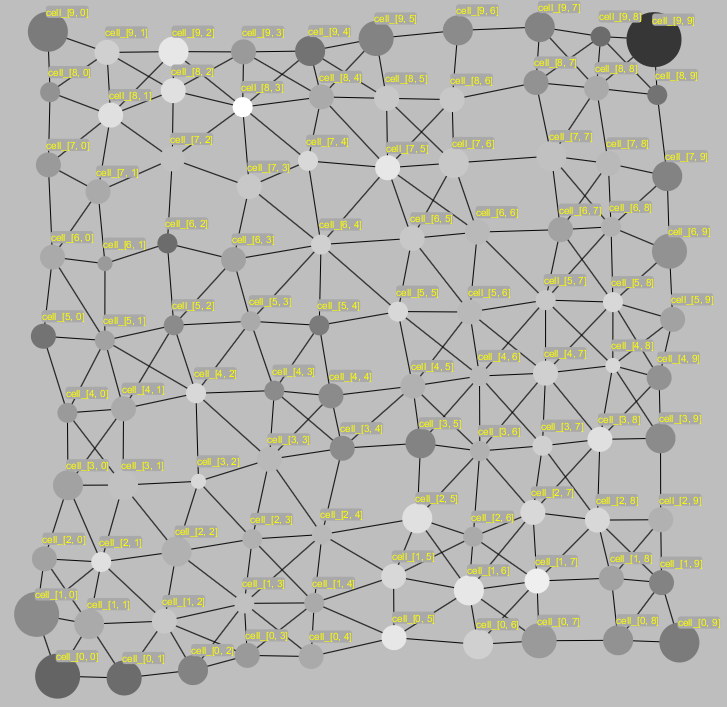
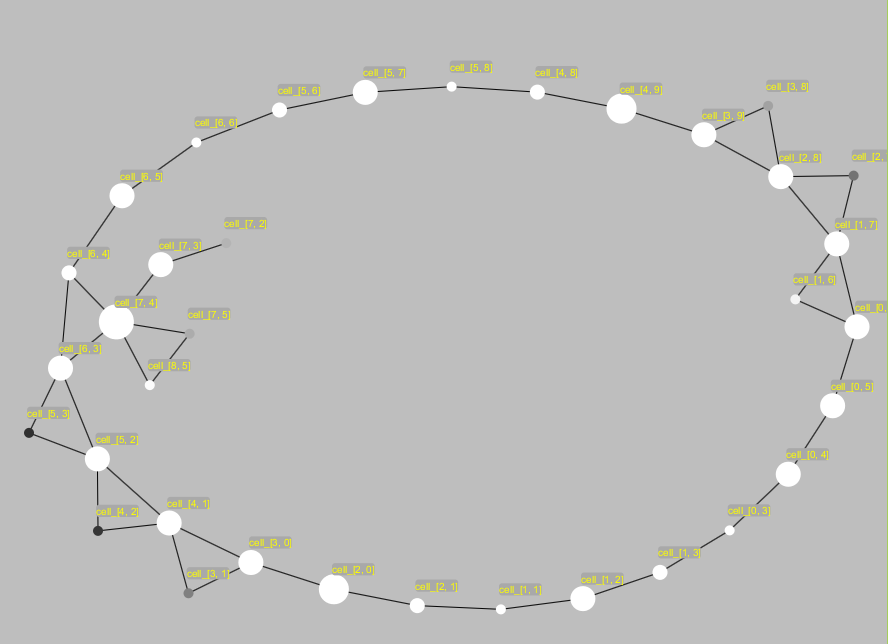
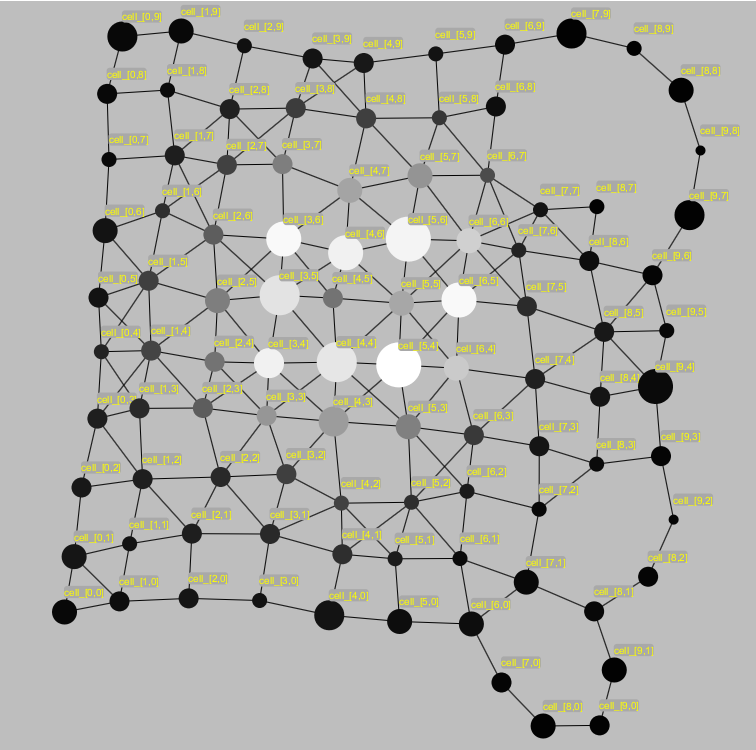
  • Some more results from the belief space mapping effort. Each map is constructed from a 100 sample run over the same 10×10 grid after the simulation stabilized:
    • Here’s a quick overview of the populations: ThreePopulations
    • Stable Nomad behavior map: nomad-stableGood overall coverage as you would expect. Some places have more visitors (the bright spots), but there are no gaps in the belief space.
    • Stable Flocking behavior map: flocking-stableWe can see gaps start to appear in the belief space, but the overall grid structure is still visible at the center of the network where the flock spent most of its time. This is also evident in the bright ring of nodes that represents the cells that the flock traversed while it was orbiting the center area.
    • Stable stampede behavior map: stampede-stableHere, the relationship of the trajectories to the underlying coordinate frame is completely lost. In this case, the boundary of the simulation was reflective, so the stampede bounces around the simulation space. The reason that there is a loop rather than a line is because the tight cluster of agents crossed its path at some point.
  • What could be interesting it to overlay the other graphs on the nomad-produced map. We could see the popular (exploitable) sections of the flocking population while also seeing the areas visited by the stampede. The assumption is that the stampede is engaged in untrustworthy behavior, so those parts would be marked as ‘dangerous’, while the flocking areas would marked as a region of ‘conventional wisdom’ or normative behavior.

Phil 1.2.18

7:00 – 3:30 ASRC MKT

  • Star wars link for Thursday
  • Selective Exposure to Misinformation: Evidence from the consumption of fake news during the 2016 U.S. presidential campaign
    • Andrew M. Guess 
    • Brendan Nyhan
    • Jason Reifler
    • Though some warnings about online “echo chambers” have been hyperbolic, tendencies toward selective exposure to politically congenial content are likely to extend to misinformation and to be exacerbated by social media platforms. We test this prediction using data on the factually dubious articles known as “fake news.” Using unique data combining survey responses with individual-level web trac histories, we estimate that approximately 1 in 4 Americans visited a fake news website from October 7-November 14, 2016. Trump supporters visited the most fake news websites, which were overwhelmingly pro-Trump. However, fake news consumption was heavily concentrated among a small group — almost 6 in 10 visits to fake news websites came from the 10% of people with the most conservative online information diets. We also find that Facebook was a key vector of exposure to fake news and that fact-checks of fake news almost never reached its consumers.
  • Via Kate Starbird: The Elusive Backfire Effect: Mass Attitudes’ Steadfast Factual Adherence
    • Can citizens heed factual information, even when such information challenges their partisan and ideological attachments? The “backfire effect,” described by Nyhan and Reifler (2010), says no: rather than simply ignoring factual information, presenting respondents with facts can compound their ignorance. In their study, conservatives presented with factual information about the absence of Weapons of Mass Destruction in Iraq became more convinced that such weapons had been found. The present paper presents results from five experiments in which we enrolled more than 10,100 subjects and tested 52 issues of potential backfire. Across all experiments, we found no corrections capable of triggering backfire, despite testing precisely the kinds of polarized issues where backfire should be expected. Evidence of factual backfire is far more tenuous than prior research suggests. By and large, citizens heed factual information, even when such information challenges their ideological commitments.
  • Stanford political scientist studies apocalyptic political rhetoric <- dimension reduction
    • Stanford political scientist Alison McQueen’s research shows that apocalyptic rhetoric can make wars, natural disasters, economic collapse and even the possibility of nuclear war easier to understand. But although it can rouse people to action, apocalyptic rhetoric also carries great peril.
    • Political Realism in Apocalyptic Times
  • The Concept of Narrative as a Fundamental for Human Agent-Based Modeling
    • This paper introduces the concept of narrative and its construction into the structure of agent-based modeling, as an effective mechanism for representation of stochastic behavior by agents in the context of social phenomena that are governed by fundamental random processes. A theoretical foundation is offered, citing authorities from the narrative community and related biological, sociological and psychological fields. The fundamental properties of narratives and their relationships are described, and potentially useful lines of further research are posited.
  • Automotive Pishkin-style pileup: http://digg.com/video/thirty-car-pile-up
  • Full read-through of the edited paper. Minor edits so far.
  • Back to the Belief Space proposal

Phil 1.1.18

8:00 – 12:00 ASRC MKT

  • Here’s hoping we don’t look back with longing on 2017. I fear that 2018 could be radioactively bad.
  • Working on WSC version of the paper. Finished markup, and am now adding in the changes. Done! Currently 15 pages. Need to trim the citations and shrink some figures

Phil 12.29.17

8:30 – 4:30 ASRC MKT

  • A spiffy blog that covers many of the things that I’m interested in, including knowledge diagramsthe scottbot irregular
  • News media literacy and conspiracy theory endorsement
    • Conspiracy theories flourish in the wide-open media of the digital age, spurring concerns about the role of misinformation in influencing public opinion and election outcomes. This study examines whether news media literacy predicts the likelihood of endorsing conspiracy theories and also considers the impact of literacy on partisanship. A survey of 397 adults found that greater knowledge about the news media predicted a lower likelihood of conspiracy theory endorsement, even for conspiracy theories that aligned with their political ideology.
  • Folding in Aaron’s comments – Done! Need to send a copy of the first draft to Wayne

Phil 12.28.12

8:30 – 4:30 ASRC MKT

  • Still sick. Nearing bronchitis?
  • Confessions of a Digital Nazi Hunter
  • Phenotyping of Clinical Time Series with LSTM Recurrent Neural Networks
    • We present a novel application of LSTM recurrent neural networks to multi label classification of diagnoses given variable-length time series of clinical measurements. Our method outperforms a strong baseline on a variety of metrics.
    • Scholar Cited by
      • Mapping Patient Trajectories using Longitudinal Extraction and Deep Learning in the MIMIC-III Critical Care Database
        • Electronic Health Records (EHRs) contain a wealth of patient data useful to biomedical researchers. At present, both the extraction of data and methods for analyses are frequently designed to work with a single snapshot of a patient’s record. Health care providers often perform and record actions in small batches over time. By extracting these care events, a sequence can be formed providing a trajectory for a patient’s interactions with the health care system. These care events also offer a basic heuristic for the level of attention a patient receives from health care providers. We show that is possible to learn meaningful embeddings from these care events using two deep learning techniques, unsupervised autoencoders and long short-term memory networks. We compare these methods to traditional machine learning methods which require a point in time snapshot to be extracted from an EHR.
  • Continuing on white paper
  • Moved the Flocking and Herding paper over to the WSC17 format for editing. Will need to move to the WSC18 format when that becomes available

Phil 12.27.17

8:00 – 4:00 ASRC MKT

  • Granted permission for the CHIIR18 DC.
  • Continuing on white paper. And we’ll see what Aaron has to say about the stampede paper today?
  • It occurs to be that it could make sense to read the trajectories in using the ARFF format. Looks straightforward, though I’d have to output each agent on an axis-by-axis basis. That would in turn mean that we’d have to save each ParticleStatement and save it out .
  • A new optimizer using particle swarm theory (1995)
    • The optimization of nonlinear functions using particle swarm methodology is described. Implementations of two paradigms are discussed and compared, including a recently developed locally oriented paradigm. Benchmark testing of both paradigms is described, and applications, including neural network training and robot task learning, are proposed. Relationships between particle swarm optimization and both artificial life and evolutionary computation are reviewed.
    • Cited by 12155

Phil 12.26.17

8:00 – 4:00 ASRC MKT

  • Gotta get a new keyboard
  • Working on the additional thoughts section. Add paragraph describing how the evolutionary benefits of groups are visible at nearly every level of interaction. However, with these benefits comes the additional burden of control. Evolution has provided mechanisms that are calibrated to match communication to the optimal(?) group behavior. This timeframe has been short-circuited by technology. Coordination based on the trust of a neighbor no longer works when the neighbor isn’t near.
    • Patchwork alignment?
    • Information and its use by animals in evolutionary ecology
      • Information is a crucial currency for animals from both a behavioural and evolutionary perspective. Adaptive behaviour relies upon accurate estimation of relevant ecological parameters; the better informed an individual, the better it can develop and adjust its behaviour to meet the demands of a variable world. Here, we focus on the burgeoning interest in the impact of ecological uncertainty on adaptation, and the means by which it can be reduced by gathering information, from both ‘passive’ and ‘responsive’ sources. Our overview demonstrates the value of adopting an explicitly informational approach, and highlights the components that one needs to develop useful approaches to studying information use by animals. We propose a quantitative framework, based on statistical decision theory, for analysing animal information use in evolutionary ecology. Our purpose is to promote an integrative approach to studying information use by animals, which is itself integral to adaptive animal behaviour and organismal biology.
    • Evolutionary Explanations for Cooperation
      • Natural selection favours genes that increase an organism’s ability to survive and reproduce. This would appear to lead to a world dominated by selfish behaviour. However, cooperation can be found at all levels of biological organisation: genes cooperate in genomes, organelles cooperate to form eukaryotic cells, cells cooperate to make multicellular organisms, bacterial parasites cooperate to overcome host defences, animals breed cooperatively, and humans and insects cooperate to build societies. Over the last 40 years, biologists have developed a theoretical framework that can explain cooperation at all these levels. Here, we summarise this theory, illustrate how it may be applied to real organisms and discuss future directions.
    • Thomas Valone (Scholar)
      • Much of Valone’s work in arid ecosystems has examined desertification and factors that affect the biodiversity. He is particularly interested in livestock effects on soil chemical and physical processes that then affect plant and animal populations. Valone’s examination of behavior is frequently centered on understanding how animals perceive their environment. Much of his behavioral work examines information use in social animals who differ from solitary individuals in that they can acquire public information to estimate the quality of resources by noting the activities of other individuals.
      • Group foraging, public information, and patch estimation
        • Public information is information about the quality of a patch that can be obtained by observing the foraging success of other individuals in that patch. I examine the influence of the use of public information on patch departure and foraging efficiency of group members. When groups depart a patch with the first individual to leave, the use of public information can prevent the underutilization of resource patches.
      • Public Information: From Nosy Neighbors to Cultural Evolution
        • Psychologists, economists, and advertising moguls have long known that human decision-making is strongly influenced by the behavior of others. A rapidly accumulating body of evidence suggests that the same is true in animals. Individuals can use information arising from cues inadvertently produced by the behavior of other individuals with similar requirements. Many of these cues provide public information about the quality of alternatives. The use of public information is taxonomically widespread and can enhance fitness. Public information can lead to cultural evolution, which we suggest may then affect biological evolution.
  • Get started on Polarization Game proposal. Include Moral Machine. Read the papers into LMN and started to poke at the structure.
  • Speaking of which, here’s a labeled map: LabeledMap
  • Which clearly provides more relational (map-ish) information than a word cloud using the same data: wordcloud