2.9.18

7:00 – 5:00 ASRC MKT

  • Add something about a population of ants – done
  • Add loaders for the three populations, and then one for trajectories
    • Promoted WeightWidget to JavaUtils
    • Moving 3d and UI building out of start
    • Ugh, new IntelliJ
    • Made the graph pieces selectable
    • Got drawmode (LINE) working
    • Reading in trajectories
    • Need to load each as a child and then draw all of them first, then make that selectable. Done!
  • Go over draft with Aaron. Hand off for rewrite 1? Nope – family emergency
  • 2:00 meeting with Aaron and IC team? Nope
  • Intro to deep learning course from MIT: introtodeeplearning.com
    • An introductory course on deep learning methods with applications to machine translation, image recognition, game playing, image generation and more. A collaborative course incorporating labs in TensorFlow and peer brainstorming along with lectures. Course concludes with project proposals with feedback from staff and panel of industry sponsors.
  • Topics, Events, Stories in Social Media
    • This thesis focuses on developing methods for social media analysis. Specifically, five directions are proposed here: 1) semi-supervised detection for targeted-domain events, 2) topical interaction study among multiple datasets, 3) discriminative learning about the identifications for common and distinctive topics, 4) epidemics modeling for flu forecasting with simulation via signals from social media data, 5) storyline generation for massive unorganized documents.
  • Communication by virus
    • The standard way to think about neurons is somewhat passive. Yes, they can exciteor inhibit the neurons they communicate with but, at the end of the day, they are passively relaying whatever information they contain. This is true not only in biologicalneurons but also in artificial neural networks. 

Phil 2.8.18

7:00 – 5:00 ASRC MKT

  • I need to put together an equation that describes group cohesion. Something like
    • C = Var(L) * Var(O) * Avg(V)/Var(V) * Si, for some population p, over a period of time t, where
      • C is group cohesion
      • Var(x) is the variance
      • Avg(x) is the average
      • L is location
      • O is orientation
      • V is velocity
      • Si is social influence, which is in turn a function of awareness and reach. In network terms, the range is from unconnected through partially connected to fully connected
    • C should have (at least?) three phases: Nomad (low), Flocking(mid), and Stampede(high). The intuition here is that the higher the velocity, the lower the variance has to be in location and orientation to obtain the same level of cohesion. A high velocity, tightly clustered group is a stampede, where social influence overrides environmental awareness.
  • The Shape of Art History in the Eyes of the Machine (Many mapping implications)
  • More writing
    • Citations are all in

Phil 2.7/18

7:30 – 5:30 ASRC MKT

  • Freezing rain and general ick, so I’m working from home. Thus leading to the inevitable updating of IntelliJ
  • Working on the 3D mapping app.
    • Reading in single spreadsheet with nomad graph info
    • Building a NodeInfo inner class to keep the nomad positions for the other populations
    • Working! 2018-02-07
    • Better: 2018-02-07 (2)
    • Resisting the urge to code more and getting back to the extended abstract. I also need to add a legend to the above pix.
  • Back to extended abstract
    • Added results and future work section
    • got all the pictures in
    • Currently at 3 pages plus. Not horrible.
  • Demographics and Dynamics of Mechanical Turk Workers
    • There are about 100K-200K unique workers on Amazon. On average, there are 2K-5K workers active on Amazon at any given time, which is equivalent to having 10K-25K full-time employees. On average, 50% of the worker population changes within 12-18 months. Workers exhibit widely different patterns of activity, with most workers being active only occasionally, and few workers being very active. Combining our results with the results from Hara et al, we see that MTurk has a yearly transaction volume of a few hundreds of millions of dollars.

Phil 2.6.18

7:30 – 5:00 ASRC MKT

  • Took four much needed days off on Sanibel island. Forgot to pack some things? Need to call the hotel at (239) 215-3401
  • Starting CI 2018 abstract. And oddly, the abstract isn’t showing??? Sent a note to the conference chair. IN the meantime, I have a subsection for the abstract. It appears to be acmlarge for the most part, so maybe use that????
  • Was going to get back to Angular, but stuck with 404s on CRUD operations: 404
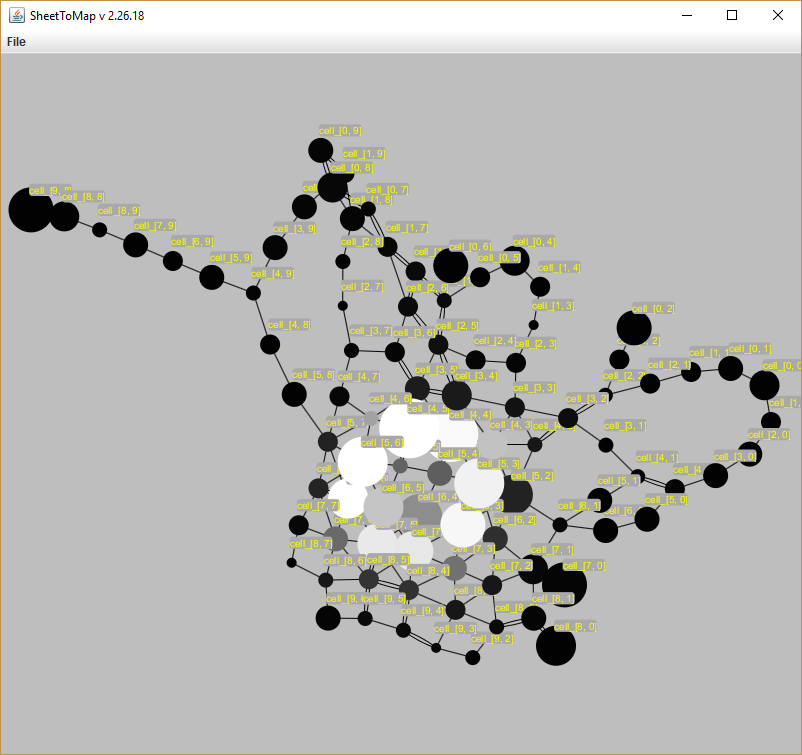
  • Working on the 3D map application. Decided to go with JavaFX and their 3d implementation. It’s going quickly. MapApp1
  • I’ve also gotten the graph generator creating spreadsheets that the map app can read in. So the next job will be to wire everything together, where the position information is based off the nomad trajectories, with the size and visitor (height) data being overlayed with the different colors.

Phil 2.1.18

7:00 – 3:30 ASRC MKT

  • Communications Handbook for IPCC scientists
  • The Barnes-Hut Approximation
    • Efficient computation of N-body forces
      By: Jeffrey Heer
      Computers can serve as exciting tools for discovery, with which we can model and explore complex phenomena. For example, to test theories about the formation of the universe, we can perform simulations to predict how galaxies evolve. To do this, we could gather the estimated mass and location of stars and then model their gravitational interactions over time.
  • Need to get started on the extended abstract for Collective Intelligence 2018! One month! March 2, 2018!
    • Set up the LaTex template for the conference. Done
    • Think I want to call it Mapping Simon’s Anthill
  • Need to contact the CHIIR 2018 folks to see what is expected for the DC
  • More Angular, feeling my way through the Http code, which has been deprecated. Looked at the similar code in Tour of Heroes. We’ll see if the old stuff works and then try to update? Need to ask Jeremy.
  • Back to BIC. Evolutionary reasons for cooperation as group fitness, where group payoff is maximized. This makes the stag salient in stag hunt.
  • A thorough explanation of synchronization/phase locking. My mental model is this: Imaging a set of coaxial but randomly oscillating identical weights sliding back and forth in their section of lightweight tubing. From the outside, the tube would be stationary, as all the forces would be cancelling. If the weights can synchronize, then the lightweight tube will be doing most of the moving. Since the mass of the tube is lower than the mass of the combined weights,   The force required for the whole system will be lower, and as a result (I think?) the system will run more efficiently and longer. Need to work out the math.

Phil 1.31.18

7:00 – 7:00 ASRC MKT

  • The Matrix Calculus You Need For Deep Learning
    • Most of us last saw calculus in school, but derivatives are a critical part of machine learning, particularly deep neural networks, which are trained by optimizing a loss function. Pick up a machine learning paper or the documentation of a library such as PyTorch and calculus comes screeching back into your life like distant relatives around the holidays. And it’s not just any old scalar calculus that pops up—you need differential matrix calculus, the shotgun wedding of linear algebra and multivariate calculus.
  • Continuing BIC
    • Explaining the evolution of any human behavior trait (say, a tendency to play C in Prisoner’s Dilemmas) raises three questions. The first is the behavior selection question: why did this trait, rather than some other, get selected by natural selection? Answering this involves giving details of the selection process, and saying what made the disposition confer fitness in the ecology in which selection took place. But now note that ‘When a behavior evolves, a proximate mechanism also must evolve that allows the organism to produce the target behavior. Ivy plants grow toward the light. This is a behavior, broadly construed. For phototropism to evolve, there must be some mechanism inside of ivy plants that causes them to grow in one direction rather than in another’ (Sober and Wilson 1998, pp. 199-200). This raises the second question, the production question: how is the behavior produced within the individual-what is the ‘proximate mechanism’? In the human case, the interest is often in a psychological mechanism: we ask what perceptual, affective and cognitive processes issue in the behavior. Finally, note that these processes must also have evolved, so an answer to the second question brings a third: why did this proximate mechanism evolve rather than some other that could have produced the same behavior? This is the mechanism selection question. (pg 95)
      • These are good questions to answer, or at least address. Roughly, I thing my answers are
        • Selection Question: The three phases are a very efficient way to exploit an environment
        • Production Question: Neural coupling, as developed in physical swarms and moving on to cognitive clustering
        • Mechanism Question: Oscillator frequency locking provides a natural foundation for  collective behavior. Dimension reduction is how axis are selected for matching.
  • Value Orientations, Expectations and Voluntary Contributions in Public Goods
    • ValueOrientation
  • Discussion with Aaron about JuryRoom design
  • Observable is a better way to code.
    • Discover insights faster and communicate more effectively with interactive notebooks for data analysis, visualization, and exploration.
  • More Angular. Finished with module communication, starting with services
  • Meeting with Wayne
    • Submit to JASS
    • Abstract to CI 2018 July 7-8, 2018 at the University of Zurich, Switzerland

Phil 1.30.18

7:00 – 5:00 ASRC MKT

  • Big thought for today.In a civilization context, the three phases of collective intelligence work like this. These phases relate to computational effort which is proportional to the number of dimensions that an individual has to consider in their existential calculus. The assumption is that lower computational effort is selected for at natural explore/exploit ratios.
    • Exploration phase. Nomadic explorers are introduced to a new environment. Can be physical, informational, cognitive, etc. This phase has the highest dimensional processing required for the individual.
    • Exploitation phase. Social patterns increase the hill climbing power of agents in the environment. This results in a sufficiently optimal access to resources. This employs lower dimensions to support consensus and polarization.
    • Inertial phase. Social influence becomes dominant and environmental influence wains. Local diversity drops as similar agents cluster tightly together. Resources wane. This employs the most dimension reduction and the highest polarization, resulting in high implicit coordination.
    • Collapse. Implied, since the Inertial phase is unsustainable. If the previous population produced explorers that found new, productive environments, the cycle can repeat elsewhere.
  • Continuing BIC
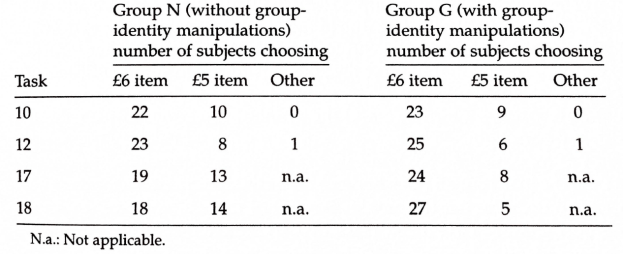
    • “We need to know, in detail, what deliberations are like that people engage in when they group-identify”. Also, agency transformationAgencyTransformation
  • Rules, norms and institutional erosion: Of non-compliance, enforcement and lack of rule of law
    • What I am seeing right now in the US (a steady and slow erosion of democratic norms and a systematic violation of rules by the President Elect, in particular as though “they don’t apply to him“) is something that I’ve seen in other countries where I have studied formal and informal rules and institution building (and decay). This, in my view, is worrisome. If the US is going to want to continue having a functioning democracy where compliance with rules and norms is an expectation at the societal level, it’s going to have to do something major to stop this systematic rule violation.
  • Evaluation of Interactive Machine Learning Systems
    • The evaluation of interactive machine learning systems remains a difficult task. These systems learn from and adapt to the human, but at the same time, the human receives feedback and adapts to the system. Getting a clear understanding of these subtle mechanisms of co-operation and co-adaptation is challenging. In this chapter, we report on our experience in designing and evaluating various interactive machine learning applications from different domains. We argue for coupling two types of validation: algorithm-centered analysis, to study the computational behaviour of the system; and human-centered evaluation, to observe the utility and effectiveness of the application for end-users. We use a visual analytics application for guided search, built using an interactive evolutionary approach, as an exemplar of our work. We argue that human-centered design and evaluation complement algorithmic analysis, and can play an important role in addressing the “black-box” effect of machine learning. Finally, we discuss research opportunities that require human-computer interaction methodologies, in order to support both the visible and hidden roles that humans play in interactive machine learning.
  • Jensen–Shannon divergence – I think I can use this to show the distance between a full coordination matrix and one that contains only the main diagonal.
  • Evolution of social behavior in finite populations: A payoff transformation in general n-player games and its implications
    • The evolution of social behavior has been the focus of many theoretical investigations, which typically have assumed infinite populations and specific payoff structures. This paper explores the evolution of social behavior in a finite population using a general n-player game. First, we classify social behaviors in a group of n individuals based on their effects on the actor’s and the social partner’s payoffs, showing that in general such classification is possible only for a given composition of strategies in the group. Second, we introduce a novel transformation of payoffs in the general n-player game to formulate explicitly the effects of a social behavior on the actor’s and the social partners’ payoffs. Third, using the transformed payoffs, we derive the conditions for a social behavior to be favored by natural selection in a well-mixed population and in the presence of multilevel selection.
  • Got the data for the verdicts and live verdicts set up right, or at least closer: JuryRoom
  • Booked a room for the CHIIR Hotel
  • Got farther on UltimateAngular:
    •  UltimateAngular

Phil 1.29.18

7:00 – 5:30 ASRC MKT

  • The phrase “Epistemic Game Theory” occurred to me in the shower. Looked it up and found these two things:
  • When it’s easier to agree than discuss, it should be easier to stampede:
  • Like vs. words
  • This is also a piece of Salganik’s work as described in Leading the Herd Astray: An Experimental Study of Self-Fulfilling Prophecies in an Artificial Cultural Market
  • An article on FB optimization and how to change the ratio of likes to comments, etc
  • I don’t think people did. It’s just that it’s easier to not think too much 🙂 people are busy selling tools that do everything for people, and people are happy buying tools to limit thinking. The analogy of replacing cognitive load with perception by VIS misleads in this regard. (Twitter)
  • Continuing BIC
    • Dimension reduction is a form of induced conceptual myopia (pg 89)? Conceptual Myopia
  • AI Roundup workshop today
    • Zenpeng, Biruh, Phil, Aaron, Eric, Eric, Kevin
    • Eric – Introductory remarks. Budget looks good for 2018. Direction, chance to overlap, get leaders together for unique differentiators and something that we can build a business around. There has to be a really good business case with revenue in the out years
    • Aaron – CDS for A2P. Collaborate on analytics, ML, etc. Non corporate focused. Emerging technologies and trends. Helping each other out. Background in IC software dev.
    • Pam Scheller – SW Aegis. BD. EE, MS Computer engineering.
    • Biruh, TF, LIDAR, Generalized AI as hobby.
    • Zhenpeng Lee – Physics, Instrument Data Processing for GOES-R. FFT. GOES_R radiometric analysis. 7k detector rows? Enormous data sets. Attempting to automate processing the analysis of these data sets. Masters in Computer Science from JHU. Written most of his code from scratch.
    • Kevin Wainwright. Software engineering Aegis. C&C, etc. Currently working on a cloud based analytics with ML for big data, anomaly detection, etc. Looking for deviation from known flight paths
    • Eric Velte. History degree. Aegis. Situational awareness. Chief technologists for missions solutions group. Software mostly. Data analytics for the last two years. Big Data Analytics Platform.
    • Cornel as engineer, Zero G heat transfer, spacecraft work. Technology roadmaps for thermal control. Then business development, mostly for DoD. Research Sports research – head of Olympic Committee research kayaks, women’s 8, horse cooling, bobsleds.
    • Mike Beduck. Chemical Engineering and computer science. Visualization, new to big data. Closed system sensor fusion. RFP response, best practices. Repository for analytics
    • George. Laser physics. Cardiac imaging analysis. Software development, 3D graphics. Medical informatics. CASI ground systems. More GOES-R/S. Image and signal processing and analysis.
    • Anton is lurling and listening. Branding and marketing.
  • A2P WIP
    • Put a place on sharepoint for papers and other documents – annotated bibliography.
    • Floated the JuryRoom app. Need to mention that the polarizing discussion closes at consensus.
  • Zhenpeng Lee AIMS – GOES-R. What went wrong and how to fix. ML to find pattern change in 20k sensor streams. Full training on each day’s data, then large scale clustering. Trends are seasonal? Relationships between sensors? Channel has 200-600 detectors. “Machine Learning of Situational Awareness” MLP written in Java. TANH activation function.
    • Eric Haught: Long term quest for condition-based maintenance.
    • Aaron – we are all trying to come up with a useful cross platform approach to anomaly detection.
    • Training size: 100k samples? Sample selection reduce to 200? Not sure what the threshold sensitivity is
  • Eric Velte – Devops. Centralize SW dev and support into a standardized framework. NO SECURITY STACK!!!!!
  • Dataforbio? Video series

Phil 1.28.18

Rain!

  • A full-throated defense of simulation from Joanna Bryson in Artificial Intelligence and Pro-Social Behaviour (pg 290)
    • The role of simulations in science has been at times confused, not only by occasional bad practice (as with any method), but also by claims by some of the method’s innovators that simulations were a “third way” to do science (after induction and deduction, Axelrod 1997 ). However, more recently a consensus has been reached that simulation and modelling more generally are indeed a part of ordinary science (Dunbar 2002 ; Kokko 2007 ; Seth et al. 2012). The part that they are is theory building. Every model is a theory—a very-well specified theory. In the case of simulations, the models are theories expressed in so much detail that their consequences can be checked by execution on a computer. Science requires two things: theories that explain the world, and data about the world which can be used to compare and validate the theories. A simulation provides no data about the world, but it can provide a great deal of ‘data’ about a theory. First, the very process of constructing a simulation can show that a theory is incoherent—internally contradictory, or incomplete, making no account for some part of the system intended to be explained (Axelrod 1997 ; Whitehouse et al. 2012 ). Secondly, modelling in general can show us a fuller range of consequences for a theory. This allows us to make specific, formal hypotheses about processes too complex to entirely conceptualise inside a single human brain (Dunbar 2002 ; Kokko 2007 ). The wide-spread acceptance of simulations as a part of the scientific method can be seen by their inclusion in the highest levels of academic publication, both in the leading general science journals and in the flagship journals for specific fields ranging from biology through political science. Fortunately, a theory expressed formally as a simulation can also be expressed in the traditional, informal, ordinary-language way as well.
  • Also this, from the same article:
    • Recently in the megafauna literature there has been a new hypothesis: individuals in populations might benefit from information transmission, of which vigilance against predators is just a special case (Crockford et al. 2012 ; Chivers and Ferrari 2014 ; Hogan and Laskowski 2013 ; Derex et al. 2013 ). Transmission of behaviour may be at least as important as information about localised threats (Jaeggi et al. 2008 ; Dimitriu et al. 2014 ). Note that behaviour itself, when transmitted horizontally (that is, not by genes to offspring), must be transmitted as information via perception (Shannon 2001 ).
  • On Discovering the Number of Document Topics via Conceptual Latent Space
    • Topic modeling is a widely used technique in knowledge discovery and data mining. However, finding the right number of topics in a given text source has remained a challenging issue. In this paper, we study the concept of conceptual stability via nonnegative matrix factorization. Based on this finding, we propose a method to identify the correct number of topics and offer empirical evidence in its favor in terms of classification accuracy and the number of topics that are naturally present in the text sources. Experiments on real-world text corpora demonstrate that the proposed method has outperformed state-of-the-art latent Dirichlet allocation and nonnegative matrix factorization models.
  • Beyond the Ranked List: User-Driven Exploration and Diversification of Social Recommendation
    • The beyond-relevance objectives of recommender systems have been drawing more and more attention. For example, a diversity-enhanced interface has been shown to associate positively with overall levels of user satisfaction. However, little is known about how users adopt diversity-enhanced interfaces to accomplish various real-world tasks. In this paper, we present two attempts at creating a visual diversity-enhanced interface that presents recommendations beyond a simple ranked list. Our goal was to design a recommender system interface to help users explore the different relevance prospects of recommended items in parallel and to stress their diversity. Two within-subject user studies in the context of social recommendation at academic conferences were conducted to compare our visual interfaces. Results from our user study show that the visual interfaces significantly reduced the exploration efforts required for given tasks and helped users to perceive the recommendation diversity. We show that the users examined a diverse set of recommended items while experiencing an improvement in overall user satisfaction. Also, the users’ subjective evaluations show significant improvement in many user-centric metrics. Experiences are discussed that shed light on avenues for future interface designs.
  • Setting up a Dissertation main points page on Phlog
  • This is an interesting map, from allgeneralizationsarefalse.commedia-bias-chart_3-0_hi-res
  • Don’t know what to do with this, but wow: Audio Adversarial Examples: Targeted Attacks on Speech-to-Text
    • We construct targeted audio adversarial examples on automatic speech recognition. Given any audio waveform, we can produce another that is over 99.9% similar, but transcribes as any phrase we choose (at a rate of up to 50 characters per second). We apply our iterative optimization-based attack to Mozilla’s implementation DeepSpeech end-to-end, and show it has a 100% success rate. The feasibility of this attack introduce a new domain to study adversarial examples.

Phil 1.26.18

7:00 – 4:00 ASRC MKT

  • Tweaked my hypotheses from this post. I need to promote to a Phlog page.
  • Using Self-Organizing Maps to solve the Traveling Salesman Problem
    • The Traveling Salesman Problem is a well known challenge in Computer Science: it consists on finding the shortest route possible that traverses all cities in a given map only once. To solve it, we can try to apply a modification of the Self-Organizing Map (SOM) technique. Let us take a look at what this technique consists, and then apply it to the TSP once we understand it better.
  • Starting JuryRoom project with Jeremy.
    • Angular material  design
    • VerdictBox (Scenario and verdict)
    • Chat message
    • Live discussion cards (right gutter)
    • Topics (alphabetic, ranking, trending) with sparklines
    • Progress!!!!!! JuryRoom

Phil 1.25.18

ASRC MKT 7:00 –

  • Domo arigato, Mr. Roboto, tell us your secret (good article on recognizing behavior patterns, rather than words)
    • Everybody that has an interest in influencing public opinion will happily pay a handful of Dollars to amplify their voices. Governments, political groups, corporations, traders, and just simple plain trolls will continue to shout through bot armies—as long as it is so cheap. Bots are cheaper than buying ad space, less risky than a network of spies, more efficient and less prone to failure than creating 50 fake accounts by hand. If bots could be identified and tagged, the fake news industry would suffer a heavy blow. Here is how we can make this happen.
  • More Angular
  • Wireframing with Jeremy

Phil 1.24.18

7:00 – 5:00 ASRC MKT

  • H1: Groups are defined by a common location, orientation, and velocity (LOV) through a navigable physical or cognitive space. The amount of group cohesion and identification is proportional to the amount of similarity along all three axis.
  • H2: Group Behavior emerges from mutual influence, based on awareness and trust. Mutual influence is facilitated by Dimension Reduction: The lower the number of dimensions, the easier it is to produce a group.
  • H3: Group behavior has three distinct patterns: Nomadic, Flocking and Stampeding. These behaviors are dictated by the level of trust and awareness between individuals having similar LOVs
    • H3a: The trustworthiness of the underlying information space can be inferred from the group behaviors through belief space. All agents  seek out fitness peaks (reward gradients) and avoids valleys (risk gradients) within the space. (Risk = negative heading alignment, increase speed. Reward = positive heading alignment, decrease speed.)
      • Nomadic emphasizes environmental gradients as an individual or small group of agents. This supports the broadest awareness of the belief space, though it may be difficult to infer fitness peaks. Gradient discovery is  less influences by additional social effects,
      • Flocking behavior results from environmentally constrained social gradient seeking. For example, distance attenuates social influence. If an agent finds a risk or reward, that information cascades through the population as a function of the environmental constraints. (Note: In-group and out group could be manifestations of pure social gradient creation.)
      • Stampede emphasizes social gradients. This becomes easier as groups become larger and a strong ‘social reality’ occurs. When social influence is dominant at the expense of environmental awareness, a runaway stampede can occur. The beliefs and associated information that underlie a stampede can be inferred to be untrustworthy.
  • H4: Individual trajectories through these spaces, when combined with large numbers of other individual trajectories produce maps which reflect the dimensions that define the groups in that space.
  • These conclusions can be derived though
  • Continuing with BIC
    • GroupIdentification
  • Fundamentals of Data Visualization
    • I’m very excited to announce my latest project, a book on data visualization. The working title is “Fundamentals of Data Visualization”. The book will be published with O’Reilly, and a preview is available here. The entire book is written in R Markdown, and the figures are made with ggplot2. The source for the book is available on github.
  • Sex differences in the use of social information emerge under conditions of risk
    • Social learning provides an effective route to gaining up-to-date information, particularly when information is costly to obtain asocially. Theoretical work predicts that the willingness to switch between using asocial and social sources of information will vary between individuals according to their risk tolerance. We tested the prediction that, where there are sex differences in risk tolerance, altering the variance of the payoffs of using asocial and social information differentially influences the probability of social information use by sex. In a computer-based task that involved building a virtual spaceship, men and women (N = 88) were given the option of using either asocial or social sources of information to improve their performance. When the asocial option was risky (i.e., the participant’s score could markedly increase or decrease) and the social option was safe (i.e., their score could slightly increase or remain the same), women, but not men, were more likely to use the social option than the asocial option. In all other conditions, both women and men preferentially used the asocial option to a similar degree. 
  • Thinking Fast and Slow on Networks: Co-evolution of Cognition and Cooperation in Structured Populations
    •  In line with past work in well-mixed populations, we find that selection favors either the intuitive defector (ID) strategy which never deliberates, or the dual-process cooperator (DC) strategy which intuitively cooperates but uses deliberation to switch to defection in Prisoner’s Dilemma games. We find that sparser networks (i.e. smaller average degree) facilitate the success of DC over ID, while also reducing the level of deliberation that DC agents engage in; and that these results generalize across different kinds of networks.
  • Joanna J Bryson 7:30 AM – 24 Jan 2018: This didn’t happen because humans are evil. It happens because intelligence is computation—an expensive physical process—and therefore limited. Thread very worth reading.
  • A bit more Angular
  • Compared the speed of execution for LSTM on my and Aaron’s boxes. His newer card is a bit faster than my TITAN
  • Most of the day was spent putting together the ppt for the ML/AI workshop on Monday

Phil 1.23.18

7:00 – 5:00 ASRC MKT

  • Lesser-known trolley problem variations
  • News presented as a list: The 270 people connected to the Russia probes
  • continuing BIC
    • Group as Frame
    • Categorizatino and bias
  • Groups are defined by a common location, orientation, and velocity through a physical or virtual space. They influence each other dependent on awareness and trust. The lower the number of dimensions, the easier it is to produce a group.
  • Russia’s Full Spectrum Propaganda
    • This post examines one full spectrum case to illustrate the method. @DFRLab examined this case in an earlier post; since then, further evidence emerged, which changed and improved our understanding of the technique.
  • More Angular. Nice progress. I had some issues where I wanted to keep an old version of the app directory and did a refactor. This (of course) refactored the calling program, so I broke quite a few things figuring it out. That being said, Angular 1.5 is really, really nice.
  • Long chat about handling Trolls in the discussion app

Phil 1.22.18

7:00 – 4:00 ASRC MKT

  • Continuing Beyond Individual Choice
  • Pinged Kate Starbird to see if she has any time-series data that could be used to build maps
  • Parametrizing Brexit: Mapping Twitter Political Space to Parliamentary Constituencies
    • In this paper, a proof of concept study is performed to validate the use of social media signal to model the ideological coordinates underpinning the Brexit debate. We rely on geographically-enriched Twitter data and a purpose-built, deep learning algorithm to map the political value space of users tweeting the referendum onto Parliamentary Constituencies. We find a significant incidence of nationalist sentiments and economic views expressed on Twitter, which persist throughout the campaign and are only offset in the last days when a globalist upsurge brings the British Twittersphere closer to a divide between nationalist and globalist standpoints. Upon combining demographic variables with the classifier scores, we find that the model explains 41% of the variance in the referendum vote, an indication that not only material inequality, but also ideological readjustments have contributed to the outcome of the referendum. We conclude with a discussion of conceptual and methodological challenges in signal-processing social media data as a source for the measurement of public opinion.
  • Nice little echo chamber to study: Why 9/11 Truthers Are Obsessed With the Plasco High-Rise Fire in Tehran
    • One month after the fire, AE911Truth released a paper confirming its own unsolicited suggestion that the Plasco building was demolished with pre-planted explosives. Most of the links in footnotes of the paper point to YouTube videos and the organization’s own PDF documents. As proof of its claims, it cites puffs of smoke emanating from the collapsing building (demolition squibs), large clouds of dust and ash (proof of highly energetic explosive material), and the presence of supposedly molten material in the debris pile (nano-thermite’s persistent exothermic reaction). Since truthers made these exact same observations about WTC7, and since WTC7 must have been a controlled demolition, then clearly the Plasco Building was demolished as well. In a perfect infinite loop of anti-logic—like a snake slithering into its own asshole—an exact refutation of AE911Truth’s beliefs has instead vindicated them completely.
  • Good quick view into the left/right views of the Trump presidency year one:
    • o-brodner0121-web
    • o-lester0121full
  • Good progress on Angular. Since I’m using the CLI, I was having issues with getting to assets. Jeremy was able to guide me to the angular-cli.json file, which had all the hidden knowledge.
  • Discussion with Aaron about the product baseline

Phil 1.19.18

7:00 – 5:00 ASRC

  • Look! Adversarial Herding: https://twitter.com/katestarbird/status/954802718018686976
  • Reconnected with Wayne. Arranging a time to meet the week of the 29th. Sent him a copy of the winter sim conference paper
  • Continuing with Beyond Individual Choice. Actually, wound up adding a section on how attention and awareness interplay, and how high social trust makes for much more efficient way to approach games such as the prisoner’s dilemma on my thoughts about trust and awareness
  • Starting Angular course
    • Architecture overview
  • Meeting with Jeremy, Heath and Aaron on Project structure/setup
  • More Angular. Yarn requires Python 2.x, which I hope doesn’t break my Python 3.x
  • Could not get the project to serve once built
  • Adversarial herding via The Opposition
    • Clint WattsClint is a consultant and researcher modeling and forecasting threat actor behavior and developing countermeasures for disrupting and defeating state and non-state actors. As a consultant, Clint designs and implements customized training and research programs for military, intelligence and law enforcement organizations at the federal, state and local level. In the private sector, he helps financial institutions develop best practices in cybersecurity intelligence operations. His research predominately focuses on terrorism forecasting and trends seeking to anticipate emerging extremist hotspots and anticipate appropriate counterterrorism responses. More recently, Clint used modeling to outline Russian influence operations via social media and the Kremlin’s return to Active Measures.