Category Archives: proposals

Phil 3.15.18

8:30 – 4:30 ASRC MKT

Phil 3.9.18

8:00 – 4:30 ASRC MKT

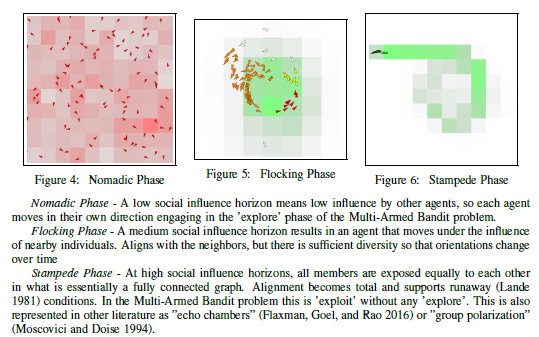
  • Still working on the nomad->flocking->stampede slide. Do I need a “dimensions” arrow?
  • Labeled slides. Need to do timings – done
  • And then Aaron showed up, so lots of reworking. Done again!
  • Put the ONR proposal back in its original form
  • An overview of gradient descent optimization algorithm
    • Gradient descent is one of the most popular algorithms to perform optimization and by far the most common way to optimize neural networks. At the same time, every state-of-the-art Deep Learning library contains implementations of various algorithms to optimize gradient descent (e.g. lasagne’scaffe’s, and keras’ documentation). These algorithms, however, are often used as black-box optimizers, as practical explanations of their strengths and weaknesses are hard to come by. This blog post aims at providing you with intuitions towards the behaviour of different algorithms for optimizing gradient descent that will help you put them to use.

Phil 3.7.18

7:00 – 5:00 ASRC MKT

  • Some surprising snow
  • Meeting with Sy at 1:30 slides
  • Meeting with Dr. DesJardins at 4:00
  • Nice chat with Wajanat about the presentation of the Saudi Female self in physical and virtual environments
  • Sprint planning
    • Finish ONR Proposal VP-331
    • CHIIR VP-332
    • Prep for TF dev conf VP-334
    • TF dev conf VP-334
  • Working on the ONR proposal
  • Oxford Internet Institute – Computational Propaganda Research Project
    • The Computational Propaganda Research Project (COMPROP) investigates the interaction of algorithms, automation and politics. This work includes analysis of how tools like social media bots are used to manipulate public opinion by amplifying or repressing political content, disinformation, hate speech, and junk news. We use perspectives from organizational sociology, human computer interaction, communication, information science, and political science to interpret and analyze the evidence we are gathering. Our project is based at the Oxford Internet Institute, University of Oxford.
    • Polarization, Partisanship and Junk News Consumption over Social Media in the US
      • What kinds of social media users read junk news? We examine the distribution of the most significant sources of junk news in the three months before President Donald Trump’s first State of the Union Address. Drawing on a list of sources that consistently publish political news and information that is extremist, sensationalist, conspiratorial, masked commentary, fake news and other forms of junk news, we find that the distribution of such content is unevenly spread across the ideological spectrum. We demonstrate that (1) on Twitter, a network of Trump supporters shares the widest range of known junk news sources and circulates more junk news than all the other groups put together; (2) on Facebook, extreme hard right pages—distinct from Republican pages—share the widest range of known junk news sources and circulate more junk news than all the other audiences put together; (3) on average, the audiences for junk news on Twitter share a wider range of known junk news sources than audiences on Facebook’s public pages
      • Need to look at the variance in the articles. Are these topical stampedes? Or is this source-oriented?
  • Understanding and Addressing the Disinformation Ecosystem
    • This workshop brings together academics, journalists, fact-checkers, technologists, and funders to better understand the challenges produced by the current disinformation ecosystem. The facilitated discussions will highlight relevant research, share best-practices, identify key questions of scholarly and practical concern regarding the nature and implications of the disinformation ecosystem, and outline a potential research agenda designed to answer these questions.
  • More BIC
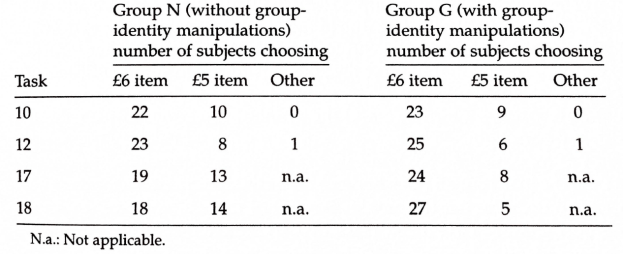
    • The psychology of group identity allows us to understand that group identification can be due to factors that have nothing to do with the individual preferences. Strong interdependence and other forms of common individual interest are one sort of favouring condition, but there are many others, such as comembership of some existing social group, sharing a birthday, and the artificial categories of the minimal group paradigm. (pg 150)
    • Wherever we may expect group identity we may also expect team reasoning. The effect of team reasoning on behavior is different from that of individualistic reasoning. We have already seen this for Hi-Lo. This has wide implications. It makes the theory of team reasoning a much more powerful explanatory and predictive theory than it would be if it came on line only in games with th3e right kind of common interest. To take just one example, if management brings it about so that the firm’s employees identify with the firm, we may expect for them to team-reason and so to make choices that are not predicted by the standard theories of rational choice. (pg 150)
    • As we have seen, the same person passes through many group identities in the flux of life, and even on a single occasion more than one of these identities may be stimulated. So we will need a model of identity in which the probability of a person’s identification is distributed over not just two alternatives-personal self-identity or identity with a fixed group-but, in principle, arbitrarily many. (pg 151)

Phil 3.6.18

7:00 – 4:00 ASRC MKT

  • Endless tweaking of the presentation
    • Pinged Sy – Looks like something on Wednesday. Yep his place around 1:30
  • More BIC
    • The explanatory potential of team reasoning is not confined to pure coordination games like Hi-Lo. Team reasoning is assuredly important for its role in explaining the mystery facts about Hi-Lo; but I think we have stumbled on something bigger than a new theory of behaviour in pure coordination games. The key to endogenous group identification is not identity of interest but common interest giving rise to strong interdependence. There is common interest in Stag Hunts, Battles of the Sexes, bargaining games and even Prisoner’s Dilemmas. Indeed, in any interaction modelable as a ‘mixed motive’ game there is an element of common interest. Moreover, in most of the landmark cases, including the Prisoner’s Dilemma, the common interest is of the kind that creates strong interdependence, and so on the account of chapter 2 creates pressure for group identification. And given group identification, we should expect team reasoning. (pg 144)
    • There is a second evolutionary argument in favour of the spontaneous team-reasoning hypothesis. Suppose there are two alternative mental mechanisms that, given common interest, would lead humans to act to further that interest. Other things being equal, the cognitively cheapest reliable mechanism will be favoured by selection. As Sober and Wilson (1998) put it, mechanisms will be selected that score well on availability, reliability and energy efficiency. Team reasoning meets these criteria; more exactly, it does better on them than the alternative heuristics suggested in the game theory and psychology literature for the efficient solution of common-interest games. (pg 146)
    • BIC_pg 149 (pg 149)
  • Educational resources from machine learning experts at Google
    • We’re working to make AI accessible by providing lessons, tutorials and hands-on exercises for people at all experience levels. Filter the resources below to start learning, building and problem-solving.
  • A Structured Response to Misinformation: Defining and Annotating Credibility Indicators in News Articles
    • The proliferation of misinformation in online news and its amplification by platforms are a growing concern, leading to numerous efforts to improve the detection of and response to misinformation. Given the variety of approaches, collective agreement on the indicators that signify credible content could allow for greater collaboration and data-sharing across initiatives. In this paper, we present an initial set of indicators for article credibility defined by a diverse coalition of experts. These indicators originate from both within an article’s text as well as from external sources or article metadata. As a proof-of-concept, we present a dataset of 40 articles of varying credibility annotated with our indicators by 6 trained annotators using specialized platforms. We discuss future steps including expanding annotation, broadening the set of indicators, and considering their use by platforms and the public, towards the development of interoperable standards for content credibility.
    • Slide deck for above
  • Sprint review
    • Presented on Talk, CI2018 paper, JuryRoom, and ONR proposal.
  • ONR proposal
    • Send annotated copy to Wayne, along with the current draft. Basic question is “is this how it should look? Done
    • Ask folks at school for format help?

Phil 3.5.18

7:00 – 6:00 ASRC MKT

    • Dead Reckoning: Navigating Content Moderation After “Fake News”
      • Authors Robyn Caplan, Lauren Hanson, and Joan Donovan analyze nascent solutions recently proposed by platform corporations, governments, news media industry coalitions, and civil society organizations. Then, the authors explicate potential approaches to containing “fake news” including trust and verification,disrupting economic incentivesde-prioritizing content and banning accounts, as well as limited regulatory approaches.
    • ‘The world is best experienced at 18 mph’. The psychological wellbeing effects of cycling in the countryside: an Interpretative Phenomenological Analysis
      • Green Exercise (GE) refers to physical activity conducted whilst simultaneously engaging the natural environment. A substantial body of literature has now been accumulated that establishes that carrying out exercise in this way has significantly greater psychological wellbeing benefits than the non-GE equivalent. Hitherto, seldom has consideration been given to the individual meanings that doing GE has. This study, therefore, sought to understand the lived experience of the phenomenon amongst a group of serious male recreational road bicyclists aged between mid-30s and early 50s who routinely rode in the countryside. Eleven bicyclists participated in semi-structured interviews. Data were analysed using Interpretative Phenomenological Analysis. This revealed themes of mastery and uncomplicated joys; my place to escape and rejuvenate; and alone but connected. Findings indicate that green-cycling served to enhance the participants’ sense of wellbeing and in doing so helped them cope with the mental challenges associated with their lives. It is suggested that green-cycling merges the essential qualities of natural surroundings – including its aesthetic, feelings of calm and a chance for exploration – with the potential for physical challenge and, facilitated by modern technology, opportunities for prosocial behaviours. It also identifies how green-cycling may influence self-determined behaviours towards exercise regulation, suggesting more satisfying and enduring exercise experiences.
      • Exhibit A: OLYMPUS DIGITAL CAMERA
    • More BIC. I think MB is getting at the theory for why there is explore/exploit in populations
      • We have progressed towards a plausible explanation of the behavioural fact about Hi-Lo. It is explicable as an outcome of group identification by the players, because this is likely to produce a way of reasoning, team reasoning, that at once yields A. Team reasoning satisfies the conditions for the mode-P reasoning that we concluded in chapter 1 must be operative if people are ever to reason their way to A. It avoids magical thinking. It takes the profile-selection problem by the scruff of the neck. What explains its onset is an agency transformation in the mind of the player; this agency transformation leads naturally to profile-based reasoning and is a natural consequence of self-identification with the player group. (pg 142)
      • Hi-Lo induces group identification. A bit more fully: the circumstances of Hi-Lo cause each player to tend to group-identify as a member of the group G whose membership is the player-set and whose goal is the shared payoff. (pg 142)
      • If what induces A-choices is a piece of reasoning which is part of our mental constitution, we are likely to have the impression that choosing A is obviously right. Moreover, if the piece of reasoning does not involve a belief that the coplayer is bounded, we will feel that choosing A is obviously right against a player as intelligent as ourselves; that is, our intuitions will be an instance of the judgemental fact. I suspect, too, that if the reasoning schema we use is valid, rather than involving falacy, our intuitions of reality are likely to be more robust. Later I shall argue that team reasoning is indeed nonfallacious. (pg 143)
        • I think this is more than “as intelligent as ourselves”, I think this is a position/orientation/velocity case. I find it compelling that people with different POVs regard each other as ‘stupid’
      • When framing tendencies are culture-wide, people in whom a certain frame is operative are aware that it may be operative in others; and if its availability is high, those in it think that it is likely to be operative in others. Here the framing tendency is-so goes my claim-universal, and a fortiori it is culture-wide. (pg 144)
      • But for the theory of endogenous team reasoning there are two differences between the Hi-Lo case and these other cases of strong interdependence. First, outside Hi-Los there are counterpressures towards individual self-identification and so I-framing of the problem. In my model this comes out as a reduction in the salience of the strong interdependence, or an increase in that of other features. One would expect these pressures to be very strong in games like Prisoner’s Dilemma, and the fact that C rates are in the 40 per cent range rather than the 90 percent range, so far from surprising, is a prediction of the present theory (pg 144)
        • This is where MB starts to get to explore/exploit in populations. There are pressueres that drive groups together and apart. And as individuals, our thresholds for group identification varies
    • Working on the ONR whitepaper. Moving over to LaTex because MSword makes me want to injure myself.
    • For future reference, here’s my basic LaTex setup:
      \documentclass[]{article}
      
      \usepackage{latexsym}
      \usepackage{graphicx}
      \usepackage{mathptmx}
      \usepackage{float}
      \usepackage[normalem]{ulem} 
      \usepackage{wrapfig}
      
      %opening
      \title{}
      \author{Philip Feldman}
      
      
      \begin{document}
      
      \maketitle
      
      \begin{abstract}
      
      \end{abstract}
      
      \section{}
      
      \newpage
      
      % Bibliography
      \bibliographystyle{acm}
      \bibliography{ONR_whitepaper_bib}
      
      
      \end{document}
    • Ok, got all the text moved over. Then I need to out the citations back and start of fix content
    • Citations are done.
  • Fika
    • Presentation by Dr. Greg Walsh:
      • For the last 10 years, Greg Walsh has focused on design research around participatory and cooperative design. His efforts include high- and low-tech techniques that extend co-design both geographically and temporally. He has led design research with groups like Nickelodeon, Carnegie Hall, the National Park Service, and most recently, National Public Radio. In this talk, Greg will discuss his work around inclusive and equitable participatory design that range from design-centric Minecraft virtual worlds to Baltimore City public libraries.
    • Surprise meeting with Wayne.
      • Went over slides. Made some tweaks
      • Talked about the ONR and Twitter RFPs. Need to send the ONR proposal for some insight, and get another back
    • Slide walkthrough with Brian
      • More slide tweaks.
      • He suggested that I get in contact with Sy, which makes a lot of sense.


Phil 3.2.18

7:00 – 5:00 ASRC MKT

  • Got Wayne’s comments. Will integrate and see if EasyChair will take it
  • Work on ONR WhitePaper
  • Twitter proposal?
  • Society for Personality and Social Psychology
    • The mission of SPSP is to advance the scienceteaching, and application of social and personality psychology. SPSP members aspire to understand individuals in their social contexts for the benefit of all people.
    • Social psychology is the scientific study of how people’s thoughts, feelings, and behaviors are influenced by the actual, imagined, or implied presence of others.
  • Rebecca Hofstein Grady
    • I am interested in the ways that bias and motivation can affect our reasoning and memory to influence the judgments and decisions that we make.  In particular, I am currently studying how these biases apply to real-world situations, such as political conflicts, hiring decisions, and legal decision-making.  I explore not only how biases affect decision-making but what people think about their own biases and the best ways to help correct them.
    • Data from a pre-publication independent replication initiative examining ten moral judgement effects

Phil 2.26.18

7:00 – 6:00 ASRC MKT

  • Spread of information is dominated by search ranking f1-large
    • Twitter thread
      • The spreading process was linear because the background search rate is roughly constant day to day for discounts, and any viral element turned out to be quite small.
    • Paper
  •  BIC
    • There are many conceivable team mechanisms apart from simple direction and team reasoning; they differ in the way in which computation is distributed and the pattern of message sending. For example, one agent might compute o* and send instructions to the others. With the exception of team reasoning, these mechanisms involve the communication of information. If they do I shall call them modes of organization or protocols. (pg 125)
    • A mechanism is a general process. The idea (which I here leave only roughly stated) is of a causal process which determines (wholly or partly) what the agents do in any simple coordination context. It will be seen that all the examples I have mentioned are of this kind; contrast a mechanism that applies, say, only in two-person cases, or only to matching games, or only in business affairs. In particular, team reasoning is this kind of thing. It applies to any simple coordination context whatsoever. It is a mode of reasoning rather than an argument specific to a context. (pg 126)
  •  Presentation:
    • I need to put together a 2×2 payoff matrix that covers nomad/flock/stampede
    • Some more heat map views, showing nomad, flocking
    • De-uglify JuryRoom
    • Timeline of references
    • Collapse a few pages 22.5 minutes for presentation and questions
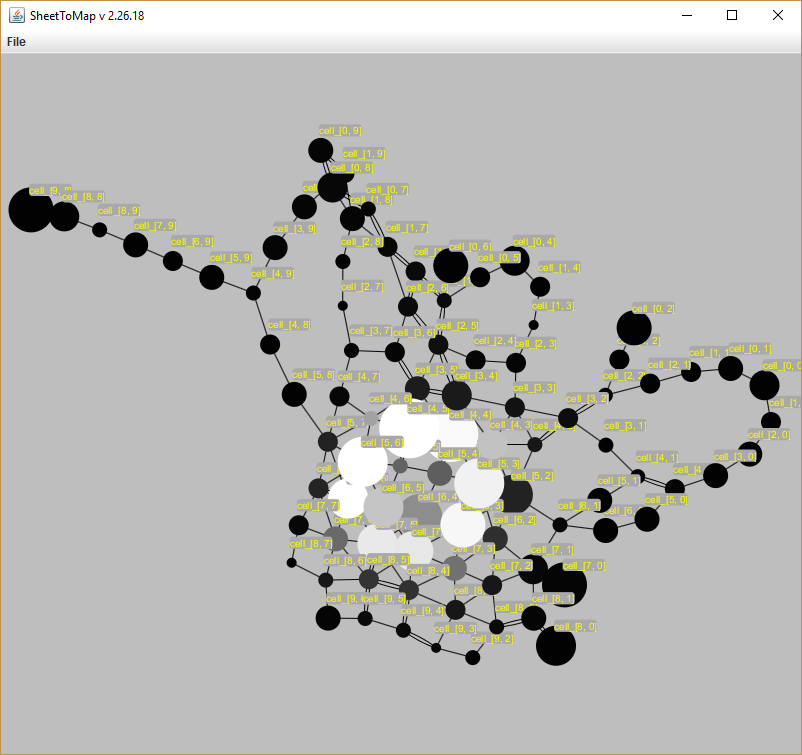
  • Work on getting SheetToMap in a swing app? Less figuring things out…
    • Slower going than I hoped, but mostly working now. As always, StackOverflow to the rescue: How to draw graph inside swing with GraphStream actually?
    • Adding load and save menu choices. Done! Had a few issues with getting the position of the nodes saved out. It seems like you should do this?
      GraphicNode gn = viewer.getGraphicGraph().getNode(name);
      row.createCell(cellIndex++).setCellValue(gn.getX());
      row.createCell(cellIndex++).setCellValue(gn.getY());
    • Anyway, pretty pix: 2018-02-26
  • Start on white paper
  • Fika

Phil 1.9.18

7:00 – 4:00 ASRC MKT

  • Submit DC paper – done
  • Add primary goal and secondary goals
  • Add group decision making tool to secondary goals
  • Add site search to “standard” websearch – done
  • Visual Analytics to Support Evidence-Based Decision Making (dissertation)
  • Can Public Diplomacy Survive the internet? Bots, Echo chambers, and Disinformation
    • Shawn Powers serves as the Executive Director of the United States Advisory Commission on Public Diplomacy
    • Markos Kounalakis, Ph.D. is a visiting fellow at the Hoover Institution at Stanford University and is a presidentially appointed member of the J. William Fulbright Foreign Scholarship Board.  Kounalakis is a senior fellow at the Center for Media, Data and Society at Central European University in Budapest, Hungary and president and publisher emeritus of the Washington Monthly. He is currently researching a book on the geopolitics of global news networks.
  • Partisanship, Propaganda, and Disinformation: Online Media and the 2016 U.S. Presidential Election (Harvard)
    • Rob Faris
    • Hal Roberts
    • Bruce Etling
    • Nikki Bourassa 
    • Ethan Zuckerman
    • Yochai Benkler
    • We find that the structure and composition of media on the right and left are quite different. The leading media on the right and left are rooted in different traditions and journalistic practices. On the conservative side, more attention was paid to pro-Trump, highly partisan media outlets. On the liberal side, by contrast, the center of gravity was made up largely of long-standing media organizations steeped in the traditions and practices of objective journalism.

      Our data supports lines of research on polarization in American politics that focus on the asymmetric patterns between the left and the right, rather than studies that see polarization as a general historical phenomenon, driven by technology or other mechanisms that apply across the partisan divide.

      The analysis includes the evaluation and mapping of the media landscape from several perspectives and is based on large-scale data collection of media stories published on the web and shared on Twitter.

Phil 1.8.18

7:00 – 5:00 ASRC MKT

  • Complexity Explorables
    • This page is part of the Research on Complex Systems Group at the Institute for Theoretical Biology at Humboldt University of Berlin.The site is designed for people interested in complex dynamical processes. The Explorables are carefully chosen in such a way that the key elements of their behavior can be explored and explained without too much math (There are a few exceptions) and with as few words as possible.
    • Orli’s Flock’n Roll (Adjustable variables, but just having the alignment radius doesn’t have the same effect. Maybe a function of the slew rate?
      • This explorable illustrates of an intuitive dynamic model for collective motion (swarming) in animal groups. The model can be used to describe collective behavior observed in schooling fish or flocking birds, for example. The details of the model are described in a 2002 paper by Iain Couzin and colleagues.
  • Saving Human Lives: What Complexity Science and Information Systems can Contribute
    • We discuss models and data of crowd disasters, crime, terrorism, war and disease spreading to show that conventional recipes, such as deterrence strategies, are often not effective and sufficient to contain them. Many common approaches do not provide a good picture of the actual system behavior, because they neglect feedback loops, instabilities and cascade effects. The complex and often counter-intuitive behavior of social systems and their macro-level collective dynamics can be better understood by means of complexity science. We highlight that a suitable system design and management can help to stop undesirable cascade effects and to enable favorable kinds of self-organization in the system. In such a way, complexity science can help to save human lives.
  • Fooled around with the model definition section in the paper to bring forward the rate limited heading a bit.
  • Had to fix several bug in the DC paper
  • Worked with Aaron a lot on tweaking the introduction. T is reading it now. Assuming it’s done, the only thing remaining is the conclusion

Phil 1.7.17

8:30 – 11:30 ASRC MKT

  • It is still waayyyyyy to cold to do much, so I’ll work on the whitepaper
  • Sent a note to Dr. desJardins about looking at the rewrite and suggesting venues
  • Finished the introduction

Phil 1.5.17

7:00 – 3:30 ASRC MKT

  • Saw the new Star Wars film. That must be the most painful franchise to direct “Here’s an unlimited amount of money. You have unlimited freedom in these areas over here, and this giant pile is canon, that you  must adhere to…”
  • Wikipedia page view tool
  • My keyboard has died. Waiting on the new one and using the laptop in the interim. It’s not quite worth setting up the dual screen display. Might go for the mouse though. On a side note, the keyboard on my Lenovo Twist is quite nice.
  • More tweaking of the paper. Finished methods, on to results
  •  Here’s some evidence that we have mapping structures in our brain: Hippocampal Remapping and Its Entorhinal Origin
      • The activity of hippocampal cell ensembles is an accurate predictor of the position of an animal in its surrounding space. One key property of hippocampal cell ensembles is their ability to change in response to alterations in the surrounding environment, a phenomenon called remapping. In this review article, we present evidence for the distinct types of hippocampal remapping. The progressive divergence over time of cell ensembles active in different environments and the transition dynamics between pre-established maps are discussed. Finally, we review recent work demonstrating that hippocampal remapping can be triggered by neurons located in the entorhinal cortex.


  • Added a little to the database section, but spent most of the afternoon updating TF and trying it out on examples

Phil 1.4.17

7:00 – 3:00 ASRC MKT

  • Confidence modulates exploration and exploitation in value-based learning
    • Uncertainty is ubiquitous in cognitive processing, which is why agents require a precise handle on how to deal with the noise inherent in their mental operations. Previous research suggests that people possess a remarkable ability to track and report uncertainty, often in the form of confidence judgments. Here, we argue that humans use uncertainty inherent in their representations of value beliefs to arbitrate between exploration and exploitation. Such uncertainty is reflected in explicit confidence judgments. Using a novel variant of a multi-armed bandit paradigm, we studied how beliefs were formed and how uncertainty in the encoding of these value beliefs (belief confidence) evolved over time. We found that people used uncertainty to arbitrate between exploration and exploitation, reflected in a higher tendency towards exploration when their confidence in their value representations was low. We furthermore found that value uncertainty can be linked to frameworks of metacognition in decision making in two ways. First, belief confidence drives decision confidence — that is people’s evaluation of their own choices. Second, individuals with higher metacognitive insight into their choices were also better at tracing the uncertainty in their environment. Together, these findings argue that such uncertainty representations play a key role in the context of cognitive control.

  • Artificial Intelligence, AI in 2018 and beyond
    • Eugenio Culurciello
    • These are my opinions on where deep neural network and machine learning is headed in the larger field of artificial intelligence, and how we can get more and more sophisticated machines that can help us in our daily routines. Please note that these are not predictions of forecasts, but more a detailed analysis of the trajectory of the fields, the trends and the technical needs we have to achieve useful artificial intelligence. Not all machine learning is targeting artificial intelligences, and there are low-hanging fruits, which we will examine here also.
  • Synthetic Experiences: How Popular Culture Matters for Images of International Relations
    • Many researchers assert that popular culture warrants greater attention from international relations scholars. Yet work regarding the effects of popular culture on international relations has so far had a marginal impact. We believe that this gap leads mainstream scholars both to exaggerate the influence of canonical academic sources and to ignore the potentially great influence of popular culture on mass and elite audiences. Drawing on work from other disciplines, including cognitive science and psychology, we propose a theory of how fictional narratives can influence real actors’ behavior. As people read, watch, or otherwise consume fictional narratives, they process those stories as if they were actually witnessing the phenomena those narratives describe, even if those events may be unlikely or impossible. These “synthetic experiences” can change beliefs, reinforce preexisting views, or even displace knowledge gained from other sources for elites as well as mass audiences. Because ideas condition how agents act, we argue that international relations theorists should take seriously how popular culture propagates and shapes ideas about world politics. We demonstrate the plausibility of our theory by examining the influence of the US novelist Tom Clancy on issues such as US relations with the Soviet Union and 9/11.
  • Continuing with paper tweaking. Added T’s comments, and finished Methods.

Phil 1.3.18

Well, it didn’t take long at all for 2018 to trend radioactive…

Jan2_2018_Trump

7:00 – 4:30 ASRC MKT

  • Behavioural and Evolutionary Theory Lab. Check the publications and the venues
  • A bit on the idea that Neural Coupling is an aspect of the Willing Suspension of Disbelief.
  • More tweaking on the paper. Waaaaaayyyyyy to many “We” in the abstract. Done through modeling.
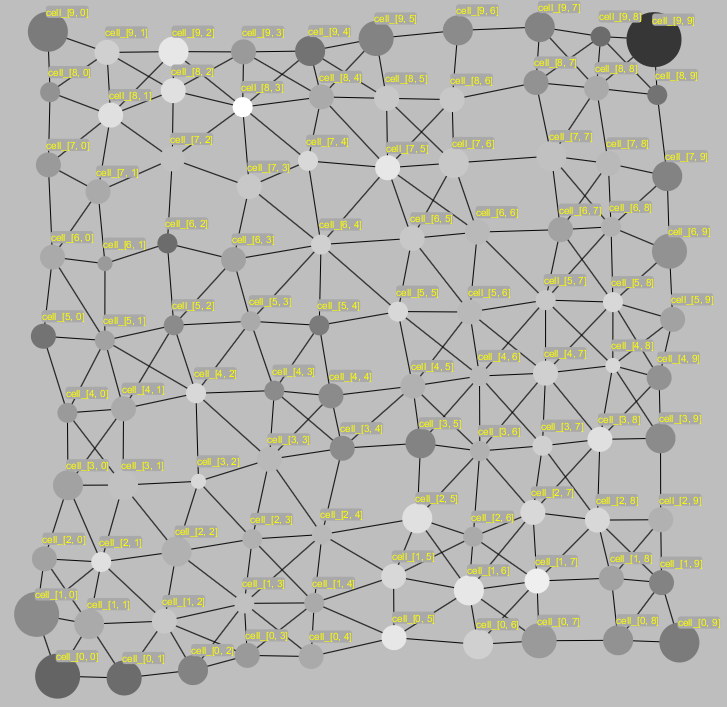
  • Need to generate nomadic, flocking, and stampede generated maps. Done! See below.
  • Redo the proposal so that the Tile View is the central navigation scheme with aspects for users, topics, ratings, etc. Done
  • Generated data for Aaron’s ML sessions. Planned upgrading my box so we can run things on the Titan card
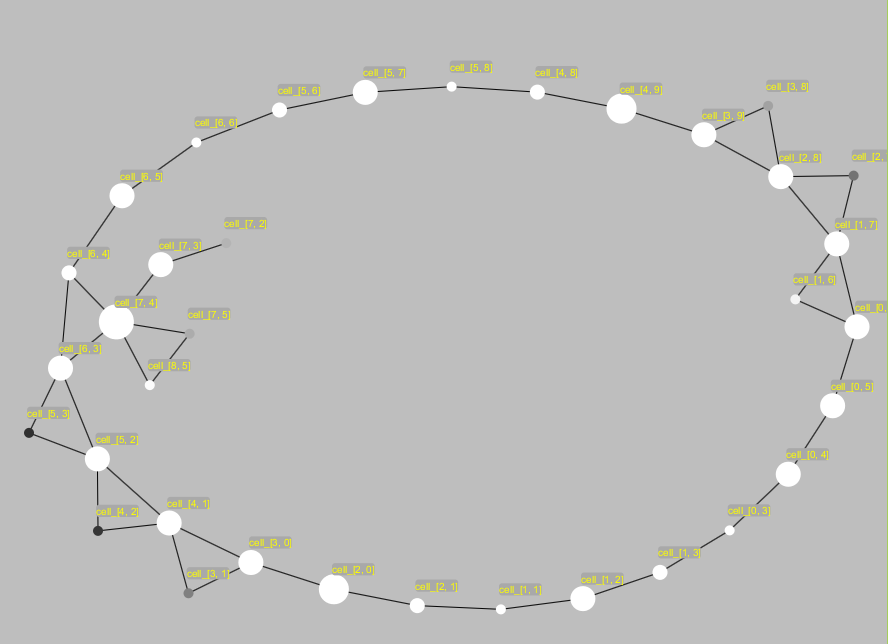
  • Some more results from the belief space mapping effort. Each map is constructed from a 100 sample run over the same 10×10 grid after the simulation stabilized:
    • Here’s a quick overview of the populations: ThreePopulations
    • Stable Nomad behavior map: nomad-stableGood overall coverage as you would expect. Some places have more visitors (the bright spots), but there are no gaps in the belief space.
    • Stable Flocking behavior map: flocking-stableWe can see gaps start to appear in the belief space, but the overall grid structure is still visible at the center of the network where the flock spent most of its time. This is also evident in the bright ring of nodes that represents the cells that the flock traversed while it was orbiting the center area.
    • Stable stampede behavior map: stampede-stableHere, the relationship of the trajectories to the underlying coordinate frame is completely lost. In this case, the boundary of the simulation was reflective, so the stampede bounces around the simulation space. The reason that there is a loop rather than a line is because the tight cluster of agents crossed its path at some point.
  • What could be interesting it to overlay the other graphs on the nomad-produced map. We could see the popular (exploitable) sections of the flocking population while also seeing the areas visited by the stampede. The assumption is that the stampede is engaged in untrustworthy behavior, so those parts would be marked as ‘dangerous’, while the flocking areas would marked as a region of ‘conventional wisdom’ or normative behavior.

Phil 12.28.12

8:30 – 4:30 ASRC MKT

  • Still sick. Nearing bronchitis?
  • Confessions of a Digital Nazi Hunter
  • Phenotyping of Clinical Time Series with LSTM Recurrent Neural Networks
    • We present a novel application of LSTM recurrent neural networks to multi label classification of diagnoses given variable-length time series of clinical measurements. Our method outperforms a strong baseline on a variety of metrics.
    • Scholar Cited by
      • Mapping Patient Trajectories using Longitudinal Extraction and Deep Learning in the MIMIC-III Critical Care Database
        • Electronic Health Records (EHRs) contain a wealth of patient data useful to biomedical researchers. At present, both the extraction of data and methods for analyses are frequently designed to work with a single snapshot of a patient’s record. Health care providers often perform and record actions in small batches over time. By extracting these care events, a sequence can be formed providing a trajectory for a patient’s interactions with the health care system. These care events also offer a basic heuristic for the level of attention a patient receives from health care providers. We show that is possible to learn meaningful embeddings from these care events using two deep learning techniques, unsupervised autoencoders and long short-term memory networks. We compare these methods to traditional machine learning methods which require a point in time snapshot to be extracted from an EHR.
  • Continuing on white paper
  • Moved the Flocking and Herding paper over to the WSC17 format for editing. Will need to move to the WSC18 format when that becomes available