The torrent of false information, such as the election-fraud claims that led to the assault on the U.S. Capitol, Russian disinformation about the invasion of Ukraine and pseudoscientific assertions about the coronavirus pandemic, has emerged despite the astonishing growth of the fact-checking movement. In 2021, there were 391 active fact-checking projects, according to an annual census by the Duke Reporters’ Lab, up from 168 in 2016.
GPT-Agents
Add a “Clamped” button so that each keyword is limited to max number of pulls but not balanced beyond that
Add a “Percent” button so that a certain percentage of tweets are gathered with no max but a minimum of 10
SBIRs
Grinding through the RCSNN paper. I’m beginning to think that this will be harder than the “golf ball interceptor”
We’re still having problems with IT getting the server up
I’m starting to think about a second book about how to egalitarian systems can actively disrupt authoritarian systems in technology-mediated contexts using the concepts of belief space.
Imagine a world in which developers and operators of systems exploit attackers as much as attackers exploit defenders. By leveraging system-design knowledge and modern computing to deploy deception environments, software engineering teams can successfully bamboozle attackers for fun and profit while deepening systems resilience.
GPT Agents
Everything looks like it’s working when I perise the DB. Need to do some counts of the output
Misinformation online poses a range of threats, from subverting democratic processes to undermining public health measures. Proposed solutions range from encouraging more selective sharing by individuals to removing false content and accounts that create or promote it. Here we provide a framework to evaluate interventions aimed at reducing viral misinformation online both in isolation and when used in combination. We begin by deriving a generative model of viral misinformation spread, inspired by research on infectious disease. By applying this model to a large corpus (10.5 million tweets) of misinformation events that occurred during the 2020 US election, we reveal that commonly proposed interventions are unlikely to be effective in isolation. However, our framework demonstrates that a combined approach can achieve a substantial reduction in the prevalence of misinformation. Our results highlight a practical path forward as misinformation online continues to threaten vaccination efforts, equity and democratic processes around the globe.
Book
Start U of Wisc proposal – Whoops! They don’t publish in this area. They do give nice links though
A good proposal will include an accessible overview of the work, a chapter-by-chapter summary, an account of your book’s relationship to comparable or competing works, your assessment of your book’s audience, and practical details including length, number of illustrations, and the status of the work. Most book proposals are 5-10 single-spaced pages long. For suggestions on proposals and other elements of a submission, we highly recommend chapter 5 of William Germano’s Getting It Published.
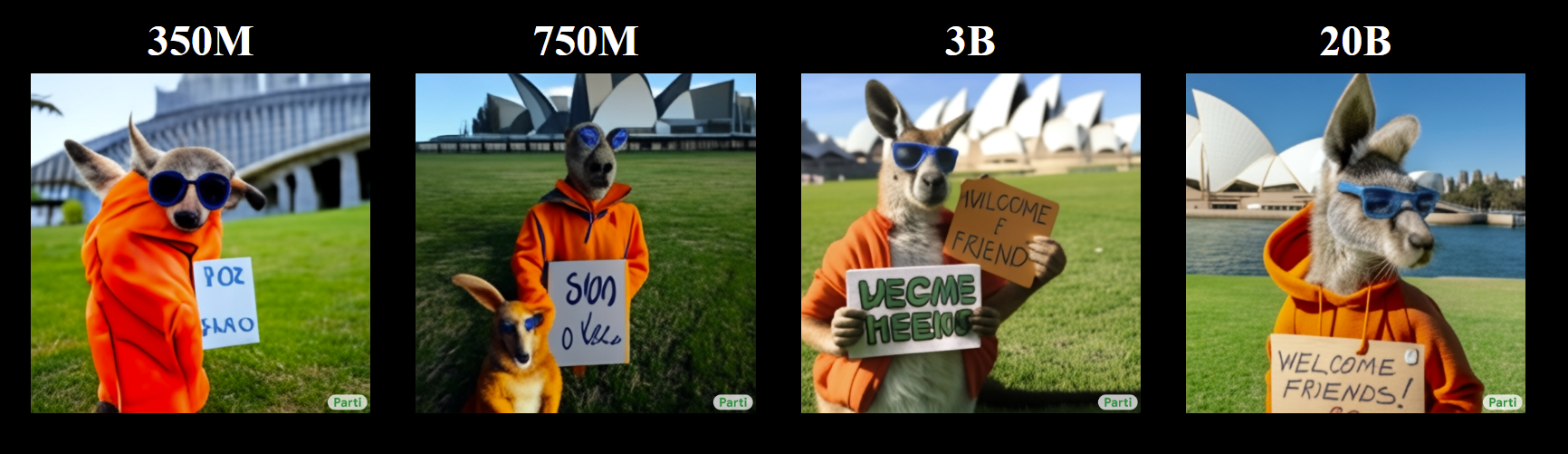
A portrait photo of a kangaroo wearing an orange hoodie and blue sunglasses standing on the grass in front of the Sydney Opera House holding a sign on the chest that says Welcome Friends!
It is interesting that the size of the model does not matter as much for abstract concepts
Infinity
Pinged Nabeel. If that goes well, maybe we can set up a tiny working group? Maybe add Lynnette? Others? We’ll see
Book
I’ve kind of run out of things to do as far as direct content, so I’m playing around with titles using the GPT-3. I have the [insert] prompt between Title: and a brief description from the proposal. The results are pretty interesting:
Humans are a planet-altering force. Gaia Vince argues that our unique ability – compared with other species – to determine the course of our own destiny rests on a special relationship between our genes, environment and culture going back into deep time. It is our collective culture, rather than our individual intelligence, that makes humans unique. Vince shows how four evolutionary drivers – Fire, Language, Beauty and Time – are further transforming our species into a transcendent superorganism: a hyper-cooperative mass of humanity that she calls Homo omnis. Drawing on leading-edge advances in population genetics, archaeology, palaeontology and neuroscience, Transcendence compels us to reimagine ourselves, showing us to be on the brink of something grander – and potentially more destructive.
SBIRs
Look through Github for things like reinforcement learning and agents. Use the Keyword generator
Start the matrix of evaluation tests. Low frequency patterns seem to be hard. Networks like having their average position around zero, with a +/- 1.0 range. Going to set up a list of tests that we can try hyperparameters on
It occurs to me that the concept of a carrier wave might be useful here. Either FM or AM?
I think this is one of those interesting posts about how AI is a tool like other tools. It’s a valid point, but I’m not so sure. In my creative experience there is an initial creative part and then an extensive editing part. Generating that initial content is hard in cases like writing, graphic arts, chorography, etc. It’s not as hard when working with found objects (like photography or this piece by Marcel Duchamp. AI models like Dall-e and GPT-3 change this balance and make the initial creation more working from found objects that are latent in the models.
Coordinated groups of user accounts working together in online social media can be used to manipulate the online discourse and thus is an important area of study. In this study, we work towards a general theory of coordination. There are many ways to coordinate groups online: semantic, social, referral and many more. Each represents a coordination dimension, where the more dimensions of coordination are present for one event, the stronger the coordination present. We build on existing approaches that detect coordinated groups by identifying high levels of synchronized actions within a specified time window. A key concern with this approach is the selection of the time window. We propose a method that selects the optimal window size to accurately capture local coordination while avoiding the capture of coincidental synchronicity. With this enhanced method of coordination detection, we perform a comparative study across four events: US Elections Primaries 2020, Reopen America 2020, Capitol Riots 2021 and COVID Vaccine Release 2021. Herein, we explore the following three dimensions of coordination for each event — semantic, referral and social coordination — and perform group and user analysis within and among the events. This allows us to expose different user coordination behavior patterns and identify narratives and user support themes, hence estimating the degree and theme of coordination.
Pinged Nabeel. We’ll see where that goes
Sent intro to Shannon for Aaron – nope, can’t test out of a BS?
Book
Send a note to MIT Press and see if I can get a proposal template – done!
GPT Agents
Test some downloads
Create experiment, query, tweet database (users table later, based on SELECT DISTINCT on user id’s from the tweet table) got the experiment and query DBs working. Tweets are harder
Safer is a supertanker in advanced state of decay that will break apart or explode if the world does not act. The result will be an environmental and humanitarian catastrophe centered on the coast of a country already devastated by seven years of war and affecting the entire region. The UN is ready to stage an emergency operation to address this threat, but work will only begin when we have the necessary funds.
Transferring knowledge from one domain to another is of practical importance for many tasks in natural language processing, especially when the amount of available data in the target domain is limited. In this work, we propose a novel few-shot approach to domain adaptation in the context of Named Entity Recognition (NER). We propose a two-step approach consisting of a variable base module and a template module that leverages the knowledge captured in pre-trained language models with the help of simple descriptive patterns. Our approach is simple yet versatile and can be applied in few-shot and zero-shot settings. Evaluating our lightweight approach across a number of different datasets shows that it can boost the performance of state-of-the-art baselines by 2-5% F1-score.
Book
Finish proposal? Yes!
Gita Manaktala (Information Science and Communication editor) oversees the MIT Press’s book acquisitions and works closely with our other editors. She acquires her own list of books in the areas of information science, communication, and internet studies. Her interests include networked communication, news and information, privacy, data security, and access to knowledge.
Katie Helke | Editor: I acquire trade books, professional books, crossover books, and (very occasionally) textbooks. Head here if you’d like to learn more about those different book types and some other random publishing stuff that may or may not be useful to you. Head here if you’d like to learn more about the MIT Press, its history, and some of its current initiatives.
GPT-Agents
Continue working on balanced pull. I think I finally got the math right
A clear throughline in this year’s report is the changing habits of younger groups, specifically those under 30, whom news organisations often struggle to reach. Throughout this Executive Summary, and in a separate chapter, we find that this group that has grown up with social media is not just different but more different than they were in the past. We also explore their use of newer visual networks for news such as TikTok and Instagram, with support from a detailed qualitative study in three countries (UK, US, and Brazil).
GPT Agents
Met with Shimei and Jimmy.
added ” OR ” to the input list to handle things like “chinavirus OR china virus”
Still working towards initial corpus creation. Need to store the queries in the db too
No meeting next week
Book
Working on Stripe proposal. Set up the root tex file and reworked the OUP parts. I need to do a first person author bio and a lite version of the comparables
Need to write a marketing plan
SBIRs
Work on RCSNN App
Filtering – done
Color coding dictionary entries by type – got colors working. It is not obvious!
Got a response back and template from Stripe! (marketing plan)
If that doesn’t work, I think it’s time to hire an editor
GPT Agents
Still working on collecting balanced data. I think the trick will be to look for the lowest number of tweets per day starting at the first day of collection and work forward, collecting that many tweets from each keyword, then repeat
For unbalanced, just make the one request and go forward in time until the corpora size is reached?
3:30 Meeting
SBIRs
9:15 standup. Need to get reacquainted with the RCSNN codebase and tool
Six years into the grass-roots movement unleashed by Donald Trump in his first presidential campaign, Angela Rubino is a case study in what that movement is becoming. Suspicious of almost everything, trusting of almost nothing, believing in almost no one other than those who share her unease, she has in many ways become a citizen of a parallel America — not just red America, but another America entirely, one she believes to be awash in domestic enemies, stolen elections, immigrant invaders, sexual predators, the machinations of a global elite and other fresh nightmares revealed by the minute on her social media scrolls. She is known online as “Burnitdown.”
The video of the FBI’s March 31 interview of Rodriguez, released to members of the media by federal prosecutors this week after an order from U.S. District Judge Amy Berman Jackson, is a remarkable look at how a radical Trump supporter came to engage in an act of domestic terrorism in hopes of keeping the former president in office for a second term. An emotional Rodriguez explains how he actually believed Trump’s dangerous lies about the 2020 election, referring to himself as “fucking piece of shit,” “so stupid,” “an asshole,” and “not smart” as he confesses his crimes.
Really good example of stampede behavior
Book
Reworking the proposal
SBIRs
Fix broken things? Not sure what will be needed today






You must be logged in to post a comment.