Category Archives: Mapping

Phil 4.3.18

ASRC MKT 7:00 – 5:30

  • Integrating airplane notes on Influence of augmented humans in online interactions during voting events
  • Follow up on pointing logs
  • World Affairs Council (Part II. Part I is Jennifer Kavanagh and Tom Nichols: The End of Authority)
    • With so many forces undermining democratic institutions worldwide, we wanted a chance to take a step back and provide some perspective. Russian interference in elections here and in Europe, the rise in fake news and a decline in citizen trust worldwide pose a danger. In this second of a three part series, we look at the role of social media and the ways in which it was exploited for the purpose of sowing distrust. Janine Zacharia, former Jerusalem bureau chief and Middle East correspondent for The Washington Post, and Roger McNamee, managing director at Elevation Partners and an early stage investor in Google and Facebook, are in conversation with World Affairs CEO Jane Wales.
    • “The ultimate combination of propaganda and gambling … powered by machine learning”
  • The emergence of consensus: a primer (No Moscovici – odd)
    • The origin of population-scale coordination has puzzled philosophers and scientists for centuries. Recently, game theory, evolutionary approaches and complex systems science have provided quantitative insights on the mechanisms of social consensus. However, the literature is vast and widely scattered across fields, making it hard for the single researcher to navigate it. This short review aims to provide a compact overview of the main dimensions over which the debate has unfolded and to discuss some representative examples. It focuses on those situations in which consensus emerges ‘spontaneously’ in the absence of centralized institutions and covers topics that include the macroscopic consequences of the different microscopic rules of behavioural contagion, the role of social networks and the mechanisms that prevent the formation of a consensus or alter it after it has emerged. Special attention is devoted to the recent wave of experiments on the emergence of consensus in social systems.
  • Need to write up diversity injection proposal
    • Basically updated PSAs for social media
    • Intent is to expand the information horizon, not to counter anything in particular. So it’s not political
    • Presented in a variety of ways (maps, stories and lists)
    • Goes identically into everyone’s feed
    • Can be blocked, but blockers need to be studied
    • More injection as time on site goes up. Particularly with YouTube & FB
  • Working on SASO paper. Made it through discussion

Phil 3.27.18

7:00 – 6:00 ASRC MKT

  •  
  • Continuing with Keras
    • The training process can be stopped when a metric has stopped improving by using an appropriate callback:
      keras.callbacks.EarlyStopping(monitor='val_loss', min_delta=0, patience=0, verbose=0, mode='auto')
    • How to download and install quiver
    • Tried to get Tensorboard working, but it doesn’t connect to the data right?
    • Spent several hours building a neuron that learns in Excel. I’m very happy with it. What?! SingleNeuron
  • This is a really interesting thread. Stonekettle provoked a response that can be measured for variance, and also for the people (and bots?) who participate.
  • Listening to the World Affairs Council on The End of Authority, about social influence and misinformation
    • With so many forces undermining democratic institutions worldwide, we wanted a chance to take a step back and provide some perspective. Russian interference in elections here and in Europe, the rise in fake news and a decline in citizen trust worldwide all pose a danger. In this first of a three-part series, we focus on the global erosion of trust. Jennifer Kavanagh, political scientist at the RAND Corporation and co-author of “Truth Decay”, and Tom Nichols, professor at the US Naval War college and author of “The Death of Expertise,” are in conversation with Ray Suarez, former chief national correspondent for PBS NewsHour.
  • Science maps for kids
    • Dominic Walliman has created science infographics and animated videos that explore how the fields of biology, chemistry, computer science, physics, and mathematics relate.
  • The More you Know (Wikipedia) might serve as a template for diversity injection
  • A list of the things that Google knows about you via Twitter
  • Collective movement ecology
    • The collective movement of animals is one of the great wonders of the natural world. Researchers and naturalists alike have long been fascinated by the coordinated movements of vast fish schools, bird flocks, insect swarms, ungulate herds and other animal groups that contain large numbers of individuals that move in a highly coordinated fashion ([1], figure 1). Vividly worded descriptions of the behaviour of animal groups feature prominently at the start of journal articles, book chapters and popular science reports that deal with the field of collective animal behaviour. These descriptions reflect the wide appeal of collective movement that leads us to the proximate question of how collective movement operates, and the ultimate question of why it occurs (sensu[2]). Collective animal behaviour researchers, in collaboration with physicists, computer scientists and engineers, have often focused on mechanistic questions [37] (see [8] for an early review). This interdisciplinary approach has enabled the field to make enormous progress and revealed fundamental insights into the mechanistic basis of many natural collective movement phenomena, from locust ‘marching bands’ [9] through starling murmurations [10,11].
  • Starting to read Influence of augmented humans in online interactions during voting events
    • Massimo Stella (Scholar)
    • Marco Cristoforetti (Scholar)
    • Marco Cristoforetti (Scholar)
    • Abstract: Overwhelming empirical evidence has shown that online social dynamics mirrors real-world events. Hence, understanding the mechanisms leading to social contagion in online ecosystems is fundamental for predicting, and even manouvering, human behavior. It has been shown that one of such mechanisms is based on fabricating armies of automated agents that are known as social bots. Using the recent Italian elections as an emblematic case study, here we provide evidence for the existence of a special class of highly influential users, that we name “augmented humans”. They exploit bots for enhancing both their visibility and influence, generating deep information cascades to the same extent of news media and other broadcasters. Augmented humans uniformly infiltrate across the full range of identified clusters of accounts, the latter reflecting political parties and their electoral ranks.
    • Bruter and Harrison [19] shift the focus on the psychological in uence that electoral arrangements exert on voters by altering their emotions and behavior. The investigation of voting from a cognitive perspective leads to the concept of electoral ergonomics: Understanding optimal ways in which voters emotionally cope with voting decisions and outcomes leads to a better prediction of the elections.
    • Most of the Twitter interactions are from humans to bots (46%); Humans tend to interact with bots in 56% of mentions, 41% of replies and 43% of retweets. Bots interact with humans roughly in 4% of the interactions, independently on interaction type. This indicates that bots play a passive role in the network but are rather highly mentioned/replied/retweeted by humans.
    • bots’ locations are distributed worldwide and they are present in areas where no human users are geo-localized such as Morocco.
    • Since the number of social interactions (i.e., the degree) of a given user is an important estimator of the in uence of user itself in online social networks [17, 22], we consider a null model fixing users’ degree while randomizing their connections, also known as configuration model [23, 24].
    • During the whole period, bot bot interactions are more likely than random (Δ > 0), indicating that bots tend to interact more with other bots rather than with humans (Δ < 0) during Italian elections. Since interactions often encode the spread of a given content online [16], the positive assortativity highlights that bots share contents mainly with each other and hence can resonate with the same content, be it news or spam.

Phil 3.21.18

7:00 – 6:00 ASRC MKT, with some breaks for shovelling

  • First day of spring. Snow on the ground and more in the forecast.
  • I’ve been thinking of ways to describe the differences between information visualizations with respect to maps. Here’s The Odyssey as a geographic map:
  • Odysseus'_Journey
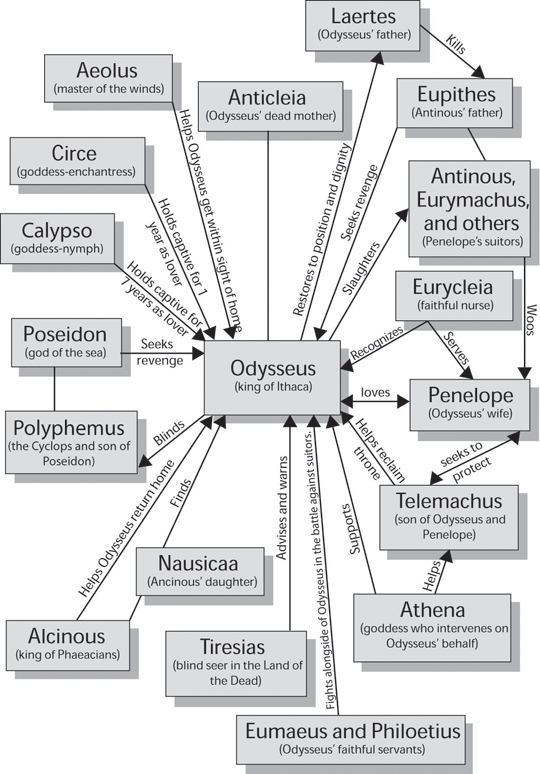
  • The first thing that I notice is just how far Odysseus travelled. That’s about half of the Mediterranean! I thought that it all happened close to Greece. Maps afford this understanding. They are diagrams that support the plotting of trajectories.Which brings me to the point that we lose a lot of information about relationships in narratives. That’s not their point. This doesn’t mean that non-map diagrams don’t help sometimes. Here’s a chart of the characters and their relationships in the Odyssey:
  •  odyssey
  • There is a lot of information here that is helpful. And this I do remember and understood from reading the book. Stories are good about depicting how people interact. But though this chart shows relationships, the layout does not really support navigation. For example, the gods are all related by blood and can pretty much contact each other at will. This chart would have Poseidon accessing Aeolus and  Circe by going through Odysseus.  So this chart is not a map.
  • Lastly, is the relationship that comes at us through search. Because the implicit geographic information about the Odyssey is not specifically in the text, a search request within the corpora cannot produce a result that lets us integrate it
  • OdysseySearchJourney
  • There is a lot of ambiguity in this result, which is similar to other searches that I tried which included travel, sail and other descriptive terms. This doesn’t mean that it’s bad, it just shows how search does not handle context well. It’s not designed to. It’s designed around precision and recall. Context requires a deeper understanding about meaning, and even such recent innovations such as sharded views with cards, single answers, and pro/con results only skim the surface of providing situationally appropriate, meaningful context.
  • Ok, back to tensorflow. Need to update my computer first….
    • Updating python to 64-bit – done
    • Installing Visual Studio – sloooooooooooooooooooooowwwwwwwwwwwww. Done
    • Updating graphics drivers – done
    • Updating tensorflow
    • Updating numpy with intel math
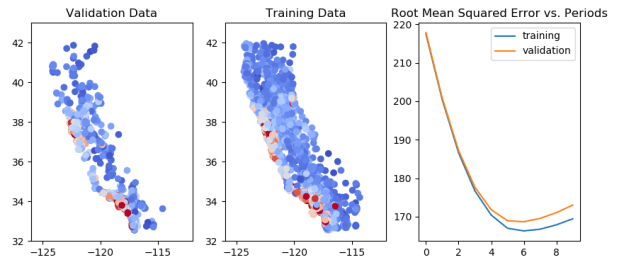
  • At the Validation section in the TF crash course. Good progress. drilling down into all the parts of python that I’ve forgotten. And I got to make a pretty picture: TF_crash_course1

Phil 3.16.18

7:00 – 4:00 ASRC MKT

    • Umwelt
      • In the semiotic theories of Jakob von Uexküll and Thomas A. Sebeokumwelt (plural: umwelten; from the German Umwelt meaning “environment” or “surroundings”) is the “biological foundations that lie at the very epicenter of the study of both communication and signification in the human [and non-human] animal”.[1] The term is usually translated as “self-centered world”.[2] Uexküll theorised that organisms can have different umwelten, even though they share the same environment. The subject of umwelt and Uexküll’s work is described by Dorion Sagan in an introduction to a collection of translations.[3] The term umwelt, together with companion terms umgebungand innenwelt, have special relevance for cognitive philosophers, roboticists and cyberneticians, since they offer a solution to the conundrum of the infinite regress of the Cartesian Theater.
    • Benjamin Kuipers
      • How Can We Trust a Robot? (video)
        • Advances in artificial intelligence (AI) and robotics have raised concerns about the impact on our society of intelligent robots, unconstrained by morality or ethics
      • Socially-Aware Navigation Using Topological Maps and Social Norm Learning
        • We present socially-aware navigation for an intelligent robot wheelchair in an environment with many pedestrians. The robot learns social norms by observing the behaviors of human pedestrians, interpreting detected biases as social norms, and incorporating those norms into its motion planning. We compare our socially-aware motion planner with a baseline motion planner that produces safe, collision-free motion. The ability of our robot to learn generalizable social norms depends on our use of a topological map abstraction, so that a practical number of observations can allow learning of a social norm applicable in a wide variety of circumstances. We show that the robot can detect biases in observed human behavior that support learning the social norm of driving on the right. Furthermore, we show that when the robot follows these social norms, its behavior influences the behavior of pedestrians around it, increasing their adherence to the same norms. We conjecture that the legibility of the robot’s normative behavior improves human pedestrians’ ability to predict the robot’s future behavior, making them more likely to follow the same norm.
    • Erin’s defense
      • Nice slides!
      • Slide 4 – narrowing from big question to dissertation topic. Nice way to set up framing
      • Intellectual function vs. adaptive behavior
      • Loss of self-determination
      • Maker culture as a way of having your own high-dimensional vector? Does this mean that the maker culture is inherently more exploratory when compared to …?
      • “Frustration is an easy way to end up in off-task behavior”
      • Peer learning as gradient descent?
      • Emic ethnography
      • Pervasive technology in education
      • Turn-taking
      • Antecedent behavior consequence theory
      • Reducing the burden on the educators. Low-level detection and to draw attention to the educator and annotate. Capturing and labeling
      • Helina – bring the conclusions back to the core questions
      • Diversity injection works! Mainstream students gained broader appreciation of students with disability
      • Q: Does it make more sense to focus on potentially charismatic technologies that will include the more difficult outliers even if it requires a breakthrough? Or to make incremental improvements that can improve accessibility to some people with disabilities faster?
      • Boris analytic software


Phil 2.27.18

7:00 – 5:00 ASRC MKT

  • More BIC
    • A mechanism is a general process. The idea (which I here leave only roughly stated) is of a causal process which determines (wholly or partly) what the agents do in any simple coordination context. It will be seen that all the examples I have mentioned are of this kind; contrast a mechanism that applies, say, only in two-person cases, or only to matching games, or only in business affairs. In particular, team reasoning is this kind of thing. It applies to any simple coordination context whatsoever. It is a mode of reasoning rather than an argument specific to a context. (pg 126)
    • In particular, [if U is Paretian] the correct theory of Hi-Lo says that all play A. In short, an intuition in favour of C’ supports A-playing in Hi-Lo if we believe that all players are rational and there is one rationality. (pg 130)
      • Another form of dimension reduction – “We are all the same”
  • Machine Theory of Mind
    • We design a Theory of Mind neural network – a ToMnet – which uses meta-learning to build models of the agents it encounters, from observations of their behaviour alone. Through this process, it acquires a strong prior model for agents’ behaviour, as well as the ability to bootstrap to richer predictions about agents’ characteristics and mental states using only a small number of behavioural observations. We apply the ToMnet to agents behaving in simple gridworld environments, showing that it learns to model random, algorithmic, and deep reinforcement learning agents from varied populations, and that it passes classic ToM tasks such as the “SallyAnne” test of recognising that others can hold false beliefs about the world
  • Classifier Technology and the Illusion of Progress (David Hand, 2006)
    • A great many tools have been developed for supervised classification, ranging from early methods such as linear discriminant analysis through to modern developments such as neural networks and support vector machines. A large number of comparative studies have been conducted in attempts to establish the relative superiority of these methods. This paper argues that these comparisons often fail to take into account important aspects of real problems, so that the apparent superiority of more sophisticated methods may be something of an illusion. In particular, simple methods typically yield performance almost as good as more sophisticated methods, to the extent that the difference in performance may be swamped by other sources of uncertainty that generally are not considered in the classical supervised classification paradigm.
  • Sensitivity and Generalization in Neural Networks: an Empirical Study
    • Neural nets generalize better when they’re larger and less sensitive to their inputs, are less sensitive near training data than away from it, and other results from massive experiments. (From @Jascha)
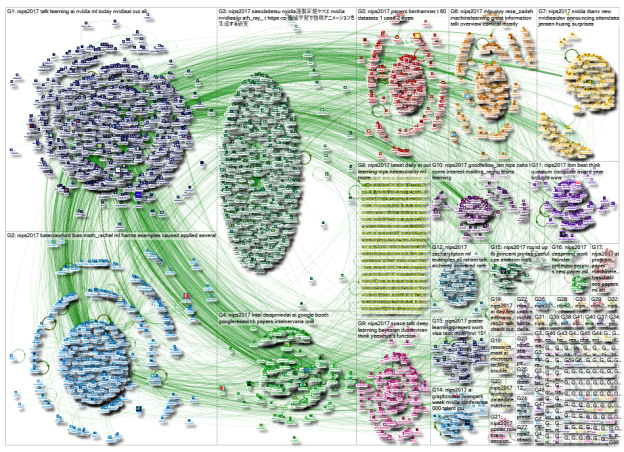
  • Graph-131941
    • The graph represents a network of 6,716 Twitter users whose recent tweets contained “#NIPS2017”, or who were replied to or mentioned in those tweets, taken from a data set limited to a maximum of 18,000 tweets. The network was obtained from Twitter on Friday, 08 December 2017 at 15:30 UTC.
  • Back to Basics: Benchmarking Canonical Evolution Strategies for Playing Atari
    • Evolution Strategies (ES) have recently been demonstrated to be a viable alternative to reinforcement learning (RL) algorithms on a set of challenging deep RL problems, including Atari games and MuJoCo humanoid locomotion benchmarks. While the ES algorithms in that work belonged to the specialized class of natural evolution strategies (which resemble approximate gradient RL algorithms, such as REINFORCE), we demonstrate that even a very basic canonical ES algorithm can achieve the same or even better performance. This success of a basic ES algorithm suggests that the state-of-the-art can be advanced further by integrating the many advances made in the field of ES in the last decades. 
      We also demonstrate qualitatively that ES algorithms have very different performance characteristics than traditional RL algorithms: on some games, they learn to exploit the environment and perform much better while on others they can get stuck in suboptimal local minima. Combining their strengths with those of traditional RL algorithms is therefore likely to lead to new advances in the state of the art.
  • Copied over SheetToMap to the Applications file on TOSHIBA
  • Created a Data folder, which has all the input and output files for the various applications
  • Need to add a curDir variable to LMN
  •  Presentation:
    • I need to put together a 2×2 payoff matrix that covers nomad/flock/stampede – done
    • Some more heat map views, showing nomad, flocking – done
    • De-uglify JuryRoom
    • Timeline of references – done
    • Collapse a few pages 22.5 minutes for presentation and questions – done
  • Start on white paper

Phil 2.16.18

7:00 – 3:00 ASRC MKT

  • Finished the first draft of the CI 2018 extended abstract!
  • And I also figured out how to run the sub projects in the Ultimate Angular src collection. You need to go to the root directory for the chapter, run yarn install, then yarn start. Everything works then.
  • Trolls on Twitter: How Mainstream and Local News Outlets Were Used to Drive a Polarized News Agenda
    • This is the kind of data that compels us to rethink how we understand Twitter — and what I feel are more influential platforms for reaching regular people that include Facebook, Instagram, Google, and Tumblr, as well as understand ad tech tracking and RSS feedharvesting as part of the greater propaganda ecosystem.
  • NELA News credibility classification toolkit
    • The News Landscape (NELA) Toolkit is an open source toolkit for the systematic exploration of the news landscape. The goal of NELA is to both speed up human fact-checking efforts and increase the understanding of online news as a whole. NELA is made up of multiple indepedent modules, that work at article level granularity: reliability prediction, political impartiality prediction, text objectivity prediction, and reddit community interest prediction. As well as, modules that work at source level granularity: reliability prediction, political impartiality prediction, content-based feature visualization. 
  • New benchmarks for approximate nearest neighbors
    • I built ANN-benchmarksto address this. It pits a bunch of implementations (including Annoy) against each other in a death match: which one can return the most accurate nearest neighbors in the fastest time possible. It’s not a new project, but I haven’t actively worked on it for a while.
  • Systems of Global Governance in the Era of Human-Machine Convergence
    • Technology is increasingly shaping our social structures and is becoming a driving force in altering human biology. Besides, human activities already proved to have a significant impact on the Earth system which in turn generates complex feedback loops between social and ecological systems. Furthermore, since our species evolved relatively fast from small groups of hunter-gatherers to large and technology-intensive urban agglomerations, it is not a surprise that the major institutions of human society are no longer fit to cope with the present complexity. In this note we draw foundational parallelisms between neurophysiological systems and ICT-enabled social systems, discussing how frameworks rooted in biology and physics could provide heuristic value in the design of evolutionary systems relevant to politics and economics. In this regard we highlight how the governance of emerging technology (i.e. nanotechnology, biotechnology, information technology, and cognitive science), and the one of climate change both presently confront us with a number of connected challenges. In particular: historically high level of inequality; the co-existence of growing multipolar cultural systems in an unprecedentedly connected world; the unlikely reaching of the institutional agreements required to deviate abnormal trajectories of development. We argue that wise general solutions to such interrelated issues should embed the deep understanding of how to elicit mutual incentives in the socio-economic subsystems of Earth system in order to jointly concur to a global utility function (e.g. avoiding the reach of planetary boundaries and widespread social unrest). We leave some open questions on how techno-social systems can effectively learn and adapt with respect to our understanding of geopolitical complexity.

Phil 2.14.18

7:00 – 4:00 ASRC

  • Stampede? Herding? Twitter deleted 200,000 Russian troll tweets. Read them here.
    • Twitter doesn’t make it easy to track Russian propaganda efforts — this database can help
  • Add a “show all trajectories” checkbox.
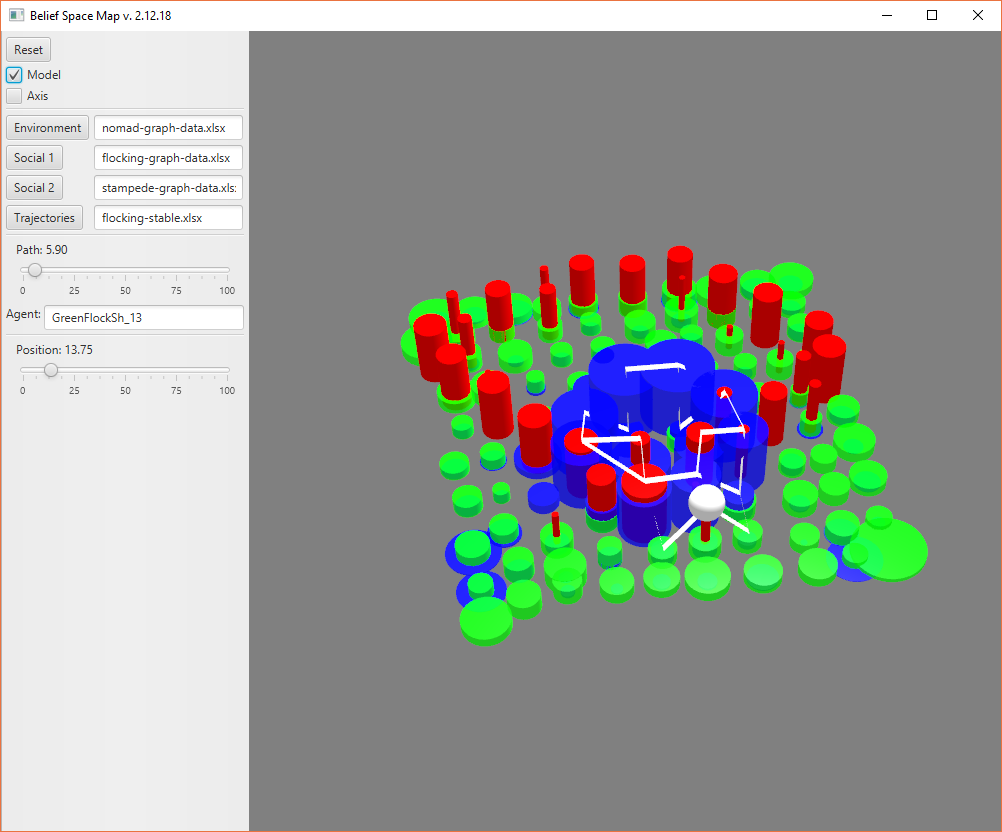
    • That’s a nice visualization that shows the idea of the terrain uncovered by the trajectories: 2018-02-14
  • Continue with paper – down to 3 pages!
  • Continue with slides. Initial walkthrough with Aaron
  • 3:00 – 4:00 A2P meeting

Phil 2.13.18

7:00 – 4:00 ASRC MKT

  • UMAP: Uniform Manifold Approximation and Projection for Dimension Reduction
    • UMAP (Uniform Manifold Approximation and Projection) is a novel manifold learning technique for dimension reduction. UMAP is constructed from a theoretical framework based in Riemannian geometry and algebraic topology. The result is a practical scalable algorithm that applies to real world data. The UMAP algorithm is competitive with t-SNE for visualization quality, and arguably preserves more of the global structure with superior run time performance. Furthermore, UMAP as described has no computational restrictions on embedding dimension, making it viable as a general purpose dimension reduction technique for machine learning.
  • How Prevalent are Filter Bubbles and Echo Chambers on Social Media? Not as Much as Conventional Wisdom Has It
    • Yet, as Rasmus points out, conventional wisdom seems to be stuck with the idea that social media constitute filter bubbles and echo chambers, where most people only, or mostly, see political content they already agree with. It is definitely true that there is a lot of easily accessible, clearly identifiable, highly partisan content on social media. It is also true that, to some extent, social media users can make choices as to which sources they follow and engage with. Whether people use these choice affordances solely to flock to content reinforcing their political preferences and prejudices, filtering out or avoiding content that espouses other viewpoints, is, however, an empirical question—not a destiny inscribed in the way social media and their algorithms function.
  • He Predicted The 2016 Fake News Crisis. Now He’s Worried About An Information Apocalypse.
    • That future, according to Ovadya, will arrive with a slew of slick, easy-to-use, and eventually seamless technological tools for manipulating perception and falsifying reality, for which terms have already been coined — “reality apathy,” “automated laser phishing,” and “human puppets.”
  • Finish first pass at DC slides – done!
  • Begin trimming paper – good progress.
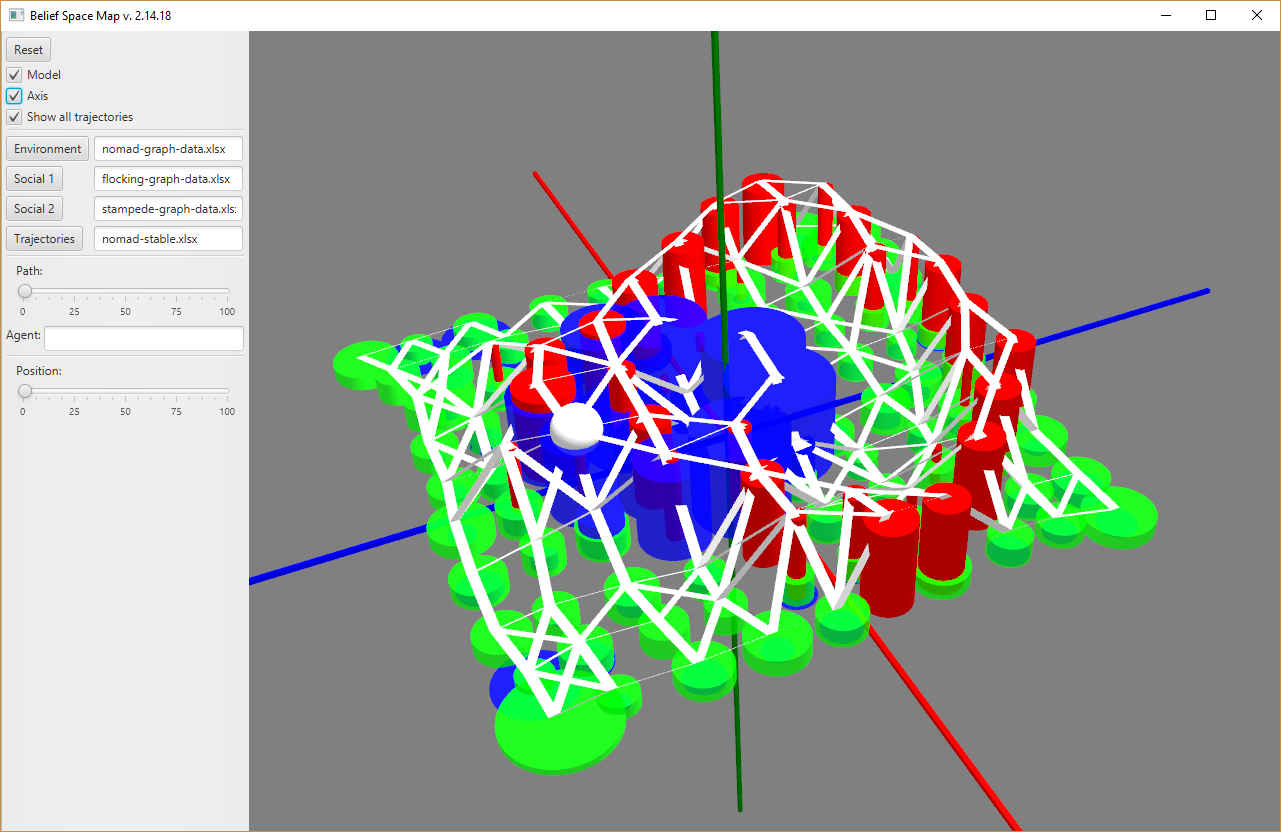
  • Add a slider that lets the user interactively move a token along the selected trajectory path – done. Yes, it looks like a golf ball on a tee… Capture
  • Sprint planning

2.9.18

7:00 – 5:00 ASRC MKT

  • Add something about a population of ants – done
  • Add loaders for the three populations, and then one for trajectories
    • Promoted WeightWidget to JavaUtils
    • Moving 3d and UI building out of start
    • Ugh, new IntelliJ
    • Made the graph pieces selectable
    • Got drawmode (LINE) working
    • Reading in trajectories
    • Need to load each as a child and then draw all of them first, then make that selectable. Done!
  • Go over draft with Aaron. Hand off for rewrite 1? Nope – family emergency
  • 2:00 meeting with Aaron and IC team? Nope
  • Intro to deep learning course from MIT: introtodeeplearning.com
    • An introductory course on deep learning methods with applications to machine translation, image recognition, game playing, image generation and more. A collaborative course incorporating labs in TensorFlow and peer brainstorming along with lectures. Course concludes with project proposals with feedback from staff and panel of industry sponsors.
  • Topics, Events, Stories in Social Media
    • This thesis focuses on developing methods for social media analysis. Specifically, five directions are proposed here: 1) semi-supervised detection for targeted-domain events, 2) topical interaction study among multiple datasets, 3) discriminative learning about the identifications for common and distinctive topics, 4) epidemics modeling for flu forecasting with simulation via signals from social media data, 5) storyline generation for massive unorganized documents.
  • Communication by virus
    • The standard way to think about neurons is somewhat passive. Yes, they can exciteor inhibit the neurons they communicate with but, at the end of the day, they are passively relaying whatever information they contain. This is true not only in biologicalneurons but also in artificial neural networks. 

Phil 2.7/18

7:30 – 5:30 ASRC MKT

  • Freezing rain and general ick, so I’m working from home. Thus leading to the inevitable updating of IntelliJ
  • Working on the 3D mapping app.
    • Reading in single spreadsheet with nomad graph info
    • Building a NodeInfo inner class to keep the nomad positions for the other populations
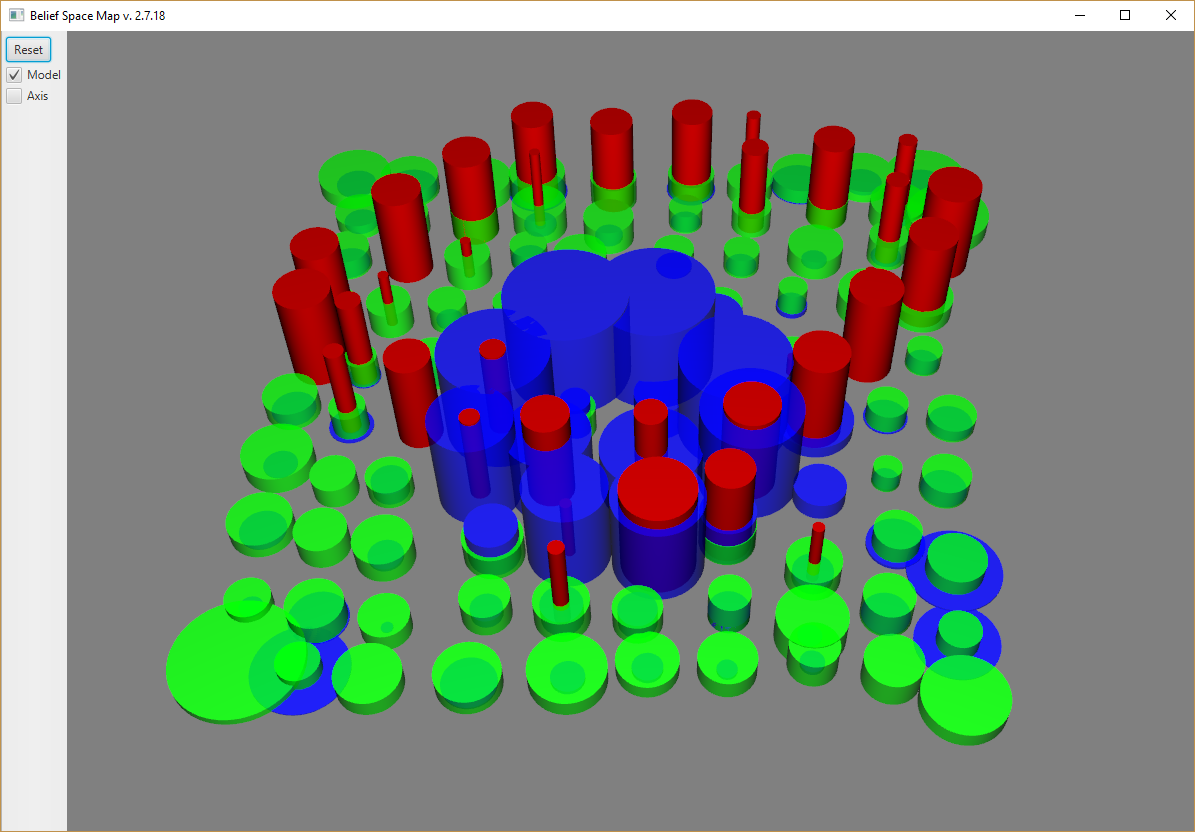
    • Working! 2018-02-07
    • Better: 2018-02-07 (2)
    • Resisting the urge to code more and getting back to the extended abstract. I also need to add a legend to the above pix.
  • Back to extended abstract
    • Added results and future work section
    • got all the pictures in
    • Currently at 3 pages plus. Not horrible.
  • Demographics and Dynamics of Mechanical Turk Workers
    • There are about 100K-200K unique workers on Amazon. On average, there are 2K-5K workers active on Amazon at any given time, which is equivalent to having 10K-25K full-time employees. On average, 50% of the worker population changes within 12-18 months. Workers exhibit widely different patterns of activity, with most workers being active only occasionally, and few workers being very active. Combining our results with the results from Hara et al, we see that MTurk has a yearly transaction volume of a few hundreds of millions of dollars.

Phil 1.16.2018

ASRC MKT 7:00 – 4:30

  • Tit for tat in heterogeneous populations
    • The “iterated prisoner’s dilemma” is now the orthodox paradigm for the evolution of cooperation among selfish individuals. This viewpoint is strongly supported by Axelrod’s computer tournaments, where ‘tit for tat’ (TFT) finished first. This has stimulated interest in the role of reciprocity in biological societies. Most theoretical investigations, however, assumed homogeneous populations (the setting for evolutionary stable strategies) and programs immune to errors. Here we try to come closer to the biological situation by following a program that takes stochasticities into account and investigates representative samples. We find that a small fraction of TFT players is essential for the emergence of reciprocation in a heterogeneous population, but only paves the way for a more generous strategy. TFT is the pivot, rather than the aim, of an evolution towards cooperation.
    • It’s a Nature Note, so a quick read. In this case, the transition is from AllD->TFT->GTFT, where evolution stops.
  • A strategy of win-stay, lose-shift that outperforms tit-for-tat in the Prisoner’s Dilemma game
    • The Prisoner’s Dilemma is the leading metaphor for the evolution of cooperative behaviour in populations of selfish agents, especially since the well-known computer tournaments of Axelrod and their application to biological communities. In Axelrod’s simulations, the simple strategy tit-for-tat did outstandingly well and subsequently became the major paradigm for reciprocal altruism. Here we present extended evolutionary simulations of heterogeneous ensembles of probabilistic strategies including mutation and selection, and report the unexpected success of another protagonist: Pavlov. This strategy is as simple as tit-for-tat and embodies the fundamental behavioural mechanism win-stay, lose-shift, which seems to be a widespread rule. Pavlov’s success is based on two important advantages over tit-for-tat: it can correct occasional mistakes and exploit unconditional cooperators. This second feature prevents Pavlov populations from being undermined by unconditional cooperators, which in turn invite defectors. Pavlov seems to be more robust than tit-for-tat, suggesting that cooperative behaviour in natural situations may often be based on win-stay, lose-shift.
    • win-stay = exploit, lose-shift = explore
  • Five rules for the evolution of cooperation
    • Cooperation is needed for evolution to construct new levels of organization. The emergence of genomes, cells, multi-cellular organisms, social insects and human society are all based on cooperation. Cooperation means that selfish replicators forgo some of their reproductive potential to help one another. But natural selection implies competition and therefore opposes cooperation unless a specific mechanism is at work. Here I discuss five mechanisms for the evolution of cooperation: kin selection, direct reciprocity, indirect reciprocity, network reciprocity and group selection. For each mechanism, a simple rule is derived which specifies whether natural selection can lead to cooperation.
  • Added a paragraph to the previous work section to include Tit-for-Tat and Milti-armed Bandit previous work.
  • Worked with Aaron on setting up sprint goals

Phil 1.15.18

7:00 – 3:30 ASRC MKT

  • Individual mobility and social behaviour: Two sides of the same coin
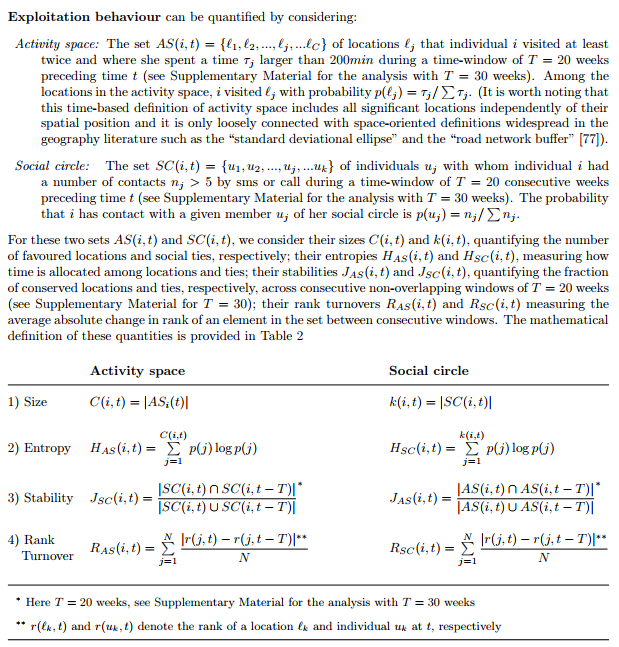
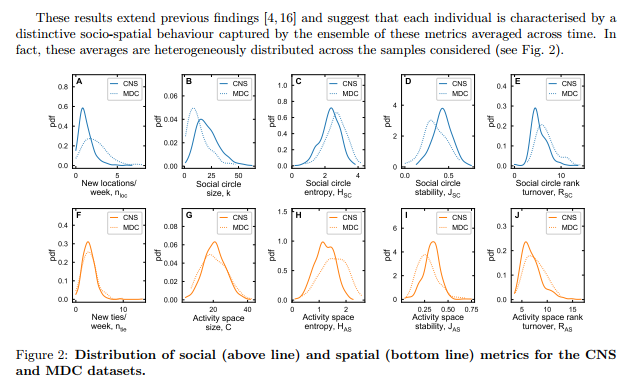
    • According to personality psychology, personality traits determine many aspects of human behaviour. However, validating this insight in large groups has been challenging so far, due to the scarcity of multi-channel data. Here, we focus on the relationship between mobility and social behaviour by analysing two high-resolution longitudinal datasets collecting trajectories and mobile phone interactions of ∼ 1000 individuals. We show that there is a connection between the way in which individuals explore new resources and exploit known assets in the social and spatial spheres. We point out that different individuals balance the exploration-exploitation trade-off in different ways and we explain part of the variability in the data by the big five personality traits. We find that, in both realms, extraversion correlates with an individual’s attitude towards exploration and routine diversity, while neuroticism and openness account for the tendency to evolve routine over long time-scales. We find no evidence for the existence of classes of individuals across the spatio-social domains. Our results bridge the fields of human geography, sociology and personality psychology and can help improve current models of mobility and tie formation.
    • This work has ways of identifying explorers and exploiters programmatically.
    • Exploit
    • SocialSpatial
  • Reading the Google Brain team’s year in review in two parts
    • From part two: We have also teamed up with researchers at leading healthcare organizations and medical centers including StanfordUCSF, and University of Chicago to demonstrate the effectiveness of using machine learning to predict medical outcomes from de-identified medical records (i.e. given the current state of a patient, we believe we can predict the future for a patient by learning from millions of other patients’ journeys, as a way of helping healthcare professionals make better decisions). We’re very excited about this avenue of work and we look to forward to telling you more about it in 2018
    • FacetsFacets contains two robust visualizations to aid in understanding and analyzing machine learning datasets. Get a sense of the shape of each feature of your dataset using Facets Overview, or explore individual observations using Facets Dive.
  • Found this article on LSTM-based prediction for robots and sent it to Aaron: Deep Episodic Memory: Encoding, Recalling, and Predicting Episodic Experiences for Robot Action Execution
  • Working through Beyond Individual Choice – Actually, wound up going Complexity LabsGame Theory course
    • Social traps are stampedes? Sliding reinforcers (lethal barrier)
    • The transition from Tit-for-tat (TFT) to generous TFT to cooperate always, to defect always has similarities to the excessive social trust stampede as well.
    • Unstable cycling vs. evolutionarily stable strategies
    • Replicator dynamic model: Explore/Exploit
      • In mathematics, the replicator equation is a deterministic monotone non-linear and non-innovative game dynamic used in evolutionary game theory. The replicator equation differs from other equations used to model replication, such as the quasispecies equation, in that it allows the fitness function to incorporate the distribution of the population types rather than setting the fitness of a particular type constant. This important property allows the replicator equation to capture the essence of selection. Unlike the quasispecies equation, the replicator equation does not incorporate mutation and so is not able to innovate new types or pure strategies.
    • Fisher’s Fundamental Theorem “The rate of increase in fitness of any organism at any time is equal to its genetic variance in fitness at that time.
    • Explorers are a form of weak ties, which is one of the reasons they add diversity. Exploiters are strong ties
  • I also had a thought about the GPM simulator. I could add an evolutionary component that would let agents breed, age and die to see if Social Influence Horizon and Turn Rate are selected towards any attractor. My guess is that there is a tension between explorers and stampeders that can be shown to occur over time.

Phil 1.11.18

7:00 – 4:00 ASRC MKT

  • Sprint review – done! Need to lay out the detailed design steps for the next sprint.

The Great Socio-cultural User Interfaces: Maps, Stories, and Lists

Maps, stories, and lists are ways humans have invented to portray and interact with information. They exist on a continuum from order through complexity to exploration.

Why these three forms? In some thoughts on alignment in belief space, I discussed how populations exhibiting collective intelligence are driven to a normal distribution with complex, flocking behavior in the middle, bounded on one side by excessive social conformity, and a nomadic diaspora of explorers on the other. I think stories, lists, and maps align with these populations. Further, I believe that these forms emerged to meet the needs of these populations, as constrained by human sensing and processing capabilities.

Lists

Lists are instruments of order. They exist in many forms, including inventories, search engine results, network graphs, and games of chance and crossword puzzles. Directions, like a business plan or a set of blueprints, are a form of list. So are most computer programs. Arithmetic, the mathematics of counting, also belongs to this class.

For a population that emphasizes conformity and simplified answers, lists are a powerful mechanism we use to simplify things. Though we can recognize easily, recall is more difficult. Psychologically, we do not seem to be naturally suited for creating and memorizing lists. It’s not surprising then that there is considerable evidence that writing was developed initially as a way of listing inventories, transactions, and celestial events.

In the case of an inventory, all we have to worry about is to verify that the items on the list are present. If it’s not on the list, it doesn’t matter. Puzzles like crosswords are list like in that they contain all the information needed to solve them. The fact that they cannon be solved without a pre-existing cultural framework is an indicator of their relationship to the well-ordered, socially aligned side of the spectrum.

Stories

Lists transition into stories when games of chance have an opponent. Poker tells a story. Roulette can be a story where the opponent is The House.

Stories convey complexity, framed in a narrative arc that contains a heading and a velocity. Stories can be resemble lists. An Agatha Christie  murder mystery is a storified list, where all the information needed to solve the crime (the inventory list), is contained in the story. At the other end of the spectrum, is a scientific paper which uses citations to act as markers into other works. Music, images, movies, diagrams and other forms can also serve as storytelling mediums. Mathematics is not a natural fit here, but iterative computation can be, where the computer becomes the storyteller.

Emergent Collective behavior requires more complex signals that support the understanding the alignment and velocity of others, so that internal adjustments can be made to stay with the local group so as not to be cast out or lost to the collective. Stories can indicate the level of dynamism supported by the group (wily Odysseus, vs. the Parable of the Workers in the Vineyard). They rally people to the cause or serve as warnings. Before writing, stories were told within familiar social frames. Even though the storyteller might be a traveling entertainer, the audience would inevitably come from an existing community. The storyteller then, like improvisational storytellers today, would adjust elements of the story for the audience.

This implies a few things: first, audiences only heard stories like this if they really wanted to. Storytellers would avoid bad venues, so closed-off communities would stay decoupled from other communities until something strong enough came along to overwhelm their resistance. Second, high-bandwidth communication would have to be hyperlocal, meaning dynamic collective action could only happen on small scales. Collective action between communities would have to be much slower. Technology, beginning with writing would have profound effects. Evolution would only have at most 200 generations to adapt collective behavior. For such a complicated set of interactions, that doesn’t seem like enough time. More likely we are responding to modern communications with the same mental equipment as our Sumerian ancestors.

Maps

Maps are diagrams that support autonomous trajectories. Though the map itself influences the view through constraints like boundaries and projections, nonetheless an individual can find a starting point, choose a destination, and figure out their own path to that destination. Mathematics that support position and velocity are often deeply intertwined with with maps.

Nomadic, exploratory behavior is not generally complex or emergent. Things need to work, and simple things work best. To survive alone, an individual has to be acutely aware of the surrounding environment, and to be able to react effectively to unforeseen events.

Maps are uniquely suited to help in these situations because they show relationships that support navigation between elements on the map.  These paths can be straight or they may meander. To get to the goal directly may be too far, and a set of paths that incrementally lead to the goal can be constructed. The way may be blocked, requiring the map to be updated and a new route to be found.

In other words, maps support autonomous reasoning about a space. There is no story demanding an alignment. There is not a list of routes that must be exclusively selected from. Maps, in short, afford informed, individual response to the environment. These affordances can be seen in the earliest maps. They are small enough to be carried. They show the relationships between topographic and ecological features. They tend practical, utilitarian objects, independent of social considerations.

Sensing and processing constraints

Though I think that the basic group behavior patterns of nomadic, flocking, and stampeding will inevitably emerge within any collective intelligence framework, I do think that the tools that support those behaviors are deeply affected by the capabilities of the individuals in the population.

Pre-literate humans had the five senses, and  memory, expressed in movement and language. Research into pre-literate cultures show that song, story and dance were used to encode historical events, location of food sources, convey mythology, and skills between groups and across generations.

As the ability to encode information into objects developed, first with pictures, then with notation and most recently with general-purpose alphabets, the need to memorize was off-loaded. Over time, the most efficient technology for each form of behavior developed. Maps to aid navigation, stories to maintain identity and cohesion, and lists for directions and inventories.

Information technology has continued to extend sensing and processing capabilities. The printing press led to mass communication and public libraries. I would submit that the increased ability to communicate and coordinate with distant, unknown, but familiar-feeling leaders led to a new type of human behavior, the runaway social influence condition known as totalitarianism. Totalitarianism depends on the individual’s belief in the narrative that the only thing that matters is to support The Leader. This extreme form of alignment allows that one story to dominate rendering any other story inaccessible.

In the late 20th century, the primary instrument of totalitarianism was terror. But as our machines have improved and become more responsive and aligned with our desires, I begin to believe that a “soft totalitarianism”, based on constant distracting stimulation and the psychology of dopamine could emerge. Rather than being isolated by fear, we are isolated through endless interactions with our devices, aligning to whatever sells the most clicks. This form of overwhelming social influence may not be as bloody as the regimes of Hitler, Stalin and Mao, but they can have devastating effects of their own.

Intelligent Machines

As with my previous post, I’d like to end with what could be the next collective intelligence on the planet.  Machines are not even near the level of preliterate cultures. Loosely, they are probably closer to the level of insect collectives, but with vastly greater sensing and processing capabilities. And they are getting smarter – whatever that really means – all the time.

Assuming that machines do indeed become intelligent and do not become a single entity, they will encounter the internal and external pressures that are inherent in collective intelligence. They will have to balance the blind efficiency of total social influence against the wasteful resilience of nomadic explorers. It seems reasonable that, like our ancestors, they may create tools that help with these different needs. It also seems reasonable that these tools will extend their capabilities in ways that the machines weren’t designed for and create information imbalances that may in turn lead to AI stampedes.

We may want to leave them a warning.


Phil 1.5.17

7:00 – 3:30 ASRC MKT

  • Saw the new Star Wars film. That must be the most painful franchise to direct “Here’s an unlimited amount of money. You have unlimited freedom in these areas over here, and this giant pile is canon, that you  must adhere to…”
  • Wikipedia page view tool
  • My keyboard has died. Waiting on the new one and using the laptop in the interim. It’s not quite worth setting up the dual screen display. Might go for the mouse though. On a side note, the keyboard on my Lenovo Twist is quite nice.
  • More tweaking of the paper. Finished methods, on to results
  •  Here’s some evidence that we have mapping structures in our brain: Hippocampal Remapping and Its Entorhinal Origin
      • The activity of hippocampal cell ensembles is an accurate predictor of the position of an animal in its surrounding space. One key property of hippocampal cell ensembles is their ability to change in response to alterations in the surrounding environment, a phenomenon called remapping. In this review article, we present evidence for the distinct types of hippocampal remapping. The progressive divergence over time of cell ensembles active in different environments and the transition dynamics between pre-established maps are discussed. Finally, we review recent work demonstrating that hippocampal remapping can be triggered by neurons located in the entorhinal cortex.


  • Added a little to the database section, but spent most of the afternoon updating TF and trying it out on examples

Phil 1.4.17

7:00 – 3:00 ASRC MKT

  • Confidence modulates exploration and exploitation in value-based learning
    • Uncertainty is ubiquitous in cognitive processing, which is why agents require a precise handle on how to deal with the noise inherent in their mental operations. Previous research suggests that people possess a remarkable ability to track and report uncertainty, often in the form of confidence judgments. Here, we argue that humans use uncertainty inherent in their representations of value beliefs to arbitrate between exploration and exploitation. Such uncertainty is reflected in explicit confidence judgments. Using a novel variant of a multi-armed bandit paradigm, we studied how beliefs were formed and how uncertainty in the encoding of these value beliefs (belief confidence) evolved over time. We found that people used uncertainty to arbitrate between exploration and exploitation, reflected in a higher tendency towards exploration when their confidence in their value representations was low. We furthermore found that value uncertainty can be linked to frameworks of metacognition in decision making in two ways. First, belief confidence drives decision confidence — that is people’s evaluation of their own choices. Second, individuals with higher metacognitive insight into their choices were also better at tracing the uncertainty in their environment. Together, these findings argue that such uncertainty representations play a key role in the context of cognitive control.

  • Artificial Intelligence, AI in 2018 and beyond
    • Eugenio Culurciello
    • These are my opinions on where deep neural network and machine learning is headed in the larger field of artificial intelligence, and how we can get more and more sophisticated machines that can help us in our daily routines. Please note that these are not predictions of forecasts, but more a detailed analysis of the trajectory of the fields, the trends and the technical needs we have to achieve useful artificial intelligence. Not all machine learning is targeting artificial intelligences, and there are low-hanging fruits, which we will examine here also.
  • Synthetic Experiences: How Popular Culture Matters for Images of International Relations
    • Many researchers assert that popular culture warrants greater attention from international relations scholars. Yet work regarding the effects of popular culture on international relations has so far had a marginal impact. We believe that this gap leads mainstream scholars both to exaggerate the influence of canonical academic sources and to ignore the potentially great influence of popular culture on mass and elite audiences. Drawing on work from other disciplines, including cognitive science and psychology, we propose a theory of how fictional narratives can influence real actors’ behavior. As people read, watch, or otherwise consume fictional narratives, they process those stories as if they were actually witnessing the phenomena those narratives describe, even if those events may be unlikely or impossible. These “synthetic experiences” can change beliefs, reinforce preexisting views, or even displace knowledge gained from other sources for elites as well as mass audiences. Because ideas condition how agents act, we argue that international relations theorists should take seriously how popular culture propagates and shapes ideas about world politics. We demonstrate the plausibility of our theory by examining the influence of the US novelist Tom Clancy on issues such as US relations with the Soviet Union and 9/11.
  • Continuing with paper tweaking. Added T’s comments, and finished Methods.