Author Archives: pgfeldman

Phil 3.9.18

8:00 – 4:30 ASRC MKT

  • Still working on the nomad->flocking->stampede slide. Do I need a “dimensions” arrow?
  • Labeled slides. Need to do timings – done
  • And then Aaron showed up, so lots of reworking. Done again!
  • Put the ONR proposal back in its original form
  • An overview of gradient descent optimization algorithm
    • Gradient descent is one of the most popular algorithms to perform optimization and by far the most common way to optimize neural networks. At the same time, every state-of-the-art Deep Learning library contains implementations of various algorithms to optimize gradient descent (e.g. lasagne’scaffe’s, and keras’ documentation). These algorithms, however, are often used as black-box optimizers, as practical explanations of their strengths and weaknesses are hard to come by. This blog post aims at providing you with intuitions towards the behaviour of different algorithms for optimizing gradient descent that will help you put them to use.
Phil 3.8.18

7:00 – 5:00 ASRC

  • Another nice comment from Joanna Bryson on BBC Business Daily – The bias is seldom in the algorithm. Latent Semantic Indexing is simple arithmetic. The data contains the bias, and that’s from us. Fairness is a negotiated concept, which means that is is complicated. Requiring algorithmic fairness necessitates placing enormous power in the hands of those writing the algorithms.
  • The science of fake news (Science magazine)
    • The rise of fake news highlights the erosion of long-standing institutional bulwarks against misinformation in the internet age. Concern over the problem is global. However, much remains unknown regarding the vulnerabilities of individuals, institutions, and society to manipulations by malicious actors. A new system of safeguards is needed. Below, we discuss extant social and computer science research regarding belief in fake news and the mechanisms by which it spreads. Fake news has a long history, but we focus on unanswered scientific questions raised by the proliferation of its most recent, politically oriented incarnation. Beyond selected references in the text, suggested further reading can be found in the supplementary materials.
  • Incorporating Sy’s comments into a new slide deck
  • More ONR
  • Meeting with Shimei
    • Definitely use the ONR-specified headings
    • Research is looking good and interesting! Had to spend quite a while explaining lexical trajectories.
  • Ran through the slides with Sy again. Mostly finalized?

Phil 3.7.18

7:00 – 5:00 ASRC MKT

  • Some surprising snow
  • Meeting with Sy at 1:30 slides
  • Meeting with Dr. DesJardins at 4:00
  • Nice chat with Wajanat about the presentation of the Saudi Female self in physical and virtual environments
  • Sprint planning
    • Finish ONR Proposal VP-331
    • CHIIR VP-332
    • Prep for TF dev conf VP-334
    • TF dev conf VP-334
  • Working on the ONR proposal
  • Oxford Internet Institute – Computational Propaganda Research Project
    • The Computational Propaganda Research Project (COMPROP) investigates the interaction of algorithms, automation and politics. This work includes analysis of how tools like social media bots are used to manipulate public opinion by amplifying or repressing political content, disinformation, hate speech, and junk news. We use perspectives from organizational sociology, human computer interaction, communication, information science, and political science to interpret and analyze the evidence we are gathering. Our project is based at the Oxford Internet Institute, University of Oxford.
    • Polarization, Partisanship and Junk News Consumption over Social Media in the US
      • What kinds of social media users read junk news? We examine the distribution of the most significant sources of junk news in the three months before President Donald Trump’s first State of the Union Address. Drawing on a list of sources that consistently publish political news and information that is extremist, sensationalist, conspiratorial, masked commentary, fake news and other forms of junk news, we find that the distribution of such content is unevenly spread across the ideological spectrum. We demonstrate that (1) on Twitter, a network of Trump supporters shares the widest range of known junk news sources and circulates more junk news than all the other groups put together; (2) on Facebook, extreme hard right pages—distinct from Republican pages—share the widest range of known junk news sources and circulate more junk news than all the other audiences put together; (3) on average, the audiences for junk news on Twitter share a wider range of known junk news sources than audiences on Facebook’s public pages
      • Need to look at the variance in the articles. Are these topical stampedes? Or is this source-oriented?
  • Understanding and Addressing the Disinformation Ecosystem
    • This workshop brings together academics, journalists, fact-checkers, technologists, and funders to better understand the challenges produced by the current disinformation ecosystem. The facilitated discussions will highlight relevant research, share best-practices, identify key questions of scholarly and practical concern regarding the nature and implications of the disinformation ecosystem, and outline a potential research agenda designed to answer these questions.
  • More BIC
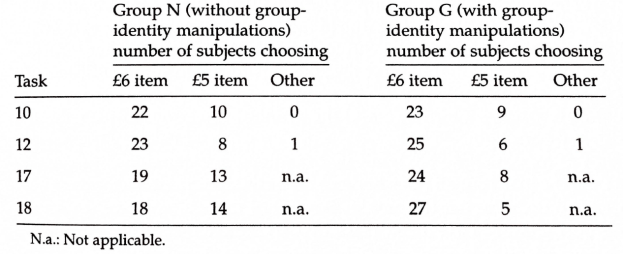
    • The psychology of group identity allows us to understand that group identification can be due to factors that have nothing to do with the individual preferences. Strong interdependence and other forms of common individual interest are one sort of favouring condition, but there are many others, such as comembership of some existing social group, sharing a birthday, and the artificial categories of the minimal group paradigm. (pg 150)
    • Wherever we may expect group identity we may also expect team reasoning. The effect of team reasoning on behavior is different from that of individualistic reasoning. We have already seen this for Hi-Lo. This has wide implications. It makes the theory of team reasoning a much more powerful explanatory and predictive theory than it would be if it came on line only in games with th3e right kind of common interest. To take just one example, if management brings it about so that the firm’s employees identify with the firm, we may expect for them to team-reason and so to make choices that are not predicted by the standard theories of rational choice. (pg 150)
    • As we have seen, the same person passes through many group identities in the flux of life, and even on a single occasion more than one of these identities may be stimulated. So we will need a model of identity in which the probability of a person’s identification is distributed over not just two alternatives-personal self-identity or identity with a fixed group-but, in principle, arbitrarily many. (pg 151)

Phil 3.6.18

7:00 – 4:00 ASRC MKT

  • Endless tweaking of the presentation
    • Pinged Sy – Looks like something on Wednesday. Yep his place around 1:30
  • More BIC
    • The explanatory potential of team reasoning is not confined to pure coordination games like Hi-Lo. Team reasoning is assuredly important for its role in explaining the mystery facts about Hi-Lo; but I think we have stumbled on something bigger than a new theory of behaviour in pure coordination games. The key to endogenous group identification is not identity of interest but common interest giving rise to strong interdependence. There is common interest in Stag Hunts, Battles of the Sexes, bargaining games and even Prisoner’s Dilemmas. Indeed, in any interaction modelable as a ‘mixed motive’ game there is an element of common interest. Moreover, in most of the landmark cases, including the Prisoner’s Dilemma, the common interest is of the kind that creates strong interdependence, and so on the account of chapter 2 creates pressure for group identification. And given group identification, we should expect team reasoning. (pg 144)
    • There is a second evolutionary argument in favour of the spontaneous team-reasoning hypothesis. Suppose there are two alternative mental mechanisms that, given common interest, would lead humans to act to further that interest. Other things being equal, the cognitively cheapest reliable mechanism will be favoured by selection. As Sober and Wilson (1998) put it, mechanisms will be selected that score well on availability, reliability and energy efficiency. Team reasoning meets these criteria; more exactly, it does better on them than the alternative heuristics suggested in the game theory and psychology literature for the efficient solution of common-interest games. (pg 146)
    • BIC_pg 149 (pg 149)
  • Educational resources from machine learning experts at Google
    • We’re working to make AI accessible by providing lessons, tutorials and hands-on exercises for people at all experience levels. Filter the resources below to start learning, building and problem-solving.
  • A Structured Response to Misinformation: Defining and Annotating Credibility Indicators in News Articles
    • The proliferation of misinformation in online news and its amplification by platforms are a growing concern, leading to numerous efforts to improve the detection of and response to misinformation. Given the variety of approaches, collective agreement on the indicators that signify credible content could allow for greater collaboration and data-sharing across initiatives. In this paper, we present an initial set of indicators for article credibility defined by a diverse coalition of experts. These indicators originate from both within an article’s text as well as from external sources or article metadata. As a proof-of-concept, we present a dataset of 40 articles of varying credibility annotated with our indicators by 6 trained annotators using specialized platforms. We discuss future steps including expanding annotation, broadening the set of indicators, and considering their use by platforms and the public, towards the development of interoperable standards for content credibility.
    • Slide deck for above
  • Sprint review
    • Presented on Talk, CI2018 paper, JuryRoom, and ONR proposal.
  • ONR proposal
    • Send annotated copy to Wayne, along with the current draft. Basic question is “is this how it should look? Done
    • Ask folks at school for format help?

Phil 3.5.18

7:00 – 6:00 ASRC MKT

    • Dead Reckoning: Navigating Content Moderation After “Fake News”
      • Authors Robyn Caplan, Lauren Hanson, and Joan Donovan analyze nascent solutions recently proposed by platform corporations, governments, news media industry coalitions, and civil society organizations. Then, the authors explicate potential approaches to containing “fake news” including trust and verification,disrupting economic incentivesde-prioritizing content and banning accounts, as well as limited regulatory approaches.
    • ‘The world is best experienced at 18 mph’. The psychological wellbeing effects of cycling in the countryside: an Interpretative Phenomenological Analysis
      • Green Exercise (GE) refers to physical activity conducted whilst simultaneously engaging the natural environment. A substantial body of literature has now been accumulated that establishes that carrying out exercise in this way has significantly greater psychological wellbeing benefits than the non-GE equivalent. Hitherto, seldom has consideration been given to the individual meanings that doing GE has. This study, therefore, sought to understand the lived experience of the phenomenon amongst a group of serious male recreational road bicyclists aged between mid-30s and early 50s who routinely rode in the countryside. Eleven bicyclists participated in semi-structured interviews. Data were analysed using Interpretative Phenomenological Analysis. This revealed themes of mastery and uncomplicated joys; my place to escape and rejuvenate; and alone but connected. Findings indicate that green-cycling served to enhance the participants’ sense of wellbeing and in doing so helped them cope with the mental challenges associated with their lives. It is suggested that green-cycling merges the essential qualities of natural surroundings – including its aesthetic, feelings of calm and a chance for exploration – with the potential for physical challenge and, facilitated by modern technology, opportunities for prosocial behaviours. It also identifies how green-cycling may influence self-determined behaviours towards exercise regulation, suggesting more satisfying and enduring exercise experiences.
      • Exhibit A: OLYMPUS DIGITAL CAMERA
    • More BIC. I think MB is getting at the theory for why there is explore/exploit in populations
      • We have progressed towards a plausible explanation of the behavioural fact about Hi-Lo. It is explicable as an outcome of group identification by the players, because this is likely to produce a way of reasoning, team reasoning, that at once yields A. Team reasoning satisfies the conditions for the mode-P reasoning that we concluded in chapter 1 must be operative if people are ever to reason their way to A. It avoids magical thinking. It takes the profile-selection problem by the scruff of the neck. What explains its onset is an agency transformation in the mind of the player; this agency transformation leads naturally to profile-based reasoning and is a natural consequence of self-identification with the player group. (pg 142)
      • Hi-Lo induces group identification. A bit more fully: the circumstances of Hi-Lo cause each player to tend to group-identify as a member of the group G whose membership is the player-set and whose goal is the shared payoff. (pg 142)
      • If what induces A-choices is a piece of reasoning which is part of our mental constitution, we are likely to have the impression that choosing A is obviously right. Moreover, if the piece of reasoning does not involve a belief that the coplayer is bounded, we will feel that choosing A is obviously right against a player as intelligent as ourselves; that is, our intuitions will be an instance of the judgemental fact. I suspect, too, that if the reasoning schema we use is valid, rather than involving falacy, our intuitions of reality are likely to be more robust. Later I shall argue that team reasoning is indeed nonfallacious. (pg 143)
        • I think this is more than “as intelligent as ourselves”, I think this is a position/orientation/velocity case. I find it compelling that people with different POVs regard each other as ‘stupid’
      • When framing tendencies are culture-wide, people in whom a certain frame is operative are aware that it may be operative in others; and if its availability is high, those in it think that it is likely to be operative in others. Here the framing tendency is-so goes my claim-universal, and a fortiori it is culture-wide. (pg 144)
      • But for the theory of endogenous team reasoning there are two differences between the Hi-Lo case and these other cases of strong interdependence. First, outside Hi-Los there are counterpressures towards individual self-identification and so I-framing of the problem. In my model this comes out as a reduction in the salience of the strong interdependence, or an increase in that of other features. One would expect these pressures to be very strong in games like Prisoner’s Dilemma, and the fact that C rates are in the 40 per cent range rather than the 90 percent range, so far from surprising, is a prediction of the present theory (pg 144)
        • This is where MB starts to get to explore/exploit in populations. There are pressueres that drive groups together and apart. And as individuals, our thresholds for group identification varies
    • Working on the ONR whitepaper. Moving over to LaTex because MSword makes me want to injure myself.
    • For future reference, here’s my basic LaTex setup:
      \documentclass[]{article}
      
      \usepackage{latexsym}
      \usepackage{graphicx}
      \usepackage{mathptmx}
      \usepackage{float}
      \usepackage[normalem]{ulem} 
      \usepackage{wrapfig}
      
      %opening
      \title{}
      \author{Philip Feldman}
      
      
      \begin{document}
      
      \maketitle
      
      \begin{abstract}
      
      \end{abstract}
      
      \section{}
      
      \newpage
      
      % Bibliography
      \bibliographystyle{acm}
      \bibliography{ONR_whitepaper_bib}
      
      
      \end{document}
    • Ok, got all the text moved over. Then I need to out the citations back and start of fix content
    • Citations are done.
  • Fika
    • Presentation by Dr. Greg Walsh:
      • For the last 10 years, Greg Walsh has focused on design research around participatory and cooperative design. His efforts include high- and low-tech techniques that extend co-design both geographically and temporally. He has led design research with groups like Nickelodeon, Carnegie Hall, the National Park Service, and most recently, National Public Radio. In this talk, Greg will discuss his work around inclusive and equitable participatory design that range from design-centric Minecraft virtual worlds to Baltimore City public libraries.
    • Surprise meeting with Wayne.
      • Went over slides. Made some tweaks
      • Talked about the ONR and Twitter RFPs. Need to send the ONR proposal for some insight, and get another back
    • Slide walkthrough with Brian
      • More slide tweaks.
      • He suggested that I get in contact with Sy, which makes a lot of sense.


Phil 3.2.18

7:00 – 5:00 ASRC MKT

  • Got Wayne’s comments. Will integrate and see if EasyChair will take it
  • Work on ONR WhitePaper
  • Twitter proposal?
  • Society for Personality and Social Psychology
    • The mission of SPSP is to advance the scienceteaching, and application of social and personality psychology. SPSP members aspire to understand individuals in their social contexts for the benefit of all people.
    • Social psychology is the scientific study of how people’s thoughts, feelings, and behaviors are influenced by the actual, imagined, or implied presence of others.
  • Rebecca Hofstein Grady
    • I am interested in the ways that bias and motivation can affect our reasoning and memory to influence the judgments and decisions that we make.  In particular, I am currently studying how these biases apply to real-world situations, such as political conflicts, hiring decisions, and legal decision-making.  I explore not only how biases affect decision-making but what people think about their own biases and the best ways to help correct them.
    • Data from a pre-publication independent replication initiative examining ten moral judgement effects

Phil 3.1.18

7:00 – 4:30 ASRC MKT

  • Anonymize (done) and submit paper – done!
  • Finish T’s timeline approach? Finished my version. I think I like it.
  • This may be important: https://twitter.com/jack/status/969234275420655616
    • We’re committing Twitter to help increase the collective health, openness, and civility of public conversation, and to hold ourselves publicly accountable towards progress.11:33 AM – 1 Mar 2018 from San Francisco, CA
      Our friends at @cortico and @socialmachines introduced us to the concept of measuring conversational health. They came up with four indicators: shared attention, shared reality, variety of opinion, and receptivity. Read about their work here: https://www.cortico.ai/blog/2018/2/29/public-sphere-health-indicators
    • We simply can’t and don’t want to do this alone. So we’re seeking help by opening up an RFP process to cast the widest net possible for great ideas and implementations. This will take time, and we’re committed to providing all the necessary resources. RFP: https://blog.twitter.com/official/en_us/topics/company/2018/twitter-health-metrics-proposal-submission.html


  • Interactive topic hierarchy revision for exploring a collection of online conversations
    • In the last decade, there has been an exponential growth of asynchronous online conversations (e.g. blogs), thanks to the rise of social media. Analyzing and gaining insights from such discussions can be quite challenging for a user, especially when the user deals with hundreds of comments that are scattered around multiple different conversations. A promising solution to this problem is to automatically mine the major topics from conversations and organize them into a hierarchical structure. However, the resultant topic hierarchy can be noisy and/or it may not match the user’s current information needs. To address this problem, we introduce a novel human-in-the-loop approach that allows the user to revise the topic hierarchy based on her feedback. We incorporate this approach within a visual text analytics system that helps users in analyzing and getting insights from conversations by exploring and revising the topic hierarchy. We evaluated the resulting system with real users in a lab-based study. The results from the user study, when compared to its counterpart that does not support interactive revisions of a hierarchical topic model, provide empirical evidence of the potential utility of our system in terms of both performance and subjective measures. Finally, we summarize generalizable lessons for introducing human-in-the-loop computation within a visual text analytics system
  • Understanding the Promise and Limits of Automated Fact-Checking
    • The furor over so-called ‘fake news’ has exacerbated long-standing concerns about political lying and online rumors in a fragmented media environment, drawing attention to the potential of various automated fact-checking (AFC) technologies to combat online misinformation. This factsheet gives an overview of current efforts to automatically police false claims and misleading content online. Based on a review of recent research and interviews with both fact-checkers and computer scientists working in this area, we find that:
      • Much of the terrain covered by human fact-checkers requires a kind of judgement and sensitivity to context that remains far out of reach for fully automated verification. 
      • Despite progress in automatic verification of a narrow range of simple factual claims, AFC systems will require human supervision for the foreseeable future.
      • The promise of AFC technologies for now lies in tools to assist fact-checkers to identify and investigate claims, and to deliver their conclusions, as effectively as possible.
  • More BIC
    • Now it is the case, and increasingly widely recognized to be, that in games in general there’s no way players can rationally deliberate to a Nash equilibrium. Rather, classical canons of rationality do not in general support playing in Nash equilibria. So it looks as though shared intentions cannot, in the general run of games, by classical canons, be rationally formed! And that means in the general run of life as well. This is highly paradoxical if you think that rational people can have shared intentions. The paradox is not resolved by the thought that when they do, the context is not a game: any situation in which people have to make the sorts of decisions that issue in shared intentions must be a game, which is, after all, just a situation in which combinations of actions matter to the combining parties. (pg 139)
    • Turn to the idea that a joint intention to do (x,y) is rationally produced in 1 and 2 by common knowledge of two conditional intentions: Pl has the intention expressed by ‘I’ll do x if and only if she does y’, and P2 the counterpart one. Clearly P1 doesn’t have the intention to do x if and. only if P2 in fact does y whether or not Pl believes P2 will do y; the right condition must be along the lines of:
      (C1) P1 intends to do x if and only if she believes P2 will do y. (pg 139)

      • So this is in belief space, and belief is based on awareness and trust
    • There are two obstacles to showing this, one superable, the other not, I think. First, there are two Nash equilibria, and nothing in the setup to suggest that some standard refinement (strengthening) of the Nash equilibrium condition will eliminate one. However, I suspect that my description of the situation could be refined without ‘changing the subject’. Perhaps the conditional intention Cl should really be ‘I’ll do x if and only if she’ll do y, and that’s what I would like best’. For example, if x and y are the two obligations in a contract being discussed, it is natural to suppose that Pl thinks that both signing would be better than neither signing. If we accept this gloss then the payoff structure becomes a Stag Hunt – Hi-Lo if both are worse off out of equilibrium than in the poor equilibrium (x’ ,y’). To help the cause of rationally deriving the joint intention (x,y), assume the Hi-Lo case. What are the prospects now? As I have shown in chapter 1, there is no chance of deriving (x,y) by the classical canons, and the only (so far proposed) way of doing to is by team reasoning. (pg 140)
    • The nature of team reasoning, and of the conditions under which it is likely to be primed in individual agents, has a consequence that gives further support to this claim. This is that joint intentions arrived at by the route of team reasoning involve, in the individual agents, a ‘sense of collectivity’. The nature of team reasoning has this effect, because the team reasoner asks herself not ‘What should I do?’ but ‘What should we do?’ So, to team-reason, you must already be in a frame in which first-person plural concepts are activated. The priming conditions for team reasoning have this effect because, as we shall see later in this chapter, team reasoning, for a shared objective, is likely to arise spontaneously in an individual who is in the psychological state of group-identifying with the set of interdependent actors; and to self-identify as a member of a group essentially involves a sense of collectivity. (pg 141)
  • Starting on ONR white paper – first pass banged together
    • Need to add figures and references
  • discovered pandoc, which converts nicely between many files, including LaTex and word. The command that matters is:
    pandoc -s foo.tex -o foo.docx

Phil 2.28.18

7:00 – 4:00 ASRC MKT

  • More BIC
    • One of the things that MB seems to be saying here is that group identification has two parts. First is the self-identification with the group. Second is the mechanism that supports that framing. You can’t belong to a group you don’t see.
    • To generalize the notions of team mechanism and team to unreliable contexts, we need the idea of the profile that gets enacted if all the agents function under a mechanism. Call this the protocol delivered by the mechanism. The protocol is , roughly, what everyone is supposed to do, what everyone does if the mechanism functions without any failure. But because there may well be failures, the protocol of a mechanism may not get enacted, some agents not playing their part but doing their default actions instead. For this reason the best protocol to have is not in general the first-best profile o*. In judging mechanisms we must take account of the states of the world in which there are failures, with their associated probabilities. How? Put it this way: if we are choosing a mechanism, we want one that delivers the protocol that maximizes the expected value of U. (pg 131)
    • Group identification is a framing phenomenon. Among the many different dimensions of the frame of a decision-maker is the ‘unit of agency’ dimension: the framing agent may think of herself as an individual doer or as part of some collective doer. The first type of frame is operative in ordinary game-theoretic, individualistic reasoning, and the second in team reasoning. The concept-clusters of these two basic framings center round ‘I/ she/he’ concepts and ‘we’ concepts respectively. Players in the two types of frame begin their reasoning with the two basic conceptualizations of the situation, as a ‘What shall I do?’ problem, and a ‘What shall we do?’ problem, respectively. (pg 137)
  • Analyzing the Digital Traces of Political Manipulation: The 2016 Russian Interference Twitter Campaign
    • Until recently, social media was seen to promote democratic discourse on social and political issues. However, this powerful communication platform has come under scrutiny for allowing hostile actors to exploit online discussions in an attempt to manipulate public opinion. A case in point is the ongoing U.S. Congress investigation of Russian interference in the 2016 U.S. election campaign, with Russia accused of, among other things, using trolls (malicious accounts created for the purpose of manipulation) and bots (automated accounts) to spread misinformation and politically biased information. In this study, we explore the effects of this manipulation campaign, taking a closer look at users who re-shared the posts produced on Twitter by the Russian troll accounts publicly disclosed by U.S. Congress investigation. We collected a dataset with over 43 million elections-related posts shared on Twitter between September 16 and October 21, 2016 by about 5.7 million distinct users. This dataset included accounts associated with the identified Russian trolls. We use label propagation to infer the ideology of all users based on the news sources they shared. This method enables us to classify a large number of users as liberal or conservative with precision and recall above 90%. Conservatives retweeted Russian trolls about 31 times more often than liberals and produced 36 times more tweets. Additionally, most retweets of troll content originated from two Southern states: Tennessee and Texas. Using state-of-the-art bot detection techniques, we estimated that about 4.9% and 6.2% of liberal and conservative users respectively were bots. Text analysis on the content shared by trolls reveals that they had a mostly conservative, pro-Trump agenda. Although an ideologically broad swath of Twitter users were exposed to Russian Trolls in the period leading up to the 2016 U.S. Presidential election, it was mainly conservatives who helped amplify their message.
  • CHIIR Talk
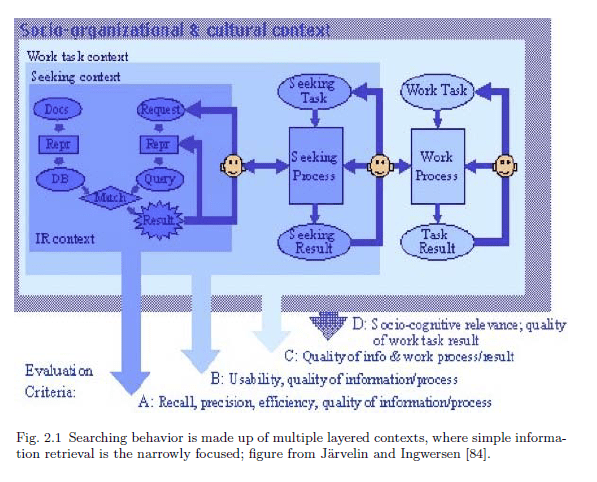
    • Make new IR-Context graphic – done!
    • De-uglify JuryRoom – done!
  • TensorFlow’s Machine Learning Crash Course

Phil 2.27.18

7:00 – 5:00 ASRC MKT

  • More BIC
    • A mechanism is a general process. The idea (which I here leave only roughly stated) is of a causal process which determines (wholly or partly) what the agents do in any simple coordination context. It will be seen that all the examples I have mentioned are of this kind; contrast a mechanism that applies, say, only in two-person cases, or only to matching games, or only in business affairs. In particular, team reasoning is this kind of thing. It applies to any simple coordination context whatsoever. It is a mode of reasoning rather than an argument specific to a context. (pg 126)
    • In particular, [if U is Paretian] the correct theory of Hi-Lo says that all play A. In short, an intuition in favour of C’ supports A-playing in Hi-Lo if we believe that all players are rational and there is one rationality. (pg 130)
      • Another form of dimension reduction – “We are all the same”
  • Machine Theory of Mind
    • We design a Theory of Mind neural network – a ToMnet – which uses meta-learning to build models of the agents it encounters, from observations of their behaviour alone. Through this process, it acquires a strong prior model for agents’ behaviour, as well as the ability to bootstrap to richer predictions about agents’ characteristics and mental states using only a small number of behavioural observations. We apply the ToMnet to agents behaving in simple gridworld environments, showing that it learns to model random, algorithmic, and deep reinforcement learning agents from varied populations, and that it passes classic ToM tasks such as the “SallyAnne” test of recognising that others can hold false beliefs about the world
  • Classifier Technology and the Illusion of Progress (David Hand, 2006)
    • A great many tools have been developed for supervised classification, ranging from early methods such as linear discriminant analysis through to modern developments such as neural networks and support vector machines. A large number of comparative studies have been conducted in attempts to establish the relative superiority of these methods. This paper argues that these comparisons often fail to take into account important aspects of real problems, so that the apparent superiority of more sophisticated methods may be something of an illusion. In particular, simple methods typically yield performance almost as good as more sophisticated methods, to the extent that the difference in performance may be swamped by other sources of uncertainty that generally are not considered in the classical supervised classification paradigm.
  • Sensitivity and Generalization in Neural Networks: an Empirical Study
    • Neural nets generalize better when they’re larger and less sensitive to their inputs, are less sensitive near training data than away from it, and other results from massive experiments. (From @Jascha)
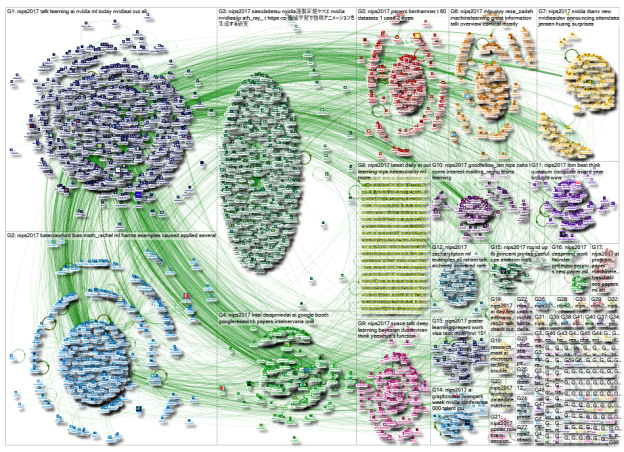
  • Graph-131941
    • The graph represents a network of 6,716 Twitter users whose recent tweets contained “#NIPS2017”, or who were replied to or mentioned in those tweets, taken from a data set limited to a maximum of 18,000 tweets. The network was obtained from Twitter on Friday, 08 December 2017 at 15:30 UTC.
  • Back to Basics: Benchmarking Canonical Evolution Strategies for Playing Atari
    • Evolution Strategies (ES) have recently been demonstrated to be a viable alternative to reinforcement learning (RL) algorithms on a set of challenging deep RL problems, including Atari games and MuJoCo humanoid locomotion benchmarks. While the ES algorithms in that work belonged to the specialized class of natural evolution strategies (which resemble approximate gradient RL algorithms, such as REINFORCE), we demonstrate that even a very basic canonical ES algorithm can achieve the same or even better performance. This success of a basic ES algorithm suggests that the state-of-the-art can be advanced further by integrating the many advances made in the field of ES in the last decades. 
      We also demonstrate qualitatively that ES algorithms have very different performance characteristics than traditional RL algorithms: on some games, they learn to exploit the environment and perform much better while on others they can get stuck in suboptimal local minima. Combining their strengths with those of traditional RL algorithms is therefore likely to lead to new advances in the state of the art.
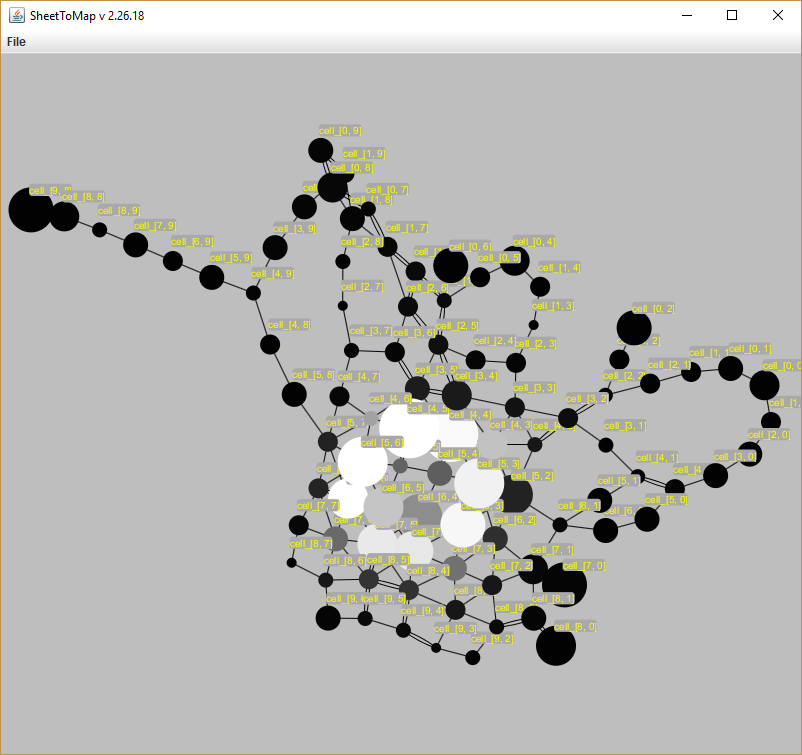
  • Copied over SheetToMap to the Applications file on TOSHIBA
  • Created a Data folder, which has all the input and output files for the various applications
  • Need to add a curDir variable to LMN
  •  Presentation:
    • I need to put together a 2×2 payoff matrix that covers nomad/flock/stampede – done
    • Some more heat map views, showing nomad, flocking – done
    • De-uglify JuryRoom
    • Timeline of references – done
    • Collapse a few pages 22.5 minutes for presentation and questions – done
  • Start on white paper

Phil 2.26.18

7:00 – 6:00 ASRC MKT

  • Spread of information is dominated by search ranking f1-large
    • Twitter thread
      • The spreading process was linear because the background search rate is roughly constant day to day for discounts, and any viral element turned out to be quite small.
    • Paper
  •  BIC
    • There are many conceivable team mechanisms apart from simple direction and team reasoning; they differ in the way in which computation is distributed and the pattern of message sending. For example, one agent might compute o* and send instructions to the others. With the exception of team reasoning, these mechanisms involve the communication of information. If they do I shall call them modes of organization or protocols. (pg 125)
    • A mechanism is a general process. The idea (which I here leave only roughly stated) is of a causal process which determines (wholly or partly) what the agents do in any simple coordination context. It will be seen that all the examples I have mentioned are of this kind; contrast a mechanism that applies, say, only in two-person cases, or only to matching games, or only in business affairs. In particular, team reasoning is this kind of thing. It applies to any simple coordination context whatsoever. It is a mode of reasoning rather than an argument specific to a context. (pg 126)
  •  Presentation:
    • I need to put together a 2×2 payoff matrix that covers nomad/flock/stampede
    • Some more heat map views, showing nomad, flocking
    • De-uglify JuryRoom
    • Timeline of references
    • Collapse a few pages 22.5 minutes for presentation and questions
  • Work on getting SheetToMap in a swing app? Less figuring things out…
    • Slower going than I hoped, but mostly working now. As always, StackOverflow to the rescue: How to draw graph inside swing with GraphStream actually?
    • Adding load and save menu choices. Done! Had a few issues with getting the position of the nodes saved out. It seems like you should do this?
      GraphicNode gn = viewer.getGraphicGraph().getNode(name);
      row.createCell(cellIndex++).setCellValue(gn.getX());
      row.createCell(cellIndex++).setCellValue(gn.getY());
    • Anyway, pretty pix: 2018-02-26
  • Start on white paper
  • Fika

Phil 2.25.18

Looks like I need to update the DC and the CI 2018 paper with a new reference:

Dynamic Word Embeddings for Evolving Semantic Discovery

  • Zijun YaoYifan Sun, Weicong Ding, Nikhil RaoHui Xiong
  • Word evolution refers to the changing meanings and associations of words throughout time, as a byproduct of human language evolution. By studying word evolution, we can infer social trends and language constructs over different periods of human history. However, traditional techniques such as word representation learning do not adequately capture the evolving language structure and vocabulary. In this paper, we develop a dynamic statistical model to learn time-aware word vector representation. We propose a model that simultaneously learns time-aware embeddings and solves the resulting “alignment problem”. This model is trained on a crawled NYTimes dataset. Additionally, we develop multiple intuitive evaluation strategies of temporal word embeddings. Our qualitative and quantitative tests indicate that our method not only reliably captures this evolution over time, but also consistently outperforms state-of-the-art temporal embedding approaches on both semantic accuracy and alignment quality.
  • Embeddings


Phil 2.23.18

6:30 – 8:30, 11:00 – 5:00 ASRC MKT

  • Graphstream with javafx? https://github.com/graphstream/gs-ui-javafx
  • Learning to Cooperate, Compete, and Communicate
    • Multiagent environments where agents compete for resources are stepping stones on the path to AGI. Multiagent environments have two useful properties: first, there is a natural curriculum — the difficulty of the environment is determined by the skill of your competitors (and if you’re competing against clones of yourself, the environment exactly matches your skill level). Second, a multiagent environment has no stable equilibrium: no matter how smart an agent is, there’s always pressure to get smarter. These environments have a very different feel from traditional environments, and it’ll take a lot more research before we become good at them.
  • Storytelling and Politics: How History, Myths and Narratives Drive Our Decisions (video)
    • A narrative with historical overtones, an emotive connection and credibility not only convinces people, it frames the points of reference they use to evaluate the decision they are being asked to make.
    • Logos Pathos Ethos?
  • Continuing with rewrite. Had to fire up the MiKTex admin console to install wrapfig. Permissions issue?
    • Need to take the description of the maps at the end of the results section and turn into a paragraph.
  • Walk through of presentation this afternoon. Need to set up a skype session and bridge. Went well, I need to make a few fixes. Most importantly I need to put together a 2×2 payoff matrix that covers nomad/flock/stampede

Phil 2.22.18

7:00 – ASRC MKT

  • Long chat with Wajant about the CI 2018 paper. going to work up a new version
    • Started in Docs, but wound up saving out and reworking the LaTex version to keep track of the length.
  • Coincidentally, ONR is soliciting white papers for theoretically-based decision making tools. Five pages plus references for the paper, and a one-page resume.
    • The 5-page body of the white paper shall include the following information:
      • Principal Investigator(s);
      • Relevance of the proposed effort to the research areas described in Section II; (Topic 2, Research Focus Area 1)
        • relationship of the proposed work to current state of art.
      • Technical objective of the proposed effort;
      • Technical approach that will be pursued to meet the objective;
      • A summary of recent relevant technical breakthroughs; and
      • A funding plan showing requested funding per fiscal year.
  • Need to register for TF conference when Aaron gets in. Got hotel and $$ approval.
  • More dimension reduction and belief vectors on twitter

Phil 2.21.18

7:00 – 6:00 ASRC MKT

  • Wow – I’m going to the Tensorflow Summit! Need to get a hotel.
  • Dimension reduction + velocity in this thread
  • Global Pose Estimation with an Attention-based Recurrent Network
    • The ability for an agent to localize itself within an environment is crucial for many real-world applications. For unknown environments, Simultaneous Localization and Mapping (SLAM) enables incremental and concurrent building of and localizing within a map. We present a new, differentiable architecture, Neural Graph Optimizer, progressing towards a complete neural network solution for SLAM by designing a system composed of a local pose estimation model, a novel pose selection module, and a novel graph optimization process. The entire architecture is trained in an end-to-end fashion, enabling the network to automatically learn domain-specific features relevant to the visual odometry and avoid the involved process of feature engineering. We demonstrate the effectiveness of our system on a simulated 2D maze and the 3D ViZ-Doom environment.
  •  Slides
    • Location
    • Orientation
    • Velocity
    • IR context -> Sociocultural context
  • Writing Fika. Make a few printouts of the abstract
    • It kinda happened. W
  • Write up LMN4A2P thoughts. Took the following and put them in a LMN4A2P roadmap document in Google Docs
    • Storing a corpora (raw text, BoW, TF-IDF, Matrix)
      • Uploading from file
      • Uploading from link/crawl
      • Corpora labeling and exploring
    • Index with ElasticSearch
    • Production of word vectors or ‘effigy documents’
    • Effigy search using Google CSE for public documents that are similar
      • General
      • Site-specific
      • Semantic (Academic, etc)
    • Search page
      • Lists (reweightable) or terms and documents
      • Cluster-based map (pan/zoom/search)
  • I’m as enthusiastic about the future of AI as (almost) anyone, but I would estimate I’ve created 1000X more value from careful manual analysis of a few high quality data sets than I have from all the fancy ML models I’ve trained combined. (Thread by Sean Taylor on Twitter, 8:33 Feb 19, 2018)
  • Prophet is a procedure for forecasting time series data. It is based on an additive model where non-linear trends are fit with yearly and weekly seasonality, plus holidays. It works best with daily periodicity data with at least one year of historical data. Prophet is robust to missing data, shifts in the trend, and large outliers.
  • Done with Angular fundamentals. reDirectTo isn’t working though…
    • zone.js:405 Unhandled Promise rejection: Invalid configuration of route '': redirectTo and component cannot be used together ; Zone: <root> ; Task: Promise.then ; Value: Error: Invalid configuration of route '': redirectTo and component cannot be used together

Phil 2.20.18

7:00 – 5:00 ASRC MKT

  • Diversity injection: How to Inoculate the Public Against Fake News
    • Cambridge researchers developed a game to help people understand, broadly, how fake news works by having users play trolls and create misinformation. By “placing news consumers in the shoes of (fake) news producers, they are not merely exposed to small portions of misinformation,” the researchers write in their accompanying paper.
  • Physics of human cooperation: experimental evidence and theoretical models
    • Angel Sánchez (Scholar)
    • In recent years, many physicists have used evolutionary game theory combined with a complex systems perspective in an attempt to understand social phenomena and challenges. Prominent among such phenomena is the issue of the emergence and sustainability of cooperation in a networked world of selfish or self-focused individuals. The vast majority of research done by physicists on these questions is theoretical, and is almost always posed in terms of agent-based models. Unfortunately, more often than not such models ignore a number of facts that are well established experimentally, and are thus rendered irrelevant to actual social applications. I here summarize some of the facts that any realistic model should incorporate and take into account, discuss important aspects underlying the relation between theory and experiments, and discuss future directions for research based on the available experimental knowledge.
  • What We Read, What We Search: Media Attention and Public Attention Among 193 Countries
    • We investigate the alignment of international attention of news media organizations within 193 countries with the expressed international interests of the public within those same countries from March 7, 2016 to April 14, 2017. We collect fourteen months of longitudinal data of online news from Unfiltered News and web search volume data from Google Trends and build a multiplex network of media attention and public attention in order to study its structural and dynamic properties. Structurally, the media attention and the public attention are both similar and different depending on the resolution of the analysis. For example, we find that 63.2% of the country-specific media and the public pay attention to different countries, but local attention flow patterns, which are measured by network motifs, are very similar. We also show that there are strong regional similarities with both media and public attention that is only disrupted by significantly major worldwide incidents (e.g., Brexit). Using Granger causality, we show that there are a substantial number of countries where media attention and public attention are dissimilar by topical interest. Our findings show that the media and public attention toward specific countries are often at odds, indicating that the public within these countries may be ignoring their country-specific news outlets and seeking other online sources to address their media needs and desires.
  • Sent Jen a note about carpooling to CHIIR. Need to check out one day earlier
  • Add slides
    • Two phases – theoretical model building, then study
    • Implications for design based on Search Context
    • Something about velocity? Academic journal papers (slow production, slow consumption) at one end and twitter on the other (fast production, fast consumption)
  • Ingesting Documents (pdf, word, txt, etc) Into ElasticSearch
  • More Angular
  • Discussions with Aaron about getting some LMN capability into A2P.