Category Archives: NextGen experimentation

Phil 4.30.14

8:00 – 5:00 SR

  • DB backups
  • Deploy new RQ – or at least most of it…
  • Got the list of desired enhancements. Need to assign hours.
  • JavaScript
    • Threejs examples
    • Work on making a YUI module that extends WebGLComponent – Done!
    • Added three.js loading capability. Easy!
YUI({
        groups:{
            threejs:{
                base: './libs/',
                async: false,
                modules: {
                    'threejs': {
                        path: 'three.js'
                    }
                }
            },
            localModules:{
                base: './BasicBaseElements/',
                modules: {
                    'WebGLCanvas': {
                        path: 'WebGLCanvas/js/WebGLCanvas.js',
                        skinnable: true
                    },
                    'WebGLComponent': {
                        path: 'WebGLComponent/js/WebGLComponent.js',
                        skinnable: false
                    }
                }
            }
        }
    }).use('threejs', 'WebGLCanvas', 'WebGLComponent', 'panel', 'dd-plugin', function (Y) {...});
  • Ok, now to inheritance
  • To inherit in YUI, it looks like all you have to do(?) is to use Y.Base.create, and specify the component that you are extending. Here’s how it looks:
YUI.add('WebGLSphere', function (Y) {
    "use strict";

    // handy constants and shortcuts used in the module
    var _LANG = Y.Lang;
    var _NAME = 'WebGLSphere';


    // publish the global prototype
    Y.WebGLSphere = Y.Base.create(
        _NAME, // the name of this module (for debugging
        Y.WebGLComponent, // the class we are extending (can be Widget too)
        [], // any extensions that we want to properties or methods (e.g. ArrayList)

        // Instance members are the properties and methods that go into the class prototype, those that
        // each instance will get a copy and usually need to be references by 'this'
        {
            // prototype variables

            // prototype methods

        },
        //  Attributes - accessed through this.get('attrName') and this.set('attrName', value).
        // Note that we can do "type" checking here with validators
        {
            ATTRS: {
		myValue:{
			value: 1.0
		}
            }
        }
    );

}, '0.1', {
    requires: ['WebGLComponent'],
    skinnable: false
});

In this case, the module I’m creating is Y.WebGLSphere. I am extending it from Y.WebGLComponent. In the code above, it does nothing. Next, I’m going to override the initModel function to create a sphere and the initializer to take a jpg to use as a texture.

yuiWebGl

Phil 4.29.14

8:00 – 4:00 SR

  • DB Backups
  • Breaking out models from the scene. Figuring out what parts of THREE.js were needed to work took a bit of time but the results are good.
  • Had a lot of trouble with “this” today. The lesson learned is that when a locally declared function is called from outside the class, there is no “this”. To get that to work you have to have the function AND the variable referenced in the prototype. If the variable is a reference, then it appears that you can get away with declaring it locally, but what really seems to be happening is that the same reference is being shared “globally” across all instances. If the variable is declared in the prototype, it’s unique. Here’s all of WebGLComponent. Note that mesh and dprintArray are declared in the prototype:
YUI.add('WebGLComponent', function (Y) {
     "use strict";

     // handy constants and shortcuts used in the module
     var _LANG = Y.Lang;
     var _NAME = 'WebGLComponent';

     // private variables


     // private function predefinitions. We can "publish" them at the end of this object
     var _initializer;
     var _initModel;
     var _setPosition;
     var _setScale;
     var _update;
     var _dprint;
     var _dshow;

      // private function definitions

      /* The initializer method has several tasks. First, it should set any properties that need to be
      initialized to objects or arrays. Then it will publish all the events this class will produce.
      the cfg object is an arbitrary object such as {myValue:321, foo:'bar'} */
     _initializer = function (cfg) {
         //Y.log("--->The following config object was passed into the RemoteDataChart initializer.'"+cfg.myValue+"'");
          this.dprintArray = new Array(100);
          this.dprintArray.length = 0;
          if (cfg.hasOwnProperty('objName')) {
              this.set('objName', cfg.objName);
     }
     if (cfg.hasOwnProperty('timeScalar')) {
          this.set('timeScalar', cfg.timeScalar);
     }
     this.initModel();

     };


     _initModel = function () {
          var geometry = new THREE.CubeGeometry(1, 1, 1);
          var material = new THREE.MeshPhongMaterial({color: 0xFFFFFF});

          var mesh = new THREE.Mesh(geometry, material);

          this.set('object3d', mesh);
          this.mesh = mesh;
     };

     // setPosition - move the object to a new position
     _setPosition = function (x, y, z) {
          if (this.mesh) {
             this.mesh.position.set(x, y, z);
          }
     };

    //setScale - scale the object
     _setScale = function (x, y, z) {
     if (this.mesh) {
         this.mesh.scale.set(x, y, z);
     }
     };


 _update = function (elapsed) {
          var rate = this.get('timeScalar');
          var angle;
          if (this.mesh) {
              this.mesh.rotation.x += rate * elapsed;
              this.mesh.rotation.y += rate * elapsed;
              this.mesh.rotation.z += rate * elapsed;
              angle = this.mesh.rotation.x;
              this.dprint("angle = "+angle.toFixed(2));
          }
 };


 _dprint = function(str) {
          this.dprintArray.push(this.get('objName')+": "+str);
 };

 _dshow = function(dpa) {
          var i;
          for(i =0; i < this.dprintArray.length; i++){
              dpa.push(this.dprintArray.shift());
          }
          this.dprintArray.length = 0;
 };

 // publish the global prototype
 Y.WebGLComponent = Y.Base.create(
      _NAME, // the name of this module (for debugging
      Y.Base, // the class we are extending (can be Widget too)
      [], // any extensions that we want to properties or methods (e.g. ArrayList)

          // Instance members are the properties and methods that go into the class prototype, those that
          // each instance will get a copy and usually need to be references by 'this'
      {
         // prototype variables
          mesh: null,
          dprintArray: null,

          // prototype methods
          initializer: _initializer,
          initModel: _initModel,
          update: _update,
          setPosition: _setPosition,
          setScale: _setScale,
          dprint: _dprint,
          dshow: _dshow
 },
 // Attributes - accessed through this.get('attrName') and this.set('attrName', value).
 // Note that we can do "type" checking here with validators
 {
          ATTRS: {
              timeScalar:{
                  value: 1.0
              },
              objName:{
                  value: "unset"
              },
              object3d:{
                  value: null
              }
          }
     }
 );

}, '0.1', {
 requires: ['base-build', 'node', 'event'],
 skinnable: false
});

Phil 4.28.14

8:00 – 5:00 SR

  • DB backups
  • Lenny’s making progress in as our new security guy
  • Need to fix the appropriation year calculations in the fake data generator. Done
  • Need to build a YUI template and store it off as a complete project. Done, but I spent a while running in circles trying to get resize to work on the YUI panel. It turns out that you have to enable resize on the node the panel points at. So the code kind of looks like this:
 // If we want to make the panel resize, we have to manipulate the srcNode.
 // This must be done before the Panel is created
 var n = Y.one("#topNode");
 n.plug(Y.Plugin.Resize);

 var panel = new Y.Panel({
     srcNode : n,
     x :200,
     y :100,
     headerContent : 'A Panel containing a widget',
     plugins : [Y.Plugin.Drag]
 });
 panel.render();
  • This also requires that the style for the div have the position: relative property set. Here’s how it’s done in this example:
.topNode{
     position: relative;
     width:800px;
     height:640px;
     background: #bcbcbc;
     overflow: hidden;
}
  • I then spent a while seeing if typescript could be integrated, but it and YUI are really two very different patterns.
  • Working on the WebGL container
    • Set for 2D/3D
    • use defaults (ambient/directional light, perspectives, etc)
    • Show/hide stage
    • Add models. Looking at the code, the cube is currently added as a mesh to a scene. Need to look into how to break that apart. Going to start with the “interaction-simple.html” code from the webgl book and try adding the cube in as a model first.

Phil 4.25.14

8:00 – 5:00 SR

  • DB Backups
  • Helping Dong out with some questions he has. Some queries are running on the production servers that don’t run on his dev box?
  • Finish financial reporting
  • JavaScript
    • Reworking WebGLCanvas. I think it’s better. The structure is now:
      • YUI.add(‘ModuleName”, function(Y) {} wrapper
        • List of all the private variables, using _myVariable notation
        • List of all the private variables that will point at functions (e.g. var _myFunction)
        • The function declarations (e.g. _myFunction = function (args) {};)
        • The publication section – Y.WebGLCanvas = Y.Base.create({/* vars*/}, {/*attrs */});
          • in the {/*vars*/} object, the prototype function vars are matched to a local var (defined above). It looks like this
            • myProtoVariable: null,
            • myProtoFunction:  _myLocalFunction,
            • etc.
          • There are no bodies to anything, just pointers to functions that have already been declared. Closure takes care of the wrapping of appropriate module data. This way, exactly what is in the prototype can be quickly seen.
          • The {/*attrs*/} object is handled in the ‘traditional’ YUI way, since each attribute is actually a cluster of small sub-objects, no clarity is gained by breaking things up.
      • Still have to see if this mechanism extends correctly, but that’s next week.
    • Spent a good deal of time getting panel components to assemble correctly. I had to go digging for the height of the header and allow a modified height value to be passed into the WebGLCanvas. Sheesh.

yuiWebGl

Still, good progress for the week.

Phil 4.24.14

7:30 – 4:30 SR

  • DB backups
  • Financial reporting
  • JavaScript
    • Working on the WebGL container
      • Add a clock – done
      • Set for 2D/3D
      • background color/image
      • Overlay – done
      • Dprint – done
      • use defaults (ambient/directional light, perspectives, etc)
      • Show/hide stage
      • Add models

Phil 4.23.14

8:00 – 5:00 SR

  • I was informed that passed my comprehensive exams yesterday!
  • DB backups
  • Dumped the _reqonciler_processing table for dong.
  • Started to build up the threejs/YUI charting package. Step one, make all the pieces work together.
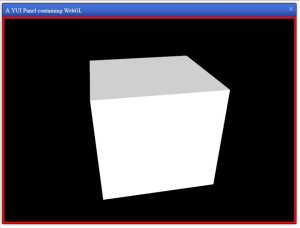
  • Behold! yuiWebGl
  • That being said, there are some issues in the loading? Need to look into that some more. Still, not a bad day’s work.

Phil 4.18.14

8:00 – 5:00 SR

  • DB Backups
  • Dong discussed Reqonciler with Lenny
  • Spent some time chasing down what to do about heartbleed. Since I admin only the VMs, and it appears that the landlord is doing regular updates, I’m trying to determine if I have to do anything in addition to what I’m already doing. Once more, it would really help if we had a real sysadm on the team.
  • Today’s big JavaScript breakthrough.The following have the same results, though the Internet says that bind() has more overhead and takes longer.

    // Typical way to handle callbacks
    var self = this;
    setTimeout(function() {self.callbackFn()}, this.delay);

    // More clear?
    setTimeout(this.callbackFn.bind(this), this.delay);

    Interestingly, you can move the inner function out of the callback and into the “Constrictor” (e.g. combination inheritance) so that the function only gets created once:

    function MyClass(){
    var self = this;
    this.boundFunc = function(){self.callbackFn()};
    }

    This allows for a nicer looking call:
    setTimeout(this.boundFunc, this.delay);

    On the whole, I think I like the last pattern the best.

Phil 4.17.14

8:00 – 4:00 SR

  • DB Backups
  • Added notes to the VizTool main page about the current state of the bugs and fixes
  • Linked Lenny’s help document to ReqAssistant.
  • JavaScript
  • Spent some time digging around in WebGL and found out how to set up the Structure view. Much better.
  • Also figured out the code inspector. Also very nice. I’m beginning to see why this editor gets high reviews.
  • And don’d forget this: http://learningthreejs.com/

Phil 4.16.14

8:00 – 5:00 SR

  • Somewhere out there are a bunch of accountants taking a breather.
  • DB Backups
  • Deployed a new RA. Lenny wasn’t there to check it out, though it seems to be working correctly.
  • JavaScript – Back to WebGL. And yes, the code makes much more sense now.
  • Worked through the interaction chapter. The first example is actually pretty close to the chart concept,
  • Starting on the Combining HTML/WebGL. First example gives tooltip and data options.

Phil 4.15.14

8:00 – 5:00 SR

  • DB Backups
  • Sent Lenny a bunch of links for security workshops and such.
  • Put together the querylog script and added in the excerpt. Works fine now. Also took out all the lines with “lock” in them and scheduled it for a once-per-day run.
  • Documented what I learned in yesterday’s episode of “Eclipse Hates being a Webserver”.
  • JavaScript
    • Started my JS cheat sheet.
    • Ok, now that I think I know more of what’s going on in the example code, back to WebGL

Phil 4.14.14

8:00 – 5:00 SR

  • Db backups
  • Look into truncating queries for querylog script and how it’s keeping tables from being made.
  • …and my Eclipse server went kablooey again. Spent the morning rebuilding that. Still no real idea what broke or how it was fixed. Grr.
  • The truncated queries work fine here.
  • Asked Dong to look into extending the query-log with additional information that can be the basis of some auditing/alerts. The idea is that after one or more queries are run to produce a result such as adding a MIPR or inputting PM_Actuals or even FMPs that additional lines are added to the query_log immediately after to add more directly usable information that we can use for reports.
    • All of these additional ittems use the table name “META%” so they can easily be pulled in a query.
    • The “type” field has an overall name for the activity like “ADD PROJECT”
    • The query contains useful text, rather than a query: i.e. “Added Project Carla Demo”. Short enough to keep the text string under 255 chars.
  • JavaScript
    • Working through the Module pattern and having issues with either typeof or my debugger.

Phil 4.11.14

8:00 – 5:00 SR

  • DB Backups
  • Updated FY13 and FY14 slides and slide shows.
  • JavaScript
    • A new pattern to get used to:
    • var myGlobalScoped = 0;
      console.log("Hello Block Scope " + myGlobalScoped);
       (function (start, stop) {
           for (var iBlockScoped = start; iBlockScoped < stop; iBlockScoped++) {
               myGlobalScoped += iBlockScoped;
           }
       })(0, 5);
       console.log("Hello Block Scope " + myGlobalScoped);
    • Because JS doesn’t understand block scope.
  • Gotta find out who isn’t filling out their forms in RA.

Phil 4.10.14

  • DB backups
  • Deploy new VSS jars
  • Deployed new FA and RA
  • Webapps backups
  • Goals were coming back wrong in the briefing queries. This turned out to be because there needed to be one more item in the ‘group by’ condition.
  • Changed the briefing query so that a scratch table is produced first, and then all queries are run against that.
  • JavaScript – struggled with the console variable for a while. it looks like Fiddler might have stolen it. removal and restart. My mantra. Still, looking at how the app variable is put together is most interesting….
  • The Surprisingly Elegant Javascript Type Model