Category Archives: Machine Learning

Phil 1.4.17

7:00 – 3:00 ASRC MKT

  • Confidence modulates exploration and exploitation in value-based learning
    • Uncertainty is ubiquitous in cognitive processing, which is why agents require a precise handle on how to deal with the noise inherent in their mental operations. Previous research suggests that people possess a remarkable ability to track and report uncertainty, often in the form of confidence judgments. Here, we argue that humans use uncertainty inherent in their representations of value beliefs to arbitrate between exploration and exploitation. Such uncertainty is reflected in explicit confidence judgments. Using a novel variant of a multi-armed bandit paradigm, we studied how beliefs were formed and how uncertainty in the encoding of these value beliefs (belief confidence) evolved over time. We found that people used uncertainty to arbitrate between exploration and exploitation, reflected in a higher tendency towards exploration when their confidence in their value representations was low. We furthermore found that value uncertainty can be linked to frameworks of metacognition in decision making in two ways. First, belief confidence drives decision confidence — that is people’s evaluation of their own choices. Second, individuals with higher metacognitive insight into their choices were also better at tracing the uncertainty in their environment. Together, these findings argue that such uncertainty representations play a key role in the context of cognitive control.

  • Artificial Intelligence, AI in 2018 and beyond
    • Eugenio Culurciello
    • These are my opinions on where deep neural network and machine learning is headed in the larger field of artificial intelligence, and how we can get more and more sophisticated machines that can help us in our daily routines. Please note that these are not predictions of forecasts, but more a detailed analysis of the trajectory of the fields, the trends and the technical needs we have to achieve useful artificial intelligence. Not all machine learning is targeting artificial intelligences, and there are low-hanging fruits, which we will examine here also.
  • Synthetic Experiences: How Popular Culture Matters for Images of International Relations
    • Many researchers assert that popular culture warrants greater attention from international relations scholars. Yet work regarding the effects of popular culture on international relations has so far had a marginal impact. We believe that this gap leads mainstream scholars both to exaggerate the influence of canonical academic sources and to ignore the potentially great influence of popular culture on mass and elite audiences. Drawing on work from other disciplines, including cognitive science and psychology, we propose a theory of how fictional narratives can influence real actors’ behavior. As people read, watch, or otherwise consume fictional narratives, they process those stories as if they were actually witnessing the phenomena those narratives describe, even if those events may be unlikely or impossible. These “synthetic experiences” can change beliefs, reinforce preexisting views, or even displace knowledge gained from other sources for elites as well as mass audiences. Because ideas condition how agents act, we argue that international relations theorists should take seriously how popular culture propagates and shapes ideas about world politics. We demonstrate the plausibility of our theory by examining the influence of the US novelist Tom Clancy on issues such as US relations with the Soviet Union and 9/11.
  • Continuing with paper tweaking. Added T’s comments, and finished Methods.

Phil 1.3.18

Well, it didn’t take long at all for 2018 to trend radioactive…

Jan2_2018_Trump

7:00 – 4:30 ASRC MKT

  • Behavioural and Evolutionary Theory Lab. Check the publications and the venues
  • A bit on the idea that Neural Coupling is an aspect of the Willing Suspension of Disbelief.
  • More tweaking on the paper. Waaaaaayyyyyy to many “We” in the abstract. Done through modeling.
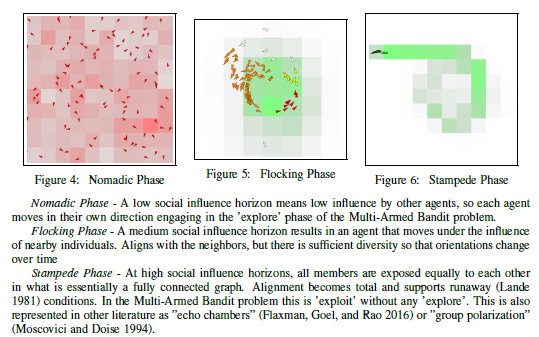
  • Need to generate nomadic, flocking, and stampede generated maps. Done! See below.
  • Redo the proposal so that the Tile View is the central navigation scheme with aspects for users, topics, ratings, etc. Done
  • Generated data for Aaron’s ML sessions. Planned upgrading my box so we can run things on the Titan card
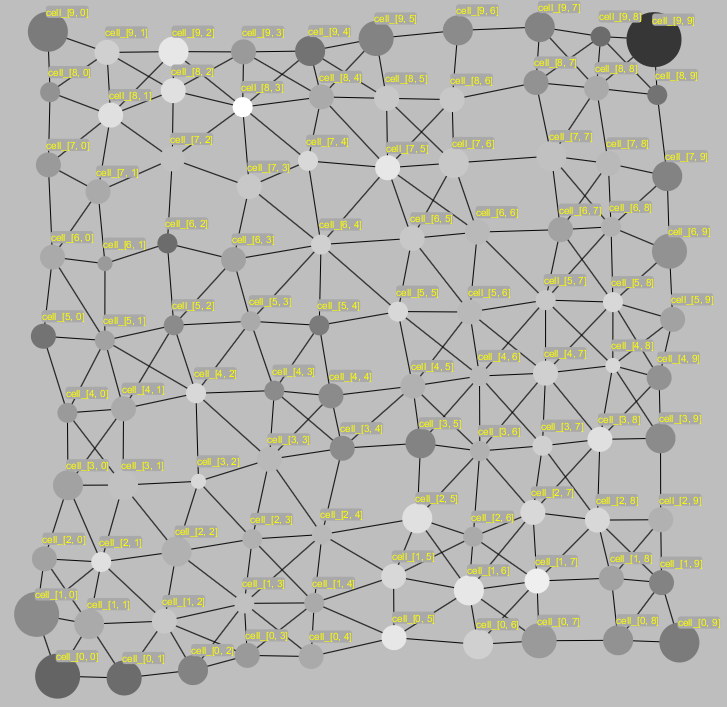
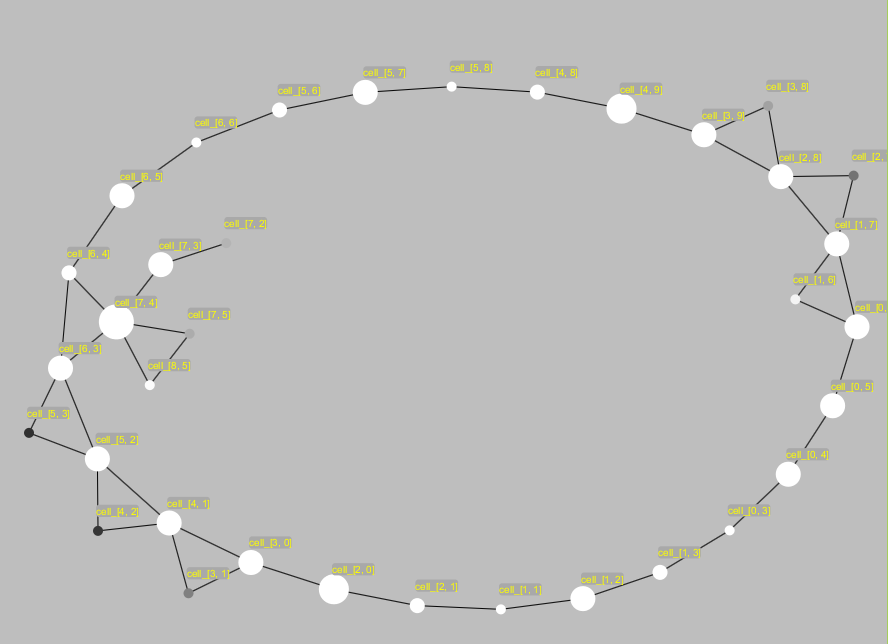
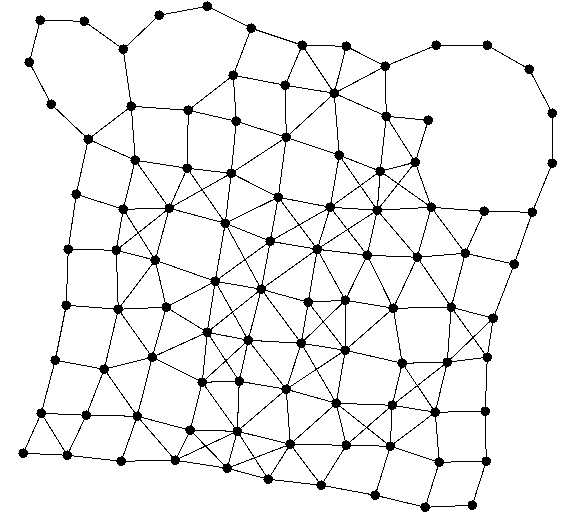
  • Some more results from the belief space mapping effort. Each map is constructed from a 100 sample run over the same 10×10 grid after the simulation stabilized:
    • Here’s a quick overview of the populations: ThreePopulations
    • Stable Nomad behavior map: nomad-stableGood overall coverage as you would expect. Some places have more visitors (the bright spots), but there are no gaps in the belief space.
    • Stable Flocking behavior map: flocking-stableWe can see gaps start to appear in the belief space, but the overall grid structure is still visible at the center of the network where the flock spent most of its time. This is also evident in the bright ring of nodes that represents the cells that the flock traversed while it was orbiting the center area.
    • Stable stampede behavior map: stampede-stableHere, the relationship of the trajectories to the underlying coordinate frame is completely lost. In this case, the boundary of the simulation was reflective, so the stampede bounces around the simulation space. The reason that there is a loop rather than a line is because the tight cluster of agents crossed its path at some point.
  • What could be interesting it to overlay the other graphs on the nomad-produced map. We could see the popular (exploitable) sections of the flocking population while also seeing the areas visited by the stampede. The assumption is that the stampede is engaged in untrustworthy behavior, so those parts would be marked as ‘dangerous’, while the flocking areas would marked as a region of ‘conventional wisdom’ or normative behavior.

Phil 12.28.12

8:30 – 4:30 ASRC MKT

  • Still sick. Nearing bronchitis?
  • Confessions of a Digital Nazi Hunter
  • Phenotyping of Clinical Time Series with LSTM Recurrent Neural Networks
    • We present a novel application of LSTM recurrent neural networks to multi label classification of diagnoses given variable-length time series of clinical measurements. Our method outperforms a strong baseline on a variety of metrics.
    • Scholar Cited by
      • Mapping Patient Trajectories using Longitudinal Extraction and Deep Learning in the MIMIC-III Critical Care Database
        • Electronic Health Records (EHRs) contain a wealth of patient data useful to biomedical researchers. At present, both the extraction of data and methods for analyses are frequently designed to work with a single snapshot of a patient’s record. Health care providers often perform and record actions in small batches over time. By extracting these care events, a sequence can be formed providing a trajectory for a patient’s interactions with the health care system. These care events also offer a basic heuristic for the level of attention a patient receives from health care providers. We show that is possible to learn meaningful embeddings from these care events using two deep learning techniques, unsupervised autoencoders and long short-term memory networks. We compare these methods to traditional machine learning methods which require a point in time snapshot to be extracted from an EHR.
  • Continuing on white paper
  • Moved the Flocking and Herding paper over to the WSC17 format for editing. Will need to move to the WSC18 format when that becomes available

Phil 12.18.17

7:15 – 4:15 ASRC MKT

  • I’m having old iPhone problems. Trying a wipe and restart.
  • Exploring the ChestXray14 dataset: problems
    • Interesting article on using tagged datasets. What if the tags are wrong? Something to add to the RB is a random re-introduction of a previously tagged item to see if tagging remains consistent.
  • Continuing Consensus and Cooperation in Networked Multi-Agent Systems here
  • Visualizing the Temporal Evolution of Dynamic Networks (ACM MLG 2011)
    • Many developments have recently been made in mining dynamic networks; however, effective visualization of dynamic networks remains a significant challenge. Dynamic networks are typically visualized via a sequence of static graph layouts. In addition to providing a visual representation of the network topology at each time step, the sequence should preserve the “mental map” between layouts of consecutive time steps to allow a human to interpret the temporal evolution of the network and gain valuable insights that are difficult to convey by summary statistics alone. We propose two regularized layout algorithms for visualizing dynamic networks, namely dynamic multidimensional scaling (DMDS) and dynamic graph Laplacian layout (DGLL). These algorithms discourage node positions from moving drastically between time steps and encourage nodes to be positioned near other members of their group. We apply the proposed algorithms on several data sets to illustrate the benefit of the regularizers for producing interpretable visualizations.
    • These look really straightforward to implement. May be handy in the new flocking paper
  • Opinion and community formation in coevolving networks (Phys Review E)
    • In human societies, opinion formation is mediated by social interactions, consequently taking place on a network of relationships and at the same time influencing the structure of the network and its evolution. To investigate this coevolution of opinions and social interaction structure, we develop a dynamic agent-based network model by taking into account short range interactions like discussions between individuals, long range interactions like a sense for overall mood modulated by the attitudes of individuals, and external field corresponding to outside influence. Moreover, individual biases can be naturally taken into account. In addition, the model includes the opinion-dependent link-rewiring scheme to describe network topology coevolution with a slower time scale than that of the opinion formation. With this model, comprehensive numerical simulations and mean field calculations have been carried out and they show the importance of the separation between fast and slow time scales resulting in the network to organize as well-connected small communities of agents with the same opinion.
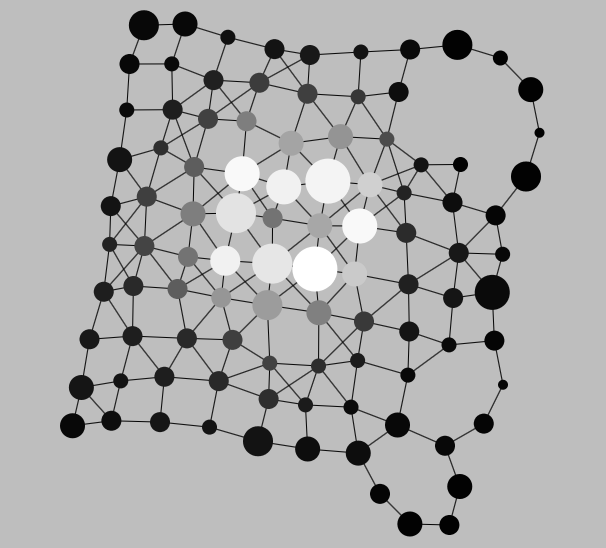
  • I can build maps from trajectories of agents through a labeled belief space: mapFromTrajectories
    • This would be analogous to building a map based on terms or topics used by people during multiple group polarization discussion. Densely connected central area where all the discussions begin, sparse ‘outer region’ where the poles live. In this case, you can clearly see the underlying grid that was used to generate the ‘terms’
  • Progress for today. Size is the average time spent ‘over’ a topic/term. Brightness is the number of distinct visitors: mapFromTrajectories2

Phil 12.12.17

7:00 – 3:30 ASRC MKT

  • Need to make sure that an amplified agent also has amplified influence in calculating velocity – Fixed
  • Towards the end of this video is an interview with Ian Couzin talking about how mass communication is disrupting our ability to flock ‘correctly’ due to the decoupling of distance and information
  • Write up fire stampede. Backups everywhere, one hole, antennas burn so the AI keeps trust in A* but loses awareness as the antennas burn: “The Los Angeles Police Department asked drivers to avoid navigation apps, which are steering users onto more open routes — in this case, streets in the neighborhoods that are on fire.” [LA Times] Also this slow motion version of the same thing: For the Good of Society — and Traffic! — Delete Your Map App
  • First self-driving car ‘race’ ends in a crash at the Buenos Aires Formula E ePrix; two cars enter, one car survives
  • Taking a closer look at Oscillator Models and Collective Motion (178 Citations) and Consensus and Cooperation in Networked Multi-Agent Systems (6,291 Citations)
  • Consensus and Cooperation in Networked Multi-Agent Systems
    • Reza Olfati-SaberAlex Fax, and Richard M. Murray
    • We discuss the connections between consensus problems in networked dynamic systems and diverse applications including synchronization of coupled oscillators, flocking, formation control, fast consensus in small world networks, Markov processes and gossip-based algorithms, load balancing in networks, rendezvous in space, distributed sensor fusion in sensor networks, and belief propagation. We establish direct connections between spectral and structural properties of complex networks and the speed of information diffusion of consensus algorithms (Abstract)
    • In networks of agents (or dynamic systems), “consensus” means to reach an agreement regarding a certain quantity of interest that depends on the state of all agents. A “consensus algorithm” (or protocol) is an interaction rule that specifies the information exchange between an agent and all of its (nearest) neighbors on the network (pp 215)
      • In my work, this is agreement on heading and velocity
    • Graph Laplacians are an important point of focus of this paper. It is worth mentioning that the second smallest eigenvalue of graph Laplacians called algebraic connectivity quantifies the speed of convergence of consensus algorithms. (pp 216)
    • More recently, there has been a tremendous surge of interest among researchers from various disciplines of engineering and science in problems related to multi-agent networked systems with close ties to consensus problems. This includes subjects such as consensus [26]–[32], collective behavior of flocks and swarms [19], [33]–[37], sensor fusion [38]–[40], random networks [41], [42], synchronization of coupled oscillators [42]–[46], algebraic connectivity of complex networks [47]–[49], asynchronous distributed algorithms [30], [50], formation control for multi-robot systems [51]–[59], optimization-based cooperative control [60]–[63], dynamic graphs [64]–[67], complexity of coordinated tasks [68]–[71], and consensus-based belief propagation in Bayesian networks [72], [73]. (pp 216)
      • That is a dense lit review. How did they order it thematically?
    • A byproduct of this framework is to demonstrate that seemingly different consensus algorithms in the literature [10], [12]–[15] are closely related. (pp 216)
    • To understand the role of cooperation in performing coordinated tasks, we need to distinguish between unconstrained and constrained consensus problems. An unconstrained consensus problem is simply the alignment problem in which it suffices that the state of all agents asymptotically be the same. In contrast, in distributed computation of a function f(z), the state of all agents has to asymptotically become equal to f(z), meaning that the consensus problem is constrained. We refer to this constrained consensus problem as the f-consensus problem. (pp 217)
      • Normal exploring/flocking/stampeding is unconstrained. Herding adds constraint, though it’s dynamic. The variables that have to be manipulated in the case of constraint to result in the same amount of consensus are probably what’s interesting here. Examples could be how ‘loud’ does the herder have to be? Also, how ‘primed’ does the population have to be to accept herding?
    • …cooperation can be informally interpreted as “giving consent to providing one’s state and following a common protocol that serves the group objective.” (pp 217)
    • Formal analysis of the behavior of systems that involve more than one type of agent is more complicated, particularly, in presence of adversarial agents in noncooperative games [79], [80]. (pp 217)
    • The reason matrix theory [81] is so widely used in analysis of consensus algorithms [10], [12], [13], [14], [15], [64] is primarily due to the structure of P in (4) and its connection to graphs. (pp 218)
    • The role of consensus algorithms in particle based flocking is for an agent to achieve velocity matching with respect to its neighbors. In [19], it is demonstrated that flocks are networks of dynamic systems with a dynamic topology. This topology is a proximity graph that depends on the state of all agents and is determined locally for each agent, i.e., the topology of flocks is a state dependent graph. The notion of state-dependent graphs was introduced by Mesbahi [64] in a context that is independent of flocking. (pp 218)
      • They leave out heading alignment here. Deliberate? Or is heading alignment just another variant on velocity
    • Consider a network of decision-making agents with dynamics ẋi = ui interested in reaching a consensus via local communication with their neighbors on a graph G = (V, E). By reaching a consensus, we mean asymptotically converging to a one-dimensional agreement space characterized by the following equation: x1 = x2 = … = x (pp 219)
    • A dynamic graph G(t) = (V, E(t)) is a graph in which the set of edges E(t) and the adjacency matrix A(t) are time-varying. Clearly, the set of neighbors Ni(t) of every agent in a dynamic graph is a time-varying set as well. Dynamic graphs are useful for describing the network topology of mobile sensor networks and flocks [19]. (pp 219)
    • GraphLaplacianGradientDescent(pp 220)
  • algebraic connectivity of a graph: The algebraic connectivity (also known as Fiedler value or Fiedler eigenvalue) of a graph G is the second-smallest eigenvalue of the Laplacian matrix of G.[1] This eigenvalue is greater than 0 if and only if G is a connected graph. This is a corollary to the fact that the number of times 0 appears as an eigenvalue in the Laplacian is the number of connected components in the graph. The magnitude of this value reflects how well connected the overall graph is. It has been used in analysing the robustness and synchronizability of networks. (wikipedia) (pp 220)
  • According to Gershgorin theorem [81], all eigenvalues of L in the complex plane are located in a closed disk centered at delta + 0j with a radius of delta, the maximum degree of a graph (pp 220)
    • This is another measure that I can do of the nomad/flock/stampede structures combined with DBSCAN. Each agent knows what agents it is connected with, and we know how many agents there are. Each agent row should just have the number of agents it is connected to.
  • In many scenarios, networked systems can possess a dynamic topology that is time-varying due to node and link failures/creations, packet-loss [40], [98], asynchronous consensus [41], state-dependence [64], formation reconfiguration [53], evolution [96], and flocking [19], [99]. Networked systems with a dynamic topology are commonly known as switching networks. (pp 226)
  • Conclusion: A theoretical framework was provided for analysis of consensus algorithms for networked multi-agent systems with fixed or dynamic topology and directed information flow. The connections between consensus problems and several applications were discussed that include synchronization of coupled oscillators, flocking, formation control, fast consensus in small-world networks, Markov processes and gossip-based algorithms, load balancing in networks, rendezvous in space, distributed sensor fusion in sensor networks, and belief propagation. The role of “cooperation” in distributed coordination of networked autonomous systems was clarified and the effects of lack of cooperation was demonstrated by an example. It was demonstrated that notions such as graph Laplacians, nonnegative stochasticmatrices, and algebraic connectivity of graphs and digraphs play an instrumental role in analysis of consensus algorithms. We proved that algorithms introduced by Jadbabaie et al. and Fax and Murray are identical for graphs with n self-loops and are both special cases of the consensus algorithm of Olfati-Saber and Murray. The notion of Perron matrices was introduced as the discrete-time counterpart of graph Laplacians in consensus protocols. A number of fundamental spectral properties of Perron matrices were proved. This led to a unified framework for expression and analysis of consensus algorithms in both continuous-time and discrete-time. Simulation results for reaching a consensus in small-worlds versus lattice-type nearest-neighbor graphs and cooperative control of multivehicle formations were presented. (pp 231)
  • Not sure about this one. It just may be another set of algorithms to do flocking. Maybe some network implications? Flocking for Multi-Agent Dynamic Systems: Algorithms and Theory. It is one of the papers that the Consensus and Cooperation paper above leans on heavily though…
  • The Emergence of Consensus: A Primer
    • The origin of population-scale coordination has puzzled philosophers and scientists for centuries. Recently, game theory, evolutionary approaches and complex systems science have provided quantitative insights on the mechanisms of social consensus. However, the literature is vast and scattered widely across fields, making it hard for the single researcher to navigate it. This short review aims to provide a compact overview of the main dimensions over which the debate has unfolded and to discuss some representative examples. It focuses on those situations in which consensus emerges ‘spontaneously’ in absence of centralised institutions and covers topic that include the macroscopic consequences of the different microscopic rules of behavioural contagion, the role of social networks, and the mechanisms that prevent the formation of a consensus or alter it after it has emerged. Special attention is devoted to the recent wave of experiments on the emergence of consensus in social systems.
  • Critical dynamics in population vaccinating behavior
    • Complex adaptive systems exhibit characteristic dynamics near tipping points such as critical slowing down (declining resilience to perturbations). We studied Twitter and Google search data about measles from California and the United States before and after the 2014–2015 Disneyland, California measles outbreak. We find critical slowing down starting a few years before the outbreak. However, population response to the outbreak causes resilience to increase afterward. A mathematical model of measles transmission and population vaccine sentiment predicts the same patterns. Crucially, critical slowing down begins long before a system actually reaches a tipping point. Thus, it may be possible to develop analytical tools to detect populations at heightened risk of a future episode of widespread vaccine refusal.
  • For Aaron’s Social Gradient Descent Agent research (lit review)
    • On distributed search in an uncertain environment (Something like Social Gradient Descent Agents)
      • The paper investigates the case where N agents solve a complex search problem by communicating to each other their relative successes in solving the task. The problem consists in identifying a set of unknown points distributed in an n–dimensional space. The interaction rule causes the agents to organize themselves so that, asymptotically, each agent converges to a different point. The emphasis of this paper is on analyzing the collective dynamics resulting from nonlinear interactions and, in particular, to prove convergence of the search process.
    • A New Clustering Algorithm Based Upon Flocking On Complex Network (Sizing and timing for flocking systems seems to be ok?)
      • We have proposed a model based upon flocking on a complex network, and then developed two clustering algorithms on the basis of it. In the algorithms, firstly a k-nearest neighbor (knn) graph as a weighted and directed graph is produced among all data points in a dataset each of which is regarded as an agent who can move in space, and then a time-varying complex network is created by adding long-range links for each data point. Furthermore, each data point is not only acted by its k nearest neighbors but also r long-range neighbors through fields established in space by them together, so it will take a step along the direction of the vector sum of all fields. It is more important that these long-range links provides some hidden information for each data point when it moves and at the same time accelerate its speed converging to a center. As they move in space according to the proposed model, data points that belong to the same class are located at a same position gradually, whereas those that belong to different classes are away from one another. Consequently, the experimental results have demonstrated that data points in datasets are clustered reasonably and efficiently, and the rates of convergence of clustering algorithms are fast enough. Moreover, the comparison with other algorithms also provides an indication of the effectiveness of the proposed approach.
  • Done with the first draft of the white paper! And added the RFP section to the LMN productization version
  • Amazon Sage​Maker: Amazon SageMaker is a fully managed machine learning service. With Amazon SageMaker, data scientists and developers can quickly and easily build and train machine learning models, and then directly deploy them into a production-ready hosted environment. It provides an integrated Jupyter authoring notebook instance for easy access to your data sources for exploration and analysis, so you don’t have to manage servers. It also provides common machine learning algorithms that are optimized to run efficiently against extremely large data in a distributed environment. With native support for bring-your-own-algorithms and frameworks, Amazon SageMaker offers flexible distributed training options that adjust to your specific workflows. Deploy a model into a secure and scalable environment by launching it with a single click from the Amazon SageMaker console. Training and hosting are billed by minutes of usage, with no minimum fees and no upfront commitments. (from the documentation)

4:00 – 5:00 Meeting with Aaron M. to discuss Academic RB wishlist.

Phil 12.10.17

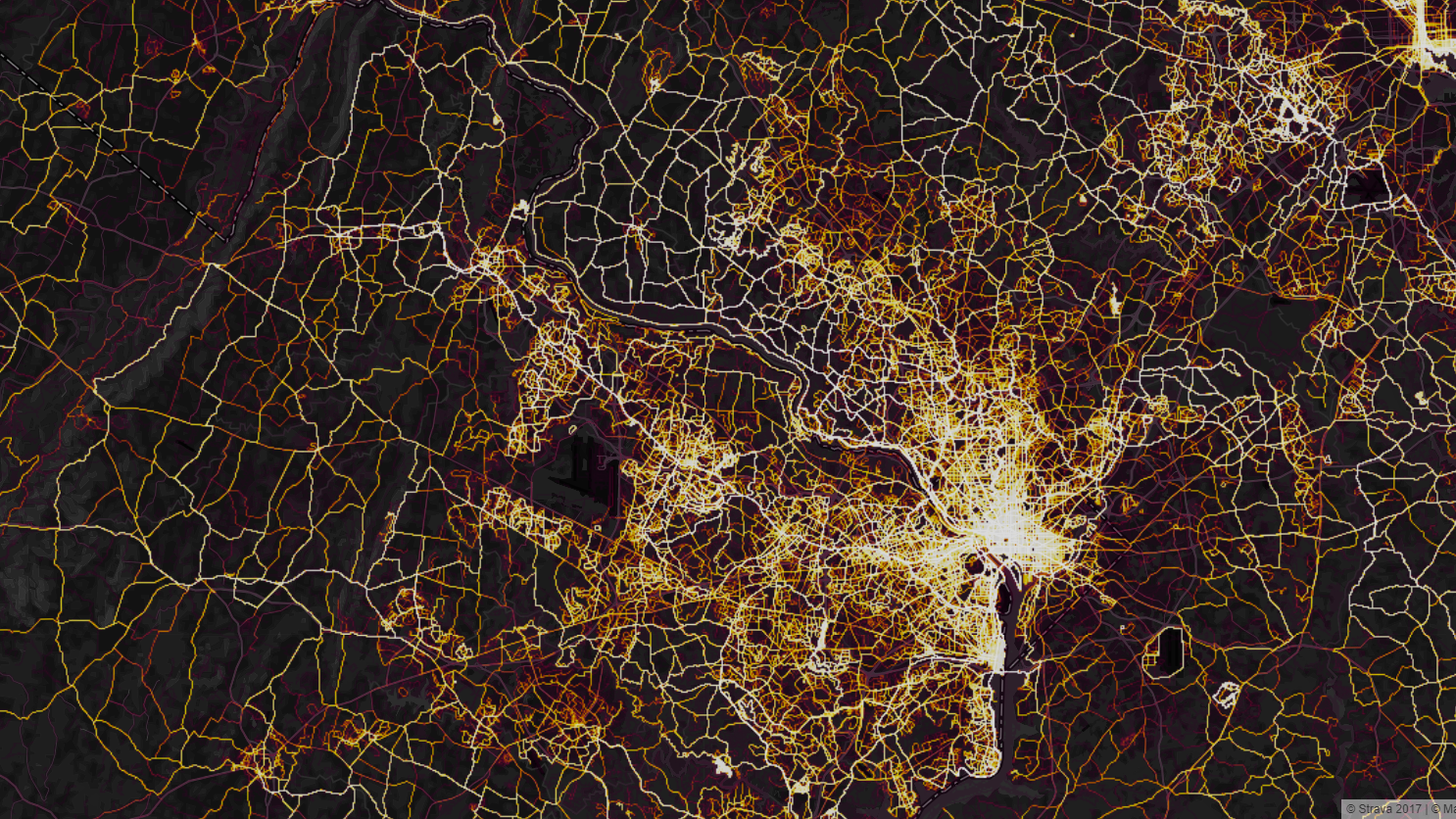
Thinking about the map. In cases where it is impossible to project cleanly down to 2 dimensions, like you could with this Strava heatmap:

Strava

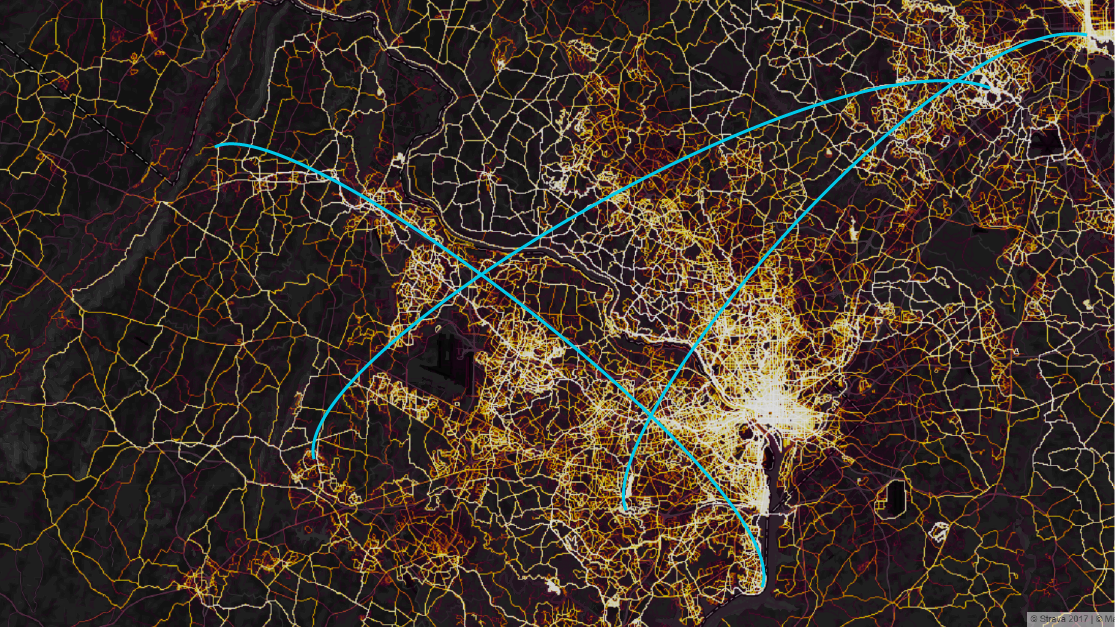
Adding elements like ‘highways’ (wormholes?) connecting two distant points might make sense. In this way, the larger dimensions are preserved, and the unusual relationships are still visible. In the case of language vs semantics, this could show the connections of ‘Java’ as a computer language, beverage, and country:

StravaWormholes

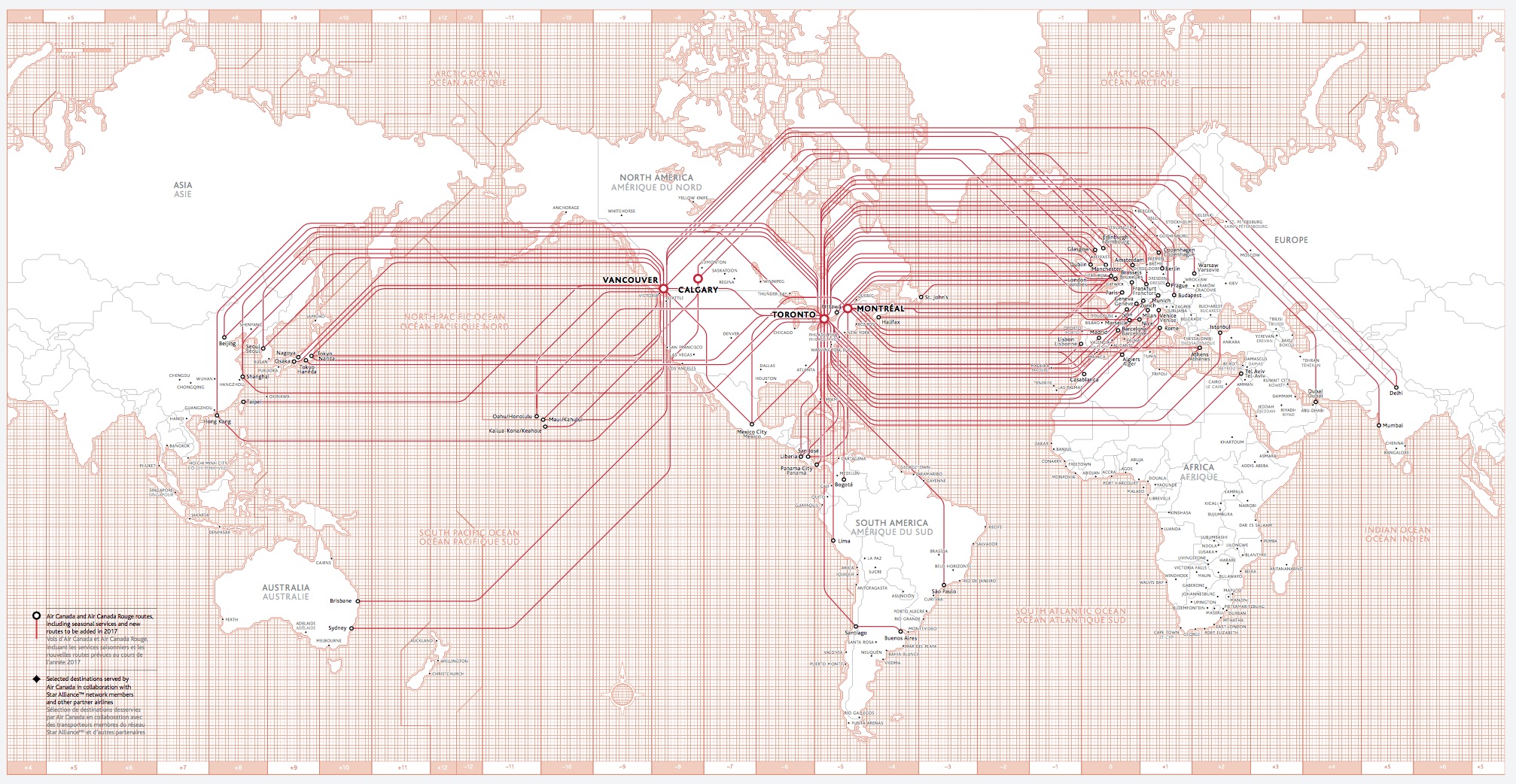
There are several ways of looking at these projections too. I would think that a map made entirely of long haul air routes would project differently than roads. It should be possible to ‘morph’ between these projections to explore the relationships.

air-canada-2-17-international-route-map

Cute thing:

dqeg3kcuqaamtt6

Phil 12.7.17

ASRC MKT 7:00 – 4:30

  • Association of moral values with vaccine hesitancy
  • Online extremism and the communities that sustain it: Detecting the ISIS supporting community on Twitter
  • Continuing Schooling as a strategy for taxis in a noisy environment here
  • Consensus and Cooperation in Networked Multi-Agent Systems
    • This paper provides a theoretical framework for analysis of consensus algorithms for multi-agent networked systems with an emphasis on the role of directed information flow, robustness to changes in network topology due to link/node failures, time-delays, and performance guarantees. An overview of basic concepts of information consensus in networks and methods of convergence and performance analysis for the algorithms are provided. Our analysis framework is based on tools from matrix theory, algebraic graph theory, and control theory. We discuss the connections between consensus problems in networked dynamic systems and diverse applications including synchronization of coupled oscillators, flocking, formation control, fast consensus in smallworld networks, Markov processes and gossip-based algorithms, load balancing in networks, rendezvous in space, distributed sensor fusion in sensor networks, and belief propagation. We establish direct connections between spectral and structural properties of complex networks and the speed of information diffusion of consensus algorithms. A brief introduction is provided on networked systems with nonlocal information flow that are considerably faster than distributed systems with lattice-type nearest neighbor interactions. Simulation results are presented that demonstrate the role of smallworld effects on the speed of consensus algorithms and cooperative control of multivehicle formations.
  • Found this in the citations of the above paper with terms “belief space flocking“: Spatial Coordination Games for Large-Scale Visualization
    • Dimensionality reduction (’visualization’) is a central problem in statistics. Several of the most popular solutions grew out of interaction metaphors (springs, boids, neurons, etc.) We show that the problem can be framed as a game of coordination and solved with standard game-theoretic concepts. Nodes that are close in a (high-dimensional) graph must coordinate in a (low-dimensional) screen position. We derive a game solution, a GPU-parallel implementation and report visualization experiments in several datasets. The solution is a very practical application of game-theory in an important problem, with fast and low-stress embeddings.
  • Lots of progress on the White Paper. Aaron wants to split out the WordRank work and the mapping work as two separate epochs. He thinks they may be easier to pitch than the phased approach
  • Some discussion on how explore/exploit is a bad metaphor due to the bad associations with exploit
  • Added a SIGINT use case
  • Discussed the ‘map weaving from trajectories’ concept

Phil 12.5.17

7:00 – 4:00 ASRC MKT

Phil 12.4.17

7:00 – ASRC MKT

3:00 – Campus

  • Fika
  • Meeting w/Wayne
    • Up to date. He was a bit worried that I might be going off the rails with the Neural Coupling work, but relaxed when I showed how it was being used to buttress the flocking model. And I have access to an fMRI, it seems…
    • Information Ecologies – The common rhetoric about technology falls into two extreme categories: uncritical acceptance or blanket rejection. Claiming a middle ground, Bonnie Nardi and Vicki O’Day call for responsible, informed engagement with technology in local settings, which they call information ecologies.An information ecology is a system of people, practices, technologies, and values in a local environment. Nardi and O’Day encourage the reader to become more aware of the ways people and technology are interrelated. They draw on their empirical research in offices, libraries, schools, and hospitals to show how people can engage their own values and commitments while using technology.
  • Bonus meeting with Shimei. Rambled through the following topics
    • Reinforcement learning with flocks and gradient descent
    • Flocking, herding and social engineering
    • Suspicious OS
    • She has a tall son 🙂

Phil 12.1.17

7:00 – 4:30 ASRC MKT

ZeynepWeb1-3

  • High-Resolution Image Synthesis and Semantic Manipulation with Conditional GANs. This shows NNs filling in slots in semantic maps (which are actually semantic mattes, and not to be confused with earlier self-organizing semantic maps). How is this with other, more linear processes like sound and narrative?
  • Continuing Alignment in social interactions here.
  • People flock in computer mediated environments: Spontaneous flocking in human groups
  • Schooling as a strategy for taxis in a noisy environment
    • Daniel Grunbaum
    • Abstract
      • A common strategy to overcome this problem is taxis, a behaviour in which an animal performs a biased random walk by changing direction more rapidly when local conditions are getting worse.
        • Consider voters switching from Bush->Obama->Trump
      • Such an animal spends more time moving in right directions than wrong ones, and eventually gets to a favourable area. Taxis is ineffcient, however, when environmental gradients are weak or overlain by `noisy’ small-scale fluctuations. In this paper, I show that schooling behaviour can improve the ability of animals performing taxis to climb gradients, even under conditions when asocial taxis would be ineffective. Schooling is a social behaviour incorporating tendencies to remain close to and align with fellow members of a group. It enhances taxis because the alignment tendency produces tight angular distributions within groups, and dampens the stochastic effects of individual sampling errors. As a result, more school members orient up-gradient than in the comparable asocial case. However, overly strong schooling behaviour makes the school slow in responding to changing gradient directions. This trade-off suggests an optimal level of schooling behaviour for given spatio-temporal scales of environmental variations.
        • This has implications for everything from human social interaction to ANN design.
    • Notes
      • Because limiting resources typically have `patchy’ distributions in which concentrations may vary by orders of magnitude, success or failure in finding favourable areas often has an enormous impact on growth rates and reproductive success. To locate resource concentrations, many aquatic organisms display tactic behaviours, in which they orient with respect to local variations in chemical stimuli or other environmental properties. (pp 503)
      • Here, I propose that schooling behaviours improve the tactic capabilities of school members, and enable them to climb faint and noisy gradients which they would otherwise be unable to follow. (pp 504)
      • Schooling is thought to result from two principal behavioural components: (1) tendencies to move towards neighbours when isolated, and away from them when too close, so that the group retains a characteristic level of compactness; and (2) tendencies to align orientation with those of neighbours, so that nearby animals have similar directions of travel and the group as a whole exhibits a directional polarity. (pp 504)
        • My models indicate that attraction isn’t required, as long as there is a distance-graded awareness. In other words, you align most strongly with those agents that are closest.
      • I focus in this paper on schooling in aquatic animals, and particularly on phytoplankton as a distributed resource. However, although I do not examine them specifically, the modelling approaches and the basic results apply more generally to other environmental properties (such as temperature), to other causes of population movement (such as migration) and to other socially aggregating species which form polarized groups (such as flocks, herds and swarms). (pp 504)
      • Under these circumstances, the search of a nektonic filter-feeder for large-scale concentrations of phytoplankton is analogous to the behaviour of a bacterium performing chemotaxis. The essence of the analogy is that, while higher animals have much more sophisticated sensory and cognitive capacities, the scale at which they sample their environment is too small to identify accurately the true gradient. (pp 505)
        • And, I would contend for determining optimal social interactions in large groups.
      • Bacteria using chemotaxis usually do not directly sense the direction of the gradient. Instead, they perform random walks in which they change direction more often or by a greater amount if conditions are deteriorating than if they are improving (Keller and Segel, 1971; Alt, 1980; Tranquillo, 1990). Thus, on average, individuals spend more time moving in favourable directions than in unfavourable ones. (pp 505)
      • A bacterial analogy has been applied to a variety of behaviours in more complex organisms, such as spatially varying di€usion rates due to foraging behaviours or food-handling in copepods and larval ®sh (Davis et al., 1991), migration patterns in tuna (Mullen, 1989) and restricted area searching in ladybugs (Kareiva and Odell, 1987) and seabirds (Veit et al., 1993, 1995). The analogy provides for these higher animals a quantitative prediction of distribution patterns and abilities to locate resources at large space and time scales, based on measurable characteristics of small-scale movements. (pp 505)
      • I do not consider more sophisticated (and possibly more effective) social tactic algorithms, in which explicit information about the environment at remote points is actively or passively transmitted between individuals, or in which individual algorithms (such as slowing down when in relatively high concentrations) cause the group to function as a single sensing unit (Kils, 1986, described in Pitcher and Parrish, 1993). (pp 506)
        • This is something that could be easily added to the model. There could be a multiplier for each data cell that acts as a velocity scalar of the flock. That should have significant effects! This could also be applied to gradient descent. The flock of Gradient Descent Agents (GDAs) could have a higher speed across the fitness landscape, but slow and change direction when a better value is found by one of the GDAs. It occurs to me that this would work with a step function, as long as the baseline of the flock is sufficiently broad.
      • When the noise predominates (d <= 1), the angular distribution of individuals is nearly uniform, and the up-gradient velocity is near zero. In a range of intermediate values of d(0.3 <= d <= 3), there is measurable but slow movement up-gradient. The question I will address in the next two sections is: Can individuals in this intermediate signal-to-noise range with slow gradient-climbing rates improve their tactic ability by adopting a social behaviour (i.e. schooling)? (pp 508)
      • The key attributes of these models are: (1) a decreasing probability of detection or responsiveness to neighbours at large separation distances; (2) a social response that includes some sort of switch from attractive to repulsive interactions with neighbours, mediated by either separation distance or local density of animals*; and (3) a tendency to align with neighbours (Inagaki et al., 1976; Matuda and Sannomiya, 1980, 1985; Aoki, 1982; Huth and Wissel, 1990, 1992; Warburton and Lazarus, 1991; Grunbaum, 1994). (pp 508)
        • Though not true of belief behavior (multiple individuals can share the same belief), for a Gradient Descent Agent (GDA), the idea of attraction/repulsion may be important.
      • If the number of neighbours is within an acceptable range, then the individual does not respond to them. On the other hand, if the number is outside that range, the individual turns by a small amount, Δθ3, to the left or right according to whether it has too many or too few of them and which side has more neighbours. In addition, at each time step, each individual randomly chooses one of its visible neighbours and turns by a small amount, Δθ4, towards that neighbour’s heading. (pp 508)
      • The results of simulations based on these rules show that schooling individuals, on average, move more directly in an up-gradient direction than asocial searchers with the same tactic parameters. Figure 4 shows the distribution of individuals in simulations of asocial and social taxis in a periodic domain (i.e. animals crossing the right boundary re-enter the left boundary, etc.). (pp 509)
      • Gradient Schooling
      • As predicted by Equation (5), asocial taxis results in a broad distribution of orientations, with a peak in the up-gradient (positive x-axis) direction but with a large fraction of individuals moving the wrong way at any given time (Fig. 5a,b). By comparison, schooling individuals tend to align with one another, forming a group with a tightened angular distribution. There is stochasticity in the average velocity of both asocial and social searchers (Fig. 5c). On average, however, schooling individuals move up-gradient faster and more directly than asocial ones. These simulation results demonstrate that it is theoretically possible to devise tactic search strategies utilizing social behaviours that are superior to asocial algorithms. That is, one of the advantages of schooling is that, potentially, it allows more successful search strategies under `noisy’ environmental conditions, where variations on the micro-scales at which animals sense their environment obscure the macro-scale gradients between ecologically favourable and unfavourable regions. (pp 510)
      • School-size effects must depend to some extent on the tactic and schooling algorithms, and the choices of parameters. However, underlying social taxis are the statistics of pooling outcomes of independent decisions, so the numerical dependence on school size may operate in a similar manner for many comparable behavioural schemes. For example, it seems reasonable to expect that, in many alternative schooling and tactic algorithms, decisions made collectively by less than 10 individuals would show some improvement over the asocial case but also retain much of the variability. Similarly, in most scenarios, group statistics probably vary only slowly with group size once it reaches sizes of 50-100. (pp 514)
      • when group size becomes large, the behaviour of model schools changes in character. With numerous individuals, stochasticity in the behaviour of each member has a relatively weaker effect on group motion. The behaviour of the group as a whole becomes more consistent and predictable, for longer time periods. (pp 514)
        • I think that this should be true in belief spaces as well. It may be difficult to track one person’s trajectory, but a group in aggregate, particularly a polarized group may be very detectable.
      • An example of group response to changing gradient direction shows that there can be a cost to strong alignment tendency. In this example, the gradient is initially pointed in the negative y-direction (Fig. 9). After an initial period of 5 time units, during which the gradient orients perpendicularly to the x-axis, the gradient reverts to the usual x-direction orientation. The school must then adjust to its new surroundings by shifting to climb the new gradient. This example shows that alignment works against course adjustment: the stronger the tendency to align, the slower is the group’s reorientation to the new gradient direction. This is apparently due to a non-linear interaction between alignment and taxis: asymmetries in the angular distribution during the transition create a net alignment flux away from the gradient direction. Thus, individuals that pay too much attention to neighbours, and allow alignment to overwhelm their tactic tendencies, may travel rapidly and persistently in the wrong direction. (pp 516)
        • So, if alignment (and velocity matching) are strong enough, the conditions for a stampede (group behavior with negative outcomes – in this case, less food) emerge
      • The models also suggest that there is a trade-off in strengthening tendencies to align with neighbours: strong alignment produces tight angular distributions, but increases the time needed to adjust course when the direction of the gradient changes. A reasonable balance seems to be achieved when individuals take roughly the same time to coalesce into a polarized group as they do to orient to the gradient in asocial taxis. (pp 518)
        • There is something about the relationship between explore and exploit in this statement that I really need to think about.
      • Social taxis is potentially effective in animals whose resources vary substantially over large length scales and for whom movements over these scales are possible. (pp 518)
        • Surviving as a social animal requires staying in the group. Since belief can cover wide ranges (e.g. religion), does there need to be a mechanism where individuals can harmonize their beliefs? From Social Norms and Other Minds The Evolutionary Roots of Higher Cognition :  Field research on primate societies in the wild and in captivity clearly shows that the capacity for (at least) implicit appreciation of permission, prohibition, and obligation social norms is directly related to survival rates and reproductive success. Without at least a rudimentary capacity to recognize and respond appropriately to these structures, remaining within a social group characterized by a dominance hierarchy would be all but impossible.
      • Interestingly, krill have been reported to school until a food patch has been discovered, whereupon they disperse to feed, consistent with a searching function for schooling. The apparent effectiveness of schooling as a strategy for taxis suggests that these schooling animals may be better able to climb obscure large-scale gradients than they would were they asocial. Interactive effects of taxis and sociality may affect the evolutionary value of larger groups both directly, by improving foraging ability with group size, and indirectly, by constraining alignment rates. (pp 518)
      • An example where sociality directly affects foraging strategy is forage area copying, in which unsuccessful fish move to the vicinity of neighbours that are observed to be foraging successfully (Pitcher et al., 1982; Ranta and Kaitala, 1991; Pitcher and Parrish, 1993). Pitcher and House (1987) interpreted area copying in goldfish as the result of a two-stage decision process: (1) a decision to stay put or move depending on whether feeding rate is high or low; and (2) a decision to join neighbours or not based upon whether or not further solitary searching is successful. Similar group dynamics have been observed in foraging seabirds (Porter and Seally, 1982; Haney et al., 1992).
      • Synchrokinesis depends upon the school having a relatively large spatial extent: part of a migrating school encounters an especially favourable or unfavourable area. The response of that section of the school is propagated throughout the school by alignment and grouping behaviours, with the result that the school as a whole is more effective at route-finding than isolated individuals. Forage area copying and synchrokinesis are distinct from social taxis in that an individual discovers and reacts to an environmental feature or resource, and fellow group members exploit that discovery. In social taxis, no individual need ever have greater knowledge about the environment than any other — social taxis is essentially bound up in the statistics of pooling the outcomes of many unreliable decisions. Synchrokinesis and social taxis are complementary mechanisms and may be expected to co-occur in migrating and gradient-climbing schools. (pp 519)
      • For example, in the comparisons of taxis among groups of various sizes, the most successful individuals were in the asocial simulation, even though as a fraction of the entire population they were vanishingly small. (pp 519)
        • Explorers have the highest payoff for the highest risks
  • Continuing white paper. Done with intro, background, and phase 1
  • Intel-powered AI Helps Fight Fraud

Phil 11.26.17

User experience design for APIs

  • Writing code is rarely just a private affair between you and your computer. Code is not just meant for machines; it has human users. It is meant to be read by people, used by other developers, maintained and built upon. Developers who produce better code, in greater quantity, when they are kept happy and productive, working with tools they love. Developers who unfortunately are often being let down by their tools, and left cursing at obscure error messages, wondering why that stupid library doesn’t do what they thought it would. Our tools have great potential to cause us pain, especially in a field as complex as software engineering.

Phil 11.16.2017

7:00 – ASRC MKT

  • Data & Society to Launch Disinformation Action Lab Supported by Knight Foundation
    • The lab will use research to explore issues such as: how fake news narratives propagate; how to detect coordinated social media campaigns; and how to limit adversaries who are deliberately spreading misinformation. To understand where online manipulation is headed, it will analyze the technology and tactics being used by players at the international and domestic level.This project builds off the ongoing work of the Media Manipulation initiative at Data & Society, which examines how groups use social media and the participatory culture of the internet to spread and amplify misinformation and disinformation. Recent releases from this initiative include Lexicon of Lies and Media Manipulation and Disinformation Online.The funding is part of today’s announcement that the John S. and James L. Knight Foundation is giving $4.5 million in new funding to eight leading organizations working to create more informed and engaged communities through innovative use of technology. The other organizations receiving support include: Code2040, Code for Science & Society, Columbia Journalism School, DocumentCloud, Emblematic Group, HistoryPin and mRelief.
  • Before I restart on The Group Polarization Phenomenon, I’m going to take a look at how much work it would be to add the recording of trajectories through cells by agent.
  • And updates
  • Done! The name incorporates the n-dimensional cell position. In this case it’s 2D
    GreenFlockSh_10: GreenFlock[6, 3], RedFlock[6, 4], GreenFlock[7, 4], GreenFlock[7, 4], GreenFlock[7, 4], RedFlock[8, 4], GreenFlock[8, 5], GreenFlock[8, 5], GreenFlock[8, 5], RedFlock[8, 6], RedFlock[8, 6], RedFlock[8, 6], RedFlock[8, 6], GreenFlock[8, 7], GreenFlock[8, 7], RedFlock[7, 7], RedFlock[7, 7], GreenFlock[7, 8], GreenFlock[7, 8], RedFlock[6, 8], RedFlock[6, 8], RedFlock[6, 8], GreenFlock[5, 8], GreenFlock[5, 8], GreenFlock[5, 8], RedFlock[4, 8], RedFlock[4, 8], RedFlock[4, 8], RedFlock[4, 8], RedFlock[3, 7], RedFlock[3, 7], RedFlock[3, 7], RedFlock[3, 7], GreenFlock[3, 6], GreenFlock[3, 6], GreenFlock[3, 6], RedFlock[3, 5], RedFlock[3, 5], GreenFlock[2, 5], GreenFlock[2, 5], RedFlock[2, 4], RedFlock[2, 4], RedFlock[2, 4], GreenFlock[2, 3], GreenFlock[2, 3], GreenFlock[2, 3], GreenFlock[3, 2], GreenFlock[3, 2], GreenFlock[3, 2], GreenFlock[3, 2], GreenFlock[3, 2], RedFlock[4, 2], GreenFlock[4, 1], GreenFlock[4, 1], RedFlock[5, 1], GreenFlock[5, 2], GreenFlock[5, 2], RedFlock[6, 2], RedFlock[6, 2], RedFlock[6, 2], GreenFlock[6, 3], GreenFlock[6, 3], GreenFlock[6, 3], RedFlock[7, 3], GreenFlock[7, 4], GreenFlock[7, 4], GreenFlock[7, 4], RedFlock[7, 5], RedFlock[7, 5], RedFlock[7, 5], GreenFlock[8, 5], RedFlock[8, 6], RedFlock[8, 6], RedFlock[8, 6], GreenFlock[8, 7], GreenFlock[8, 7], GreenFlock[8, 7], GreenFlock[8, 7], GreenFlock[9, 8], GreenFlock[9, 8], GreenFlock[9, 8], RedFlock[9, 9], RedFlock[9, 9], RedFlock[9, 9], RedFlock[9, 9], RedFlock[9, 9], RedFlock[9, 9], RedFlock[9, 9], GreenFlock[9, 8], GreenFlock[9, 8], GreenFlock[9, 8], GreenFlock[9, 8], GreenFlock[8, 7], GreenFlock[8, 7], GreenFlock[8, 7], GreenFlock[8, 7], RedFlock[7, 7], RedFlock[7, 7], RedFlock[7, 7]
    
  • Some additional thoughts about building maps from trajectories
    • Incorporating trajectories allows determination of otherwise difficult problems. An example of this is pictures of war crimes. If the trajectory originates in a legal belief space, then it’s evidence to be saved. If it comes from an extremist belief space, it’s propaganda to be deleted.
    • The simplest way to do this is to look at all the trajectories where a landmark is shared. Every item that is adjacent to that landmark on a trajectory must be adjacent in the environment. If we build a graph with the lowest crossing number, we should have our best reconstruction.
    • Time can be an important dimension, and may provide useful information where just sequence may not
    • It is possible, even likely, that the map is not fixed, so the environment should also be allowed to morph over time to support optimal relations. Think of it as agents surfing on a wave. There is an outer frame (the shore) that waves and surfers can’t exist. Within that frame, waves move and follow different rules from surfers. Surfers in turn are influenced by the waves, and in our case, waves may be influenced by the surfers as well as the external environment.
    • Trajectories point both ways. In addition to being able to infer a destination for an agent, it may be possible to infer an origin.
    • Discussing this with Aaron, we realized that it might be possible to build a map by constructing a network from the adjacency of paths. In other words, if one path goes from C1->C2->C3 and another goes from B2->C2->D2, then we know that C2 is adjacent to all those points. That information can be used to build a graph. If the graph can be arranged so that it has a low crossing number, then it should approximate the original map. The (relative) size of the areas could be related to the crossing times averaged out for all agents.
  • And I just found this in Reinforcement Learning : An Introduction (1st edition linked here): ReinforcementLearningPP2
  • Back to Angular
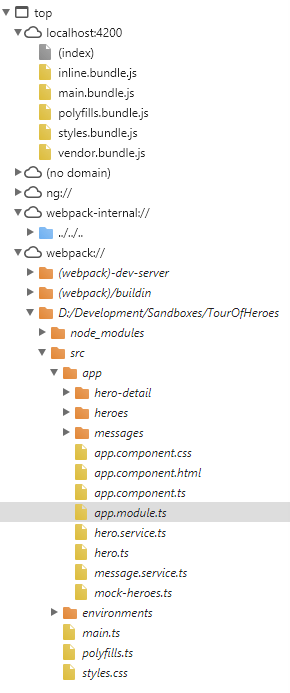
    • Found where the typescript files live on the browser/webpack: FoundTheFiles
    • Got routes working, with minimal confusion. The framework generates a lot of code though…
    • To get npm install angularinmemorywebapi save to install something visible for the IDE, I had to add the -g option. Still got weird errors though: 
      D:\Development\Sandboxes\TourOfHeroes>npm install angular-in-memory-web-api --save -g
      npm WARN angular-in-memory-web-api@0.5.1 requires a peer of @angular/common@>=2.0.0 <6.0.0 but none is installed. You must install peer dependencies yourself. npm WARN angular-in-memory-web-api@0.5.1 requires a peer of @angular/core@>=2.0.0 <6.0.0 but none is installed. You must install peer dependencies yourself. npm WARN angular-in-memory-web-api@0.5.1 requires a peer of @angular/http@>=2.0.0 <6.0.0 but none is installed. You must install peer dependencies yourself.
      npm WARN angular-in-memory-web-api@0.5.1 requires a peer of rxjs@^5.1.0 but none is installed. You must install peer dependencies yourself.
      
    • Here’s how you generate a service
      ng generate service in-memory-data --flat --module=app


Phil 11.15.17

7:00 – 4:30 ASRC MKT

  • How A Russian Troll Fooled America Reconstructing the life of a covert Kremlin influence account (Herding behavior???)
  • Psychological targeting as an effective approach to digital mass persuasion
    • People are exposed to persuasive communication across many different contexts: Governments, companies, and political parties use persuasive appeals to encourage people to eat healthier, purchase a particular product, or vote for a specific candidate. Laboratory studies show that such persuasive appeals are more effective in influencing behavior when they are tailored to individuals’ unique psychological characteristics. However, the investigation of large-scale psychological persuasion in the real world has been hindered by the questionnaire-based nature of psychological assessment. Recent research, however, shows that people’s psychological characteristics can be accurately predicted from their digital footprints, such as their Facebook Likes or Tweets. Capitalizing on this form of psychological assessment from digital footprints, we test the effects of psychological persuasion on people’s actual behavior in an ecologically valid setting. In three field experiments that reached over 3.5 million individuals with psychologically tailored advertising, we find that matching the content of persuasive appeals to individuals’ psychological characteristics significantly altered their behavior as measured by clicks and purchases. Persuasive appeals that were matched to people’s extraversion or openness-to experience level resulted in up to 40% more clicks and up to 50% more purchases than their mismatching or unpersonalized counterparts. Our findings suggest that the application of psychological targeting makes it possible to influence the behavior of large groups of people by tailoring persuasive appeals to the psychological needs of the target audiences. We discuss both the potential benefits of this method for helping individuals make better decisions and the potential pitfalls related to manipulation and privacy
  • Wrote up notes from yesterday
  •  (MIT) is a tool that tries to engage users in constructive debate. The questions were devised by Jonathan Haidt and his team for YourMorals.org – a site that collects data on moral sense.
    • CollectiveDebate
    • CollectiveDebate2
    • After using it some, it seems awkward, and requires a good deal of busywork. Much delayed gratification, and you seem to only select the arguments that work best for you. The visualizations, based on the 5 axis are pretty cool, could be some default axis to play with.
  • Continuing with From Keyword Search to Exploration – finished. Need to get my notes over from the Kindle, which is not posting them….
  • Banging away at Angular. Basically figuring out what I did yesterday. Ok, done. I think it makes more sense now.

Phil 11.14.17

7:00 – 4:00 ASRC MKT

  • Reinforcement Learning: An Introduction (2nd Edition)
    • Richard S. Sutton (Scholar): I am seeking to identify general computational principles underlying what we mean by intelligence and goal-directed behavior. I start with the interaction between the intelligent agent and its environment. Goals, choices, and sources of information are all defined in terms of this interaction. In some sense it is the only thing that is real, and from it all our sense of the world is created. How is this done? How can interaction lead to better behavior, better perception, better models of the world? What are the computational issues in doing this efficiently and in realtime? These are the sort of questions that I ask in trying to understand what it means to be intelligent, to predict and influence the world, to learn, perceive, act, and think. In practice, I work primarily in reinforcement learning as an approach to artificial intelligence. I am exploring ways to represent a broad range of human knowledge in an empirical form–that is, in a form directly in terms of experience–and in ways of reducing the dependence on manual encoding of world state and knowledge.
    • Andrew G. Barto : Most of my recent work has been about extending reinforcement learning methods so that they can work in real-time with real experience, rather than solely with simulated experience as in many of the most impressive applications to date. Of particular interest to me at present is what psychologists call intrinsically motivated behavior, meaning behavior that is done for its own sake rather than as a step toward solving a specific problem of clear practical value. What we learn during intrinsically motivated behavior is essential for our development as competent autonomous entities able to efficiently solve a wide range of practical problems as they arise. Recent work by my colleagues and me on what we call intrinsically motivated reinforcement learning is aimed at allowing artificial agents to construct and extend hierarchies of reusable skills that form the building blocks for open-ended learning. Visit the Autonomous Learning Laboratory page for some more details.
  • There was a piece on BBC Business Daily on social network moderators. Aside from it being a horrible job, the show touched on how international criminal cases often rest on video uploaded to services like Twitter and Facebook. This process worked as long as the moderators were human and could tell the difference between criminal activity and the documentation of criminal activity, but now with ML solutions being implemented, these videos are being deleted. First, this shows how ad-hoc the usage of these networks are as a place for legal and journalistic activity. Second, it shows the need for a mechanism that is built to support these activities, where there is a more expansive role of reporter/researcher and editor. This is near the center of gravity for the TACJOUR project.
  • Flying home yesterday, I was thinking about how the maps need to get built. One way of thinking about it is that you are given a set of directions that run through a geographic area and have to build a map from that. We know the adjacencies by the sequence of the directions. It follows that we should be able to build a map by overlaying all the routes in an n-dimensional space. I was then reading Technical Perspective: Exploring a Kingdom by Geodesic Measures, and at least some of the concepts appear related. In the case of the game at least, we have the center ‘post’, which is the discussion starting point. The discussion is (can be) a random walk towards the poles created in that iteration. Multiple walks create multiple paths over this unknown Manifold.  I’m thinking that this should be enough information to build a self organizing map. This might help: Visual analysis of self-organizing maps
    • Had some discussions with Arron about this. It should be pretty straightforward to build a map, grid or hex that trajectories can be recorded from. Then the trajectories can be used to reconstruct the map. Success is evaluated by the similarity between the source map and the reconstructed one.
    • I could also add recorded trajectories to the generated spreadsheet. It could be a list of cells that the agent traverses. Comparing explore, flocking and stampede behaviors in their reconstructed maps?
  • Continuing with From Keyword Search to Exploration
    • The mSpace Browser is a multi faceted column based client for exploring large data sets in the way that makes sense to you. You decide the columns and the order that best suits your browsing needs.
    • Yippy search
    • Exalead search
    • pg 62, animation
  • Continuing along with Angular
  • Multiple discussions with Aaron about next steps, particularly for anomaly detection

Phil 11.3.17

7:00 – ASRC MKT

  • Good comments from Cindy on yesterday’s work
  • Facebook’s 2016 Election Team Gave Advertisers A Blueprint To A Divided US
  • Some flocking activity? AntifaNov4
  • I realized that I had not added the herding variables to the Excel output. Fixed.
  • DINH Q. LÊ: South China Sea Pishkun
    • In his new work, South China Sea Pishkun, Dinh Q. Lê references the horrifying events that occurred on April 30th 1975 (the day Saigon fell) as hundreds of thousands of people tried to flee Saigon from the encroaching North Vietnamese Army and Viet Cong. The mass exodus was a “Pishkun” a term used to describe the way in which the Blackfoot American Indians would drive roaming buffalo off cliffs in what is known as a buffalo jump.
  • Back to writing – got some done, mostly editing.
  • Stochastic gradient descent with momentum
  • Referred to in this: There’s No Fire Alarm for Artificial General Intelligence
    •  AlphaGo did look like a product of relatively general insights and techniques being turned on the special case of Go, in a way that Deep Blue wasn’t. I also updated significantly on “The general learning capabilities of the human cortical algorithm are less impressive, less difficult to capture with a ton of gradient descent and a zillion GPUs, than I thought,” because if there were anywhere we expected an impressive hard-to-match highly-natural-selected but-still-general cortical algorithm to come into play, it would be in humans playing Go.
  • In another article: The AI Alignment Problem: Why It’s Hard, and Where to Start
    • This is where we are on most of the AI alignment problems, like if I ask you, “How do you build a friendly AI?” What stops you is not that you don’t have enough computing power. What stops you is that even if I handed you a hypercomputer, you still couldn’t write the Python program that if we just gave it enough memory would be a nice AI.
    • I think this is where models of flocking and “healthy group behaviors” matters. Explore in small numbers is healthy – it defines the bounds of the problem space. Flocking is a good way to balance bounded trust and balanced awareness. Runaway echo chambers are very bad. These patterns are recognizable, regardless of whether they come from human, machine, or bison.
  • Added contacts and invites. I think the DB is ready: polarizationgameone
  • While out riding, I realized what I can do to show results in the herding paper. There are at least three ways to herd:
    1. No herding
    2. Take the average of the herd
    3. Weight a random agent
    4. Weight random agents (randomly select an agent and leave it that way for a few cycles, then switch
  • Look at the times it takes for these to converge and see which one is best. Also look at the DTW to see if they would be different populations.
  • Then re-do the above for the two populations inverted case (max polarization)
  • Started to put in the code changes for the above. There is now a combobox for herding with the above options.