Category Archives: Keras

Phil 9.3.19 (including install directions for Tensorflow 2.0rc1 on Windows 10)

7:00 – 4:30ASRC GOES

  • Dissertation – Working on the Orientation section, where I compare Moby Dick to Dieselgate
  • Uninstalling all previous versions of CUDA, which should hopefully allow 10 to be installed
  • Still flailing on getting TF 2.0 working. Grrrrr. Success! Added guide below
  • Spent some time discussing mapping the GPT-2 with Aaron

Installing Tensorflow 2.0rc1 to Windows 10, a temporary accurate guide

  • Uninstall any previous version of Tensorflow (e.g. “pip uninstall tensorflow”)
  • Uninstall all your NVIDIA crap
  • Install JUST THE CUDA LIBRARIES for version 9.0 and 10.0. You don’t need anything else

NVIDIA1

NVIDIA2

  • Then install the latest Nvidia graphics drivers. When you’re done, your install should look something like this (this worked on 9.3.19):

NVIDIA3

Edit your system variables so that the CUDA 9 and CUDA 10 directories are on your path:

NVIDIA4

One more part is needed from NVIDIA: cudnn64_7.dll

In order to download cuDNN, ensure you are registered for the NVIDIA Developer Program.

    1. Go to: NVIDIA cuDNN home page
    2. Click “Download”.
  1. Remember to accept the Terms and Conditions.
  2. Select the cuDNN version to want to install from the list. This opens up a second list of target OS installs. Select cuDNN Library for Windows 10.
  3. Extract the cuDNN archive to a directory of your choice. The important part (cudnn64_7.dll) is in the cuda\bin directory. Either add that directory to your path, or copy the dll and put it in the Program Files\NVIDIA GPU Computing Toolkit\CUDA\v10\bin directory

NVIDIA6

Then open up a console window (cmd) as admin, and install tensorflow:

  • pip install tensorflow-gpu==2.0.0-rc1
  • verify that it works by opening the python console and typing the following:

NVIDIA5

if that works, you should be able to have the following work:

import tensorflow as tf
print("tf version = {}".format(tf.__version__))
mnist = tf.keras.datasets.mnist

(x_train, y_train), (x_test, y_test) = mnist.load_data()
x_train, x_test = x_train / 255.0, x_test / 255.0

model = tf.keras.models.Sequential([
    tf.keras.layers.Flatten(input_shape=(28, 28)),
    tf.keras.layers.Dense(128, activation='relu'),
    tf.keras.layers.Dropout(0.2),
    tf.keras.layers.Dense(10, activation='softmax')
])

model.compile(optimizer='adam',
              loss='sparse_categorical_crossentropy',
              metrics=['accuracy'])

model.fit(x_train, y_train, epochs=5)

model.evaluate(x_test, y_test)

The results should looks something like:

"D:\Program Files\Python37\python.exe" D:/Development/Sandboxes/PyBullet/src/TensorFlow/HelloWorld.py
2019-09-03 15:09:56.685476: I tensorflow/stream_executor/platform/default/dso_loader.cc:44] Successfully opened dynamic library cudart64_100.dll
tf version = 2.0.0-rc0
2019-09-03 15:09:59.272748: I tensorflow/stream_executor/platform/default/dso_loader.cc:44] Successfully opened dynamic library nvcuda.dll
2019-09-03 15:09:59.372341: I tensorflow/core/common_runtime/gpu/gpu_device.cc:1618] Found device 0 with properties: 
name: TITAN X (Pascal) major: 6 minor: 1 memoryClockRate(GHz): 1.531
pciBusID: 0000:01:00.0
2019-09-03 15:09:59.372616: I tensorflow/stream_executor/platform/default/dlopen_checker_stub.cc:25] GPU libraries are statically linked, skip dlopen check.
2019-09-03 15:09:59.373339: I tensorflow/core/common_runtime/gpu/gpu_device.cc:1746] Adding visible gpu devices: 0
2019-09-03 15:09:59.373671: I tensorflow/core/platform/cpu_feature_guard.cc:142] Your CPU supports instructions that this TensorFlow binary was not compiled to use: AVX2
2019-09-03 15:09:59.376010: I tensorflow/core/common_runtime/gpu/gpu_device.cc:1618] Found device 0 with properties: 
name: TITAN X (Pascal) major: 6 minor: 1 memoryClockRate(GHz): 1.531
pciBusID: 0000:01:00.0
2019-09-03 15:09:59.376291: I tensorflow/stream_executor/platform/default/dlopen_checker_stub.cc:25] GPU libraries are statically linked, skip dlopen check.
2019-09-03 15:09:59.376996: I tensorflow/core/common_runtime/gpu/gpu_device.cc:1746] Adding visible gpu devices: 0
2019-09-03 15:09:59.951116: I tensorflow/core/common_runtime/gpu/gpu_device.cc:1159] Device interconnect StreamExecutor with strength 1 edge matrix:
2019-09-03 15:09:59.951317: I tensorflow/core/common_runtime/gpu/gpu_device.cc:1165]      0 
2019-09-03 15:09:59.951433: I tensorflow/core/common_runtime/gpu/gpu_device.cc:1178] 0:   N 
2019-09-03 15:09:59.952189: I tensorflow/core/common_runtime/gpu/gpu_device.cc:1304] Created TensorFlow device (/job:localhost/replica:0/task:0/device:GPU:0 with 9607 MB memory) -> physical GPU (device: 0, name: TITAN X (Pascal), pci bus id: 0000:01:00.0, compute capability: 6.1)
Train on 60000 samples
Epoch 1/5
2019-09-03 15:10:00.818650: I tensorflow/stream_executor/platform/default/dso_loader.cc:44] Successfully opened dynamic library cublas64_100.dll

   32/60000 [..............................] - ETA: 17:07 - loss: 2.4198 - accuracy: 0.0938
  736/60000 [..............................] - ETA: 48s - loss: 1.7535 - accuracy: 0.4891  
 1696/60000 [..............................] - ETA: 22s - loss: 1.2584 - accuracy: 0.6515
 2560/60000 [>.............................] - ETA: 16s - loss: 1.0503 - accuracy: 0.7145
 3552/60000 [>.............................] - ETA: 12s - loss: 0.9017 - accuracy: 0.7531
 4352/60000 [=>............................] - ETA: 10s - loss: 0.8156 - accuracy: 0.7744
 5344/60000 [=>............................] - ETA: 9s - loss: 0.7407 - accuracy: 0.7962 
 6176/60000 [==>...........................] - ETA: 8s - loss: 0.7069 - accuracy: 0.8039
 7040/60000 [==>...........................] - ETA: 7s - loss: 0.6669 - accuracy: 0.8134
 8032/60000 [===>..........................] - ETA: 6s - loss: 0.6285 - accuracy: 0.8236
 8832/60000 [===>..........................] - ETA: 6s - loss: 0.6037 - accuracy: 0.8291
 9792/60000 [===>..........................] - ETA: 6s - loss: 0.5823 - accuracy: 0.8356
10656/60000 [====>.........................] - ETA: 5s - loss: 0.5621 - accuracy: 0.8410
11680/60000 [====>.........................] - ETA: 5s - loss: 0.5434 - accuracy: 0.8453
12512/60000 [=====>........................] - ETA: 5s - loss: 0.5311 - accuracy: 0.8485
13376/60000 [=====>........................] - ETA: 4s - loss: 0.5144 - accuracy: 0.8534
14496/60000 [======>.......................] - ETA: 4s - loss: 0.4997 - accuracy: 0.8580
15296/60000 [======>.......................] - ETA: 4s - loss: 0.4894 - accuracy: 0.8609
16224/60000 [=======>......................] - ETA: 4s - loss: 0.4792 - accuracy: 0.8634
17120/60000 [=======>......................] - ETA: 4s - loss: 0.4696 - accuracy: 0.8664
17888/60000 [=======>......................] - ETA: 3s - loss: 0.4595 - accuracy: 0.8690
18752/60000 [========>.....................] - ETA: 3s - loss: 0.4522 - accuracy: 0.8711
19840/60000 [========>.....................] - ETA: 3s - loss: 0.4434 - accuracy: 0.8738
20800/60000 [=========>....................] - ETA: 3s - loss: 0.4356 - accuracy: 0.8756
21792/60000 [=========>....................] - ETA: 3s - loss: 0.4293 - accuracy: 0.8776
22752/60000 [==========>...................] - ETA: 3s - loss: 0.4226 - accuracy: 0.8794
23712/60000 [==========>...................] - ETA: 3s - loss: 0.4179 - accuracy: 0.8808
24800/60000 [===========>..................] - ETA: 2s - loss: 0.4111 - accuracy: 0.8827
26080/60000 [============>.................] - ETA: 2s - loss: 0.4029 - accuracy: 0.8849
27264/60000 [============>.................] - ETA: 2s - loss: 0.3981 - accuracy: 0.8864
28160/60000 [=============>................] - ETA: 2s - loss: 0.3921 - accuracy: 0.8882
29408/60000 [=============>................] - ETA: 2s - loss: 0.3852 - accuracy: 0.8902
30432/60000 [==============>...............] - ETA: 2s - loss: 0.3809 - accuracy: 0.8916
31456/60000 [==============>...............] - ETA: 2s - loss: 0.3751 - accuracy: 0.8932
32704/60000 [===============>..............] - ETA: 2s - loss: 0.3707 - accuracy: 0.8946
33760/60000 [===============>..............] - ETA: 1s - loss: 0.3652 - accuracy: 0.8959
34976/60000 [================>.............] - ETA: 1s - loss: 0.3594 - accuracy: 0.8975
35968/60000 [================>.............] - ETA: 1s - loss: 0.3555 - accuracy: 0.8984
37152/60000 [=================>............] - ETA: 1s - loss: 0.3509 - accuracy: 0.8998
38240/60000 [==================>...........] - ETA: 1s - loss: 0.3477 - accuracy: 0.9006
39232/60000 [==================>...........] - ETA: 1s - loss: 0.3442 - accuracy: 0.9015
40448/60000 [===================>..........] - ETA: 1s - loss: 0.3393 - accuracy: 0.9030
41536/60000 [===================>..........] - ETA: 1s - loss: 0.3348 - accuracy: 0.9042
42752/60000 [====================>.........] - ETA: 1s - loss: 0.3317 - accuracy: 0.9049
43840/60000 [====================>.........] - ETA: 1s - loss: 0.3288 - accuracy: 0.9059
44992/60000 [=====================>........] - ETA: 1s - loss: 0.3255 - accuracy: 0.9069
46016/60000 [======================>.......] - ETA: 0s - loss: 0.3230 - accuracy: 0.9077
47104/60000 [======================>.......] - ETA: 0s - loss: 0.3203 - accuracy: 0.9085
48288/60000 [=======================>......] - ETA: 0s - loss: 0.3174 - accuracy: 0.9091
49248/60000 [=======================>......] - ETA: 0s - loss: 0.3155 - accuracy: 0.9098
50208/60000 [========================>.....] - ETA: 0s - loss: 0.3131 - accuracy: 0.9105
51104/60000 [========================>.....] - ETA: 0s - loss: 0.3111 - accuracy: 0.9111
52288/60000 [=========================>....] - ETA: 0s - loss: 0.3085 - accuracy: 0.9117
53216/60000 [=========================>....] - ETA: 0s - loss: 0.3066 - accuracy: 0.9121
54176/60000 [==========================>...] - ETA: 0s - loss: 0.3043 - accuracy: 0.9128
55328/60000 [==========================>...] - ETA: 0s - loss: 0.3018 - accuracy: 0.9135
56320/60000 [===========================>..] - ETA: 0s - loss: 0.2995 - accuracy: 0.9141
57440/60000 [===========================>..] - ETA: 0s - loss: 0.2980 - accuracy: 0.9143
58400/60000 [============================>.] - ETA: 0s - loss: 0.2961 - accuracy: 0.9148
59552/60000 [============================>.] - ETA: 0s - loss: 0.2941 - accuracy: 0.9154
60000/60000 [==============================] - 4s 65us/sample - loss: 0.2930 - accuracy: 0.9158
... epochs pass ...
10000/1 [==========] - 1s 61us/sample - loss: 0.0394 - accuracy: 0.9778

Phil 8.23.19

7:00 – 4:00 ASRC GEOS

  • More Dissertation
    • Continuing lit review
  • Rework BlueSky paper for air traffic? Meeting with T at 10:00
  • Simulation
    • Need to discuss with Aaron the best way to use the data to train the NN and round-trip the outputs so that they can be used to have the ML model issue commands to the RCS system so that given the outputs of one model, the NN can create commands that cause the same outputs in a separate model
  • Wow. It knows/finds syntactically correct Java. From TalkToTransformer.com:
  • Wow

Phil 5.2.19

7:00 – 9:00 ASRC NASA

  • Wrote up my notes from yesterday
  • Need to make an Akido Drone image, maybe even a sim in Zach’s environment?
  • Changed the title of the Dissertation
  • Need to commit the changes to LMN from the laptop – done
  • Need to create an instance of the JASSS paper in overleaf and make sure it runs
  • Put the jasss.bst file in the svn repo – done
  • Thinking about putting my dict find on stackoverflow, but did see this page on xpath for dict that is making me wonder if I just shouldn’t point there.
  • Did meaningless 2019 goal stuff
  • Adding ragged edge argument and generate a set of curves for eval
  • ML seminar 4:30
  • Meeting with Aaron M at 7:00
    • Spent a good deal of time discussing the structure of the paper and the arguments. Aaron wants the point made that the “arc to full autonomy” is really only the beginning, predictable part of the process. In this part, the humans own the “reflective part” of the process, either as a human in the loop, where they decide to pull the trigger, or in the full autonomy mode where they select the training data and evaluation criteria for the reflexive system that’s built. The next part of that sequence is when machines begin to develop reflective capabilities. When that happens, many of the common assumptions that sets of human adversaries make about conflict (OODA, for example), may well be disrupted by systems that do not share the common background and culture, but have been directed to perform the same mission.

Phil 5.1.19

7:00 – 7:00 ASRC NASA AIMS

  • Added lit review section to the dissertation, and put the seven steps of sectarianism in.
  • Spent most of yesterday helping Aaron with TimeSeriesML. Currently working on a JSON util that will get a value on a provided path
  • Had to set up python at the module and not project level, which was odd. Here’s how: www.jetbrains.com/help/idea/2016.1/configuring-global-project-and-module-sdks.html#module_sdk
  • Done!
        def lfind(self, query_list:List, target_list:List, targ_str:str = "???"):
            for tval in target_list:
                if isinstance(tval, dict):
                    return self.dfind(query_list[0], tval, targ_str)
                elif tval == query_list[0]:
                    return tval
    
        def dfind(self, query_dict:Dict, target_dict:Dict, targ_str:str = "???"):
            for key, qval in query_dict.items():
                # print("key = {}, qval = {}".format(key, qval))
                tval = target_dict[key]
                if isinstance(qval, dict):
                    return self.dfind(qval, tval, targ_str)
                elif isinstance(qval, list):
                    return self.lfind(qval, tval, targ_str)
                else:
                    if qval == targ_str:
                        return tval
                    if qval != tval:
                        return None
    
        def find(self, query_dict:Dict):
            # pprint.pprint(query_dict)
            result = self.dfind(query_dict, self.json_dict)
            return result
    
    
  • It’s called like this:
    ju = JsonUtils("../../data/output_data/lstm_structure.json")
    # ju.pprint()
    result = ju.find({"config":[{"class_name":"Masking", "config":{"batch_input_shape": "???"}}]})
    print("result 1 = {}".format(result))
    result = ju.find({"config":[{"class_name":"Masking", "config":{"mask_value": "???"}}]})
    print("result 2 = {}".format(result))
  • Here’s the results:
    result 1 = [None, 12, 1]
    result 2 = 666.0
  • Got Aaron’s code running!
  • Meeting with Joel
    • A quicker demo that I was expecting, though I was able to walk through how to create and use Corpus Manager and LMN. Also, we got a bug where the column index for the eigenvector didn’t exist. Fixed that in JavaUtils.math.Labeled2DMatrix.java
  • Meeting with Wayne
    • Walked through the JASSS paper. Need to make sure that the lit review is connected and in the proper order
    • Changed the title of the dissertation to
      • Stampede Theory: Mapping Dangerous Misinformation at Scale
    • Solidifying defense over the winter break, with diploma in the Spring
    • Mentioned the “aikido with drones” concept. Need to make an image. Actually, I wonder if there is a way for that model to be used for actually getting a grant to explore weaponized AI in a way that isn’t directly mappable to weapons systems, but is close enough to reality that people will get the point.
    • Also discussed the concept of managing runaway AI with the Sanhedrin-17a concept, where unanimous agreement to convict means acquittal.  Cities had Sanhedrin of 23 Judges and the Great Sanhedrin had 71 Judges en.wikipedia.org/wiki/Sanhedrin
      • Rav Kahana says: In a Sanhedrin where all the judges saw fit to convict the defendant in a case of capital law, they acquit him. The Gemara asks: What is the reasoning for this halakha? It is since it is learned as a tradition that suspension of the trial overnight is necessary in order to create a possibility of acquittal. The halakha is that they may not issue the guilty verdict on the same day the evidence was heard, as perhaps over the course of the night one of the judges will think of a reason to acquit the defendant. And as those judges all saw fit to convict him they will not see any further possibility to acquit him, because there will not be anyone arguing for such a verdict. Consequently, he cannot be convicted.


Phil 4.19.19

8:00 – 4:00 ASRC TL

  • Updating working copies of the paper based on the discussion with Aaron M last night.
  • Based on the diagrams of the weights that I could make with the MNIST model, I think I want to try to make a layer neuron/weight visualizer. This one is very pretty
  • Need to start on framework for data generation and analysis with Zach this morning
  • Got Flask working (see above for rant on how).
  • Flask-RESTful provides an extension to Flask for building REST APIs. Flask-RESTful was initially developed as an internal project at Twilio, built to power their public and internal APIs.

Phil 3.14.19

ASRC AIMS 7:00 – 4:00, PhD ML, 4:30 –

Phil 11.7.18

Let the House Subcommittee investigations begin! Also, better redistricting?

7:00 – 5:00 ASRC PhD/BD

  • Rather than Deep Learning with Keras, I’m starting on Grokking Deep Learning. I need better grounding
    • Installed Jupyter
  • After lunch, send follow-up emails to the technical POCs. This will be the basis for the white paper: Tentative findings/implications for design. Modify it on the blog page first and then use to create the LaTex doc. Make that one project, with different mains that share overlapping content.
  • Characterizing Online Public Discussions through Patterns of Participant Interactions
    • Public discussions on social media platforms are an intrinsic part of online information consumption. Characterizing the diverse range of discussions that can arise is crucial for these platforms, as they may seek to organize and curate them. This paper introduces a computational framework to characterize public discussions, relying on a representation that captures a broad set of social patterns which emerge from the interactions between interlocutors, comments and audience reactions. We apply our framework to study public discussions on Facebook at two complementary scales. First, we use it to predict the eventual trajectory of individual discussions, anticipating future antisocial actions (such as participants blocking each other) and forecasting a discussion’s growth. Second, we systematically analyze the variation of discussions across thousands of Facebook sub-communities, revealing subtle differences (and unexpected similarities) in how people interact when discussing online content. We further show that this variation is driven more by participant tendencies than by the content triggering these discussions.
  • More latent space flocking from Innovation Hub
    • You Share Everything With Your Bestie. Even Brain Waves.
      •  Scientists have found that the brains of close friends respond in remarkably similar ways as they view a series of short videos: the same ebbs and swells of attention and distraction, the same peaking of reward processing here, boredom alerts there. The neural response patterns evoked by the videos — on subjects as diverse as the dangers of college football, the behavior of water in outer space, and Liam Neeson trying his hand at improv comedy — proved so congruent among friends, compared to patterns seen among people who were not friends, that the researchers could predict the strength of two people’s social bond based on their brain scans alone.

    • Similar neural responses predict friendship
      • Human social networks are overwhelmingly homophilous: individuals tend to befriend others who are similar to them in terms of a range of physical attributes (e.g., age, gender). Do similarities among friends reflect deeper similarities in how we perceive, interpret, and respond to the world? To test whether friendship, and more generally, social network proximity, is associated with increased similarity of real-time mental responding, we used functional magnetic resonance imaging to scan subjects’ brains during free viewing of naturalistic movies. Here we show evidence for neural homophily: neural responses when viewing audiovisual movies are exceptionally similar among friends, and that similarity decreases with increasing distance in a real-world social network. These results suggest that we are exceptionally similar to our friends in how we perceive and respond to the world around us, which has implications for interpersonal influence and attraction.
    • Brain-to-Brain coupling: A mechanism for creating and sharing a social world
      • Cognition materializes in an interpersonal space. The emergence of complex behaviors requires the coordination of actions among individuals according to a shared set of rules. Despite the central role of other individuals in shaping our minds, most cognitive studies focus on processes that occur within a single individual. We call for a shift from a single-brain to a multi-brain frame of reference. We argue that in many cases the neural processes in one brain are coupled to the neural processes in another brain via the transmission of a signal through the environment. Brain-to-brain coupling constrains and simplifies the actions of each individual in a social network, leading to complex joint behaviors that could not have emerged in isolation.
  • Started reading Similar neural responses predict friendship

Phil 11.6.18

7:00 – 2:00 ASRC PhD/BD

  • Today’s big though: Maps are going top be easier than I thought. We’ve been doing  them for thousands of years with board games.
  • Worked with Aaron on slides, including finding fault detection using our technologies. There is quite a bit, with pioneering work from NASA
  • Uploaded documents – done
  • Called and left messages for Dr. Wilkins and Dr. Palazzolo. Need to send a follow-up email to Dr. Palazzolo and start on the short white papers
  • Leaving early to vote
  • The following two papers seem to be addressing edge stiffness
  • Model of the Information Shock Waves in Social Network Based on the Special Continuum Neural Network
    • The article proposes a special class of continuum neural network with varying activation thresholds and a specific neuronal interaction mechanism as a model of message distribution in social networks. Activation function for every neuron is fired as a decision of the specific systems of differential equations which describe the information distribution in the chain of the network graph. This class of models allows to take into account the specific mechanisms for transmitting messages, where individuals who, receiving a message, initially form their attitude towards it, and then decide on the further transmission of this message, provided that the corresponding potential of the interaction of two individuals exceeds a certain threshold level. The authors developed the original algorithm for calculating the time moments of message distribution in the corresponding chain, which comes to the solution of a series of Cauchy problems for systems of ordinary nonlinear differential equations.
  • A cost-effective algorithm for inferring the trust between two individuals in social networks
    • The popularity of social networks has significantly promoted online individual interaction in the society. In online individual interaction, trust plays a critical role. It is very important to infer the trust among individuals, especially for those who have not had direct contact previously in social networks. In this paper, a restricted traversal method is defined to identify the strong trust paths from the truster and the trustee. Then, these paths are aggregated to predict the trust rate between them. During the traversal on a social network, interest topics and topology features are comprehensively considered, where weighted interest topics are used to measure the semantic similarity between users. In addition, trust propagation ability of users is calculated to indicate micro topology information of the social network. In order to find the topk most trusted neighbors, two combination strategies for the above two factors are proposed in this paper. During trust inference, the traversal depth is constrained according to the heuristic rule based on the “small world” theory. Three versions of the trust rate inference algorithm are presented. The first algorithm merges interest topics and topology features into a hybrid measure for trusted neighbor selection. The other two algorithms consider these two factors in two different orders. For the purpose of performance analysis, experiments are conducted on a public and widely-used data set. The results show that our algorithms outperform the state-of-the-art algorithms in effectiveness. In the meantime, the efficiency of our algorithms is better than or comparable to those algorithms.
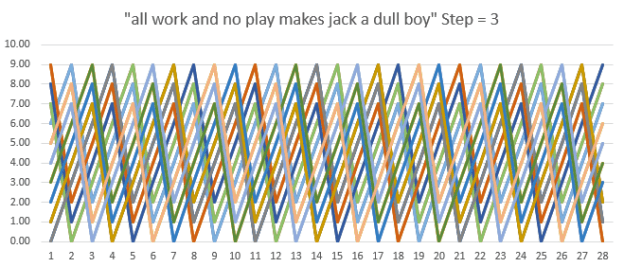
  • Back to LSTMs. Made a numeric version of “all work and no play in the jack_torrance generatorAWANPMJADB
  • Reading in and writing out weight files. The predictions seems to be working well, but I have no insight into the arguments that go into the LSTM model. Going to revisit the Deep Learning with Keras book

Phil 10.31.18

7:00 – ASRC PhD

  • Read this carefully today: Introducing AdaNet: Fast and Flexible AutoML with Learning Guarantees
    • Today, we’re excited to share AdaNet, a lightweight TensorFlow-based framework for automatically learning high-quality models with minimal expert intervention. AdaNet builds on our recent reinforcement learning and evolutionary-based AutoML efforts to be fast and flexible while providing learning guarantees. Importantly, AdaNet provides a general framework for not only learning a neural network architecture, but also for learning to ensemble to obtain even better models.
    • What about data from simulation?
    • Github repo
    • This looks like it’s based deeply the cloud AI and Machine Learning products, including cloud-based hyperparameter tuning.
    • Time series prediction is here as well, though treated in a more BigQuery manner
      • In this blog post we show how to build a forecast-generating model using TensorFlow’s DNNRegressor class. The objective of the model is the following: Given FX rates in the last 10 minutes, predict FX rate one minute later.
    • Text generation:
      • Cloud poetry: training and hyperparameter tuning custom text models on Cloud ML Engine
        • Let’s say we want to train a machine learning model to complete poems. Given one line of verse, the model should generate the next line. This is a hard problem—poetry is a sophisticated form of composition and wordplay. It seems harder than translation because there is no one-to-one relationship between the input (first line of a poem) and the output (the second line of the poem). It is somewhat similar to a model that provides answers to questions, except that we’re asking the model to be a lot more creative.
      • Codelab: Google Developers Codelabs provide a guided, tutorial, hands-on coding experience. Most codelabs will step you through the process of building a small application, or adding a new feature to an existing application. They cover a wide range of topics such as Android Wear, Google Compute Engine, Project Tango, and Google APIs on iOS.
        Codelab tools on GitHub

  • Add the Range and Length section in my notes to the DARPA measurement section. Done. I need to start putting together the dissertation using these parts
  • Read Open Source, Open Science, and the Replication Crisis in HCI. Broadly, it seems true, but trying to piggyback on GitHub seems like a shallow solution that repurposes something for coding – an ephemeral activity, to science, which is archival for a reason. Thought needs to be given to an integrated (collection, raw data, cleaned data, analysis, raw results, paper (with reviews?), slides, and possibly a recording of the talk with questions. What would it take to make this work across all science, from critical ethnographies to particle physics? How will it be accessible in 100 years? 500? 1,000? This is very much an HCI problem. It is about designing a useful socio-cultural interface. Some really good questions would be “how do we use our HCI tools to solve this problem?”, and, “does this point out the need for new/different tools?”.
  • NASA AIMS meeting. Demo in 2 weeks. AIMS is “time series prediction”, A2P is “unstructured data”. Proove that we can actually do ML, as opposed to saying things.
    • How about cross-point correlation? Could show in a sim?
    • Meeting on Friday with a package
    • We’ve solved A, here’s the vision for B – Z and a roadmap. JPSS is a near-term customer (JPSS Data)
    • Getting actionable intelligence from the system logs
    • Application portfolios for machine learning
    • Umbrella of capabilities for Rich Burns
    • New architectural framework for TTNC
    • Complete situational awareness. Access to commands and sensor streams
    • Software Engineering Division/Code 580
    • A2P as a toolbox, but needs to have NASA-relevant analytic capabilities
    • GMSEC overview

Phil 10.2.18

7:00 – 5:00 ASRC Research

  • Graph laplacian dissertation
    • The spectrum of the normalized graph Laplacian can reveal structural properties of a network and can be an important tool to help solve the structural identification problem. From the spectrum, we attempt to develop a tool that helps us to understand the network structure on a deep level and to identify the source of the network to a greater extent. The information about different topological properties of a graph carried by the complete spectrum of the normalized graph Laplacian is explored. We investigate how and why structural properties are reflected by the spectrum and how the spectrum changes when compairing different networks from different sources.
  • Universality classes in nonequilibrium lattice systems
    • This article reviews our present knowledge of universality classes in nonequilibrium systems defined on regular lattices. The first section presents the most important critical exponents and relations, as well as the field-theoretical formalism used in the text. The second section briefly addresses the question of scaling behavior at first-order phase transitions. In Sec. III the author looks at dynamical extensions of basic static classes, showing the effects of mixing dynamics and of percolation. The main body of the review begins in Sec. IV, where genuine, dynamical universality classes specific to nonequilibrium systems are introduced. Section V considers such nonequilibrium classes in coupled, multicomponent systems. Most of the known nonequilibrium transition classes are explored in low dimensions between active and absorbing states of reaction-diffusion-type systems. However, by mapping they can be related to the universal behavior of interface growth models, which are treated in Sec. VI. The review ends with a summary of the classes of absorbing-state and mean-field systems and discusses some possible directions for future research.
  • “The Government Spies Using Our Webcams:” The Language of Conspiracy Theories in Online Discussions
    • Conspiracy theories are omnipresent in online discussions—whether to explain a late-breaking event that still lacks official report or to give voice to political dissent. Conspiracy theories evolve, multiply, and interconnect, further complicating efforts to limit their propagation. It is therefore crucial to develop scalable methods to examine the nature of conspiratorial discussions in online communities. What do users talk about when they discuss conspiracy theories online? What are the recurring elements in their discussions? What do these elements tell us about the way users think? This work answers these questions by analyzing over ten years of discussions in r/conspiracy—an online community on Reddit dedicated to conspiratorial discussions. We focus on the key elements of a conspiracy theory: the conspiratorial agents, the actions they perform, and their targets. By computationally detecting agent–action–target triplets in conspiratorial statements, and grouping them into semantically coherent clusters, we develop a notion of narrative-motif to detect recurring patterns of triplets. For example, a narrative-motif such as “governmental agency–controls–communications” appears in diverse conspiratorial statements alleging that governmental agencies control information to nefarious ends. Thus, narrative-motifs expose commonalities between multiple conspiracy theories even when they refer to different events or circumstances. In the process, these representations help us understand how users talk about conspiracy theories and offer us a means to interpret what they talk about. Our approach enables a population-scale study of conspiracy theories in alternative news and social media with implications for understanding their adoption and combating their spread
  • Need to upload to ArXiv (try multiple tex files) – done!Arxiv
  • If I’m charging my 400 hours today, then start putting together text prediction. I’d like to try the Google prediction series to see what happens. Otherwise, there are two things I’d like to try with LSTMs, since they take 2 coordinates as inputs
    • Use a 2D embedding space
    • Use NLP to get a parts-of-speech (PoS) analysis of the text so that there can be a (PoS, Word) coordinate.
    • Evaluate the 2 approaches on their ability to converge?
  • Coordinating with Antonio about workshops. It’s the 2019 version of this: International Workshop on Massively Multi-Agent Systems (MMAS2018) in conjunction with IJCAI/ECAI/AAMAS/ICML 2018

Phil 7.31.18

7:00 – 6:00 ASRC MKT

  • Thinking that I need to forward the opinion dynamics part of the work. How heading differs from position and why that matters
  • Found a nice adversarial herding chart from The EconomistBrexit
  • Why Do People Share Fake News? A Sociotechnical Model of Media Effects
    • Fact-checking sites reflect fundamental misunderstandings about how information circulates online, what function political information plays in social contexts, and how and why people change their political opinions. Fact-checking is in many ways a response to the rapidly changing norms and practices of journalism, news gathering, and public debate. In other words, fact-checking best resembles a movement for reform within journalism, particularly in a moment when many journalists and members of the public believe that news coverage of the 2016 election contributed to the loss of Hillary Clinton. However, fact-checking (and another frequently-proposed solution, media literacy) is ineffectual in many cases and, in other cases, may cause people to “double-down” on their incorrect beliefs, producing a backlash effect.
  • Epistemology in the Era of Fake News: An Exploration of Information Verification Behaviors among Social Networking Site Users
    • Fake news has recently garnered increased attention across the world. Digital collaboration technologies now enable individuals to share information at unprecedented rates to advance their own ideologies. Much of this sharing occurs via social networking sites (SNSs), whose members may choose to share information without consideration for its authenticity. This research advances our understanding of information verification behaviors among SNS users in the context of fake news. Grounded in literature on the epistemology of testimony and theoretical perspectives on trust, we develop a news verification behavior research model and test six hypotheses with a survey of active SNS users. The empirical results confirm the significance of all proposed hypotheses. Perceptions of news sharers’ network (perceived cognitive homogeneity, social tie variety, and trust), perceptions of news authors (fake news awareness and perceived media credibility), and innate intentions to share all influence information verification behaviors among SNS members. Theoretical implications, as well as implications for SNS users and designers, are presented in the light of these findings.
  • Working on plan diagram – done
  • Organizing PhD slides. I think I’m getting near finished
  • Walked through slides with Aaron. Need to practice the demo. A lot.

Phil 7.27.18

Ted Underwood

  • my research is as much about information science as literary criticism. I’m especially interested in applying machine learning to large digital collections
  • Git repo with code for upcoming book: Distant Horizons: Digital Evidence and Literary Change
  • Do topic models warp time?
    • The key observation I wanted to share is just that topic models produce a kind of curved space when applied to long timelines; if you’re measuring distances between individual topic distributions, it may not be safe to assume that your yardstick means the same thing at every point in time. This is not a reason for despair: there are lots of good ways to address the distortion. The mathematics of cosine distance tend to work better if you average the documents first, and then measure the cosine between the averages (or “centroids”).
  • The Historical Significance of Textual Distances
    • Measuring similarity is a basic task in information retrieval, and now often a building-block for more complex arguments about cultural change. But do measures of textual similarity and distance really correspond to evidence about cultural proximity and differentiation? To explore that question empirically, this paper compares textual and social measures of the similarities between genres of English-language fiction. Existing measures of textual similarity (cosine similarity on tf-idf vectors or topic vectors) are also compared to new strategies that use supervised learning to anchor textual measurement in a social context.

7:00 – 8:00 ASRC MKT

  • Continued on slides. I think I have the basics. Need to start looking for pictures
  • Sent response to the SASO folks about who’s presenting what.

9:00 – ASRC IRAD