Category Archives: Conferences

Phil 10.22.19

7:00 – 4:00 ASRC

  • Dissertation – starting the maps section
  • Need to finish the financial OODA loop section
  • Spending the day at a Navy-sponsored miniconference on AI, ethics and the military (no wifi at Annapolis, so I’ll put up notes later). This was an odd mix of higher-level execs in suits, retirees, and midshipmen, with a few technical folks sprinkled in. It is clear that for these people, the technology(?) is viewed as AI/ml. The idea that AI is a thing that we don’t do yet does not emerge at this level. Rather, AI is being implemented using machine learning, and in particular deep learning.

Phil 10.21.19

7:00 – 8:00 ASRC / Phd

The Journal of Design and Science (JoDS), a joint venture of the MIT Media Lab and the MIT Press, forges new connections between science and design, breaking down the barriers between traditional academic disciplines in the process.

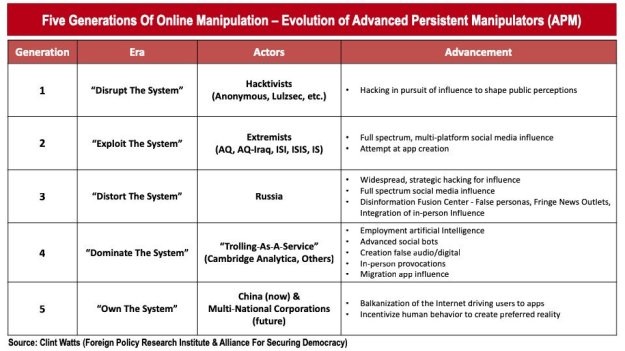
There is a style of propaganda on the rise that isn’t interested in persuading you that something is true. Instead, it’s interested in persuading you that everything is untrue. Its goal is not to influence opinion, but to stratify power, manipulate relationships, and sow the seeds of uncertainty.

Unreal explores the first order effects recent attacks on reality have on political discourse, civics & participation, and its deeper effects on our individual and collective psyche. How does the use of media to design unreality change our trust in the reality we encounter? And, most important, how does cleaving reality into different camps—political, social or philosophical—impact our society and our future?

This looks really nice: The Illustrated GPT-2 (Visualizing Transformer Language Models)

Phil 10.17.19

ASRC GOES 7:00 – 5:30

  • How A Massive Facebook Scam Siphoned Millions Of Dollars From Unsuspecting Boomers (adversarial herding for profit)
    • But the subscription trap was just one part of Ads Inc.’s shady business practices. Burke’s genius was in fusing the scam with a boiler room–style operation that relied on convincing thousands of average people to rent their personal Facebook accounts to the company, which Ads Inc. then used to place ads for its deceptive free trial offers. That strategy enabled his company to run a huge volume of misleading Facebook ads, targeting consumers all around the world in a lucrative and sophisticated enterprise, a BuzzFeed News investigation has found.
  • Finished writing up my post on ensemble NNs: A simple example of ensemble training
  • Dissertation. Working on robot stampedes, though I’m not sure that this is the right place. It could be though, as a story to reinforce the previous sections. Of course, this has caused a lot of rework, but I think I like where it’s going?
  • Good talk with Vadim and Bruce yesterday that was kind of road map-ish
  • Working on the GSAW extended abstract for the rest of the week
    • About a page in. Finished Dr. Li’s paper for reference
  • Artificial Intelligence and Machine Learning in Defense Applications

Phil 9.22.19

Getting ready for a fun trip: VA

12th International Conference on Agents and Artificial Intelligence – Dammit, the papers are due October 4th. This would be a perfect venue for the GPT2 agents

Novelist Cormac McCarthy’s tips on how to write a great science paper

Unveiling the relation between herding and liquidity with trader lead-lag networks

  • We propose a method to infer lead-lag networks of traders from the observation of their trade record as well as to reconstruct their state of supply and demand when they do not trade. The method relies on the Kinetic Ising model to describe how information propagates among traders, assigning a positive or negative “opinion” to all agents about whether the traded asset price will go up or down. This opinion is reflected by their trading behavior, but whenever the trader is not active in a given time window, a missing value will arise. Using a recently developed inference algorithm, we are able to reconstruct a lead-lag network and to estimate the unobserved opinions, giving a clearer picture about the state of supply and demand in the market at all times.
    We apply our method to a dataset of clients of a major dealer in the Foreign Exchange market at the 5 minutes time scale. We identify leading players in the market and define a herding measure based on the observed and inferred opinions. We show the causal link between herding and liquidity in the inter-dealer market used by dealers to rebalance their inventories.

Phil 7.3.19

Continuing with the ICML 2019 Tutorial: Recent Advances in Population-Based Search for Deep Neural Networks. Wow. Lots of implications for diversity science. They need to read Martindale though.

This also looks good, using the above concepts of Quality Diversity to create map-like structures in low dimensions

  • Autonomous skill discovery with Quality-Diversity and Unsupervised Descriptors
    • Quality-Diversity optimization is a new family of optimization algorithms that, instead of searching for a single optimal solution to solving a task, searches for a large collection of solutions that all solve the task in a different way. This approach is particularly promising for learning behavioral repertoires in robotics, as such a diversity of behaviors enables robots to be more versatile and resilient. However, these algorithms require the user to manually define behavioral descriptors, which is used to determine whether two solutions are different or similar. The choice of a behavioral descriptor is crucial, as it completely changes the solution types that the algorithm derives. In this paper, we introduce a new method to automatically define this descriptor by combining Quality-Diversity algorithms with unsupervised dimensionality reduction algorithms. This approach enables robots to autonomously discover the range of their capabilities while interacting with their environment. The results from two experimental scenarios demonstrate that robot can autonomously discover a large range of possible behaviors, without any prior knowledge about their morphology and environment. Furthermore, these behaviors are deemed to be similar to handcrafted solutions that uses domain knowledge and significantly more diverse than when using existing unsupervised methods.

Back to the Dissertation

  • Added notes from Monday’s dungeon run
  • Added adversarial herding
  • At 111 pages!

Phil 6.11.19

ASRC GEOS 7:00 – 5:30

  • Some interesting stuff from ICML 2019
    • The Evolved Transformer
      • Recent works have highlighted the strength of the Transformer architecture on sequence tasks while, at the same time, neural architecture search (NAS) has begun to outperform human-designed models. Our goal is to apply NAS to search for a better alternative to the Transformer. We first construct a large search space inspired by the recent advances in feed-forward sequence models and then run evolutionary architecture search with warm starting by seeding our initial population with the Transformer. To directly search on the computationally expensive WMT 2014 EnglishGerman translation task, we develop the Progressive Dynamic Hurdles method, which allows us to dynamically allocate more resources to more promising candidate models. The architecture found in our experiments – the Evolved Transformer – demonstrates consistent improvement over the Transformer on four well-established language tasks: WMT 2014 English-German, WMT 2014 English-French, WMT 2014 EnglishCzech and LM1B. At a big model size, the Evolved Transformer establishes a new state-ofthe-art BLEU score of 29.8 on WMT’14 EnglishGerman; at smaller sizes, it achieves the same quality as the original “big” Transformer with 37.6% less parameters and outperforms the Transformer by 0.7 BLEU at a mobile-friendly model size of ~7M parameters.
    • DBSCAN++: Towards fast and scalable density clustering
      • DBSCAN is a classical density-based clustering procedure with tremendous practical relevance. However, DBSCAN implicitly needs to compute the empirical density for each sample point, leading to a quadratic worst-case time complexity, which is too slow on large datasets. We propose DBSCAN++, a simple modification of DBSCAN which only requires computing the densities for a chosen subset of points. We show empirically that, compared to traditional DBSCAN, DBSCAN++ can provide not only competitive performance but also added robustness in the bandwidth hyperparameter while taking a fraction of the runtime. We also present statistical consistency guarantees showing the trade-off between computational cost and estimation rates. Surprisingly, up to a certain point, we can enjoy the same estimation rates while lowering computational cost, showing that DBSCAN++ is a sub-quadratic algorithm that attains minimax optimal rates for level-set estimation, a quality that may be of independent interest
    • Garbage In, Reward Out: Bootstrapping Exploration in Multi-Armed Bandits
      • We propose a bandit algorithm that explores by randomizing its history of rewards. Specifically, it pulls the arm with the highest mean reward in a non-parametric bootstrap sample of its history with pseudo rewards. We design the pseudo rewards such that the bootstrap mean is optimistic with a sufficiently high probability. We call our algorithm Giro, which stands for garbage in, reward out. We analyze Giro in a Bernoulli bandit and derive a bound on its n-round regret, where ? is the difference in the expected rewards of the optimal and the best suboptimal arms, and K is the number of arms. The main advantage of our exploration design is that it easily generalizes to structured problems. To show this, we propose contextual Giro with an arbitrary reward generalization model. We evaluate Giro and its contextual variant on multiple synthetic and real-world problems, and observe that it performs well.
    • Guided evolutionary strategies: Augmenting random search with surrogate gradients
      • Many applications in machine learning require optimizing a function whose true gradient is inaccessible, but where surrogate gradient information (directions that may be correlated with, but not necessarily identical to, the true gradient) is available instead. This arises when an approximate gradient is easier to compute than the full gradient (e.g. in meta-learning or unrolled optimization), or when a true gradient is intractable and is replaced with a surrogate (e.g. in certain reinforcement learning applications or training networks with discrete variables). We propose Guided Evolutionary Strategies, a method for optimally using surrogate gradient directions along with random search. We define a search distribution for evolutionary strategies that is elongated along a subspace spanned by the surrogate gradients. This allows us to estimate a descent direction which can then be passed to a first-order optimizer. We analytically and numerically characterize the trade-offs that result from tuning how strongly the search distribution is stretched along the guiding subspace, and use this to derive a setting of the hyperparameters that works well across problems. Finally, we apply our method to example problems, demonstrating an improvement over both standard evolutionary strategies and first-order methods that directly follow the surrogate gradient
    • 2019 Workshop on Human In the Loop Learning (HILL)
      • This workshop is a joint effort between the 4th ICML Workshop on Human Interpretability in Machine Learning (WHI) and the ICML 2019 Workshop on Interactive Data Analysis System (IDAS). We have combined our forces this year to run Human in the Loop Learning (HILL) in conjunction with ICML 2019!
      • The workshop will bring together researchers and practitioners who study interpretable and interactive learning systems with applications in large scale data processing, data annotations, data visualization, human-assisted data integration, systems and tools to interpret machine learning models as well as algorithm designs for active learning, online learning, and interpretable machine learning algorithms. The target audience for the workshop includes people who are interested in using machines to solve problems by having a human be an integral part of the process. This workshop serves as a platform where researchers can discuss approaches that bridge the gap between humans and machines and get the best of both worlds.
    • More JASS paper
    • Start on clustering hyperparameter search
      • Created ClusterEvaluator. Going to use learning_optimizer as the search space evaluator – Done
    • Waikato meeting
      • Extract data from the PHP and Slack DBs for Tony and JASSS

Phil 6.6.19

7:00 – 3:00 ASRC PM Summit

  • 75th anniversary of D-day 640px-Naval_Bombardments_on_D-Day
  • Research talk today at the conference. Much networking yesterday.
    • The talk went well. More opportunities for networking. Mayne some ML for 3D printing?
  • Copied the CHIPLAY paper to a new GROUP 2020 folder and change to the acm small article format
  • Simplicial models of social contagion
    • Complex networks have been successfully used to describe the spread of diseases in populations of interacting individuals. Conversely, pairwise interactions are often not enough to characterize social contagion processes such as opinion formation or the adoption of novelties, where complex mechanisms of influence and reinforcement are at work. Here we introduce a higher-order model of social contagion in which a social system is represented by a simplicial complex and contagion can occur through interactions in groups of different sizes. Numerical simulations of the model on both empirical and synthetic simplicial complexes highlight the emergence of novel phenomena such as a discontinuous transition induced by higher-order interactions. We show analytically that the transition is discontinuous and that a bistable region appears where healthy and endemic states co-exist. Our results help explain why critical masses are required to initiate social changes and contribute to the understanding of higher-order interactions in complex systems.
  • This is wild: Randomly wired neural networks and state-of-the-art accuracy? Yes it works.
  • This is sad: Training a single AI model can emit as much carbon as five cars in their lifetimes
  • Came home and slept 2 1/2 hours. Very cooked.

Phil 6.4.19

7:00 – 4:00 ASRC NASA GEOS

  • Continuing to read Colin Martindale’s Cognitive Psychology, a Neural Network Approach, which is absolutely bonkers for something written decades ago. Ordered two more copies.
  • JASSS Paper. Adding footnotes to figures, which is tricky.
  • Dissertation
    • Took the chapter numbers out of the file names, since these things seem to be sliding around quite a bit
  • Registered for Politics and Computational Social Science (PACSS) Conference
  • GROUP paper?
  • Waveform clustering
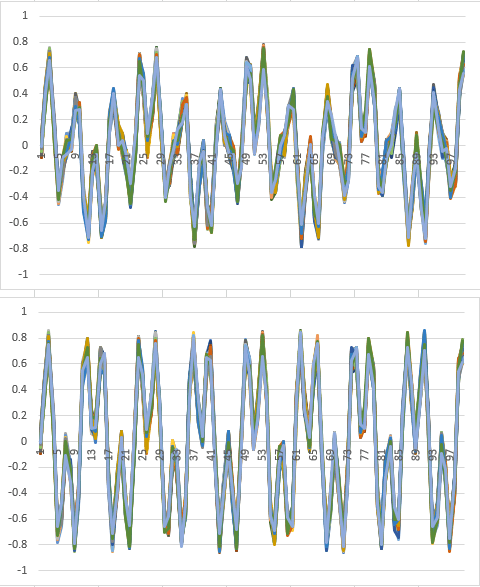
    • Adding noise to the float_functions class. Here’s the waveform without and with some (0.1) noise:
    • Installed fastdtw for python
    • DTW is working on the lines in the csv. Identical lines have zero distance, noise has some. Need to think about some kind of normalizing measure. Maybe divide by the number of points?
    • Need to iterate as nested loops over all the rows. Skip when i == j – done
    • Need to build a Dataframe of distances from one row to the next – done
    • Here are the two curves to compare: TwoCurves
    • And here’s the DTW result: DTW
  • Good Waikato meeting. We’ll try to run a jury next week. Also, meetings have been moved to 6:30 EST

Phil 5.30.19

7:00 – 2:30 NASA GEOS

  • CHI Play reviews should come back today!
    • Darn – rejected. From the reviews, it looks like we are in the same space, but going a different direction – an alignment problem. Need to read the reviews in detail though.
    • Some discussion with Wayne about GROUP
  • More JASSS paper
    • Added some broader thoughts to the conclusion and punched up the subjective/objective map difference
  • Start writing proposal for Bruce
    • Simple simulation baseline for model building
    • Develop models for
      • Extrapolating multivariate (family) values, including error conditions
      • Classify errors
      • Explainable model, that has sensor inputs drive the controls of the model that produce outputs that are evaluated against the original inputs using RL
      • “Safer” ML using Sanhedrin approach
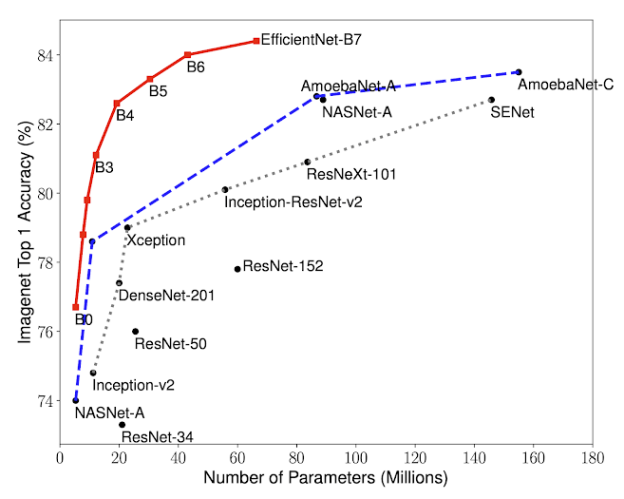
  • EfficientNet: Improving Accuracy and Efficiency through AutoML and Model Scaling
    • In our ICML 2019 paper, “EfficientNet: Rethinking Model Scaling for Convolutional Neural Networks”, we propose a novel model scaling method that uses a simple yet highly effective compound coefficient to scale up CNNs in a more structured manner. Unlike conventional approaches that arbitrarily scale network dimensions, such as width, depth and resolution, our method uniformly scales each dimension with a fixed set of scaling coefficients. Powered by this novel scaling method and recent progress on AutoML, we have developed a family of models, called EfficientNets, which superpass state-of-the-art accuracy with up to 10x better efficiency (smaller and faster). EfficientNet

Phil 4.8.19

7:00 – ASRC PhD

  • Meeting with Wayne and Aaron last night. Wayne doesn’t think the venue is right for the papers in the current form. Rewrite combining papers as a “using FTRPGs” as a source for science.
  • Still need a venue for the mapping:

Phil 3.12.19

7:00 – 4:00 ASRC PhD

TFK

d1dpqqlxgaansuo

Phil 3.10.19

Learning to Speak and Act in a Fantasy Text Adventure Game

  • We introduce a large scale crowdsourced text adventure game as a research platform for studying grounded dialogue. In it, agents can perceive, emote, and act whilst conducting dialogue with other agents. Models and humans can both act as characters within the game. We describe the results of training state-of-the-art generative and retrieval models in this setting. We show that in addition to using past dialogue, these models are able to effectively use the state of the underlying world to condition their predictions. In particular, we show that grounding on the details of the local environment, including location descriptions, and the objects (and their affordances) and characters (and their previous actions) present within it allows better predictions of agent behavior and dialogue. We analyze the ingredients necessary for successful grounding in this setting, and how each of these factors relate to agents that can talk and act successfully.

New run in the dungeon. Exciting!

Finished my pass through Antonio’s paper

Zoe Keating (May 1) or Imogen Heap (May 3)?