The silos of political groupthink created by social media have turned out to be ideal settings for the germination and dissemination of extremist ideas and alternative realities. To date, the most significant and frightening cultic phenomenon to arise from social media is QAnon. According to some observers, the QAnon movement does not qualify as a proper cult, because it lacks a single charismatic leader. Donald Trump is a hero of the movement, but not its controller. “Q,” the online presence whose gnomic briefings—“Q drops”—form the basis of the QAnon mythology, is arguably a leader of sorts, but the army of “gurus” and “promoters” who decode, interpret, and embroider Q’s utterances have shown themselves perfectly capable of generating doctrine and inciting violence in the absence of Q’s directives. (Q has not posted anything since December, but the prophecies and conspiracies have continued to proliferate.) It’s possible that our traditional definitions of what constitutes a cult organization will have to adapt to the Internet age and a new model of crowdsourced cult.
GPT Agents
Back up db
JuryRoom
More discussion with Jarod
SBIR(s)
Laic proposal? Take the map article and chess paper and use them as a base. Done! That was too much work
We introduce Codex, a GPT language model fine-tuned on publicly available code from GitHub, and study its Python code-writing capabilities. A distinct production version of Codex powers GitHub Copilot. On HumanEval, a new evaluation set we release to measure functional correctness for synthesizing programs from docstrings, our model solves 28.8% of the problems, while GPT-3 solves 0% and GPT-J solves 11.4%. Furthermore, we find that repeated sampling from the model is a surprisingly effective strategy for producing working solutions to difficult prompts. Using this method, we solve 70.2% of our problems with 100 samples per problem. Careful investigation of our model reveals its limitations, including difficulty with docstrings describing long chains of operations and with binding operations to variables. Finally, we discuss the potential broader impacts of deploying powerful code generation technologies, covering safety, security, and economics.
Today’s white evangelicals in the U.S.—along with many conservative white Catholics and mainline Protestants—imagine themselves to be the persecuted faithful, victims of state oppression in the mold of biblical apocalypses. While this might seem ludicrous to outsiders, it aptly captures their sense of the disorder of the last half century as they’ve been compelled to share cultural and political power with other groups. As it did centuries ago, apocalypse channels the persecuted group’s fear, focusing their resentment and properly directing their anger. Apocalypse’s crucial component for U.S. politics today is this extreme moral dualism, not the imminent End Times.
GPT Agents
Sent a note with preliminary results to the team
Back up db
JuryRoom
Put some text together for Jarod’s proposal – done
Ever since OpenAI released the weights and code for their CLIP model, various hackers, artists, researchers, and deep learning enthusiasts have figured out how to utilize CLIP as a an effective “natural language steering wheel” for various generative models, allowing artists to create all sorts of interesting visual art merely by inputting some text – a caption, a poem, a lyric, a word – to one of these models.
So what is a prompt? A prompt is a piece of text inserted in the input examples, so that the original task can be formulated as a (masked) language modeling problem. For example, say we want to classify the sentiment of the movie review “No reason to watch”, we can append a prompt “It was” to the sentence, getting No reason to watch. It was ____”. It is natural to expect a higher probability from the language model to generate “terrible” than “great”. This piece reviews of recent advances in prompts in large language models.
Hate speech detection is a critical problem in social media, being often accused for enabling the spread of hatred and igniting violence. Hate speech detection requires overwhelming computing resources for online monitoring as well as thousands of human experts for daily screening of suspected posts or tweets. Recently, deep learning (DL)-based solutions have been proposed for hate speech detection, using modest-sized datasets of few thousands of sequences. While these methods perform well on the specific datasets, their ability to generalize to new hate speech sequences is limited. Being a data-driven approach, it is known that DL surpasses other methods whenever scale-up in trainset size and diversity is achieved. Therefore, we first present a dataset of 1 million hate and nonhate sequences, produced by a deep generative model. We further utilize the generated data to train a well-studied DL detector, demonstrating significant performance improvements across five hate speech datasets.
The Zipp warranty worked! Dinged rim replaced for free!
SBIR(s)
Start adding initial text
10:00 Tagup?
4:00 Tagup
Book
4:00 Meeting with Michelle
GPT-Agents
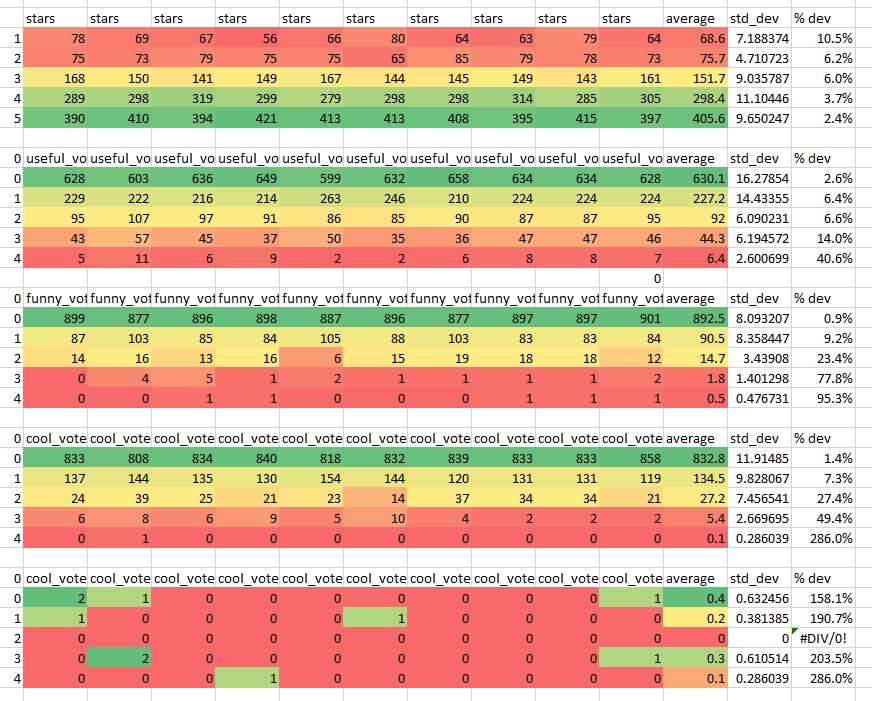
Write code to do the database pulls to count stars and votes
Important to avoid NaNs in the dataframe which xlsxwriter can’t handle:
for t in tag_list:
    ws = worksheet_dict[t]
    l = combined_dict[t]
    df = pd.DataFrame(l)
    df = df.fillna(0) <------ THIS
    stx.write_dataframe(ws, df, row=1, avg=True)
The idea of the Western construct of time as a source of neurosis came up yesterday. I found this, which kind of supports the idea. It also ties into the thing that we’re trying to work out with indigenous software practices, that might not have the same focus on scheduling and individual adherence to a schedule?
The goal of this paper is to introduce Phenomenology and the Cognitive Sciences’ thematic issue on disordered temporalities. The authors begin by discussing the main reason for the neglect of temporal experience in present-day psychiatric nosologies, mainly, its reduction to clock time. Methodological challenges facing research on temporal experience include addressing the felt sense of time, its structure, and its pre-reflective aspects in the life-world setting. In the second part, the paper covers the contributions to the thematic issue concerning temporal experience in anxiety, depression, mania, addiction, post-traumatic stress disorder, autism, and in recovery from psychosis. The authors argue in favor of integrative and cross-disciplinary approaches. In conclusion, they present time as a significant aspect of human suffering.
GPT-Agents
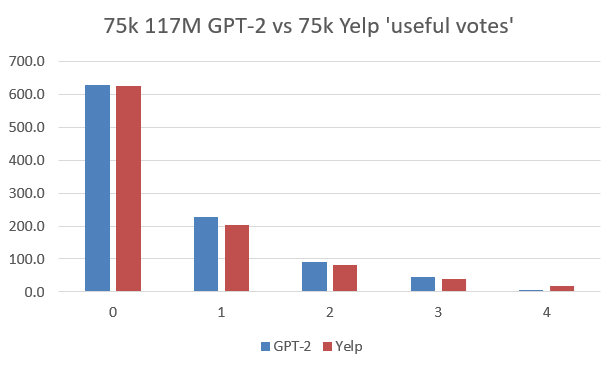
The model finished training on Thursday, and I got the model putting values into table_synth_review, with an entry in the experiment table as well
Today, do ten 1,000 review runs and compare. Then compare to the actual data
Got some nice internally consistent runs!
3:00 Meeting
Sentiment analyzer on actual data. Test whether predict whether predicted sentiment matches stars
Binary threshold accuracy?
Correlation analysis of confidence vs stars?
Does the sentiment analyzer work? Evaluate sentiment analyzer vs star ratings?
Does ground truth sentiment distribution in GPT data match ground distribution in the data?
Does predicted sentiment distribution in GPT data match ground distribution in the data?
Does predicted sentiment distribution in GPT data match predicted distribution in the data?
First detected in 2015, the NSO Group’s Pegasus malware has reportedly been used in at least 45 countries worldwide to infect the phones of activists, journalists and human rights defenders. Having learnt that our former collaborators and close associates were hacked by Pegasus, Forensic Architecture undertook 15 months of extensive open-source research, interviews assisted by Laura Poitras, and developed bespoke software to present this data as an interactive 3D platform, along with video investigations narrated by Edward Snowden to tell the stories of the individuals targeted and the web of corporate affiliations within which NSO is nested. Supported by Amnesty International and the Citizen Lab, our analysis reveals relations and patterns between separate incidents in the physical and digital sphere, demonstrating how infections are entangled with real world violence, and extend within the professional and personal networks of civil society actors worldwide.




 viztales
You must be logged in to post a comment.