Category Archives: Paper

Phil 10.2.18

7:00 – 5:00 ASRC Research

  • Graph laplacian dissertation
    • The spectrum of the normalized graph Laplacian can reveal structural properties of a network and can be an important tool to help solve the structural identification problem. From the spectrum, we attempt to develop a tool that helps us to understand the network structure on a deep level and to identify the source of the network to a greater extent. The information about different topological properties of a graph carried by the complete spectrum of the normalized graph Laplacian is explored. We investigate how and why structural properties are reflected by the spectrum and how the spectrum changes when compairing different networks from different sources.
  • Universality classes in nonequilibrium lattice systems
    • This article reviews our present knowledge of universality classes in nonequilibrium systems defined on regular lattices. The first section presents the most important critical exponents and relations, as well as the field-theoretical formalism used in the text. The second section briefly addresses the question of scaling behavior at first-order phase transitions. In Sec. III the author looks at dynamical extensions of basic static classes, showing the effects of mixing dynamics and of percolation. The main body of the review begins in Sec. IV, where genuine, dynamical universality classes specific to nonequilibrium systems are introduced. Section V considers such nonequilibrium classes in coupled, multicomponent systems. Most of the known nonequilibrium transition classes are explored in low dimensions between active and absorbing states of reaction-diffusion-type systems. However, by mapping they can be related to the universal behavior of interface growth models, which are treated in Sec. VI. The review ends with a summary of the classes of absorbing-state and mean-field systems and discusses some possible directions for future research.
  • “The Government Spies Using Our Webcams:” The Language of Conspiracy Theories in Online Discussions
    • Conspiracy theories are omnipresent in online discussions—whether to explain a late-breaking event that still lacks official report or to give voice to political dissent. Conspiracy theories evolve, multiply, and interconnect, further complicating efforts to limit their propagation. It is therefore crucial to develop scalable methods to examine the nature of conspiratorial discussions in online communities. What do users talk about when they discuss conspiracy theories online? What are the recurring elements in their discussions? What do these elements tell us about the way users think? This work answers these questions by analyzing over ten years of discussions in r/conspiracy—an online community on Reddit dedicated to conspiratorial discussions. We focus on the key elements of a conspiracy theory: the conspiratorial agents, the actions they perform, and their targets. By computationally detecting agent–action–target triplets in conspiratorial statements, and grouping them into semantically coherent clusters, we develop a notion of narrative-motif to detect recurring patterns of triplets. For example, a narrative-motif such as “governmental agency–controls–communications” appears in diverse conspiratorial statements alleging that governmental agencies control information to nefarious ends. Thus, narrative-motifs expose commonalities between multiple conspiracy theories even when they refer to different events or circumstances. In the process, these representations help us understand how users talk about conspiracy theories and offer us a means to interpret what they talk about. Our approach enables a population-scale study of conspiracy theories in alternative news and social media with implications for understanding their adoption and combating their spread
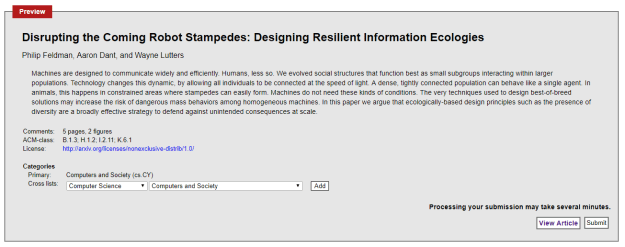
  • Need to upload to ArXiv (try multiple tex files) – done!Arxiv
  • If I’m charging my 400 hours today, then start putting together text prediction. I’d like to try the Google prediction series to see what happens. Otherwise, there are two things I’d like to try with LSTMs, since they take 2 coordinates as inputs
    • Use a 2D embedding space
    • Use NLP to get a parts-of-speech (PoS) analysis of the text so that there can be a (PoS, Word) coordinate.
    • Evaluate the 2 approaches on their ability to converge?
  • Coordinating with Antonio about workshops. It’s the 2019 version of this: International Workshop on Massively Multi-Agent Systems (MMAS2018) in conjunction with IJCAI/ECAI/AAMAS/ICML 2018

Phil 10.1.18

7:00 – 8:30 ASRC MKT?

  • Last Friday, Aaron was told by division leadership (Mike M) that R&D is being terminated as of Jan 1st and to get on billable projects. This is going against our impression of how things were going, so it’s unclear what will actually happen. So I’m not looking for a job just yet… Personally, I blame putting a deposit down on this: Tesla3
  • This looks interesting:
    • Launched in October 2015 by founding editor Robert Kadar with support from Joe Brewer, David Sloan Wilson, The Evolution Institute, and Steve Roth — who now serves as publisher — Evonomics has emerged as a powerful voice for the sea change that is sweeping through economics.
  • Working my way through At Home in the Universe
    • Fontana Lab
      • Molecular biology offers breathtaking views of the parts and processes that undergird life and its evolution. It is vexing, then, that we seem unable to analytically grasp the principles that would make the nature of cellular phenotypes more intelligible and their control more deliberate. One can always blame insufficient knowledge, but we also entertain the idea that physics and chemistry need formal and conceptual enrichment from computer science to become an appropriate foundation for systems biology. This view arises from the belief that computation is a natural phenomenon, like gravity or boiling water. We need adequate formalisms and models to reason about computation in the wild.This view guides many of our lab’s interests, which span the development and application of rule-based formalisms for modeling complex systems of molecular interaction, causality in concurrent systems, the interplay between network growth and network dynamics, phenotypic plasticity and evolvability, learning, and aging. Our approach is computational and theoretical. In the past we also conducted experimental work using C. elegans as a model system. Outside collaborations are essential to our group. The size of our team can fluctuate considerably, as we chase grants in pursuit of our passions, not opportunistically. Read more about our research.
  • Due date for the iConference Paper. Submitted last night just to be safe, but I expect to tweak today.
    • incorporating Wayne’s changes
    • Final push with Wayne on campus
    • Done! Submitted
    • Need to upload to ArXive (try multiple tex files)
  • From The Atlantic – stampede end condition:
    • It is impossible at this moment to envisage the Republican Party coming back. Like a brontosaurus with some brain-eating disorder it might lumber forward in the direction dictated by its past, favoring deregulation of businesses here and standing up to a rising China there, but there will be no higher mental functioning at work. And so it will plod into a future in which it is detested in a general way by women, African Americans, recent immigrants, and the educated young as well as progressives pure and simple. It might stumble into a political tar pit and cease to exist or it might survive as a curious, decaying relic of more savage times and more primitive instincts, lashing out and crushing things but incapable of much else.

Phil 9.28.18

7:30 – 4:00 ASRC MKT

  • Stumbled on this podcast this morning: How Small Problems Snowball Into Big Disasters
  • How to Prepare for a Crisis You Couldn’t Possibly Predict
  • I’m trying to think about how this should be applied to human/machine ecologies. I think that simulation is really important because it lets one model patch compare itself against another model without real-world impacts. This has something to do with a shared, multi-instance environment simulation as well. The environment provides one level of transparent interaction, but there also needs to be some level of inadvertent social information that shows some insight into how a particular system is working.
    • When the simulation and the real world start to diverge for a system, that needs to be signaled
    • Systems need to be able to “look into” other simulations and compare like with like. So a tagged item (bicycle) in one sim is the same in another.
    • Is there an OS that hands out environments?
    • How does a decentralized system coordinate? Is there an answer in MMOGs?
  • Kate Starbird’s presentation was interesting as always. We had a chance to talk afterwards, and she’d like to see our work, so I’ve sent her links to the last two papers.
    I also met Bill Braniff, who is the director of the UMD Study of Terrorism and responses to Terrorism. He got papers too, with a brief description about how mapping could aid in the detection of radicalization patterns
    Then at lunch, I had a chance to meet with Roger Bostelman from NIST. He’s interested in writing standards for fleet and swarm vehicles, and is interested in making sure that standards mitigate the chance of stampeding autonomous vehicles, so I sent him the Blue Sky draft.
    And lastly, I got a phone call from Aaron who says that our project will be terminated December 31, after which there will be no more IR&D at ASRC. It was a nice run while it lasted. And they may change their minds, but I doubt it.

Phil 9.27.18

7:00 – 6:00 ASRC MKT

  • Writing your own LaTex class
  • Multiple facets of biodiversity drive the diversity–stability relationship
    • A substantial body of evidence has demonstrated that biodiversity stabilizes ecosystem functioning over time in grassland ecosystems. However, the relative importance of different facets of biodiversity underlying the diversity–stability relationship remains unclear. Here we use data from 39 grassland biodiversity experiments and structural equation modelling to investigate the roles of species richness, phylogenetic diversity and both the diversity and community-weighted mean of functional traits representing the ‘fast–slow’ leaf economics spectrum in driving the diversity–stability relationship. We found that high species richness and phylogenetic diversity stabilize biomass production via enhanced asynchrony in the performance of co-occurring species. Contrary to expectations, low phylogenetic diversity enhances ecosystem stability directly, albeit weakly. While the diversity of fast–slow functional traits has a weak effect on ecosystem stability, communities dominated by slow species enhance ecosystem stability by increasing mean biomass production relative to the standard deviation of biomass over time. Our in-depth, integrative assessment of factors influencing the diversity–stability relationship demonstrates a more multicausal relationship than has been previously acknowledged.
  • Computer Algorithms, Market Manipulation and the Institutionalization of High Frequency Trading (adversarial herding?)
    • The article discusses the use of algorithmic models in finance (algo or high frequency trading). Algo trading is widespread but also somewhat controversial in modern financial markets. It is a form of automated trading technology, which critics claim can, among other things, lead to market manipulation. Drawing on three cases, this article shows that manipulation also can happen in the reverse way, meaning that human traders attempt to make algorithms ‘make mistakes’ by ‘misleading’ them. These attempts to manipulate are very simple and immediately transparent to humans. Nevertheless, financial regulators increasingly penalize such attempts to manipulate algos. The article explains this as an institutionalization of algo trading, a trading practice which is vulnerable enough to need regulatory protection.
  • Karin Knorr Cetina is interested in financial markets, knowledge and information, as well as in globalization, theory and culture. Her current projects include a book on global foreign exchange markets and on post-social knowledge societies. She continues to do research on the information architecture of financial markets, on their “global microstructures” (the global social and cultural form these markets take) and on trader markets in contrast to producer markets. She also studies globalization from a microsociological perspective, using an ethnographic approach, and she continues to be interested in “laboratory studies,” the study of science, technology and information at the site of knowledge production – particularly in the life sciences and in particle physics.
  • Reading A Sociology of Algorithms: High-Frequency Trading and the Shaping of Markets
    • Markets are politics,” (pg 8). I’d reverse that and say that politics are a market for power/influence, though that may be too glib.
    • three main types of algorithm discussed here (trading venues’ matching engines, which consummate trades; execution algorithms used by institutional investors to buy or sell large blocks of shares; and HFT algorithms), (pg 11)
    • a “lit” venue is one in which the electronic order book is visible to the humans and algorithms that trade on the venue; in a “dark” venue it is not visible.  (pg 11)
  • Meeting with USPTO folks. I went over their heads, but Aaron found the right level.

Phil 9.25.18

7:00 – 5:00 ASRC MKT

  • Wayne’s notes from yesterday:
    • Part of the wrapper for this will be why these issues might matter for the iSchool’s research future. I can help with the framing there.
      Yikes, 4 pages in this format? That is nothing!
      Will really have to shave this down to the absolute minimum.
      To that end I think the scenarios get fleshed out in their fullest now to capture all of the ideas and then hacked brutally into 1-2 paragraphs.
      The abstract probably goes to 4 sentences.
      Images stay, but no larger.
      We’ll work this out, but, man, that is barely 1500 words. Who was thinking when they put this together? 😉
  • Want to redo the designed system chart so that the complexity zone is concave – done.
  • More writing. Figured out that cars would be crashing at a rate of 3-4/sec based on 2016 data. Yikes!
  • Worked with Aaron on response to Antonio’s proposal. IEEE Software is a “production” magazine. And a nice marker for production is what kind of libraries are available, because then articles can be written on how to use them.
  • Kate Starbird this Friday! 10:00am – 12:00pm 2119 Hornbake Library South Wing
  • There is a world nomad games

Phil 9.24.18

7:00 – 6:00 ASRC MKT

  • It’s fall and dark in the morning
  • Change the “Designed systems” diagram to be more of a bathtub curve, reflecting that there is very little activity in the complex regime – done
  • Working on the “Second middle part” (discussion? results?).
  • This from the New Yorker book review of Network Propaganda: Manipulation, Disinformation, and Radicalization in American Politics
    • The Clinton orgy-island story met a very different fate in the right-wing media, which pushed versions of it over the course of the campaign. (Fox News initially ran several segments that raised the topic of the “Lolita Express.”) The dynamic on the right, the authors found, “rewards the most popular and widely viewed channels at the very top of the media ecosystem for delivering stories, whether true or false, that protect the team, reinforce its beliefs, attack opponents, and refute any claims that might threaten ‘our’ team from outsiders.” Referring to the orgy-island story, the authors note that “not one right-wing outlet came out to criticize and expose this blatant lie for what it was. In the grip of the propaganda feedback loop, the right-wing media ecosystem had no mechanism for self-correction, and instead exhibited dynamics of self-reinforcement, confirmation, and repetition so that readers, viewers and listeners encountered multiple versions of the same story, over months, to the point that both recall and credibility were enhanced.”
  • Transdisciplinary PhD Journeys: Reflecting on the challenge of the ‘transdisciplinary triple jump’
    • Responding to calls to ‘be transdisciplinary4’, we have committed to applying and critically reflecting on the principles of TD in our PhD research. However, in current institutional structures and cultures of academia, this adds an additional challenge to the existing demands of PhD research5,6. Not only are we expected to navigate the terrain of interdisciplinarity described as an ‘undisciplinary journey’6 which requires ‘epistemological agility’, but we are also confronted with the task of engaging meaningfully with societal actors beyond our academic comfort zones. All of this means we are constantly trying to ‘be everything to everyone’ and risk burning ourselves out in the process.

Fika – Sy’s talk. Better this time

Meeting with Wayne

  • Went over SASO, which we all agree went very well
  • Talked about ASRC funding conferences. Will try to see if we can do iConf if accepted
  • Went over the rough form of the iConf paper. First review pass by COB tomorrow
  • And hung the SASO poster 🙂 IMG_5490

Phil 9.21.18

7:00 – 4:00 ASRC MKT

  • “Who’s idea was it to connect every idiot on the internet with every other idiot” PJ O’Rourke, Commonwealth Club, 2018
  • Running Programs In Reverse for Deeper A.I.” by Zenna Tavares
    • In this talk I show that inverse simulation, i.e., running programs in reverse from output to input, lies at the heart of the hardest problems in both human cognition and artificial intelligence. How humans are able to reconstruct the rich 3D structure of the world from 2D images; how we predict that it is safe to cross a street just by watching others walk, and even how we play, and sometimes win at Jenga, are all solvable by running programs backwards. The idea of program inversion is old, but I will present one of the first approaches to take it literally. Our tool ReverseFlow combines deep-learning and our theory of parametric inversion to compile the source code of a program (e.g., a TensorFlow graph) into its inverse, even when it is not conventionally invertible. This framework offers a unified and practical approach to both understand and solve the aforementioned problems in vision, planning and inference for both humans and machines.
  • Bot-ivistm: Assessing Information Manipulation in Social Media Using Network Analytics
    • Matthew Benigni 
    • Kenneth Joseph
    • Kathleen M. Carley (Scholar)
    • Social influence bot networks are used to effect discussions in social media. While traditional social network methods have been used in assessing social media data, they are insufficient to identify and characterize social influence bots, the networks in which they reside and their behavior. However, these bots can be identified, their prevalence assessed, and their impact on groups assessed using high dimensional network analytics. This is illustrated using data from three different activist communities on Twitter—the “alt-right,” ISIS sympathizers in the Syrian revolution, and activists of the Euromaidan movement. We observe a new kind of behavior that social influence bots engage in—repetitive @mentions of each other. This behavior is used to manipulate complex network metrics, artificially inflating the influence of particular users and specific agendas. We show that this bot behavior can affect network measures by as much as 60% for accounts that are promoted by these bots. This requires a new method to differentiate “promoted accounts” from actual influencers. We present this method. We also present a method to identify social influence bot “sub-communities.” We show how an array of sub-communities across our datasets are used to promote different agendas, from more traditional foci (e.g., influence marketing) to more nefarious goals (e.g., promoting particular political ideologies).
  • Pinged Aaron M. about writing an article
  • More iConf paper. Got a first draft on everything but the discussion section

Phil 9.20.18

7:00 – 5:00 ASRC MKT

  • Submit pre-approval for school – done!
  • Call bank – done!
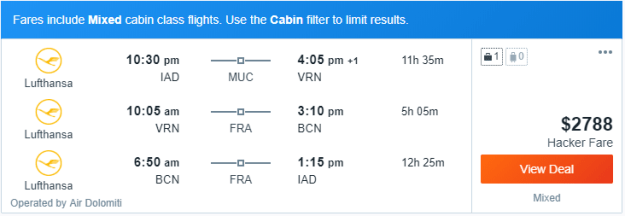
  • Tried to do stuff on the Lufthansa site but couldn’t log in
  • Read through the USPTO RFI and realized it was a good fit for the Research Browser. Sent the RB white paper to those in the decision loop.
  • Updated the JuryRoom white paper to include an appendix on self-governance and handling hate speech, etc.
  • Introducing Cloud Inference API: uncover insights from large scale, typed time-series data
    • Today, we’re announcing the Cloud Inference API to address this need. Cloud Inference API is a simple, highly efficient and scalable system that makes it easier for businesses and developers to quickly gather insights from typed time series datasets. It’s fully integrated with Google Cloud Storage and can handle datasets as large as tens of billions of event records. If you store any time series data in Cloud Storage, you can use the Cloud Inference API to begin generating predictions.
    • Thread by Jeff Dean
  • Realized that there are additional matrices that can post-multiply the Laplacian. That way we can break down the individual components that contribute to “stiffness”. The reason for this is that only identical oscillators will synchronize. Similarity is a type of implicit coordination
    • Leave the Master matrix [M]: as degree on the diagonal, with “1” for a connection, “0” for no connection
    • =Bandwidth matrix [B]: has a value (0, 1) for each connection
    • Alignment matrix [A]: calculates the direction cosine between each connected node. Completely aligned nodes get an edge value of 1.0
    • There can also be a Weight vector W: which contains the “mass” of the node. A high mass node will be more influential in the network.
  • Had a few thoughts about JuryRoom self governance. The major social networks seem to be a mess with respect to what rights users have, and what constitutes a violation of terms of service. The solutions seem pretty brittle (Radiolab podcast on facebook rule making). JuryRoom has built in a mechanism for deliberation. Can that be used to create an online legal framework for crowdsourcing the rules and the interpretation? Roughly, I think that this requires the following:
    • A constitution – a simple document that lays out how JuryRoom will be goverened.
    • A bill of rights. What are users entitled to?
    • The concept of petition, trial, binding decisions, and precedent.
    • Is there a concept of testifying under oath?
    • The addition of “evidence” attachments that can be linked to posts. This could be existing documents, commissioned expert opinion, etc.
    • A special location for the “legal decisions”. These will become the basis for the precedent in future deliberations. Links to these prior decisions are done as attachments? Or as something else?
    • Localization. Since what is acceptable (within the bounds of the constitution and the bill of rights) changes as a function of culture, there needs to be a way that groups can split off from the main group to construct and use their own legal history. Voting/membership may need to be a part of this.
      • What is visible to non-members?
      • What are the requirements to be a member?
      • How are legal decisions implemented in software?
      • What are the duties of a “citizen”?
  • More iConf paper
  • I wanted to make figures align on the bottom. Turns out that the way that you do this is to set top alignment [t] for each minipage. Here’s my example:
    \begin{figure}[h]
    	\centering
    	\begin{minipage}[t]{.5\textwidth}
    		\centering
    		\fbox{\includegraphics[width=20em]{Nomad-Flocking-Stampede2.png}}
    		\caption{\label{fig:N-F-S} Evolved systems}
    	\end{minipage}%
    	\begin{minipage}[t]{.5\textwidth}
    		\centering
    		\fbox{\includegraphics[width=20em]{Nomad-Stampede.png}}
    		\caption{\label{fig:Monolithic_complex_nomad} Designed systems}
    	\end{minipage}%
    \end{figure}


Phil 9.19.18

7:00 – 5:30 ASRC MKT

  • More iConf paper
  • GSS Meeting?
  • Meeting with Wayne? No, he’s out till Thursday
  • Pinged Don about Aaron Mannes. He’s OOO as well
  • Understanding the interplay between social and spatial behaviour
    • Laura Alessandretti
    • Sune Lehmann
    • Andrea Baronchelli
    • According to personality psychology, personality traits determine many aspects of human behaviour. However, validating this insight in large groups has been challenging so far, due to the scarcity of multi-channel data. Here, we focus on the relationship between mobility and social behaviour by analysing trajectories and mobile phone interactions of 1000 individuals from two high-resolution longitudinal datasets. We identify a connection between the way in which individuals explore new resources and exploit known assets in the social and spatial spheres. We show that different individuals balance the exploration-exploitation trade-off in different ways and we explain part of the variability in the data by the big five personality traits. We point out that, in both realms, extraversion correlates with the attitude towards exploration and routine diversity, while neuroticism and openness account for the tendency to evolve routine over long time-scales. We find no evidence for the existence of classes of individuals across the spatio-social domains. Our results bridge the fields of human geography, sociology and personality psychology and can help improve current models of mobility and tie formation.
    • This looks to be a missing link paper that I can use to connect animal behavior in physical space and human behavior in belief space
  • A Sociology of Algorithms: High-Frequency Trading and the Shaping of Markets
    • Donald MacKenzie
      • My current research is on the sociology of markets, focusing on automated trading. I’ve worked in the past on topics ranging from the sociology of nuclear weapons to the meaning of proof in the context of computer systems critical to safety or security.
    • Computer algorithms are playing an ever more important role in financial markets. This paper proposes and exemplifies a sociology of algorithms that is (i) historical, in that it demonstrates path-dependence in the development of automated markets; (ii) ecological (in Abbott’s sense), in that it shows how automated high-frequency trading (HFT) is both itself an ecology and also is shaped by other linked ecologies (especially those of trading venues and of regulation); and (iii) “Zelizerian,” in that it highlights the importance of boundary work, especially of efforts to distinguish between (in effect) “good” and “bad” actors and algorithms. Empirically, the paper draws on interviews with 43 practitioners of HFT, and on a wider historical-sociology study (including interviews with a further 44 people) of the development of trading venues. The paper investigates the practices of HFT and analyses (in historical, ecological, and “Zelizerian” terms) how these differ in three different contexts (two types of share trading and foreign exchange).
  • A2P marketing meeting in Greenbelt
  • Long discussion on networks and the stiffness of links

Phil 6.13.18

7:00 – 4:00 ASRC MKT

  • International driver’s license – done
  • Add visually-impaired labels to paper – done
  • Start slides
  • Interesting article on dimension reduction: The faces of God in America: Revealing religious diversity across people and politics What strikes me about this study is actually how similar the depictions are. In belief space, this would be a closely woven neighborhood. It would be interesting to see an equivalent study on a less anthropomorphic deity like Vishnu… journal.pone.0198745.g002
    • Literature and art have long depicted God as a stern and elderly white man, but do people actually see Him this way? We use reverse correlation to understand how a representative sample of American Christians visualize the face of God, which we argue is indicative of how believers think about God’s mind. In contrast to historical depictions, Americans generally see God as young, Caucasian, and loving, but perceptions vary by believers’ political ideology and physical appearance. Liberals see God as relatively more feminine, more African American, and more loving than conservatives, who see God as older, more intelligent, and more powerful. All participants see God as similar to themselves on attractiveness, age, and, to a lesser extent, race. These differences are consistent with past research showing that people’s views of God are shaped by their group-based motivations and cognitive biases. Our results also speak to the broad scope of religious differences: even people of the same nationality and the same faith appear to think differently about God’s appearance.
  • Finished paper
  • Working on talk

personal

  • Shopping – done
  • taxes
  • laundry – done
  • generator/un-grounded short extension cord – done. Works!

Phil 6.12.18

7:00 – 4:30 ASRC MKT

  • Listening to Clint Watts on his new book
    • “When you don’t know what to believe, you will fall back on your biases”
    • 3 levels of Russian recruitment
      • Useful Idiot
      • Fellow Traveler
      • Agent
    • “They don’t have to make up fake news, There is plenty of fake news for them to employ”
    • Huh. He’s responsible for Hamilton 68, and is interested to extending to beyond Russian Misinfo.
  • Polarization and Fake News: Early Warning of Potential Misinformation Targets
    • Walter Quattrociocchi (scholar)
    • Users polarization and confirmation bias play a key role in misinformation spreading on online social media. Our aim is to use this information to determine in advance potential targets for hoaxes and fake news. In this paper, we introduce a general framework for promptly identifying polarizing content on social media and, thus, “predicting” future fake news topics. We validate the performances of the proposed methodology on a massive Italian Facebook dataset, showing that we are able to identify topics that are susceptible to misinformation with 77% accuracy. Moreover, such information may be embedded as a new feature in an additional classifier able to recognize fake news with 91% accuracy. The novelty of our approach consists in taking into account a series of characteristics related to users behavior on online social media, making a first, important step towards the smoothing of polarization and the mitigation of misinformation phenomena.
  • Trend of Narratives in the Age of Misinformation
    • Walter Quattrociocchi (scholar)
    • Social media enabled a direct path from producer to consumer of contents changing the way users get informed, debate, and shape their worldviews. Such a {\em disintermediation} weakened consensus on social relevant issues in favor of rumors, mistrust, and fomented conspiracy thinking — e.g., chem-trails inducing global warming, the link between vaccines and autism, or the New World Order conspiracy. 
      In this work, we study through a thorough quantitative analysis how different conspiracy topics are consumed in the Italian Facebook. By means of a semi-automatic topic extraction strategy, we show that the most discussed contents semantically refer to four specific categories: environment, diet, health, and {\em geopolitics}. We find similar patterns by comparing users activity (likes and comments) on posts belonging to different semantic categories. However, if we focus on the lifetime — i.e., the distance in time between the first and the last comment for each user — we notice a remarkable difference within narratives — e.g., users polarized on geopolitics are more persistent in commenting, whereas the less persistent are those focused on diet related topics. Finally, we model users mobility across various topics finding that the more a user is active, the more he is likely to join all topics. Once inside a conspiracy narrative users tend to embrace the overall corpus.
  • More SASO paper
    • Finished explanation of the one simple trick
    • Need to add accessibility descriptions for pix

Phil 6.11.18

7:00 – 6:00 ASRC MKT

  • More Bit by Bit. Reading the section on ethics. It strikes me that simulation could be a way to cut the PII Gordion Knot in some conditions. If a simulation can be developed that generates statistically similar data to the desired population, then the simulated data and the simulation code can be released to the research community. The dataset becomes infinite and adjustable, while the PII data can be held back. Machine learning systems trained on the simulated data can then be evaluated on the confidential data. The differences in the classification by the ML systems between real data and simulated data can also provide insight into the gaps in fidelity of the simulated data, which would provide an ongoing improvement to the simulation, which could in turn be released to the community.
  • Continuing with the cleanup of the SASO paper. Mostly done but some trimming of redundent bits and the “Ose Simple Trick” paragraph.
  • SASO travel link
    • Monday prices: SASO
  • Fika
    • Come up with 3-5 options for a finished state for the dissertation. It probably ranges from “pure theory” through “instance based on theory” to “a map generated by the system that matches the theory”
    • Once the SASO paper is in, set up a “wine and cheese” get together for the committee to go over the current work and discuss changes to the next phase
    • Start on a new IRB. Emphasize how everyone will have the same system to interact with, though their interactions will be different. Emphasize that the system has to allow open interaction to provide the best chance to realize theoretical results.
    • Will and I are on the hook for a Fika about LaTex

Phil 6.8.18

7:00 – 3:30 ASRC MKT

  • We should attend this:  IEEE International Symposium on Technology and Society
    • Nov. 13 & 14th, Washington DC
    • ISTAS is a multi-disciplinary and interdisciplinary forum for engineers, policy makers, entrepreneurs, philosophers, researchers, social scientists, technologists, and polymaths to collaborate, exchange experiences, and discuss the social implications of technology.
  • More Bit by Bit
    • This looks really good. It’s on how social networks and behavior co-evolve: Social selection and peer influence in an online social network
      • Disentangling the effects of selection and influence is one of social science’s greatest unsolved puzzles: Do people befriend others who are similar to them, or do they become more similar to their friends over time? Recent advances in stochastic actor-based modeling, combined with self-reported data on a popular online social network site, allow us to address this question with a greater degree of precision than has heretofore been possible. Using data on the Facebook activity of a cohort of college students over 4 years, we find that students who share certain tastes in music and in movies, but not in books, are significantly likely to befriend one another. Meanwhile, we find little evidence for the diffusion of tastes among Facebook friends—except for tastes in classical/jazz music. These findings shed light on the mechanisms responsible for observed network homogeneity; provide a statistically rigorous assessment of the coevolution of cultural tastes and social relationships; and suggest important qualifications to our understanding of both homophily and contagion as generic social processes.
  • Cleaning up the SASO paper. Lots of good suggestions.
  • Got Aaron up to 16.5 on the 16 mile loop today!

Phil 6.7.18

7:00 – 4:30 ASRC MKT

  • Che Dorval
  • Done with the whitepaper! Submitted! Yay! Add to ADP
  • The SLT meeting went well, apparently. Need to determine next steps
  • Back to Bit by Bit. Reading about mass collaboration. eBird looks very interesting. All kinds of social systems involved here.
    • Research
      • Deep Multi-Species Embedding
        • Understanding how species are distributed across landscapes over time is a fundamental question in biodiversity research. Unfortunately, most species distribution models only target a single species at a time, despite strong ecological evidence that species are not independently distributed. We propose Deep Multi-Species Embedding (DMSE), which jointly embeds vectors corresponding to multiple species as well as vectors representing environmental covariates into a common high-dimensional feature space via a deep neural network. Applied to bird observational data from the citizen science project \textit{eBird}, we demonstrate how the DMSE model discovers inter-species relationships to outperform single-species distribution models (random forests and SVMs) as well as competing multi-label models. Additionally, we demonstrate the benefit of using a deep neural network to extract features within the embedding and show how they improve the predictive performance of species distribution modelling. An important domain contribution of the DMSE model is the ability to discover and describe species interactions while simultaneously learning the shared habitat preferences among species. As an additional contribution, we provide a graphical embedding of hundreds of bird species in the Northeast US.
  • Start fixing This one Simple Trick
    • Highlighted all the specified changes. There are a lot of them!
    • Started working on figure 2, and realized (after about an hour of Illustrator work) that the figure is correct. I need to verify each comment before fixing it!
  • Researched NN anomaly detection. That work seems to have had its heyday in the ’90s, with more conventional (but computationally intensive) methods being preferred these days.
  • I also thought that Dr. Li’s model had a time-orthogonal component for prediction, but I don’t think that’s true. THe NN is finding the frequency and bounds on its own.
  • Wrote up a paragraph expressing my concerns and sent to Aaron.

Phil 5.6.18

Sentiment detection with Keras, word embeddings and LSTM deep learning networks

  • Read this blog post to get an overview over SaaS and open source options for sentiment detection. Learn an easy and accurate method relying on word embeddings with LSTMs that allows you to do state of the art sentiment analysis with deep learning in Keras.

Which research results will generalize?

  • One approach to AI research is to work directly on applications that matter — say, trying to improve production systems for speech recognition or medical imaging. But most research, even in applied fields like computer vision, is done on highly simplified proxies for the real world. Progress on object recognition benchmarks — from toy-ish ones like MNISTNORB, and Caltech101, to complex and challenging ones like ImageNet and Pascal VOC — isn’t valuable in its own right, but only insofar as it yields insights that help us design better systems for real applications.

Revisiting terms:

  • Belief Space – A subset of information space that is associated with opinions. For example, there is little debate about what a table is, but the shape of the table has often been a source of serious diplomatic contention
  • Medium – the technology that mediates the communication that coordinates the group. There are properties that seem to matter:
    • Reach – How many individuals are connected directly. Evolutionarily we may be best suited to 7 +/- 2
    • Directionality – connections can be one way (broadcast) or two way (face to face)
    • Transparency – How ‘visible’ is the individual on the other side of the communication? There are immediate perception and historical interaction aspects.
    • Friction – How difficult is it to use the medium? For example in physical space, it is trivial to interact with someone nearby, but becomes progressively difficult with distance. Broadcasting makes it trivial for a small number of people to reach large numbers, but not the reverse. Computer mediated designs typically try to reduce the friction of interaction.
  • Dimension Reduction – The process by which groups decide where to coordinate. The lower the dimensions, the easier (less calculation) it takes to act together
  • State – a multidimensional measure of current belief and interest
  • Orientation – A vector constructed of two measures of state. Used to determine alignment with others
  • Velocity – The amount of change in state over time
  • Diversity Injection – The addition of random, factual information to the Information Retrieval Interfaces (IRIs) using mechanisms currently used to deliver advertising. This differs from Serendipity Injection, which attempts to find stochastically relevant information for an individual’s implicit information needs.
    • Level 1: population targeted –  Based on Public Service Announcements (PSAs), information presentation should range from simple, potentially gamified presentations to deep exploration with citations. The same random information is presented by the IRIs to the using population at the same time similarly to the Google Doodle.
    • Level 2: group targeted – based on detecting a group’s behaviors. For example, a stampeding group may require information that is more focussed on pointing at where flocking activity is occuring.
    • Level 3: individual targeted –  Depending on where in the belief space the individual is, there may be different reactions. In a sparsely traveled space, information that lies in the general direction of travel might be a form of useful serendipity. Conversely, when on a path that often leads to violent radicalization, information associated with disrupting the progression of other individuals with similar vectors could be applied.
  • Map – a type of diagram that supports the plotting of trajectories. In this work, maps of belief space are constructed based on the dimension reduction used by humans in discussion. These maps are assumed to be dynamic over time and may consists of many interrelated, though not necessarily congruent, layers.
  • Herding – Deliberate creation of stampede conditions in groups. Can be an internal process to consolidate a group, or an external, adversarial process.

Trump as Enron (Twitter)