Category Archives: Mapping

Phil 12.27.17

8:00 – 4:00 ASRC MKT

  • Granted permission for the CHIIR18 DC.
  • Continuing on white paper. And we’ll see what Aaron has to say about the stampede paper today?
  • It occurs to be that it could make sense to read the trajectories in using the ARFF format. Looks straightforward, though I’d have to output each agent on an axis-by-axis basis. That would in turn mean that we’d have to save each ParticleStatement and save it out .
  • A new optimizer using particle swarm theory (1995)
    • The optimization of nonlinear functions using particle swarm methodology is described. Implementations of two paradigms are discussed and compared, including a recently developed locally oriented paradigm. Benchmark testing of both paradigms is described, and applications, including neural network training and robot task learning, are proposed. Relationships between particle swarm optimization and both artificial life and evolutionary computation are reviewed.
    • Cited by 12155

Phil 12.19.17

7:00 – 5:00 ASRC MKT

  • Trust, Identity Politics and the Media
    • Essential to a free and functioning democracy is an independent press, a crucial civil society actor that holds government to account and provides citizens access to the impartial information they need to make informed judgments, reason together, exercise their rights and responsibilities, and engage in collective action. In times of crisis, the media fulfills the vital role of alerting the public to danger and connecting citizens to rescue efforts, as Ushahidi has done in Kenya. Or, it can alert the international community to human rights abuses as does Raqqa is Being Slaughtered Silently. But, the very capabilities that allow the media to alert and inform, also allow it to sow division – as it did in Rwanda leading up to and during the genocide– by spreading untruths, and, through “dog whistles,” targeting ethnic groups and inciting violence against them. This panel will focus on two topics: the role of media as a vehicle for advancing or undermining social cohesion, and the use of media to innovate, organize and deepen understanding, enabling positive collective action.
      • Abdalaziz Alhamza, Co-Founder, Raqqa is Being Slaughtered Silently
      • Uzodinma Iweala, CEO and Editor-in-Chief, Ventures Africa; Author, Beasts of No Nation; Producer, Waiting for Hassana (moderator)
      • Ben Rattray, Founder and CEO, Change.org
      • Malika Saada Saar, Senior Counsel on Civil and Human Rights, Google
  • Continuing Consensus and Cooperation in Networked Multi-Agent Systems here Done! Promoted to phlog.
  • An Agent-Based Model of Indirect Minority Influence on Social Change and Diversity
    • The present paper describes an agent-based model of indirect minority influence. It examines whether indirect minority influence can lead to social change as a function of cognitive rebalancing, a process whereby related attitudes are affected when one attitude is changed. An attitude updating algorithm was modelled with minimal assumptions drawing on social psychology theories of indirect minority influence. Results revealed that facing direct majority influence, indirect minority influence along with cognitive rebalancing is a recipe for social change. Furthermore, indirect minority influence promotes and maintains attitudinal diversity in local ingroups and throughout the society. We discuss the findings in terms of social influence theories and suggest promising avenues for model extensions for theory building in minority influence and social change.
  • Ok, time to switch gears and start on the flocking paper. And speaking of which, is this a venue?
    • Winter Simulation Conference 2017 – INFORMS Meetings Browser times out right now, so is it still valid?
    • Created a new LaTex project, since this is a modification of the CHIIR paper and started to slot pieces in. It is *hard* switching gears. Leaving it in the sigchi format for now.
    • I went to change out the echo chamber distance from average with heading from average (which looks way better), but everything was zero in the spreadsheet. After poking around a bit, I was “fixing” the angle cosine to lie on (-1, 1), by forcing it to be 1.0 all the time. Fixed. EchoChamberAngle
  • Sprint planning. I’m on the hook for writing up the mapping white paper and strawman design

Phil 12.18.17

7:15 – 4:15 ASRC MKT

  • I’m having old iPhone problems. Trying a wipe and restart.
  • Exploring the ChestXray14 dataset: problems
    • Interesting article on using tagged datasets. What if the tags are wrong? Something to add to the RB is a random re-introduction of a previously tagged item to see if tagging remains consistent.
  • Continuing Consensus and Cooperation in Networked Multi-Agent Systems here
  • Visualizing the Temporal Evolution of Dynamic Networks (ACM MLG 2011)
    • Many developments have recently been made in mining dynamic networks; however, effective visualization of dynamic networks remains a significant challenge. Dynamic networks are typically visualized via a sequence of static graph layouts. In addition to providing a visual representation of the network topology at each time step, the sequence should preserve the “mental map” between layouts of consecutive time steps to allow a human to interpret the temporal evolution of the network and gain valuable insights that are difficult to convey by summary statistics alone. We propose two regularized layout algorithms for visualizing dynamic networks, namely dynamic multidimensional scaling (DMDS) and dynamic graph Laplacian layout (DGLL). These algorithms discourage node positions from moving drastically between time steps and encourage nodes to be positioned near other members of their group. We apply the proposed algorithms on several data sets to illustrate the benefit of the regularizers for producing interpretable visualizations.
    • These look really straightforward to implement. May be handy in the new flocking paper
  • Opinion and community formation in coevolving networks (Phys Review E)
    • In human societies, opinion formation is mediated by social interactions, consequently taking place on a network of relationships and at the same time influencing the structure of the network and its evolution. To investigate this coevolution of opinions and social interaction structure, we develop a dynamic agent-based network model by taking into account short range interactions like discussions between individuals, long range interactions like a sense for overall mood modulated by the attitudes of individuals, and external field corresponding to outside influence. Moreover, individual biases can be naturally taken into account. In addition, the model includes the opinion-dependent link-rewiring scheme to describe network topology coevolution with a slower time scale than that of the opinion formation. With this model, comprehensive numerical simulations and mean field calculations have been carried out and they show the importance of the separation between fast and slow time scales resulting in the network to organize as well-connected small communities of agents with the same opinion.
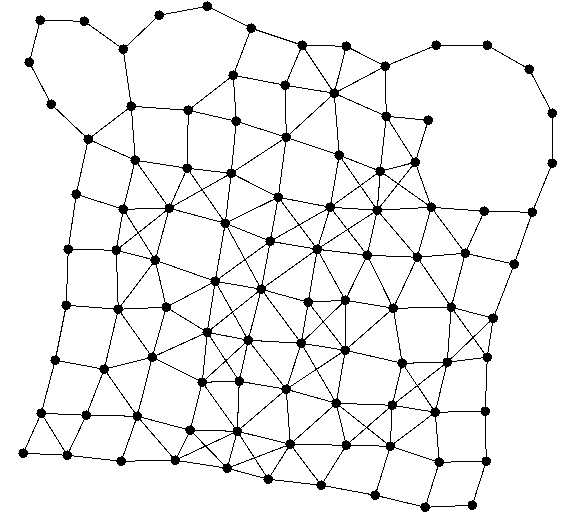
  • I can build maps from trajectories of agents through a labeled belief space: mapFromTrajectories
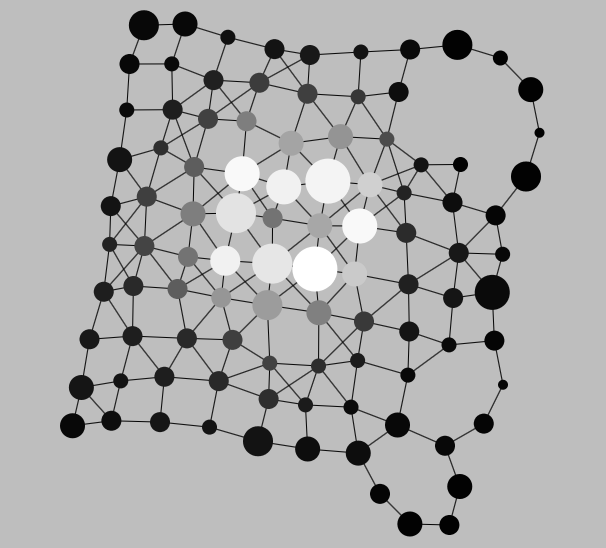
    • This would be analogous to building a map based on terms or topics used by people during multiple group polarization discussion. Densely connected central area where all the discussions begin, sparse ‘outer region’ where the poles live. In this case, you can clearly see the underlying grid that was used to generate the ‘terms’
  • Progress for today. Size is the average time spent ‘over’ a topic/term. Brightness is the number of distinct visitors: mapFromTrajectories2

Phil 12/15/17

9:00 – 1:30 ASRC MKT

  • Looong day yesterday
  • Sprint review
  • This looks like an interesting alternative to blockchain for document security: A Cryptocurrency Without a Blockchain Has Been Built to Outperform Bitcoin
    • The controversial currency IOTA rests on a mathematical “tangle” that its creators say will make it much faster and more efficient to run.
  • Also this: Can AI Win the War Against Fake News?
    • Developers are working on tools that can help spot suspect stories and call them out, but it may be the beginning of an automated arms race. 
    • Mentions adverifai.com
      • FakeRank is like PageRank for Fake News detection, only that instead of links between web pages, the network consists of facts and supporting evidence. It leverages knowledge from the Web with Deep Learning and Natural Language Processing techniques to understand the meaning of a news story and verify that it is supported by facts.

Phil 12.14.17

7:00 – 11:00 ASRC MKT

Phil 12.10.17

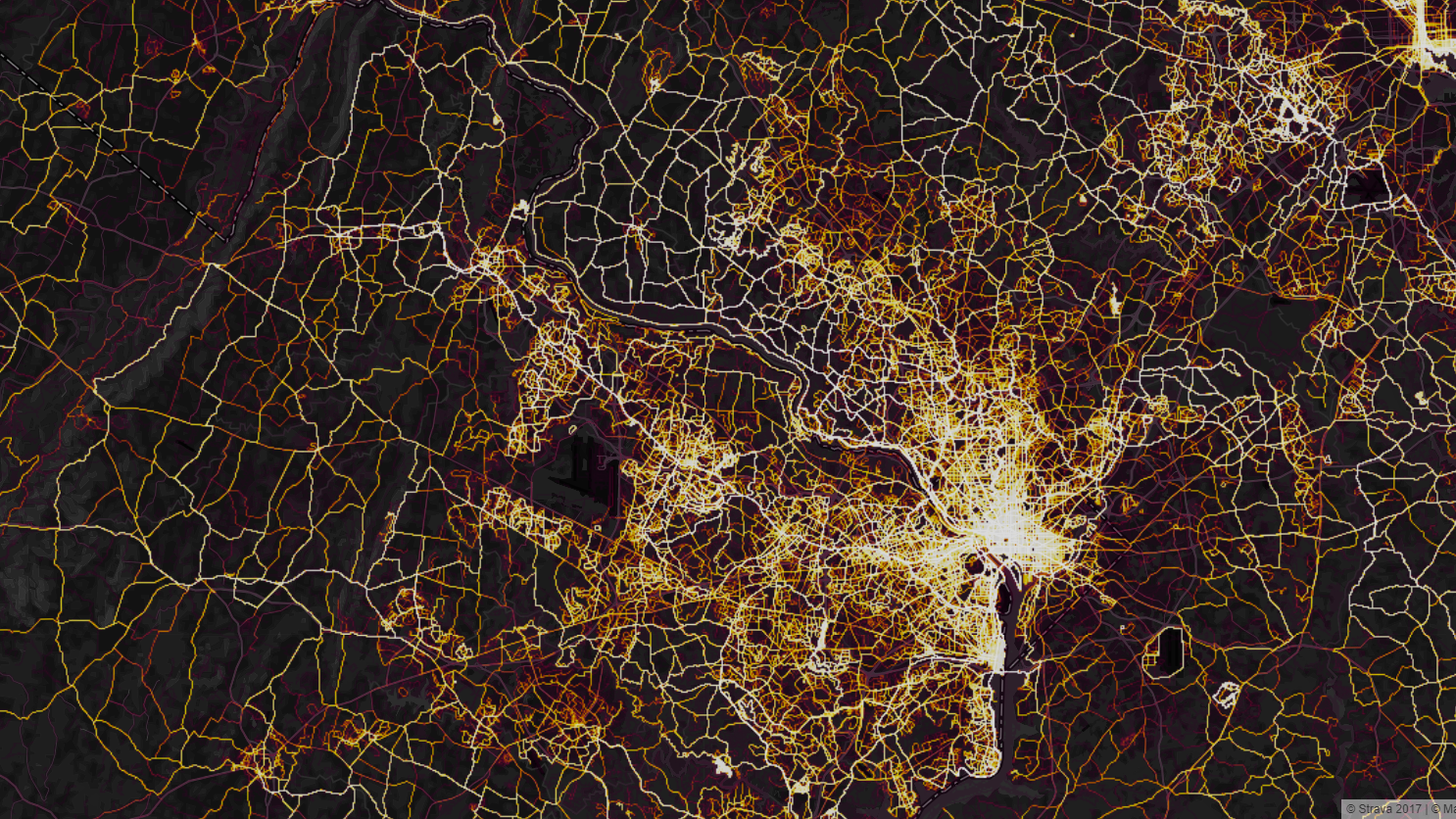
Thinking about the map. In cases where it is impossible to project cleanly down to 2 dimensions, like you could with this Strava heatmap:

Strava

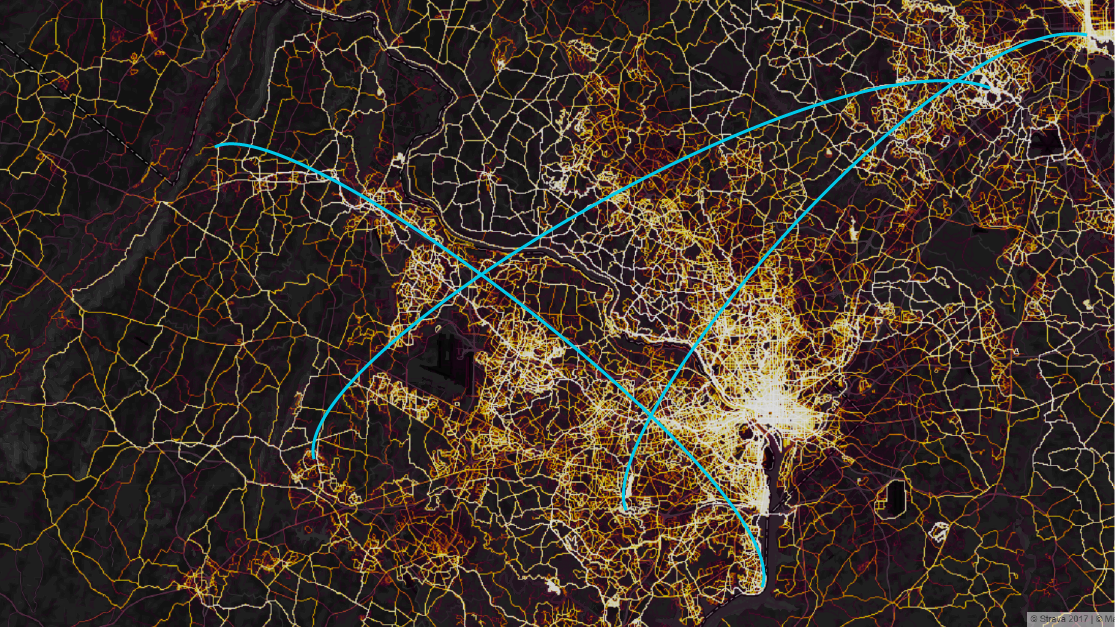
Adding elements like ‘highways’ (wormholes?) connecting two distant points might make sense. In this way, the larger dimensions are preserved, and the unusual relationships are still visible. In the case of language vs semantics, this could show the connections of ‘Java’ as a computer language, beverage, and country:

StravaWormholes

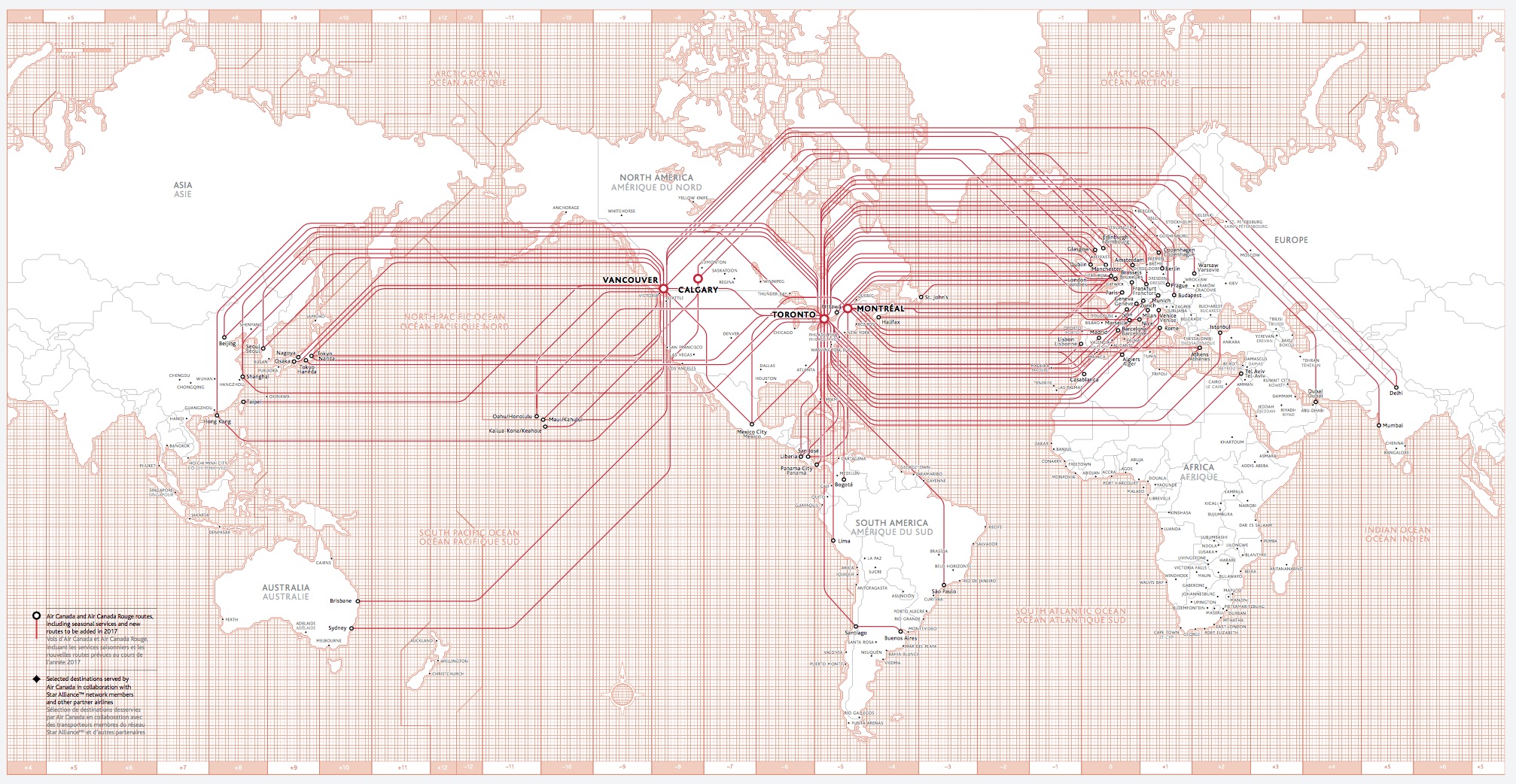
There are several ways of looking at these projections too. I would think that a map made entirely of long haul air routes would project differently than roads. It should be possible to ‘morph’ between these projections to explore the relationships.

air-canada-2-17-international-route-map

Cute thing:

dqeg3kcuqaamtt6