Author Archives: pgfeldman

Phil 12.25.17

Was listening to On Being yesterday morning, where Krista Tippet was interviewing David Steindl-Rast. He made some interesting points about power hierarchies devolving into networks. But it also maid me wonder whether the terms for Trust and Awareness are being overloaded with meanings that we used to ascribe to Faith and Doubt. Need to look into that some more.

Detecting Bots on Russian Political Twitter

  • Automated and semiautomated Twitter accounts, bots, have recently gained significant public attention due to their potential interference in the political realm. In this study, we develop a methodology for detecting bots on Twitter using an ensemble of classifiers and apply it to study bot activity within political discussions in the Russian Twittersphere. We focus on the interval from February 2014 to December 2015, an especially consequential period in Russian politics. Among accounts actively Tweeting about Russian politics, we find that on the majority of days, the proportion of Tweets produced by bots exceeds 50%. We reveal bot characteristics that distinguish them from humans in this corpus, and find that the software platform used for Tweeting is among the best predictors of bots. Finally, we find suggestive evidence that one prominent activity that bots were involved in on Russian political Twitter is the spread of news stories and promotion of media who produce them.
Phil 12.22.17

7:00 – 4:000 ASRC MKT

  • Working on flocking and herding paper. I could be done with the first draft? Switched the format to ACM Journal.
  • Positive laws in constitutional government are designed to erect boundaries and establish channels of communication between men whose community is continually endangered by the new men born into it. With each new birth, a new beginning is born into the world, a new world has potentially come into being. The stability of the laws corresponds to the constant motion of all human affairs, a motion which can never end as long as men are born and die. The laws hedge in each new beginning and at the same time assure its freedom of movement, the potentiality of something entirely new and unpredictable; the boundaries of positive laws are for the political existence of man what memory is for his historical existence: they guarantee the pre-existence of a common world, the reality of some continuity which transcends the individual life span of each generation, absorbs all new origins and is nourished by them.Arendt, Hannah. The Origins of Totalitarianism (Harvest Book, Hb244) (p. 465). Houghton Mifflin Harcourt. Kindle Edition.

Phil 12.21.17

7:00 – 4:00 ASRC MKT

  • And now the days start to get longer!
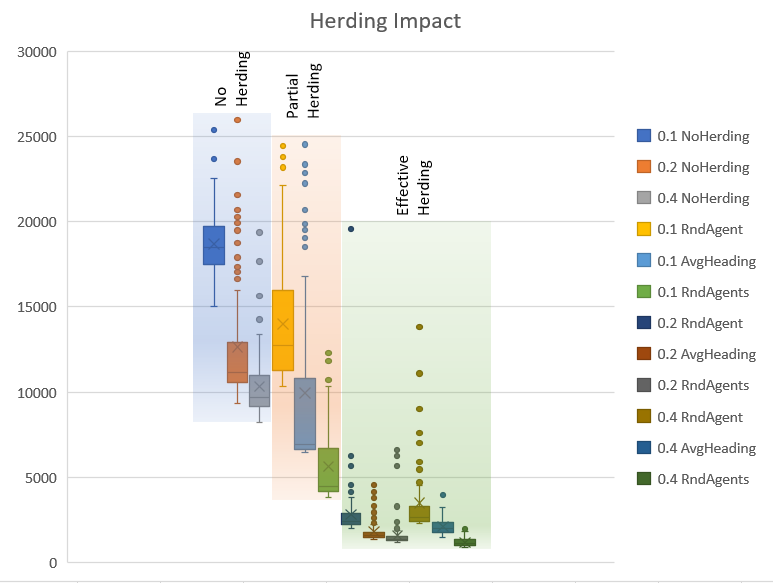
  • Working on flocking and herding paper. Adding in the adversarial herding parts. Spent a lot of time working on getting a chart that tells the herding story. I’m somewhat ok with this: HerdingImpact
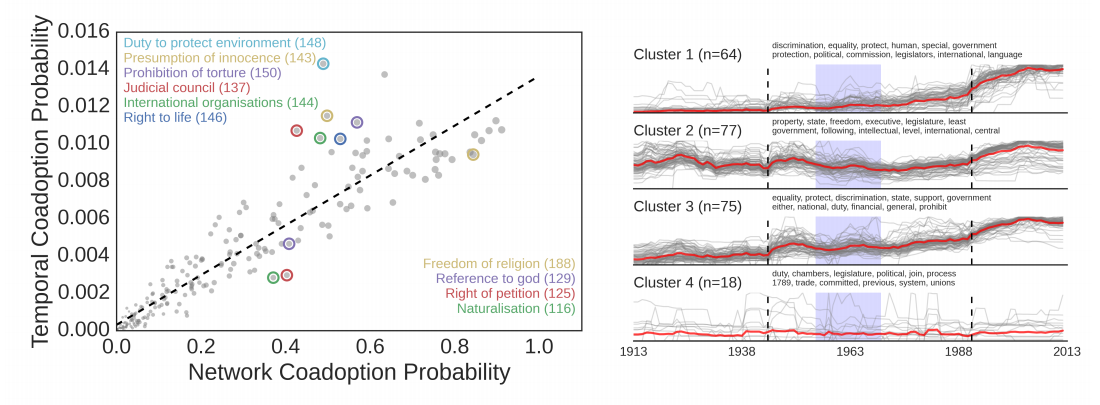
  • Some work on plotting norms using legal documents: Inferring Mechanisms for Global Constitutional Progress
    • Constitutions help define domestic political orders, but are known to be influenced by two international mechanisms: one that reflects global temporal trends in legal development, and another that reflects international network dynamics such as shared colonial history. We introduce the provision space; the growing set of all legal provisions existing in the world’s constitutions over time. Through this we uncover a third mechanism influencing constitutional change: hierarchical dependencies between legal provisions, under which the adoption of essential, fundamental provisions precedes more advanced provisions. This third mechanism appears to play an especially important role in the emergence of new political rights, and may therefore provide a useful roadmap for advocates of those rights. We further characterise each legal provision in terms of the strength of these mechanisms.
    • provisionSpace
  • A Lively Discussion, Even for KSJ: Edmond Awad on His ‘Moral Machine’
    • To collect vast amounts of data on human perspectives about such decisions, Awad and his team launched the Moral Machine website, in which visitors play an interactive game that presents them with a choice of two decisions in a variety of randomly generated crash scenarios. As in the trolley problem, the visitor must choose to swerve or stay the course, sacrificing either the people in the car or one group of pedestrians to save other pedestrians.
    • About Moral Machine
      • Recent scientific studies on machine ethics have raised awareness about the topic in the media and public discourse. This website aims to take the discussion further, by providing a platform for 1) building a crowd-sourced picture of human opinion on how machines should make decisions when faced with moral dilemmas, and 2) crowd-sourcing assembly and discussion of potential scenarios of moral consequence.
      • And this looks like it produced some really good marketing via news coverage
      • “We had four million users visit the website,” Awad said. “Three million of those actually completed the decision-making task, and they clicked on 37 million individual decisions. There’s also the survey that comes after, which is a little bit more work, and we still have over half a million survey responses.” The Scalable Cooperation group plans to publish the full results of the study in an upcoming paper.

Phil 12.20.17

7:00 – 5:00 ASRC MKT

  • Today’s Sunrise 7:23 AM and sunset 4:47 PM. Not a fan of winter.
  • Promoted the venues and journals post to its own page here.
  • Added The Emergence of Consensus: A Primer to the lit review. Nothing new in there, but it’s a fast overview with good references
  • Working on flocking and herding paper. Reasonable progress. Adding the herding parts and the self-driving car stampede. Finished first pass through methods, next is results.
  • Need to rerun the sim so that the heading and distance charts line up. Done!
  • Well, that’s pretty research-browser-ish: Inventing the “Google” for predictive analytics The company is Endor.com, and these pages are pretty informative (social physics) (jobs)
  • The Birth of A Conspiracy Theory.
    • Right after yesterday’s train derailment, a conspiracy theory was born, we tracked it in real time.

Phil 12.19.17

7:00 – 5:00 ASRC MKT

  • Trust, Identity Politics and the Media
    • Essential to a free and functioning democracy is an independent press, a crucial civil society actor that holds government to account and provides citizens access to the impartial information they need to make informed judgments, reason together, exercise their rights and responsibilities, and engage in collective action. In times of crisis, the media fulfills the vital role of alerting the public to danger and connecting citizens to rescue efforts, as Ushahidi has done in Kenya. Or, it can alert the international community to human rights abuses as does Raqqa is Being Slaughtered Silently. But, the very capabilities that allow the media to alert and inform, also allow it to sow division – as it did in Rwanda leading up to and during the genocide– by spreading untruths, and, through “dog whistles,” targeting ethnic groups and inciting violence against them. This panel will focus on two topics: the role of media as a vehicle for advancing or undermining social cohesion, and the use of media to innovate, organize and deepen understanding, enabling positive collective action.
      • Abdalaziz Alhamza, Co-Founder, Raqqa is Being Slaughtered Silently
      • Uzodinma Iweala, CEO and Editor-in-Chief, Ventures Africa; Author, Beasts of No Nation; Producer, Waiting for Hassana (moderator)
      • Ben Rattray, Founder and CEO, Change.org
      • Malika Saada Saar, Senior Counsel on Civil and Human Rights, Google
  • Continuing Consensus and Cooperation in Networked Multi-Agent Systems here Done! Promoted to phlog.
  • An Agent-Based Model of Indirect Minority Influence on Social Change and Diversity
    • The present paper describes an agent-based model of indirect minority influence. It examines whether indirect minority influence can lead to social change as a function of cognitive rebalancing, a process whereby related attitudes are affected when one attitude is changed. An attitude updating algorithm was modelled with minimal assumptions drawing on social psychology theories of indirect minority influence. Results revealed that facing direct majority influence, indirect minority influence along with cognitive rebalancing is a recipe for social change. Furthermore, indirect minority influence promotes and maintains attitudinal diversity in local ingroups and throughout the society. We discuss the findings in terms of social influence theories and suggest promising avenues for model extensions for theory building in minority influence and social change.
  • Ok, time to switch gears and start on the flocking paper. And speaking of which, is this a venue?
    • Winter Simulation Conference 2017 – INFORMS Meetings Browser times out right now, so is it still valid?
    • Created a new LaTex project, since this is a modification of the CHIIR paper and started to slot pieces in. It is *hard* switching gears. Leaving it in the sigchi format for now.
    • I went to change out the echo chamber distance from average with heading from average (which looks way better), but everything was zero in the spreadsheet. After poking around a bit, I was “fixing” the angle cosine to lie on (-1, 1), by forcing it to be 1.0 all the time. Fixed. EchoChamberAngle
  • Sprint planning. I’m on the hook for writing up the mapping white paper and strawman design

Phil 12.18.17

7:15 – 4:15 ASRC MKT

  • I’m having old iPhone problems. Trying a wipe and restart.
  • Exploring the ChestXray14 dataset: problems
    • Interesting article on using tagged datasets. What if the tags are wrong? Something to add to the RB is a random re-introduction of a previously tagged item to see if tagging remains consistent.
  • Continuing Consensus and Cooperation in Networked Multi-Agent Systems here
  • Visualizing the Temporal Evolution of Dynamic Networks (ACM MLG 2011)
    • Many developments have recently been made in mining dynamic networks; however, effective visualization of dynamic networks remains a significant challenge. Dynamic networks are typically visualized via a sequence of static graph layouts. In addition to providing a visual representation of the network topology at each time step, the sequence should preserve the “mental map” between layouts of consecutive time steps to allow a human to interpret the temporal evolution of the network and gain valuable insights that are difficult to convey by summary statistics alone. We propose two regularized layout algorithms for visualizing dynamic networks, namely dynamic multidimensional scaling (DMDS) and dynamic graph Laplacian layout (DGLL). These algorithms discourage node positions from moving drastically between time steps and encourage nodes to be positioned near other members of their group. We apply the proposed algorithms on several data sets to illustrate the benefit of the regularizers for producing interpretable visualizations.
    • These look really straightforward to implement. May be handy in the new flocking paper
  • Opinion and community formation in coevolving networks (Phys Review E)
    • In human societies, opinion formation is mediated by social interactions, consequently taking place on a network of relationships and at the same time influencing the structure of the network and its evolution. To investigate this coevolution of opinions and social interaction structure, we develop a dynamic agent-based network model by taking into account short range interactions like discussions between individuals, long range interactions like a sense for overall mood modulated by the attitudes of individuals, and external field corresponding to outside influence. Moreover, individual biases can be naturally taken into account. In addition, the model includes the opinion-dependent link-rewiring scheme to describe network topology coevolution with a slower time scale than that of the opinion formation. With this model, comprehensive numerical simulations and mean field calculations have been carried out and they show the importance of the separation between fast and slow time scales resulting in the network to organize as well-connected small communities of agents with the same opinion.
  • I can build maps from trajectories of agents through a labeled belief space: mapFromTrajectories
    • This would be analogous to building a map based on terms or topics used by people during multiple group polarization discussion. Densely connected central area where all the discussions begin, sparse ‘outer region’ where the poles live. In this case, you can clearly see the underlying grid that was used to generate the ‘terms’
  • Progress for today. Size is the average time spent ‘over’ a topic/term. Brightness is the number of distinct visitors: mapFromTrajectories2

Phil 12.17.17

Got accepted for the CHIIR DC but the paper was turned down. Overall good numbers (4-5) on the paper quality, but 3 on appropriateness. Basically, no one is interested in the study until there are human results. I think this line sums it up best:

  • I think the paper could have been rewritten as a shorter perspective or position paper if and only if the boids flocking model was left out.
  • Final Disposition: Weak reject because the lack of connection between model and reality
  • And really – this is a thing to pick at? I agree with a lot of the paper’s views, but I do not think Scott died because of an echo chamber. Scott’s death appears to have been the result of his failure to plan and prepare appropriately for arctic exploration. To which my response is ‘why was he not prepared?’

So, looking for venues/journals to publish the updated herding paper:

  • Journal of Computational Social Science
  • Ecosphere
    • The scope of Ecosphere is as broad as the science of ecology itself. The journal welcomes submissions from all sub-disciplines of ecological science, as well as interdisciplinary studies relating to ecology. The journal’s goal is to provide a rapid-publication, online-only, open-access alternative to ESA’s other journals, while maintaining the rigorous standards of peer review for which ESA publications are renowned.
  • Chaos: An Interdisciplinary Journal of Nonlinear Science is a peer-reviewed journal devoted to increasing the understanding of nonlinear phenomena and describing the manifestations in a manner comprehensible to researchers from a broad spectrum of disciplines. Chaos welcomes submission of original manuscripts on the full range of topics in the broadly interdisciplinary area of nonlinear science
  • Online Social Networks and Media
    • OSNEM is a peer-reviewed international journal that publishes high-quality scientific articles (both theoretical and experimental) and survey papers covering all aspects of OSNEM: from OSNEM protocols and applications to the use of data mined from OSNEM for modeling and understanding the human behavior in the cyber-physical world.
  • Physica A publishes research in the field of statistical mechanics and its applications.
    • Statistical mechanics sets out to explain the behaviour of macroscopic systemsby studying the statistical properties of their microscopic constituents. Applications of the techniques of statistical mechanics are widespread, and include: applications to physical systems such as solids, liquids and gases; applications to chemical and biological systems (colloids, interfaces, complex fluids, polymers and biopolymers, cell physics); and other interdisciplinary applications to for instance biological, economical and sociological systems.
  • Physical Review Letters
    • The world’s premier physics letter journal. It publishes short, high quality reports of significant and notable results in the full arc of fundamental and interdisciplinary physics research. PRL provides readers with the most influential developments and transformative ideas in physics with the goal of moving physics forward. We are the most cited physics journal — every two minutes someone cites a PRL. Authors gain high visibility, rapid publication, and broad dissemination of their work.
    • Found this by looking at the work of Andrea Baronchelli, who’s published some ABS work there
  • The ICPPMAS 2018: 20th International Conference on Principles and Practice of Multi-Agent Systems aims to bring together leading academic scientists, researchers and research scholars to exchange and share their experiences and research results on all aspects of Principles and Practice of Multi-Agent Systems. It also provides a premier interdisciplinary platform for researchers, practitioners and educators to present and discuss the most recent innovations, trends, and concerns as well as practical challenges encountered and solutions adopted in the fields of Principles and Practice of Multi-Agent Systems
    • Call for Papers
    • Abstracts/Full-Text Paper Submission Deadline: December 31, 2017
  • This looks promising: Winter Simulation Conference 2018 December 9-12 Göteborg Sweden
    • Conference Theme: Simulation for a Noble Cause. Simulation has been found useful for a range of scientific, engineering and business applications as evident by the papers presented at Winter Simulation Conferences over the past 50 years. Simulation has been employed to help noble causes too over the recent past but such efforts have received limited attention. The 2018 conference seeks to highlight applications of simulation for noble causes in addition to continuing to report leading developments and applications in other fields. We especially invite papers describing uses of simulation in efforts analyzing and addressing issues facing humanity including, but not limited to, reducing poverty and world hunger, social causes, social problems, improving natural environment, and disaster response.

Phil 12/15/17

9:00 – 1:30 ASRC MKT

  • Looong day yesterday
  • Sprint review
  • This looks like an interesting alternative to blockchain for document security: A Cryptocurrency Without a Blockchain Has Been Built to Outperform Bitcoin
    • The controversial currency IOTA rests on a mathematical “tangle” that its creators say will make it much faster and more efficient to run.
  • Also this: Can AI Win the War Against Fake News?
    • Developers are working on tools that can help spot suspect stories and call them out, but it may be the beginning of an automated arms race. 
    • Mentions adverifai.com
      • FakeRank is like PageRank for Fake News detection, only that instead of links between web pages, the network consists of facts and supporting evidence. It leverages knowledge from the Web with Deep Learning and Natural Language Processing techniques to understand the meaning of a news story and verify that it is supported by facts.

Phil 12.14.17

7:00 – 11:00 ASRC MKT

Phil 12.13.17

7:00 – 5:00 ASRC MKT

  • Schedule physical
  • Write up fire stampede. Done!
  • Continuing Consensus and Cooperation in Networked Multi-Agent Systems here
  • Would like to see how the credibility cues on the document were presented. What went right and what went wrong: Schumer calls cops after forged sex scandal charge
  • Finished linking the RB components to the use cases. Waiting on Aaron to finish SIGINT use case
  • Working on building maps from trajectories. Trying http://graphstream-project.org
    • Updating Labeled2DMatrix to read in string values. I had never finished that part! There are some issues with what to do about column headers. I think I’m going to add explicit headers for the ‘Trajectory’ sheet
  • Strategized with Aaron about how to approach the event tomorrow. And Deep Neural Network Capsules. And Social Gradient Descent Agents.
    • deep neural nets learn by back-propagation of errors over the entire network. In contrast real brains supposedly wire neurons by Hebbian principles: “units that fire together, wire together”. Capsules mimic Hebbian learning in the way that: “A lower-level capsule prefers to send its output to higher level capsules whose activity vectors have a big scalar product with the prediction coming from the lower-level capsule”
      • Sure sounds like oscillator frequency locking / flocking to me……

Phil 12.12.17

7:00 – 3:30 ASRC MKT

  • Need to make sure that an amplified agent also has amplified influence in calculating velocity – Fixed
  • Towards the end of this video is an interview with Ian Couzin talking about how mass communication is disrupting our ability to flock ‘correctly’ due to the decoupling of distance and information
  • Write up fire stampede. Backups everywhere, one hole, antennas burn so the AI keeps trust in A* but loses awareness as the antennas burn: “The Los Angeles Police Department asked drivers to avoid navigation apps, which are steering users onto more open routes — in this case, streets in the neighborhoods that are on fire.” [LA Times] Also this slow motion version of the same thing: For the Good of Society — and Traffic! — Delete Your Map App
  • First self-driving car ‘race’ ends in a crash at the Buenos Aires Formula E ePrix; two cars enter, one car survives
  • Taking a closer look at Oscillator Models and Collective Motion (178 Citations) and Consensus and Cooperation in Networked Multi-Agent Systems (6,291 Citations)
  • Consensus and Cooperation in Networked Multi-Agent Systems
    • Reza Olfati-SaberAlex Fax, and Richard M. Murray
    • We discuss the connections between consensus problems in networked dynamic systems and diverse applications including synchronization of coupled oscillators, flocking, formation control, fast consensus in small world networks, Markov processes and gossip-based algorithms, load balancing in networks, rendezvous in space, distributed sensor fusion in sensor networks, and belief propagation. We establish direct connections between spectral and structural properties of complex networks and the speed of information diffusion of consensus algorithms (Abstract)
    • In networks of agents (or dynamic systems), “consensus” means to reach an agreement regarding a certain quantity of interest that depends on the state of all agents. A “consensus algorithm” (or protocol) is an interaction rule that specifies the information exchange between an agent and all of its (nearest) neighbors on the network (pp 215)
      • In my work, this is agreement on heading and velocity
    • Graph Laplacians are an important point of focus of this paper. It is worth mentioning that the second smallest eigenvalue of graph Laplacians called algebraic connectivity quantifies the speed of convergence of consensus algorithms. (pp 216)
    • More recently, there has been a tremendous surge of interest among researchers from various disciplines of engineering and science in problems related to multi-agent networked systems with close ties to consensus problems. This includes subjects such as consensus [26]–[32], collective behavior of flocks and swarms [19], [33]–[37], sensor fusion [38]–[40], random networks [41], [42], synchronization of coupled oscillators [42]–[46], algebraic connectivity of complex networks [47]–[49], asynchronous distributed algorithms [30], [50], formation control for multi-robot systems [51]–[59], optimization-based cooperative control [60]–[63], dynamic graphs [64]–[67], complexity of coordinated tasks [68]–[71], and consensus-based belief propagation in Bayesian networks [72], [73]. (pp 216)
      • That is a dense lit review. How did they order it thematically?
    • A byproduct of this framework is to demonstrate that seemingly different consensus algorithms in the literature [10], [12]–[15] are closely related. (pp 216)
    • To understand the role of cooperation in performing coordinated tasks, we need to distinguish between unconstrained and constrained consensus problems. An unconstrained consensus problem is simply the alignment problem in which it suffices that the state of all agents asymptotically be the same. In contrast, in distributed computation of a function f(z), the state of all agents has to asymptotically become equal to f(z), meaning that the consensus problem is constrained. We refer to this constrained consensus problem as the f-consensus problem. (pp 217)
      • Normal exploring/flocking/stampeding is unconstrained. Herding adds constraint, though it’s dynamic. The variables that have to be manipulated in the case of constraint to result in the same amount of consensus are probably what’s interesting here. Examples could be how ‘loud’ does the herder have to be? Also, how ‘primed’ does the population have to be to accept herding?
    • …cooperation can be informally interpreted as “giving consent to providing one’s state and following a common protocol that serves the group objective.” (pp 217)
    • Formal analysis of the behavior of systems that involve more than one type of agent is more complicated, particularly, in presence of adversarial agents in noncooperative games [79], [80]. (pp 217)
    • The reason matrix theory [81] is so widely used in analysis of consensus algorithms [10], [12], [13], [14], [15], [64] is primarily due to the structure of P in (4) and its connection to graphs. (pp 218)
    • The role of consensus algorithms in particle based flocking is for an agent to achieve velocity matching with respect to its neighbors. In [19], it is demonstrated that flocks are networks of dynamic systems with a dynamic topology. This topology is a proximity graph that depends on the state of all agents and is determined locally for each agent, i.e., the topology of flocks is a state dependent graph. The notion of state-dependent graphs was introduced by Mesbahi [64] in a context that is independent of flocking. (pp 218)
      • They leave out heading alignment here. Deliberate? Or is heading alignment just another variant on velocity
    • Consider a network of decision-making agents with dynamics ẋi = ui interested in reaching a consensus via local communication with their neighbors on a graph G = (V, E). By reaching a consensus, we mean asymptotically converging to a one-dimensional agreement space characterized by the following equation: x1 = x2 = … = x (pp 219)
    • A dynamic graph G(t) = (V, E(t)) is a graph in which the set of edges E(t) and the adjacency matrix A(t) are time-varying. Clearly, the set of neighbors Ni(t) of every agent in a dynamic graph is a time-varying set as well. Dynamic graphs are useful for describing the network topology of mobile sensor networks and flocks [19]. (pp 219)
    • GraphLaplacianGradientDescent(pp 220)
  • algebraic connectivity of a graph: The algebraic connectivity (also known as Fiedler value or Fiedler eigenvalue) of a graph G is the second-smallest eigenvalue of the Laplacian matrix of G.[1] This eigenvalue is greater than 0 if and only if G is a connected graph. This is a corollary to the fact that the number of times 0 appears as an eigenvalue in the Laplacian is the number of connected components in the graph. The magnitude of this value reflects how well connected the overall graph is. It has been used in analysing the robustness and synchronizability of networks. (wikipedia) (pp 220)
  • According to Gershgorin theorem [81], all eigenvalues of L in the complex plane are located in a closed disk centered at delta + 0j with a radius of delta, the maximum degree of a graph (pp 220)
    • This is another measure that I can do of the nomad/flock/stampede structures combined with DBSCAN. Each agent knows what agents it is connected with, and we know how many agents there are. Each agent row should just have the number of agents it is connected to.
  • In many scenarios, networked systems can possess a dynamic topology that is time-varying due to node and link failures/creations, packet-loss [40], [98], asynchronous consensus [41], state-dependence [64], formation reconfiguration [53], evolution [96], and flocking [19], [99]. Networked systems with a dynamic topology are commonly known as switching networks. (pp 226)
  • Conclusion: A theoretical framework was provided for analysis of consensus algorithms for networked multi-agent systems with fixed or dynamic topology and directed information flow. The connections between consensus problems and several applications were discussed that include synchronization of coupled oscillators, flocking, formation control, fast consensus in small-world networks, Markov processes and gossip-based algorithms, load balancing in networks, rendezvous in space, distributed sensor fusion in sensor networks, and belief propagation. The role of “cooperation” in distributed coordination of networked autonomous systems was clarified and the effects of lack of cooperation was demonstrated by an example. It was demonstrated that notions such as graph Laplacians, nonnegative stochasticmatrices, and algebraic connectivity of graphs and digraphs play an instrumental role in analysis of consensus algorithms. We proved that algorithms introduced by Jadbabaie et al. and Fax and Murray are identical for graphs with n self-loops and are both special cases of the consensus algorithm of Olfati-Saber and Murray. The notion of Perron matrices was introduced as the discrete-time counterpart of graph Laplacians in consensus protocols. A number of fundamental spectral properties of Perron matrices were proved. This led to a unified framework for expression and analysis of consensus algorithms in both continuous-time and discrete-time. Simulation results for reaching a consensus in small-worlds versus lattice-type nearest-neighbor graphs and cooperative control of multivehicle formations were presented. (pp 231)
  • Not sure about this one. It just may be another set of algorithms to do flocking. Maybe some network implications? Flocking for Multi-Agent Dynamic Systems: Algorithms and Theory. It is one of the papers that the Consensus and Cooperation paper above leans on heavily though…
  • The Emergence of Consensus: A Primer
    • The origin of population-scale coordination has puzzled philosophers and scientists for centuries. Recently, game theory, evolutionary approaches and complex systems science have provided quantitative insights on the mechanisms of social consensus. However, the literature is vast and scattered widely across fields, making it hard for the single researcher to navigate it. This short review aims to provide a compact overview of the main dimensions over which the debate has unfolded and to discuss some representative examples. It focuses on those situations in which consensus emerges ‘spontaneously’ in absence of centralised institutions and covers topic that include the macroscopic consequences of the different microscopic rules of behavioural contagion, the role of social networks, and the mechanisms that prevent the formation of a consensus or alter it after it has emerged. Special attention is devoted to the recent wave of experiments on the emergence of consensus in social systems.
  • Critical dynamics in population vaccinating behavior
    • Complex adaptive systems exhibit characteristic dynamics near tipping points such as critical slowing down (declining resilience to perturbations). We studied Twitter and Google search data about measles from California and the United States before and after the 2014–2015 Disneyland, California measles outbreak. We find critical slowing down starting a few years before the outbreak. However, population response to the outbreak causes resilience to increase afterward. A mathematical model of measles transmission and population vaccine sentiment predicts the same patterns. Crucially, critical slowing down begins long before a system actually reaches a tipping point. Thus, it may be possible to develop analytical tools to detect populations at heightened risk of a future episode of widespread vaccine refusal.
  • For Aaron’s Social Gradient Descent Agent research (lit review)
    • On distributed search in an uncertain environment (Something like Social Gradient Descent Agents)
      • The paper investigates the case where N agents solve a complex search problem by communicating to each other their relative successes in solving the task. The problem consists in identifying a set of unknown points distributed in an n–dimensional space. The interaction rule causes the agents to organize themselves so that, asymptotically, each agent converges to a different point. The emphasis of this paper is on analyzing the collective dynamics resulting from nonlinear interactions and, in particular, to prove convergence of the search process.
    • A New Clustering Algorithm Based Upon Flocking On Complex Network (Sizing and timing for flocking systems seems to be ok?)
      • We have proposed a model based upon flocking on a complex network, and then developed two clustering algorithms on the basis of it. In the algorithms, firstly a k-nearest neighbor (knn) graph as a weighted and directed graph is produced among all data points in a dataset each of which is regarded as an agent who can move in space, and then a time-varying complex network is created by adding long-range links for each data point. Furthermore, each data point is not only acted by its k nearest neighbors but also r long-range neighbors through fields established in space by them together, so it will take a step along the direction of the vector sum of all fields. It is more important that these long-range links provides some hidden information for each data point when it moves and at the same time accelerate its speed converging to a center. As they move in space according to the proposed model, data points that belong to the same class are located at a same position gradually, whereas those that belong to different classes are away from one another. Consequently, the experimental results have demonstrated that data points in datasets are clustered reasonably and efficiently, and the rates of convergence of clustering algorithms are fast enough. Moreover, the comparison with other algorithms also provides an indication of the effectiveness of the proposed approach.
  • Done with the first draft of the white paper! And added the RFP section to the LMN productization version
  • Amazon Sage​Maker: Amazon SageMaker is a fully managed machine learning service. With Amazon SageMaker, data scientists and developers can quickly and easily build and train machine learning models, and then directly deploy them into a production-ready hosted environment. It provides an integrated Jupyter authoring notebook instance for easy access to your data sources for exploration and analysis, so you don’t have to manage servers. It also provides common machine learning algorithms that are optimized to run efficiently against extremely large data in a distributed environment. With native support for bring-your-own-algorithms and frameworks, Amazon SageMaker offers flexible distributed training options that adjust to your specific workflows. Deploy a model into a secure and scalable environment by launching it with a single click from the Amazon SageMaker console. Training and hosting are billed by minutes of usage, with no minimum fees and no upfront commitments. (from the documentation)

4:00 – 5:00 Meeting with Aaron M. to discuss Academic RB wishlist.

Phil 12.11.17

7:00 – 3:00 ASRC MKT

  • Machine learning art gallery from NIPS this year: img_20171208_212755
  • I’m reading this article on the prehistory of Bitcoin, and am realizing that there are several implications for ensuring immutability of data. For example, the entire set of records could be hashed to produce a unique has that would be disrupted if any of the records were altered.
  • Continuing Schooling as a strategy for taxis in a noisy environment here. Done! Promoted to Phlog
  • Still collecting data for web access times at work. Average time to open/finish loading a page is something around 5 seconds at work, 2 seconds at home.
  • Neural correlates of causal power judgments
    • Denise Dellarosa Cummins
    • Causal inference is a fundamental component of cognition and perception. Probabilistic theories of causal judgment (most notably causal Bayes networks) derive causal judgments using metrics that integrate contingency information. But human estimates typically diverge from these normative predictions. This is because human causal power judgments are typically strongly influenced by beliefs concerning underlying causal mechanisms, and because of the way knowledge is retrieved from human memory during the judgment process. Neuroimaging studies indicate that the brain distinguishes causal events from mere covariation, and also distinguishes between perceived and inferred causality. Areas involved in error prediction are also activated, implying automatic activation of possible exception cases during causal decision-making.
  • Writing up the Academic scenario

3:00 – 4:00 Fika – end of semester shindig

4:00 – 6:00 Meeting w/Wayne

  • Basically a status report. Maybe look at computational ecology journals if CHIIR falls through in a bad way
  • Look at workshops as well – Max Plank could be fun
  • Workshopped a workshop title with Wayne and Shimei


Phil 12.10.17

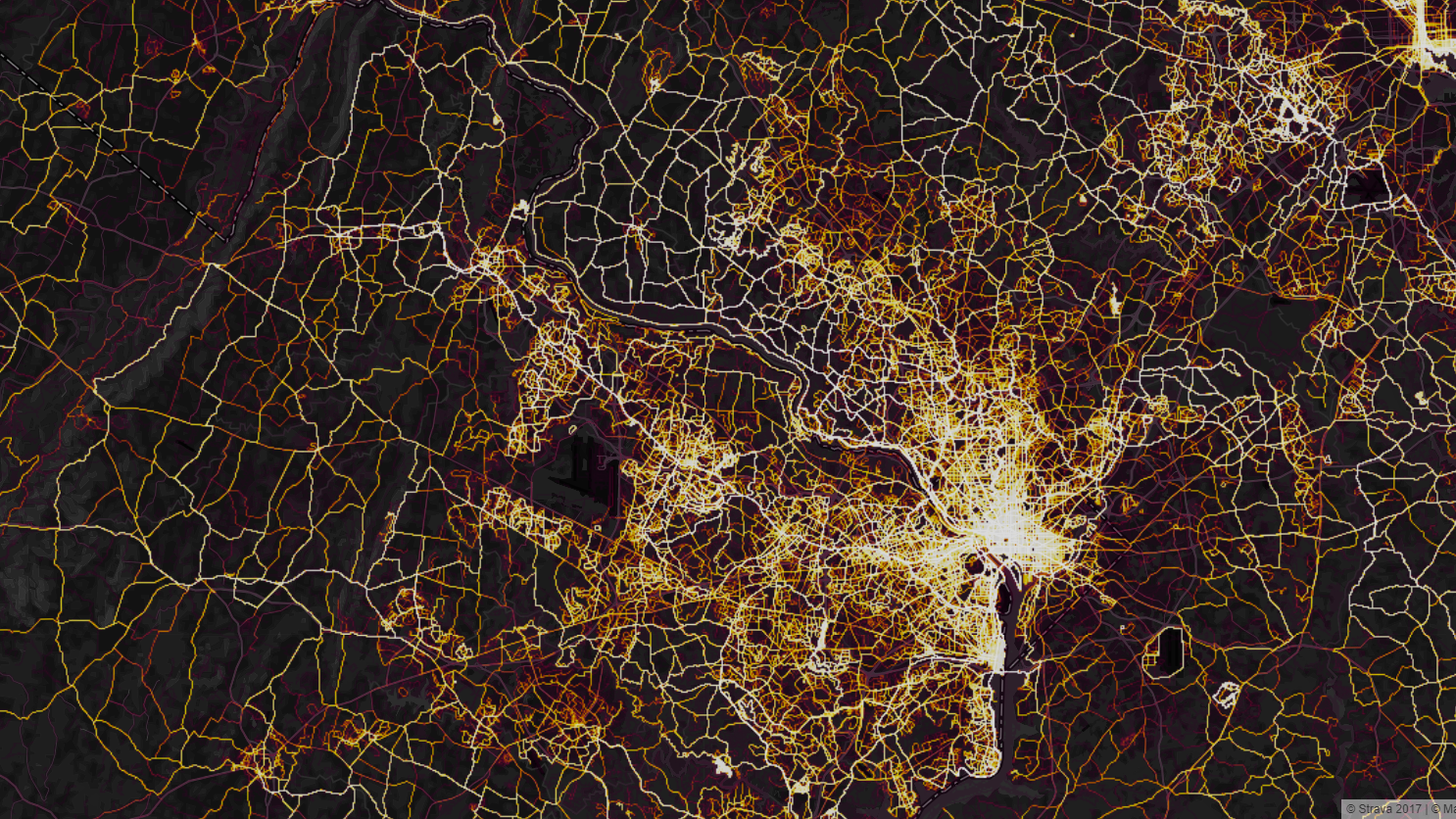
Thinking about the map. In cases where it is impossible to project cleanly down to 2 dimensions, like you could with this Strava heatmap:

Strava

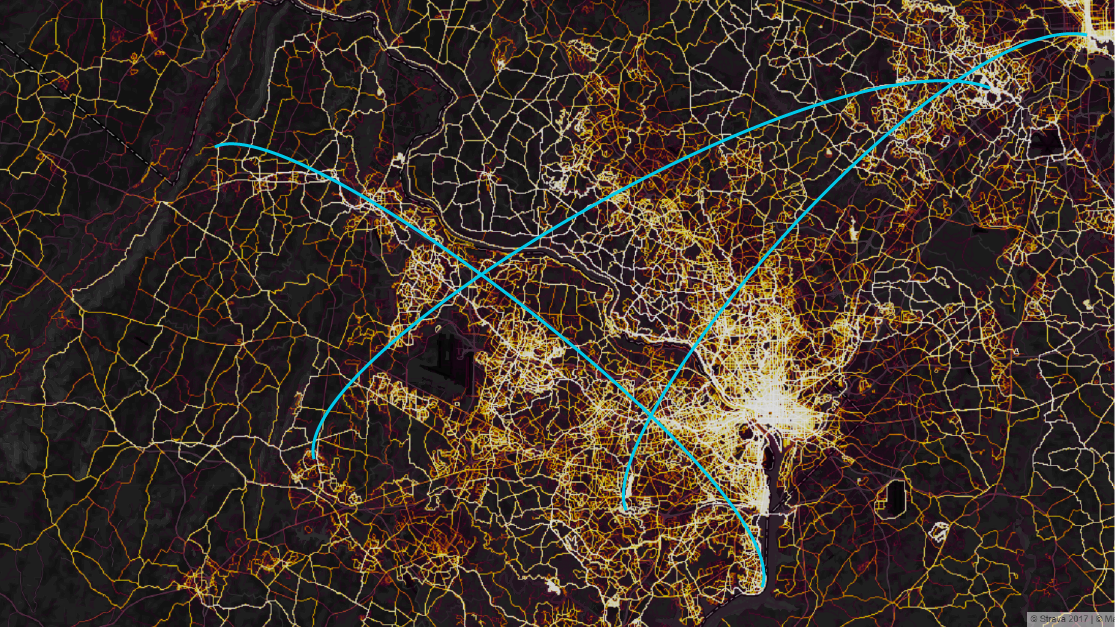
Adding elements like ‘highways’ (wormholes?) connecting two distant points might make sense. In this way, the larger dimensions are preserved, and the unusual relationships are still visible. In the case of language vs semantics, this could show the connections of ‘Java’ as a computer language, beverage, and country:

StravaWormholes

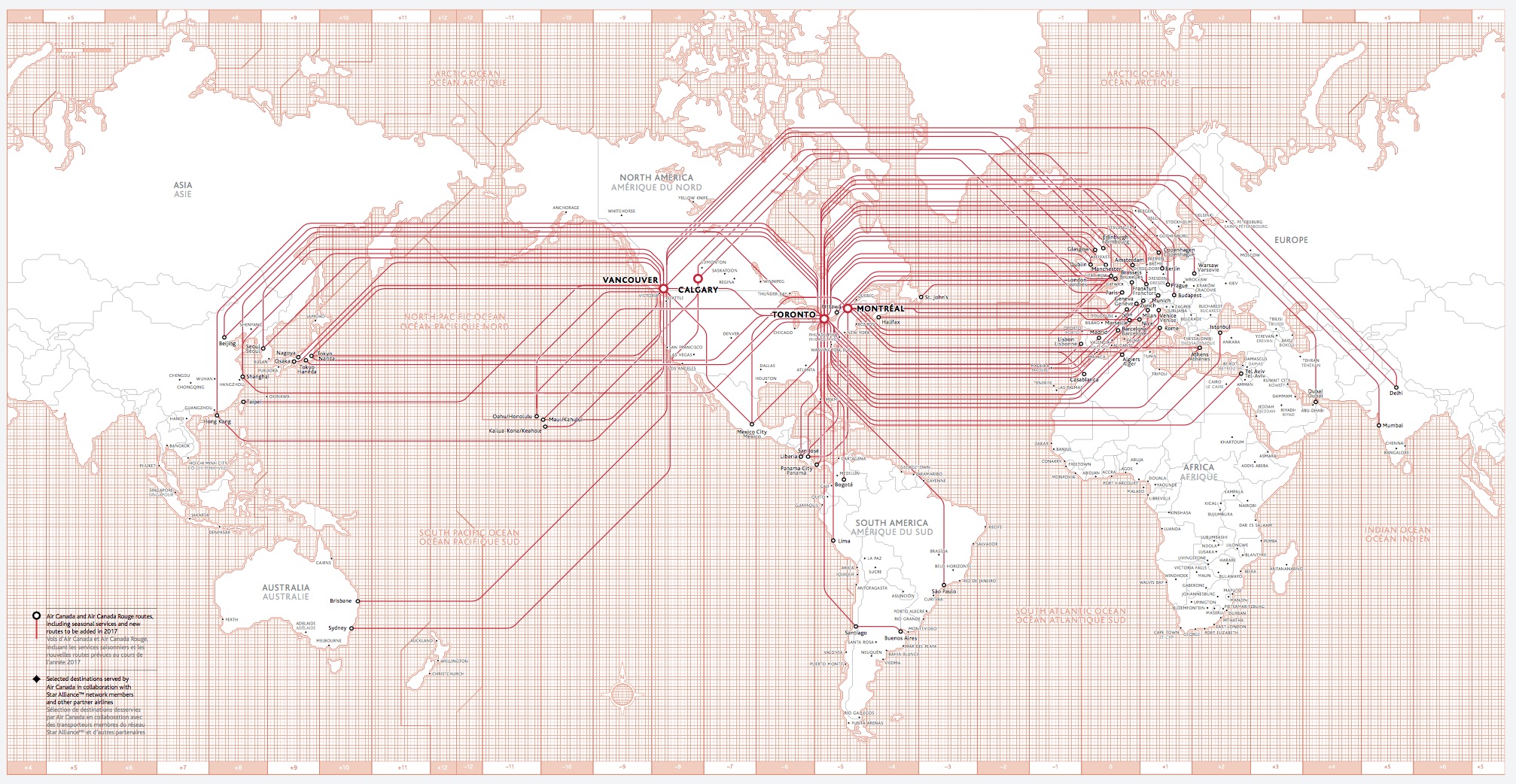
There are several ways of looking at these projections too. I would think that a map made entirely of long haul air routes would project differently than roads. It should be possible to ‘morph’ between these projections to explore the relationships.

air-canada-2-17-international-route-map

Cute thing:

dqeg3kcuqaamtt6

Phil 12/8/17

7:00 – 4:00 ASRC MKT

  • Theoretical Impediments to Machine Learning With Seven Sparks from the Causal Revolution
    • Judea Pearl 
    • Current machine learning systems operate, almost exclusively, in a statistical, or model-blind mode, which entails severe theoretical limits on their power and performance. Such systems cannot reason about interventions and retrospection and, therefore, cannot serve as the basis for strong AI. To achieve human level intelligence, learning machines need the guidance of a model of reality, similar to the ones used in causal inference. To demonstrate the essential role of such models, I will present a summary of seven tasks which are beyond reach of current machine learning systems and which have been accomplished using the tools of causal inference.
  • Talk with the first-ever robot politician on Facebook Messenger
  • Reddit network visualizations and a pass at a map (from 2014)
  • Continuing Schooling as a strategy for taxis in a noisy environment here
    • The models also suggest that there is a trade-off in strengthening tendencies to align with neighbours: strong alignment produces tight angular distributions, but increases the time needed to adjust course when the direction of the gradient changes. A reasonable balance seems to be achieved when individuals take roughly the same time to coalesce into a polarized group as they do to orient to the gradient in asocial taxis. (pp 518)
      • There is something about the relationship between explore and exploit in this statement that I really need to think about
  • Continuing white paper. Done with intro, background, and phase 1
  • Thinking about explore/exploit and how it’s not a good narrative. Everyone wants to be an explorer. So I’m trying to think of other framings: Nomad/Farmer?
  • More progress on the white paper. Split out just the LMN work (Phase 1&2). There will be a separate effort for mapping.

Phil 12.7.17

ASRC MKT 7:00 – 4:30

  • Association of moral values with vaccine hesitancy
  • Online extremism and the communities that sustain it: Detecting the ISIS supporting community on Twitter
  • Continuing Schooling as a strategy for taxis in a noisy environment here
  • Consensus and Cooperation in Networked Multi-Agent Systems
    • This paper provides a theoretical framework for analysis of consensus algorithms for multi-agent networked systems with an emphasis on the role of directed information flow, robustness to changes in network topology due to link/node failures, time-delays, and performance guarantees. An overview of basic concepts of information consensus in networks and methods of convergence and performance analysis for the algorithms are provided. Our analysis framework is based on tools from matrix theory, algebraic graph theory, and control theory. We discuss the connections between consensus problems in networked dynamic systems and diverse applications including synchronization of coupled oscillators, flocking, formation control, fast consensus in smallworld networks, Markov processes and gossip-based algorithms, load balancing in networks, rendezvous in space, distributed sensor fusion in sensor networks, and belief propagation. We establish direct connections between spectral and structural properties of complex networks and the speed of information diffusion of consensus algorithms. A brief introduction is provided on networked systems with nonlocal information flow that are considerably faster than distributed systems with lattice-type nearest neighbor interactions. Simulation results are presented that demonstrate the role of smallworld effects on the speed of consensus algorithms and cooperative control of multivehicle formations.
  • Found this in the citations of the above paper with terms “belief space flocking“: Spatial Coordination Games for Large-Scale Visualization
    • Dimensionality reduction (’visualization’) is a central problem in statistics. Several of the most popular solutions grew out of interaction metaphors (springs, boids, neurons, etc.) We show that the problem can be framed as a game of coordination and solved with standard game-theoretic concepts. Nodes that are close in a (high-dimensional) graph must coordinate in a (low-dimensional) screen position. We derive a game solution, a GPU-parallel implementation and report visualization experiments in several datasets. The solution is a very practical application of game-theory in an important problem, with fast and low-stress embeddings.
  • Lots of progress on the White Paper. Aaron wants to split out the WordRank work and the mapping work as two separate epochs. He thinks they may be easier to pitch than the phased approach
  • Some discussion on how explore/exploit is a bad metaphor due to the bad associations with exploit
  • Added a SIGINT use case
  • Discussed the ‘map weaving from trajectories’ concept