Monthly Archives: August 2021

Phil 8.12.21

Just back from a conference in Huntsville. Lots of very expensive ways to deliver energy to a point in space at a particular time. I need to write up my thoughts in more detail later. Also EXPENSE REPORT!

Announcing AI21 Studio and Jurassic-1 Language Models

  • We are thrilled to announce the launch of AI21 Studio, our new developer platform where you can use our state-of-the-art Jurassic-1 language models to build your own applications and services. Jurassic-1 models come in two sizes, where the Jumbo version, at 178B parameters, is the largest and most sophisticated language model ever released for general use by developers. AI21 Studio is currently in open beta, allowing anyone to sign up and immediately start querying Jurassic-1 using our API and interactive web environment.

Research community dynamics behind popular AI benchmarks

  • The widespread use of experimental benchmarks in AI research has created competition and collaboration dynamics that are still poorly understood. Here we provide an innovative methodology to explore these dynamics and analyse the way different entrants in these challenges, from academia to tech giants, behave and react depending on their own or others’ achievements. We perform an analysis of 25 popular benchmarks in AI from Papers With Code, with around 2,000 result entries overall, connected with their underlying research papers. We identify links between researchers and institutions (that is, communities) beyond the standard co-authorship relations, and we explore a series of hypotheses about their behavior as well as some aggregated results in terms of activity, performance jumps and efficiency. We characterize the dynamics of research communities at different levels of abstraction, including organization, affiliation, trajectories, results and activity. We find that hybrid, multi-institution and persevering communities are more likely to improve state-of-the-art performance, which becomes a watershed for many community members. Although the results cannot be extrapolated beyond our selection of popular machine learning benchmarks, the methodology can be extended to other areas of artificial intelligence or robotics, and combined with bibliometric studies.

The Learning on Graphs and Geometry Reading Group

Alpha Zero’s “Alien” Chess Shows the Power, and the Peculiarity, of AI

  • What’s also remarkable, though, Hassabis explained, is that it sometimes makes seemingly crazy sacrifices, like offering up a bishop and queen to exploit a positional advantage that led to victory. Such sacrifices of high-value pieces are normally rare. In another case the program moved its queen to the corner of the board, a very bizarre trick with a surprising positional value. “It’s like chess from another dimension,” Hassabis said.

SBIR

  • Standup – done
  • Respond to Steve – done multiple
  • Schedule story time with Andrew – done. Now I just need to put them in Jira
  • Schedule golf with Aaron? Done! Sim first (using MARE and enhanced sim), then prototype, then build a trade show version (indoor so no weather), then try fielding at some willing golf course? Paul could probably help with that
Phil 8.9.21

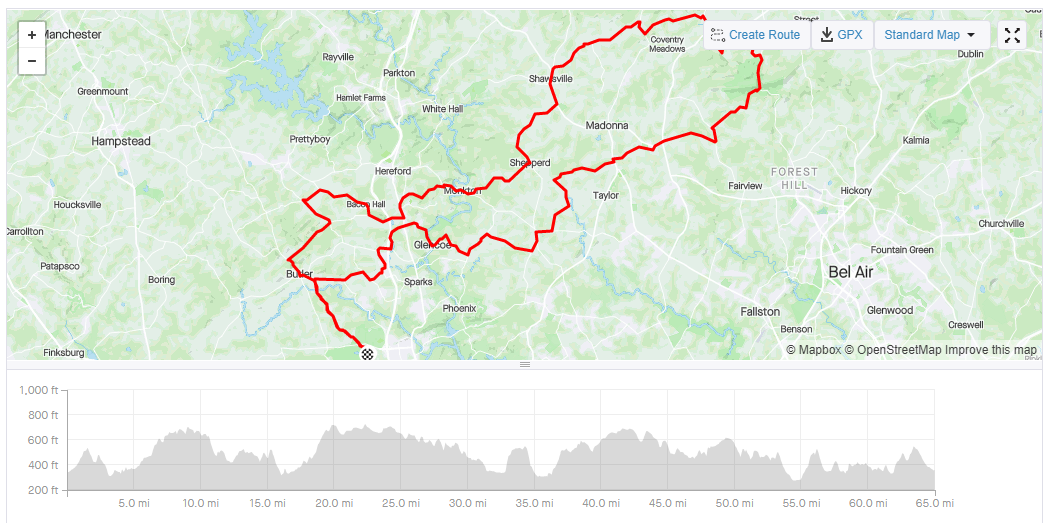
Nice ride on Saturday. An 18mph average pace and I still got dropped by the lead group! But I did hang on for over 40 miles

Book

  • Want a \TODO{write something here} that can disappear as needed? Use these two versions of TODO:
%\newcommand\TODO[1]{\textcolor{red}{(TODO: #1)}} % show
\newcommand\TODO[1]{} % hide

SBIRs

  • Go over stories with Aaron?
  • MARCOM meeting
  • Off to the SMD symposium

GPT Agents

  • Setting up the DB to handle sentiment and PoS – done
  • Generating and parsing the review/stars model. When there is an exception thrown while debugging, the IDE loses the ability to edit?

Phil 8.7.21

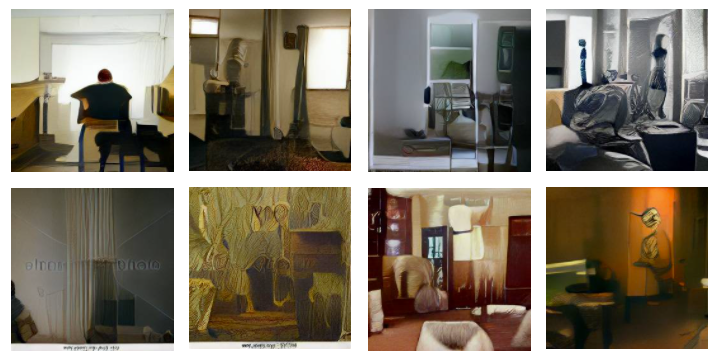
There is a version of DALL-E at huggingface for image to text! (huggingface.co/spaces/flax-community/dalle-mini)

A man in a room:

A woman in a room:

Need to fix my timesheet for Monday

A Network Framework of Cultural History

  • The emergent processes driving cultural history are a product of complex interactions among large numbers of individuals, determined by difficult-to-quantify historical conditions. To characterize these processes we have reconstructed aggregate intellectual mobility over two millennia through the birth and death locations of more than 150,000 notable individuals. The tools of network and complexity theory were then used to identify characteristic statistical patterns and determine the cultural and historical relevance of deviations. The resulting network of locations provides a macroscopic perspective of cultural history, which helps us to retrace cultural narratives of Europe and North America using large-scale visualization and quantitative dynamical tools and to derive historical trends of cultural centers beyond the scope of specific events or narrow time intervals.

Phil 8.6.21

Had to get my truck serviced yesterday (oil change and recalls) which took a bunch of hours, so I brought my bike and went on a really nice ride on a wonderful day

Speaking of the truck. These folks (103 Creek Ridge Road,Greensboro, North Carolina 27406) will install lift kits from these folks. I could also do wheels and tires. Stay at Haw River State Park?

Book

  • Put the proposal in the Overleaf folder using proposal.tex as the root document
  • 2:00 Meeting. We are getting very close! I need to make the TODOs vanish

SBIRs

  • The Delta tix did not save to PDF worth a damn, so I created a new document with screenshots that didn’t suck. Delta is horrible and expensive. I think if I have to go to Huntsville again I’ll try to take the train
  • Steve has many questions. Did some answering and pointed him at Microsoft Flight Simulator, which is getting more amazing all the time. It’s over 40 years old!

More stupid travel stuff. Clay suggests American for next time

Phil 8.4.2021

Finished Stewardship of global collective behavior. It’s quite good and a nice way to frame all this research

  • Collective behavior provides a framework for understanding how the actions and properties of groups emerge from the way individuals generate and share information. In humans, information flows were initially shaped by natural selection yet are increasingly structured by emerging communication technologies. Our larger, more complex social networks now transfer high-fidelity information over vast distances at low cost. The digital age and the rise of social media have accelerated changes to our social systems, with poorly understood functional consequences. This gap in our knowledge represents a principal challenge to scientific progress, democracy, and actions to address global crises. We argue that the study of collective behavior must rise to a “crisis discipline” just as medicine, conservation, and climate science have, with a focus on providing actionable insight to policymakers and regulators for the stewardship of social systems.

Put my bids in for ICTAI-2021 reviews

GPT Agents

  • Building 6-epoch review, stars model – done! Need to verify they work

SBIR

Phil 8.3.21

Examining the consumption of radical content on YouTube

  • Daily share of news consumption on YouTube, a social media platform with more than 2 billion monthly users, has increased in the last few years. Constructing a large dataset of users’ trajectories across the full political spectrum during 2016–2019, we identify several distinct communities of news consumers, including “far-right” and “anti-woke.” Far right is small and not increasing in size over the observation period, while anti-woke is growing, and both grow in consumption per user. We find little evidence that the YouTube recommendation algorithm is driving attention to this content. Our results indicate that trends in video-based political news consumption are determined by a complicated combination of user preferences, platform features, and the supply-and-demand dynamics of the broader web.

GPT Agents

  • I now have 3 and 6 epoch runs for name, review, stars models.
  • Evaluate stars to see how much has changed
  • Maybe try to train up a bigger model? Start with the xl model and step back to find the largest model that will fit. Then train that with the name, review, stars corpora
    • Nope, the 117m model is the biggest that will fit. When I’ve got the time try the Huggingface Course and see how to do cloud training
  • 3:00 Meeting. Went over results and the mapping tool proposal
    • Need to adjust the counts to relative percent for easier compare
    • Try training a model from scratch on the stars/votes corpora? Thaty way we could see if it learns the ratios better. This could be an artifact from finetuning
    • Create models for review+star since the name sets up the review

SBIRs

  • Sprint planning
    • Plan LM Epic – DSR-646
    • SMD conference – DSR-645
  • Long-ish chat with Rukan about transforms in scene graphs

Phil 8.2.2021

Set up oil change and recall service

GPT Agents

  • Running the ensemble of 3-epoch models to see how much variation there is
  • Create review corpora
  • Train model(s?). Start with the default 3 epoch since that seems to work well

SBIR

  • Sprint demos
  • Meeting with Steve and Rukan about next steps
  • Last-second changes about the SMD trip. I swear that I am never going to speak at a conference that doesn’t have a clear and easy to find schedule
  • Need to come up with stories