Monthly Archives: December 2017

Phil 12.11.17

7:00 – 3:00 ASRC MKT

  • Machine learning art gallery from NIPS this year: img_20171208_212755

  • I’m reading this article on the prehistory of Bitcoin, and am realizing that there are several implications for ensuring immutability of data. For example, the entire set of records could be hashed to produce a unique has that would be disrupted if any of the records were altered.
  • Continuing Schooling as a strategy for taxis in a noisy environment here. Done! Promoted to Phlog
  • Still collecting data for web access times at work. Average time to open/finish loading a page is something around 5 seconds at work, 2 seconds at home.
  • Neural correlates of causal power judgments
    • Denise Dellarosa Cummins
    • Causal inference is a fundamental component of cognition and perception. Probabilistic theories of causal judgment (most notably causal Bayes networks) derive causal judgments using metrics that integrate contingency information. But human estimates typically diverge from these normative predictions. This is because human causal power judgments are typically strongly influenced by beliefs concerning underlying causal mechanisms, and because of the way knowledge is retrieved from human memory during the judgment process. Neuroimaging studies indicate that the brain distinguishes causal events from mere covariation, and also distinguishes between perceived and inferred causality. Areas involved in error prediction are also activated, implying automatic activation of possible exception cases during causal decision-making.
  • Writing up the Academic scenario

3:00 – 4:00 Fika – end of semester shindig

4:00 – 6:00 Meeting w/Wayne

  • Basically a status report. Maybe look at computational ecology journals if CHIIR falls through in a bad way
  • Look at workshops as well – Max Plank could be fun
  • Workshopped a workshop title with Wayne and Shimei
 

Phil 12.10.17

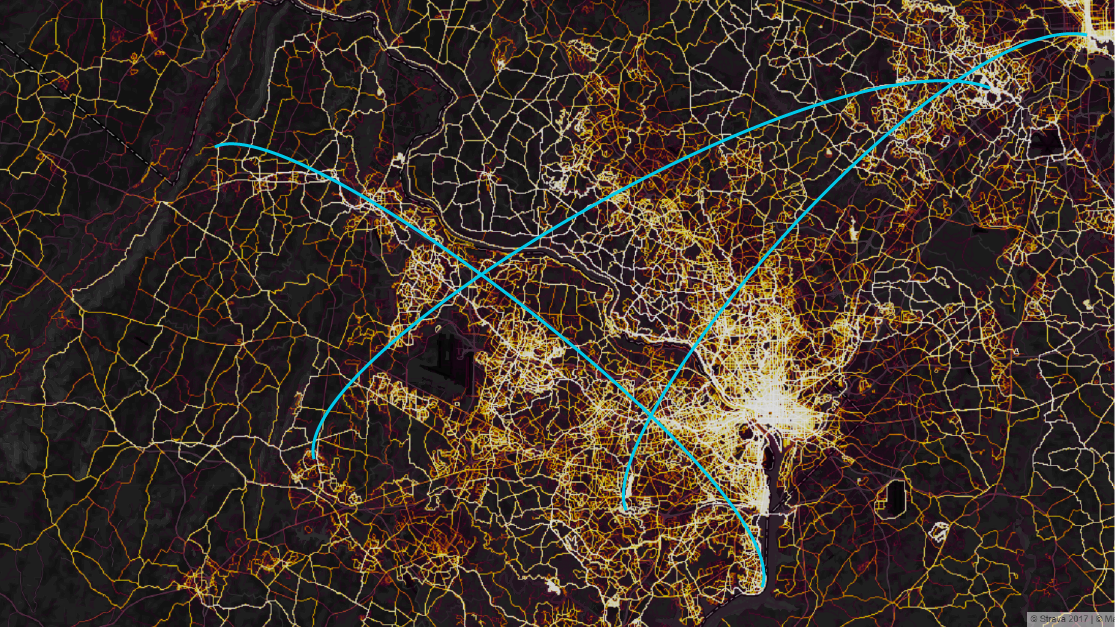
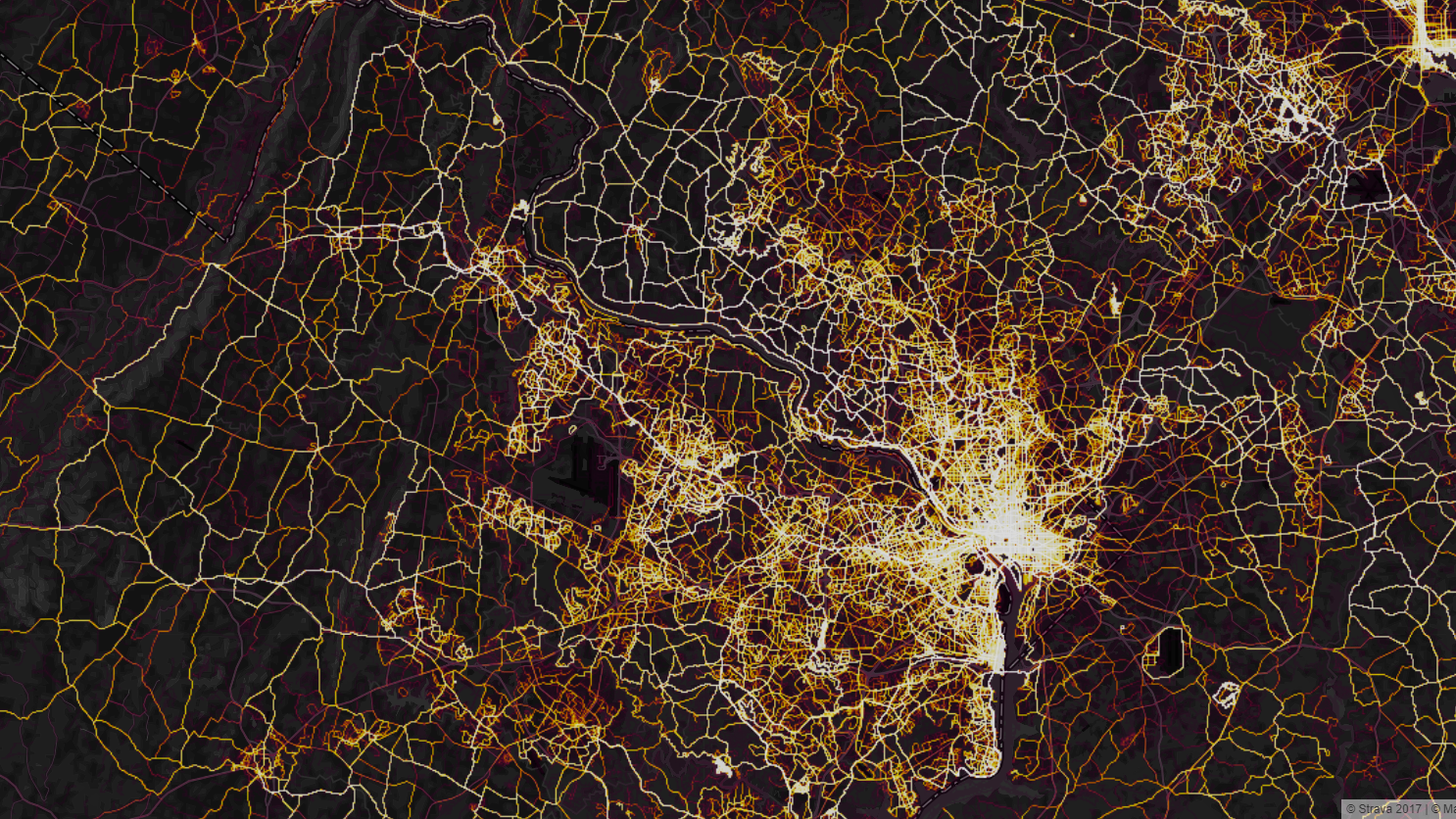
Thinking about the map. In cases where it is impossible to project cleanly down to 2 dimensions, like you could with this Strava heatmap:

Strava

Adding elements like ‘highways’ (wormholes?) connecting two distant points might make sense. In this way, the larger dimensions are preserved, and the unusual relationships are still visible. In the case of language vs semantics, this could show the connections of ‘Java’ as a computer language, beverage, and country:

StravaWormholes

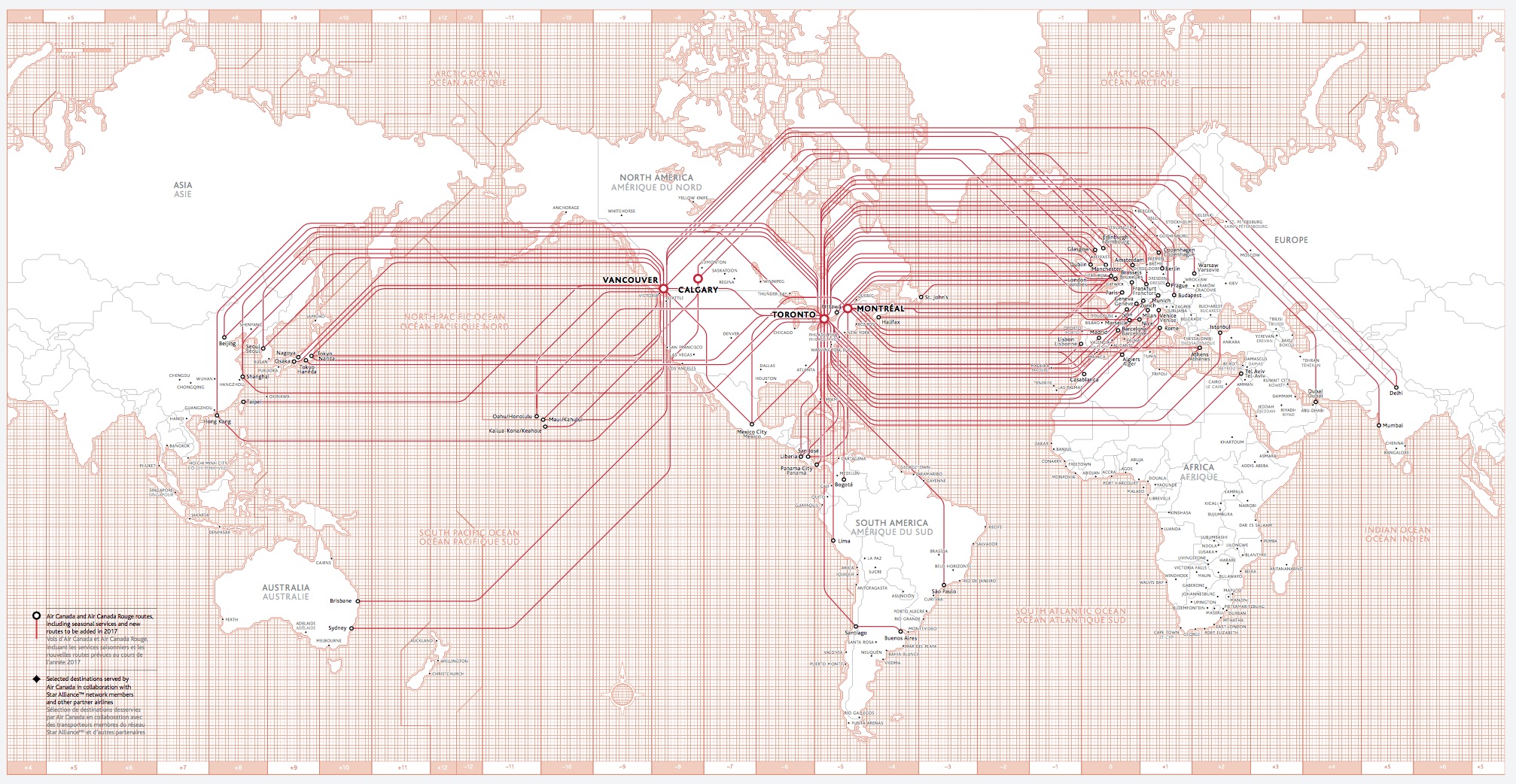
There are several ways of looking at these projections too. I would think that a map made entirely of long haul air routes would project differently than roads. It should be possible to ‘morph’ between these projections to explore the relationships.

air-canada-2-17-international-route-map

Cute thing:

dqeg3kcuqaamtt6

Phil 12/8/17

7:00 – 4:00 ASRC MKT

  • Theoretical Impediments to Machine Learning With Seven Sparks from the Causal Revolution
    • Judea Pearl 
    • Current machine learning systems operate, almost exclusively, in a statistical, or model-blind mode, which entails severe theoretical limits on their power and performance. Such systems cannot reason about interventions and retrospection and, therefore, cannot serve as the basis for strong AI. To achieve human level intelligence, learning machines need the guidance of a model of reality, similar to the ones used in causal inference. To demonstrate the essential role of such models, I will present a summary of seven tasks which are beyond reach of current machine learning systems and which have been accomplished using the tools of causal inference.
  • Talk with the first-ever robot politician on Facebook Messenger
  • Reddit network visualizations and a pass at a map (from 2014)
  • Continuing Schooling as a strategy for taxis in a noisy environment here
    • The models also suggest that there is a trade-off in strengthening tendencies to align with neighbours: strong alignment produces tight angular distributions, but increases the time needed to adjust course when the direction of the gradient changes. A reasonable balance seems to be achieved when individuals take roughly the same time to coalesce into a polarized group as they do to orient to the gradient in asocial taxis. (pp 518)
      • There is something about the relationship between explore and exploit in this statement that I really need to think about
  • Continuing white paper. Done with intro, background, and phase 1
  • Thinking about explore/exploit and how it’s not a good narrative. Everyone wants to be an explorer. So I’m trying to think of other framings: Nomad/Farmer?
  • More progress on the white paper. Split out just the LMN work (Phase 1&2). There will be a separate effort for mapping.

Phil 12.7.17

ASRC MKT 7:00 – 4:30

  • Association of moral values with vaccine hesitancy
  • Online extremism and the communities that sustain it: Detecting the ISIS supporting community on Twitter
  • Continuing Schooling as a strategy for taxis in a noisy environment here
  • Consensus and Cooperation in Networked Multi-Agent Systems
    • This paper provides a theoretical framework for analysis of consensus algorithms for multi-agent networked systems with an emphasis on the role of directed information flow, robustness to changes in network topology due to link/node failures, time-delays, and performance guarantees. An overview of basic concepts of information consensus in networks and methods of convergence and performance analysis for the algorithms are provided. Our analysis framework is based on tools from matrix theory, algebraic graph theory, and control theory. We discuss the connections between consensus problems in networked dynamic systems and diverse applications including synchronization of coupled oscillators, flocking, formation control, fast consensus in smallworld networks, Markov processes and gossip-based algorithms, load balancing in networks, rendezvous in space, distributed sensor fusion in sensor networks, and belief propagation. We establish direct connections between spectral and structural properties of complex networks and the speed of information diffusion of consensus algorithms. A brief introduction is provided on networked systems with nonlocal information flow that are considerably faster than distributed systems with lattice-type nearest neighbor interactions. Simulation results are presented that demonstrate the role of smallworld effects on the speed of consensus algorithms and cooperative control of multivehicle formations.
  • Found this in the citations of the above paper with terms “belief space flocking“: Spatial Coordination Games for Large-Scale Visualization
    • Dimensionality reduction (’visualization’) is a central problem in statistics. Several of the most popular solutions grew out of interaction metaphors (springs, boids, neurons, etc.) We show that the problem can be framed as a game of coordination and solved with standard game-theoretic concepts. Nodes that are close in a (high-dimensional) graph must coordinate in a (low-dimensional) screen position. We derive a game solution, a GPU-parallel implementation and report visualization experiments in several datasets. The solution is a very practical application of game-theory in an important problem, with fast and low-stress embeddings.
  • Lots of progress on the White Paper. Aaron wants to split out the WordRank work and the mapping work as two separate epochs. He thinks they may be easier to pitch than the phased approach
  • Some discussion on how explore/exploit is a bad metaphor due to the bad associations with exploit
  • Added a SIGINT use case
  • Discussed the ‘map weaving from trajectories’ concept

Phil 12.6.17

7:00 – 6:00 ASRC MKT

  • Best Free Alternative PDF Viewer to Adobe Reader
  • Downloaded Modeling Political Information Transmission as a Game of Telephone and gave it a skim. It  looks very much like this is an example of dimension reduction. To refine the idea, there need to be several conditions that lead to a stampeed
    • Dimension reduction and alignment need to occur across a population. It’s no good to have dimension reduction if everyone is pointing in a different direction.
    • The belief has to be ‘containing’ in some way. Either by social interaction (trust), or a lack of awareness of other ideas, it needs to be difficult to break out of.
      • This can be manipulated by external actors posing as trusted members of the group. Direction and level of uniformity can be influenced.
    • It has to be dynamic. A static belief provides the implicit ability to move away from it in any direction. A belief that is evolving fast enough maintains alignment by focusing the need for novelty (exploration?) in one direction.
  • Starting Schooling as a strategy for taxis in a noisy environment here
  • Demo
  • Chaining of matrices should be possible. Imaging an author/term matrix and a document/term matrix. Raising the weight of the author raises the weights on the associated terms. Those terms can be multiplied by the weights in the document term matrix which should result in a correct(?) re-weighting.
  • Chat with Shimei after picking up my gps
    • The Rat Park Experiment
    • Smoking and the bandit: A preliminary study of smoker and non-smoker differences in exploratory behavior measured with a multi-armed bandit task
      • Advantageous decision-making is an adaptive trade-off between exploring alternatives and exploiting the most rewarding option. This trade-off may be related to maladaptive decision-making associated with nicotine dependence; however, explore/exploit behavior has not been previously investigated in the context of addiction. The explore/exploit trade-off is captured by the multi-armed bandit task, in which different arms of a slot machine are chosen to discover the relative payoffs. The goal of this study was to preliminarily investigate whether smokers differ from non-smokers in their degree of exploratory behavior. Smokers (n = 18) and non-smokers (n = 17) completed a six-armed bandit task as well as self-report measures of behavior and personality traits. Smokers were found to exhibit less exploratory behavior (i.e. made fewer switches between slot machine arms) than non-smokers within the first 300 trials of the bandit task. The overall proportion of exploratory choices negatively correlated with self-reported measures of delay aversion and nonplanning impulsivity. These preliminary results suggest that smokers make fewer initial exploratory choices on the bandit task. The bandit task is a promising measure that could provide valuable insights into how nicotine use and dependence is associated with explore/exploit decision-making.

Phil 12.5.17

7:00 – 4:00 ASRC MKT

Phil 12.4.17

7:00 – ASRC MKT

3:00 – Campus

  • Fika
  • Meeting w/Wayne
    • Up to date. He was a bit worried that I might be going off the rails with the Neural Coupling work, but relaxed when I showed how it was being used to buttress the flocking model. And I have access to an fMRI, it seems…
    • Information Ecologies – The common rhetoric about technology falls into two extreme categories: uncritical acceptance or blanket rejection. Claiming a middle ground, Bonnie Nardi and Vicki O’Day call for responsible, informed engagement with technology in local settings, which they call information ecologies.An information ecology is a system of people, practices, technologies, and values in a local environment. Nardi and O’Day encourage the reader to become more aware of the ways people and technology are interrelated. They draw on their empirical research in offices, libraries, schools, and hospitals to show how people can engage their own values and commitments while using technology.
  • Bonus meeting with Shimei. Rambled through the following topics
    • Reinforcement learning with flocks and gradient descent
    • Flocking, herding and social engineering
    • Suspicious OS
    • She has a tall son 🙂

Phil 12.1.17

7:00 – 4:30 ASRC MKT

ZeynepWeb1-3

  • High-Resolution Image Synthesis and Semantic Manipulation with Conditional GANs. This shows NNs filling in slots in semantic maps (which are actually semantic mattes, and not to be confused with earlier self-organizing semantic maps). How is this with other, more linear processes like sound and narrative?
  • Continuing Alignment in social interactions here.
  • People flock in computer mediated environments: Spontaneous flocking in human groups
  • Schooling as a strategy for taxis in a noisy environment
    • Daniel Grunbaum
    • Abstract
      • A common strategy to overcome this problem is taxis, a behaviour in which an animal performs a biased random walk by changing direction more rapidly when local conditions are getting worse.
        • Consider voters switching from Bush->Obama->Trump
      • Such an animal spends more time moving in right directions than wrong ones, and eventually gets to a favourable area. Taxis is ineffcient, however, when environmental gradients are weak or overlain by `noisy’ small-scale fluctuations. In this paper, I show that schooling behaviour can improve the ability of animals performing taxis to climb gradients, even under conditions when asocial taxis would be ineffective. Schooling is a social behaviour incorporating tendencies to remain close to and align with fellow members of a group. It enhances taxis because the alignment tendency produces tight angular distributions within groups, and dampens the stochastic effects of individual sampling errors. As a result, more school members orient up-gradient than in the comparable asocial case. However, overly strong schooling behaviour makes the school slow in responding to changing gradient directions. This trade-off suggests an optimal level of schooling behaviour for given spatio-temporal scales of environmental variations.
        • This has implications for everything from human social interaction to ANN design.
    • Notes
      • Because limiting resources typically have `patchy’ distributions in which concentrations may vary by orders of magnitude, success or failure in finding favourable areas often has an enormous impact on growth rates and reproductive success. To locate resource concentrations, many aquatic organisms display tactic behaviours, in which they orient with respect to local variations in chemical stimuli or other environmental properties. (pp 503)
      • Here, I propose that schooling behaviours improve the tactic capabilities of school members, and enable them to climb faint and noisy gradients which they would otherwise be unable to follow. (pp 504)
      • Schooling is thought to result from two principal behavioural components: (1) tendencies to move towards neighbours when isolated, and away from them when too close, so that the group retains a characteristic level of compactness; and (2) tendencies to align orientation with those of neighbours, so that nearby animals have similar directions of travel and the group as a whole exhibits a directional polarity. (pp 504)
        • My models indicate that attraction isn’t required, as long as there is a distance-graded awareness. In other words, you align most strongly with those agents that are closest.
      • I focus in this paper on schooling in aquatic animals, and particularly on phytoplankton as a distributed resource. However, although I do not examine them specifically, the modelling approaches and the basic results apply more generally to other environmental properties (such as temperature), to other causes of population movement (such as migration) and to other socially aggregating species which form polarized groups (such as flocks, herds and swarms). (pp 504)
      • Under these circumstances, the search of a nektonic filter-feeder for large-scale concentrations of phytoplankton is analogous to the behaviour of a bacterium performing chemotaxis. The essence of the analogy is that, while higher animals have much more sophisticated sensory and cognitive capacities, the scale at which they sample their environment is too small to identify accurately the true gradient. (pp 505)
        • And, I would contend for determining optimal social interactions in large groups.
      • Bacteria using chemotaxis usually do not directly sense the direction of the gradient. Instead, they perform random walks in which they change direction more often or by a greater amount if conditions are deteriorating than if they are improving (Keller and Segel, 1971; Alt, 1980; Tranquillo, 1990). Thus, on average, individuals spend more time moving in favourable directions than in unfavourable ones. (pp 505)
      • A bacterial analogy has been applied to a variety of behaviours in more complex organisms, such as spatially varying di€usion rates due to foraging behaviours or food-handling in copepods and larval ®sh (Davis et al., 1991), migration patterns in tuna (Mullen, 1989) and restricted area searching in ladybugs (Kareiva and Odell, 1987) and seabirds (Veit et al., 1993, 1995). The analogy provides for these higher animals a quantitative prediction of distribution patterns and abilities to locate resources at large space and time scales, based on measurable characteristics of small-scale movements. (pp 505)
      • I do not consider more sophisticated (and possibly more effective) social tactic algorithms, in which explicit information about the environment at remote points is actively or passively transmitted between individuals, or in which individual algorithms (such as slowing down when in relatively high concentrations) cause the group to function as a single sensing unit (Kils, 1986, described in Pitcher and Parrish, 1993). (pp 506)
        • This is something that could be easily added to the model. There could be a multiplier for each data cell that acts as a velocity scalar of the flock. That should have significant effects! This could also be applied to gradient descent. The flock of Gradient Descent Agents (GDAs) could have a higher speed across the fitness landscape, but slow and change direction when a better value is found by one of the GDAs. It occurs to me that this would work with a step function, as long as the baseline of the flock is sufficiently broad.
      • When the noise predominates (d <= 1), the angular distribution of individuals is nearly uniform, and the up-gradient velocity is near zero. In a range of intermediate values of d(0.3 <= d <= 3), there is measurable but slow movement up-gradient. The question I will address in the next two sections is: Can individuals in this intermediate signal-to-noise range with slow gradient-climbing rates improve their tactic ability by adopting a social behaviour (i.e. schooling)? (pp 508)
      • The key attributes of these models are: (1) a decreasing probability of detection or responsiveness to neighbours at large separation distances; (2) a social response that includes some sort of switch from attractive to repulsive interactions with neighbours, mediated by either separation distance or local density of animals*; and (3) a tendency to align with neighbours (Inagaki et al., 1976; Matuda and Sannomiya, 1980, 1985; Aoki, 1982; Huth and Wissel, 1990, 1992; Warburton and Lazarus, 1991; Grunbaum, 1994). (pp 508)
        • Though not true of belief behavior (multiple individuals can share the same belief), for a Gradient Descent Agent (GDA), the idea of attraction/repulsion may be important.
      • If the number of neighbours is within an acceptable range, then the individual does not respond to them. On the other hand, if the number is outside that range, the individual turns by a small amount, Δθ3, to the left or right according to whether it has too many or too few of them and which side has more neighbours. In addition, at each time step, each individual randomly chooses one of its visible neighbours and turns by a small amount, Δθ4, towards that neighbour’s heading. (pp 508)
      • The results of simulations based on these rules show that schooling individuals, on average, move more directly in an up-gradient direction than asocial searchers with the same tactic parameters. Figure 4 shows the distribution of individuals in simulations of asocial and social taxis in a periodic domain (i.e. animals crossing the right boundary re-enter the left boundary, etc.). (pp 509)
      • Gradient Schooling
      • As predicted by Equation (5), asocial taxis results in a broad distribution of orientations, with a peak in the up-gradient (positive x-axis) direction but with a large fraction of individuals moving the wrong way at any given time (Fig. 5a,b). By comparison, schooling individuals tend to align with one another, forming a group with a tightened angular distribution. There is stochasticity in the average velocity of both asocial and social searchers (Fig. 5c). On average, however, schooling individuals move up-gradient faster and more directly than asocial ones. These simulation results demonstrate that it is theoretically possible to devise tactic search strategies utilizing social behaviours that are superior to asocial algorithms. That is, one of the advantages of schooling is that, potentially, it allows more successful search strategies under `noisy’ environmental conditions, where variations on the micro-scales at which animals sense their environment obscure the macro-scale gradients between ecologically favourable and unfavourable regions. (pp 510)
      • School-size effects must depend to some extent on the tactic and schooling algorithms, and the choices of parameters. However, underlying social taxis are the statistics of pooling outcomes of independent decisions, so the numerical dependence on school size may operate in a similar manner for many comparable behavioural schemes. For example, it seems reasonable to expect that, in many alternative schooling and tactic algorithms, decisions made collectively by less than 10 individuals would show some improvement over the asocial case but also retain much of the variability. Similarly, in most scenarios, group statistics probably vary only slowly with group size once it reaches sizes of 50-100. (pp 514)
      • when group size becomes large, the behaviour of model schools changes in character. With numerous individuals, stochasticity in the behaviour of each member has a relatively weaker effect on group motion. The behaviour of the group as a whole becomes more consistent and predictable, for longer time periods. (pp 514)
        • I think that this should be true in belief spaces as well. It may be difficult to track one person’s trajectory, but a group in aggregate, particularly a polarized group may be very detectable.
      • An example of group response to changing gradient direction shows that there can be a cost to strong alignment tendency. In this example, the gradient is initially pointed in the negative y-direction (Fig. 9). After an initial period of 5 time units, during which the gradient orients perpendicularly to the x-axis, the gradient reverts to the usual x-direction orientation. The school must then adjust to its new surroundings by shifting to climb the new gradient. This example shows that alignment works against course adjustment: the stronger the tendency to align, the slower is the group’s reorientation to the new gradient direction. This is apparently due to a non-linear interaction between alignment and taxis: asymmetries in the angular distribution during the transition create a net alignment flux away from the gradient direction. Thus, individuals that pay too much attention to neighbours, and allow alignment to overwhelm their tactic tendencies, may travel rapidly and persistently in the wrong direction. (pp 516)
        • So, if alignment (and velocity matching) are strong enough, the conditions for a stampede (group behavior with negative outcomes – in this case, less food) emerge
      • The models also suggest that there is a trade-off in strengthening tendencies to align with neighbours: strong alignment produces tight angular distributions, but increases the time needed to adjust course when the direction of the gradient changes. A reasonable balance seems to be achieved when individuals take roughly the same time to coalesce into a polarized group as they do to orient to the gradient in asocial taxis. (pp 518)
        • There is something about the relationship between explore and exploit in this statement that I really need to think about.
      • Social taxis is potentially effective in animals whose resources vary substantially over large length scales and for whom movements over these scales are possible. (pp 518)
        • Surviving as a social animal requires staying in the group. Since belief can cover wide ranges (e.g. religion), does there need to be a mechanism where individuals can harmonize their beliefs? From Social Norms and Other Minds The Evolutionary Roots of Higher Cognition :  Field research on primate societies in the wild and in captivity clearly shows that the capacity for (at least) implicit appreciation of permission, prohibition, and obligation social norms is directly related to survival rates and reproductive success. Without at least a rudimentary capacity to recognize and respond appropriately to these structures, remaining within a social group characterized by a dominance hierarchy would be all but impossible.
      • Interestingly, krill have been reported to school until a food patch has been discovered, whereupon they disperse to feed, consistent with a searching function for schooling. The apparent effectiveness of schooling as a strategy for taxis suggests that these schooling animals may be better able to climb obscure large-scale gradients than they would were they asocial. Interactive effects of taxis and sociality may affect the evolutionary value of larger groups both directly, by improving foraging ability with group size, and indirectly, by constraining alignment rates. (pp 518)
      • An example where sociality directly affects foraging strategy is forage area copying, in which unsuccessful fish move to the vicinity of neighbours that are observed to be foraging successfully (Pitcher et al., 1982; Ranta and Kaitala, 1991; Pitcher and Parrish, 1993). Pitcher and House (1987) interpreted area copying in goldfish as the result of a two-stage decision process: (1) a decision to stay put or move depending on whether feeding rate is high or low; and (2) a decision to join neighbours or not based upon whether or not further solitary searching is successful. Similar group dynamics have been observed in foraging seabirds (Porter and Seally, 1982; Haney et al., 1992).
      • Synchrokinesis depends upon the school having a relatively large spatial extent: part of a migrating school encounters an especially favourable or unfavourable area. The response of that section of the school is propagated throughout the school by alignment and grouping behaviours, with the result that the school as a whole is more effective at route-finding than isolated individuals. Forage area copying and synchrokinesis are distinct from social taxis in that an individual discovers and reacts to an environmental feature or resource, and fellow group members exploit that discovery. In social taxis, no individual need ever have greater knowledge about the environment than any other — social taxis is essentially bound up in the statistics of pooling the outcomes of many unreliable decisions. Synchrokinesis and social taxis are complementary mechanisms and may be expected to co-occur in migrating and gradient-climbing schools. (pp 519)
      • For example, in the comparisons of taxis among groups of various sizes, the most successful individuals were in the asocial simulation, even though as a fraction of the entire population they were vanishingly small. (pp 519)
        • Explorers have the highest payoff for the highest risks
  • Continuing white paper. Done with intro, background, and phase 1
  • Intel-powered AI Helps Fight Fraud