Monthly Archives: May 2017

Phil 5.10.17

7:00 – 8:00

  • Systematic exploration of unsupervised methods for mapping behavior
  • Thinking about the stories I can tell with the GP sim.
    • Start together with same settings.
    • Disconnect
    • Slide exploit to max
  • Need to download blog entries
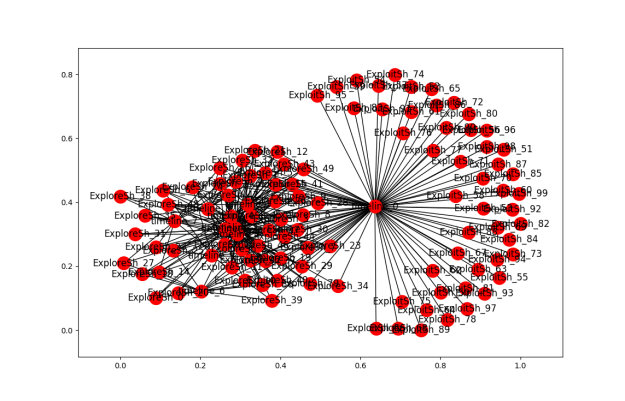
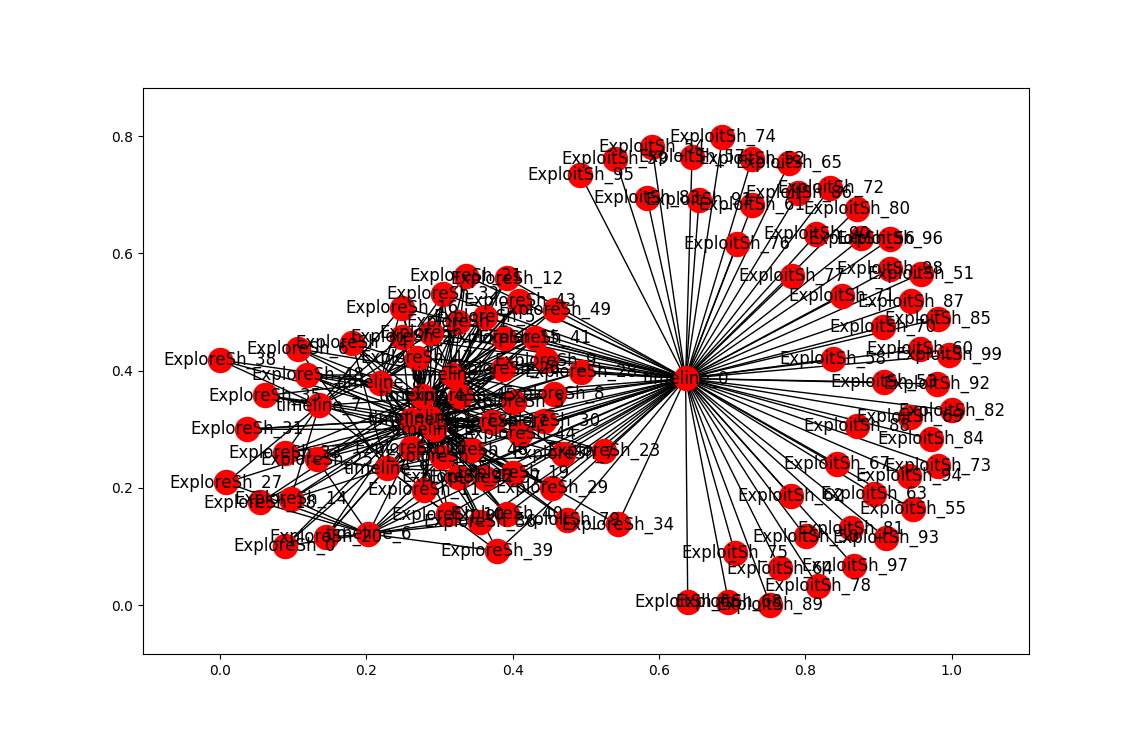
  • Working on graphing. Success!!!!! figure_1Now I need to discriminate agents from clusters, and exploit from explore. But this shows polarized vs. diverse clustering. I’m pretty sure I can get all kinds of statistics out of this too!
  • Better version. Ran all the permutations:
  • Explore_16_Exploit_32_04_14_17-08_38_48explore_1.6_exploit_3.2_ran 04_14_17-08_38_48. Green are clusters, Red are Exploit, Blue are Explore
  • Need to make the line width based on the time spent in the cluster, and the cluster size a function of its lifespan

9:00 – 5:00 BRC

  • Working on showing where the data broke. Looks like Talend
  • For future referrence, How to turn a dict of rows into a DataFrame and then how to access all the parts:
    import pandas as pd
    
    d1 = {'one':1.1, 'two':2.1, 'three':3.1}
    d2 = {'one':1.2, 'three':3.2}
    d3 = {'one':1.3, 'two':2.3, 'three':3.3}
    rows = {'row1':d1, 'row2':d2}
    rows['row3'] = d3
    df = pd.DataFrame(rows)
    df = df.transpose()
    print(df)
    
    for index, row in df.iterrows():
        print(index)
        for key, val in row.iteritems():
            print("{0}:{1}".format(key, val))
  • Helped Aaron with the writeups
  • And it turns out that all the work I did “could be done in an hour”. So back to clustering and AI work. If there is a problem with the data, I know that it works with the test data. Others can figure out where the problem is, since they can handle it so quickly.

Phil 5.9.17

7:00 – 8:00 Research

  • More clustering. Here’s the list of agents by clusters. An OPEN state means that the simulation finished with agents in the cluster. Num_entries is: the lifetime of the cluster. For these runs, the max is 200. Id is the ‘name’ of the cluster. Tomorrow, I’ll try to get this drawn using networkx.
    timeline[0]:
    Id = cluster_0
    State = ClusterState.OPEN
    Num entries = 200
    {'ExploitSh_52', 'ExploreSh_43', 'ExploitSh_56', 'ExploreSh_2', 'ExploreSh_5', 'ExploitSh_73', 'ExploitSh_95', 'ExploreSh_19', 'ExploreSh_4', 'ExploitSh_87', 'ExploitSh_76', 'ExploreSh_3', 'ExploitSh_93', 'ExploreSh_32', 'ExploreSh_41', 'ExploreSh_17', 'ExploitSh_88', 'ExploitSh_77', 'ExploreSh_39', 'ExploitSh_85', 'ExploreSh_40', 'ExploitSh_64', 'ExploreSh_34', 'ExploreSh_22', 'ExploitSh_99', 'ExploreSh_1', 'ExploitSh_97', 'ExploitSh_69', 'ExploreSh_29', 'ExploitSh_58', 'ExploitSh_62', 'ExploreSh_23', 'ExploreSh_36', 'ExploreSh_11', 'ExploitSh_80', 'ExploitSh_82', 'ExploreSh_21', 'ExploitSh_75', 'ExploitSh_72', 'ExploitSh_89', 'ExploitSh_86', 'ExploreSh_37', 'ExploitSh_84', 'ExploitSh_81', 'ExploreSh_15', 'ExploitSh_51', 'ExploreSh_44', 'ExploitSh_83', 'ExploitSh_94', 'ExploreSh_16', 'ExploitSh_53', 'ExploitSh_67', 'ExploitSh_74', 'ExploreSh_45', 'ExploreSh_26', 'ExploreSh_12', 'ExploreSh_13', 'ExploitSh_92', 'ExploreSh_9', 'ExploreSh_28', 'ExploitSh_50', 'ExploreSh_8', 'ExploreSh_30', 'ExploreSh_49', 'ExploitSh_59', 'ExploitSh_57', 'ExploreSh_42', 'ExploitSh_65', 'ExploitSh_54', 'ExploitSh_61', 'ExploitSh_66', 'ExploitSh_55', 'ExploitSh_78', 'ExploitSh_68', 'ExploitSh_79', 'ExploitSh_91', 'ExploitSh_71', 'ExploreSh_7', 'ExploitSh_98', 'ExploitSh_60', 'ExploitSh_70', 'ExploreSh_10', 'ExploitSh_90', 'ExploreSh_46', 'ExploitSh_96', 'ExploreSh_47', 'ExploitSh_63'}
    
    timeline[1]:
    Id = cluster_1
    State = ClusterState.OPEN
    Num entries = 200
    {'ExploreSh_25', 'ExploreSh_6', 'ExploreSh_38', 'ExploreSh_43', 'ExploreSh_49', 'ExploreSh_1', 'ExploreSh_2', 'ExploreSh_20', 'ExploreSh_33', 'ExploreSh_48', 'ExploreSh_5', 'ExploreSh_29', 'ExploreSh_15', 'ExploreSh_42', 'ExploreSh_24', 'ExploreSh_19', 'ExploreSh_4', 'ExploreSh_44', 'ExploreSh_16', 'ExploreSh_23', 'ExploreSh_36', 'ExploreSh_11', 'ExploreSh_3', 'ExploreSh_27', 'ExploreSh_35', 'ExploreSh_32', 'ExploreSh_17', 'ExploreSh_26', 'ExploreSh_21', 'ExploreSh_12', 'ExploreSh_18', 'ExploreSh_45', 'ExploreSh_41', 'ExploitSh_79', 'ExploreSh_13', 'ExploreSh_0', 'ExploreSh_39', 'ExploreSh_7', 'ExploreSh_9', 'ExploreSh_28', 'ExploreSh_40', 'ExploreSh_31', 'ExploreSh_10', 'ExploreSh_46', 'ExploreSh_37', 'ExploreSh_14', 'ExploreSh_47', 'ExploreSh_8', 'ExploreSh_30', 'ExploreSh_34', 'ExploreSh_22'}
    
    timeline[2]:
    Id = cluster_2
    State = ClusterState.CLOSED
    Num entries = 56
    {'ExploreSh_25', 'ExploreSh_1', 'ExploreSh_33', 'ExploreSh_29', 'ExploreSh_5', 'ExploreSh_48', 'ExploreSh_15', 'ExploreSh_19', 'ExploreSh_36', 'ExploreSh_3', 'ExploreSh_11', 'ExploreSh_35', 'ExploreSh_45', 'ExploreSh_17', 'ExploreSh_26', 'ExploreSh_41', 'ExploitSh_79', 'ExploreSh_13', 'ExploreSh_9', 'ExploreSh_40', 'ExploreSh_31', 'ExploreSh_37', 'ExploreSh_47', 'ExploreSh_30', 'ExploreSh_22'}
    
    timeline[3]:
    Id = cluster_3
    State = ClusterState.CLOSED
    Num entries = 16
    {'ExploreSh_25', 'ExploreSh_6', 'ExploreSh_43', 'ExploreSh_2', 'ExploreSh_48', 'ExploreSh_5', 'ExploreSh_15', 'ExploreSh_42', 'ExploreSh_24', 'ExploreSh_4', 'ExploreSh_44', 'ExploreSh_3', 'ExploreSh_26', 'ExploreSh_17', 'ExploreSh_41', 'ExploreSh_21', 'ExploreSh_32', 'ExploreSh_13', 'ExploreSh_9', 'ExploreSh_7', 'ExploreSh_28', 'ExploreSh_37', 'ExploreSh_8', 'ExploreSh_30', 'ExploreSh_49', 'ExploreSh_22'}
    
    timeline[4]:
    Id = cluster_4
    State = ClusterState.CLOSED
    Num entries = 30
    {'ExploreSh_6', 'ExploreSh_1', 'ExploreSh_2', 'ExploreSh_20', 'ExploreSh_33', 'ExploreSh_48', 'ExploreSh_15', 'ExploreSh_24', 'ExploreSh_4', 'ExploreSh_16', 'ExploreSh_23', 'ExploreSh_3', 'ExploreSh_11', 'ExploreSh_26', 'ExploreSh_41', 'ExploreSh_17', 'ExploreSh_32', 'ExploreSh_18', 'ExploreSh_13', 'ExploreSh_9', 'ExploreSh_46', 'ExploreSh_37', 'ExploreSh_8', 'ExploreSh_30', 'ExploreSh_49', 'ExploreSh_22'}
    
    timeline[5]:
    Id = cluster_5
    State = ClusterState.CLOSED
    Num entries = 28
    {'ExploreSh_25', 'ExploreSh_43', 'ExploreSh_2', 'ExploreSh_48', 'ExploreSh_29', 'ExploreSh_42', 'ExploreSh_24', 'ExploreSh_4', 'ExploreSh_44', 'ExploreSh_36', 'ExploreSh_35', 'ExploreSh_45', 'ExploreSh_17', 'ExploreSh_26', 'ExploreSh_12', 'ExploreSh_0', 'ExploreSh_28', 'ExploreSh_40', 'ExploreSh_31', 'ExploreSh_46', 'ExploreSh_37', 'ExploreSh_14', 'ExploreSh_47', 'ExploreSh_8', 'ExploreSh_30', 'ExploreSh_22'}
    
    timeline[6]:
    Id = cluster_6
    State = ClusterState.CLOSED
    Num entries = 10
    {'ExploreSh_40', 'ExploreSh_25', 'ExploreSh_18', 'ExploreSh_27', 'ExploreSh_10', 'ExploreSh_13', 'ExploreSh_20', 'ExploreSh_0', 'ExploreSh_37', 'ExploreSh_14', 'ExploreSh_36', 'ExploreSh_11', 'ExploreSh_39', 'ExploreSh_42', 'ExploreSh_22'}
    
    timeline[7]:
    Id = cluster_7
    State = ClusterState.CLOSED
    Num entries = 9
    {'ExploreSh_38', 'ExploreSh_2', 'ExploreSh_4', 'ExploreSh_46', 'ExploreSh_16', 'ExploreSh_33', 'ExploreSh_47', 'ExploreSh_14', 'ExploreSh_11', 'ExploreSh_27', 'ExploreSh_35', 'ExploreSh_45'}
    
    timeline[8]:
    Id = cluster_8
    State = ClusterState.CLOSED
    Num entries = 25
    {'ExploreSh_21', 'ExploreSh_38', 'ExploreSh_19', 'ExploreSh_2', 'ExploreSh_13', 'ExploreSh_44', 'ExploreSh_1', 'ExploreSh_10', 'ExploreSh_16', 'ExploreSh_47', 'ExploreSh_5', 'ExploreSh_48', 'ExploreSh_42', 'ExploreSh_35', 'ExploreSh_22', 'ExploreSh_32'}
    
    timeline[9]:
    Id = cluster_9
    State = ClusterState.OPEN
    Num entries = 16
    {'ExploreSh_17', 'ExploreSh_6', 'ExploreSh_24', 'ExploreSh_19', 'ExploreSh_10', 'ExploreSh_20', 'ExploreSh_46', 'ExploreSh_33', 'ExploreSh_14', 'ExploreSh_3', 'ExploreSh_39', 'ExploreSh_7', 'ExploreSh_45'}
  • Network Dynamics and Simulation Science Laboratory – need to go through publications and venues for these folks
  • Dynamic Spirals Put to Test: An Agent-Based Model of Reinforcing Spirals Between Selective Exposure, Interpersonal Networks, and Attitude Polarization
    • Within the context of partisan selective exposure and attitude polarization, this study investigates a mutually reinforcing spiral model, aiming to clarify mechanisms and boundary conditions that affect spiral processes—interpersonal agreement and disagreement, and the ebb and flow of message receptions. Utilizing agent-based modeling (ABM) simulations, the study formally models endogenous dynamics of cumulative processes and its reciprocal effect of media choice behavior over extended periods of time. Our results suggest that interpersonal discussion networks, in conjunction with election contexts, condition the reciprocal effect of selective media exposure and its attitudinal consequences. Methodologically, results also highlight the analytical utility of computational social science approaches in overcoming the limitations of typical experimental and observations studies.

8:30 – 5:30 BRC

Phil 5.8.17

7:00 – 8:00 Research

  • INTEL-SA-00075 vulnerability! Download and run Intel-SA-00075-GUI!
  • A good weekend off. Big, cathartic 88 mile ride on Sunday, and the Kinetic Sculpture race on Saturday
  • Working on the cluster visualization. Updating Intellij at home first
    • installed networkx
    • networkx_tutorial (Code from this post)is working
    • installed xlrd
    • membership_history_builder is working
    • Working on printing out the memberships, then I’ll start diagramming
  • Thinking about how to start Thursday. I think I’ll try reading in blogs to LMN and show differences between students. then bring up flocking, then go into the material

8:30 – 4:00 BRC

  • Analyzing data
  • Showed Aaron the results on the generated and actual data. He’s pretty happy
    • Column mismatches between January and current data
    • Present in Jan data, but not in May:
      • First Excel crash of the day
      • Got the column difference working. It’s pretty sweet, actually:
        df1_cols = set(df1.columns.values)
        df2_cols = set(df2.columns.values)
        
        diff_cols = df2_cols ^ df1_cols

        That’s it.

      • Generated a report on different columns. Tomorrow I need to build a reduced DataFrame that has only the common columns, sort both on column names and then iterate to find the level of similarity.
    • Something’s wrong with?
      calc_naive_fitness_landscape()

Phil 5.5.17

Research 7:00 – 8:00

  • Some interesting books:
    • Facing the Planetary: Entangled Humanism and the Politics of SwarmingConnolly focuses on the gap between those regions creating the most climate change and those suffering most from it. He addresses the creative potential of a “politics of swarming” by which people in different regions and social positions coalesce to reshape dominant priorities.
    • Medialogies: Reading Reality in the Age of Inflationary MediaThe book invites us to reconsider the way reality is constructed, and how truth, sovereignty, agency, and authority are understood from the everyday, philosophical, and political points of view.
    • At the Crossroads: Lessons and Challenges in Computational Social Science With tools borrowed from Statistical Physics and Complexity, this new area of study have already made important contributions, which in turn have fostered the development of novel theoretical foundations in Social Science and Economics, via mathematical approaches, agent-based modelling and numerical simulations. [free download!]
  • Finished Online clustering, fear and uncertainty in Egypt’s transition. Notes are here
  • The compass within Head direction cells have been hypothesized to form representations of an animal’s spatial orientation through internal network interactions. New data from mice show the predicted signatures of these internal dynamics. 
    • I wonder if these neurons are fired when information orientation changes?

8:30 – 3:00 BRC

  • Giving up on graph-tool since I can’t get it installed. Trying plotly next. Nope. Expensive and too html-y. Networkx for the win? Starting the tutorial
    • Well this is really cool: You might notice that nodes and edges are not specified as NetworkX objects. This leaves you free to use meaningful items as nodes and edges. The most common choices are numbers or strings, but a node can be any hashable object (except None), and an edge can be associated with any object x using G.add_edge(n1,n2,object=x).
    • Very nice. And with this, I am *done* for the week:
      import networkx as nx
      import matplotlib.pyplot as plt
      
      #  Create the graph
      G=nx.Graph(name="test", creator="Phil")
      
      #  Create the nodes. Can be anything but None
      G.add_node("foo")
      G.add_node("bar")
      G.add_node("baz")
      
      #  Link edges to nodes
      G.add_edge("foo", "bar")
      G.add_edge("foo", "baz")
      G.add_edge("bar", "baz")
      
      #  Draw
      #  Set the positions using a layout
      pos=nx.circular_layout(G) # positions for all nodes
      
      #  Draw the nodes, setting size transparancy and color explicitly
      nx.draw_networkx_nodes(G, pos,
                      nodelist=["foo", "bar"],
                      node_color='g',
                      node_size=300,
                      alpha=0.5)
      nx.draw_networkx_nodes(G, pos,
                      nodelist=["baz"],
                      node_color='b',
                      node_size=600,
                      alpha=0.5)
      
      #  Draw edges and labels using defaults
      nx.draw_networkx_edges(G,pos)
      nx.draw_networkx_labels(G,pos)
      
      #  Render to pyplot
      plt.show()
      
      print("G.graph = {0}".format(G.graph))
      print("G.number_of_nodes() = {0}".format(G.number_of_nodes()))
      print("G.number_of_edges() = {0}".format(G.number_of_edges()))
      print("G.adjacency_list() = {0}".format(G.adjacency_list()))
    • firstGraphDrawing
  • Short term goals
    • Show that it works in reasonable ways on our well characterized test data
    • See how much clustering changes from run to run
    • Compare differences between manifold learning techniques
    • Examine how it maps to the individual user data

Phil 5.4.17

Star wars day

7:00 – 8:00, 4:00 – 6:00 Research

  • Continuing Online clustering, fear and uncertainty in Egypt’s transition. Notes are here
  • Meeting with Wayne
    • Current trajectory is good
      • HCIC poster with clusters
      • What to do July+? Build ResearchBrowser. Anything else?
      • Also, try to put together a summary in the blog before each meeting
    • Add Wayne as coauthor if we get through the next gate
    • Got to talk about the future of work. My perspective is that machines will be able to meet all needs essentially for free, so we need to build an economy on a human value-add, like the Bugatti Veyron. The goal is to support the creation of items/experiences with a human value-add and an economy built around that.

8:30 – 3:30

  • Fixing all of the broken code on CI
  • Migrated all the machine-learning python code so everything matches
  • changed the algorithm from subdivision to naive
  • Working on CI
    t-SNE: 15 sec
    New best cluster: EPS = 0.1, Cluster size = 3.0
    clusters = 17
    Total  = 1179
    clustered = 1042
    unclustered = 137
    
    Algorithm naive took 17.68 seconds to execute and found 17.0 clusters
    
  • Fixed the cluster output so that it won’t save clusters that have impossible names

Phil 5.3.17

7:00 – 8:00 Research

8:30 – 6:30 BRC

  • Workshop on deep learning
  • I think I’ll have the time to work with network graphs based on the temporal coherence work using the libraries mentioned in this post
    • Looking through graph-tool‘s documentation
    • First, add all the vertices, which are all the clusters and all the agents:
      v1 = g.add_vertex()

      Then, connect each agent to its clusters:

      e = g.add_edge(v1, v2)

      Then draw:

      graph_draw(g, vertex_text=g.vertex_index,output_size=(200, 200), output="two-nodes.png")

      After that, there seem to be all kinds of analytics

    • Aaron didn’t got to the conference, so we worked on rolling in all the chnges. The reducers work fantastically well, though there is a pile of testing that needs to be done.
    • And I learned that to get a row out of n numpy matrix, you do mat[row], rather than mat[row:]
    • Pretty pictures for the isomap run

Phil 5.2.17

7:00 – 8:00 Research

8:30 – 2:30 BRC

  • Got the reducers in, now I need to colorize the original df for display. Done. The results aren’t great though. Below are results for isomap:

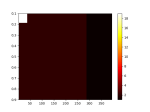
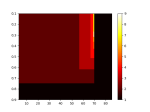
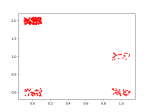
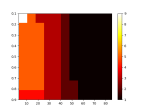
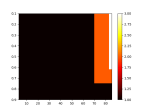
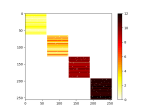
    The images show

    • The XY positions of the reduced data. I’ve added a bit of jitter so it’s possible to see all the points. They should be pretty evenly distributed, but as you can see, the lower right has a much greater population.
    • This is backed up by the color mapped images of the original clusters, were the majority of the rows are black, and the other values are all in the bottom-right square
    • The 3D fitness landscape made via subsurface shown in 3D
    • and in 2D
  • A roughly similar run (and yes, they vary a lot!) is shown with a brute-force (naive)surfacer. Actually, it may makes sense to use the naive surfacer on the reduced data since it’s so much faster:

Phil 5.1.17

7:00 – 8:00, 3:00 – 4:00 Research

  • Rita Allen Foundation – June 30 deadline for proposals
  • On the power of maps: Electoral map spurred Trump’s NAFTA change of heart
  • The Neural Basis of Map Comprehension and Spatial Abilities
  • Neurobiological bases of reading comprehension: Insights from neuroimaging studies of word level and text level processing in skilled and impaired readers
  • Reading Online clustering, fear and uncertainty in Egypt’s transition
    • Marc Lynch (webpage),
    • Deen Freelon (webpage) associate professor in the School of Communication at American University in Washington, DC. My primary research interests lie in the changing relationships between technology and politics, and encompass the study of weblogs, online forums, social media, and other forms of interactive media with political applications. Collecting and analyzing large amounts of such data (i.e. millions of tweets, Facebook wall posts, etc.) require methods drawn from the fields of computer science and information science, which I am helping to adapt to the long-standing interests of political communication research.
    • Sean Aday (From GWU) focuses on the intersection of the press, politics, and public opinion, especially in relation to war and foreign policy. He has published widely on subjects ranging from the effects of watching local television news to coverage of Elizabeth Dole’s presidential run to media coverage of the wars in Iraq and Afghanistan.Before entering academia, Dr. Aday served as a general assignment reporter for the Kansas City Star in Kansas City, MO; the Milwaukee Journal in Milwaukee, WI; and the Greenville News in Greenville, SC. He graduated from the Medill School of Journalism at Northwestern University in 1990.
    • …research has demonstrated the role played by social media in overcoming the transaction costs associated with organizing collective action against authoritarian regimes, in temporarily empowering activists against state violence, in transmitting images and ideas to the international media, and in intensifying the dynamics of social mobilization.
      • There is some kind of relationship between frictionlessness and credibility. Disbelief is a form of friction that needs to be overcome.
    • We argue that social media tends to exacerbate and intensify those factors which make failure more likely than in comparable cases which did not feature high levels of social media usage. Social media promotes the clustering of individuals into communities of the likeminded, and that these clusters have distinctly damaging implications during uncertain transitions.
      • I would add “as designed”, but uncertainty sets up an entirely different dynamic, which I doubt the designers took into account.
    • Users within these clusters tend to be exposed primarily to identity-confirming and enemy-denying information and rhetoric, which encourages the consolidation of in-group solidarity and out-group demonization. The speed, intensity, and intimacy of social media tends to exacerbate polarization during moments of crisis, and then to entrench very different narratives about those events in the aftermath.

8:30 – 2:30 BRC

  • Aaron’s and Bob’s grandmother’s passed away on Saturday. Aside from the important stuff which I can’t do anything about, there is the urgent issue about how to deal with the sprint impacts
  • HIPAA training!
  • Which machine learning algorithm should I usemachine-learning-cheet-sheet
  • Social media data collection tools
  • I got blindsided by reference rather than value. I built a dictionary that contained all the information about an attempt, but it was saving the references, which meant all the entries were the same, so no performance data! So, to ‘update’ an array in a way that maintains a reference to the old data, you need to do it like this:
    min_max_c = [min_max_c[MIN], mid_c]
  • And we get some nice pictures. The fit is better too:

    Results!

    256x256
    Algorithm subdivision took 3.12 seconds to execute and found 9.0 clusters
    Algorithm naive took 7.00seconds to execute and found 8.0 clusters
    
    512x512
    Algorithm subdivision took 12.17seconds to execute and found 16.0 clusters
    Algorithm naive took 30.15 seconds to execute and found 13.0 clusters
  • Starting to fold in Aaron’s code
    if args.reducer:
        lm = ManifoldLearning()
        if args.reducer == 'lle':
            mat = lm.lle(df.as_matrix())
        elif args.reducer == 'isomap':
            mat = lm.isomap(df.as_matrix())
        elif args.reducer == 'mds':
            mat = lm.mds(df.as_matrix())
        elif args.reducer == 'spectral':
            mat = lm.spectral_embedding(df.as_matrix())
        elif args.reducer == 'tsne':
            mat = lm.tsne(df.as_matrix())
        df = pd.DataFrame(mat, index=df.index.values, columns=['X', 'Y']) #  Assume 2D???
  • Fika Ali’s presentation
    • What is O&M training?
    • Move the mechanism up front? I was wondering what the device was
    • Paraphrasing scenarios is ok
    • Example of finding? A specific error with a response and how it was coded?
    • ‘Perpetuating stigma’ text too far indented
    • Designers Should Also?
    • slide 25 are critical should be is critical
    • Same error should be some error
    • Overall
      • It’s a lot of words. More pictures?
      • The icon works, but maybe is a little confusing
      • Helena – don’t we already know this? THe contextual issues is de-emphasized
      • William, what does the literature say on adoption? Add a brief overview of previous work. Particularly in public places? The contribution is context.
      • Stacy lean heavily on facial recognition literature. THis can show why accuracy may b overweighted.
      • Amy – focus on the bigger points. Do the hook first. Scenarios that would make things obvious. Walking into the wrong bathroom.
      • Phil – figuring out context is hard! How do you do that?
      • Amy – too heavy on process, and not enough on motivations. Lean on the quotes, they tell a better story. Fewer than 5 slides are motivations. Add an outline so they know what’s coming up. So people can know howm much time to devote to emails
      • Helena ‘You can read the details in the paper’
      • Stacy – I want to hear be excited about your talk
      • Amy, Stacy – make a recording to listen to. Pay attention to pacing, pauses, etc.