
7:00 – 8:00 Research
- Still working on building a population map. I downloaded the population density from here, and a python library for looking at GeoTiff files (georasters). And the Wilbur terrain generator
- I think I’ll have the time to work with network graphs based on the temporal coherence work using the libraries mentioned in this post
- Continuing Online clustering, fear and uncertainty in Egypt’s transition. Notes are here
- Homophilic Clustering by Locally Asymmetric Geometry
- Social Identity Theory – provides grounding for antibelief and other flocking characteristics
- Interactive Narrative: An Intelligent Systems Approach

8:30 – 6:30 BRC
- Workshop on deep learning
- I think I’ll have the time to work with network graphs based on the temporal coherence work using the libraries mentioned in this post
- Looking through graph-tool‘s documentation
- First, add all the vertices, which are all the clusters and all the agents:
v1 = g.add_vertex()
Then, connect each agent to its clusters:
e = g.add_edge(v1, v2)
Then draw:
graph_draw(g, vertex_text=g.vertex_index,output_size=(200, 200), output="two-nodes.png")
After that, there seem to be all kinds of analytics
- Aaron didn’t got to the conference, so we worked on rolling in all the chnges. The reducers work fantastically well, though there is a pile of testing that needs to be done.
- And I learned that to get a row out of n numpy matrix, you do mat[row], rather than mat[row:]
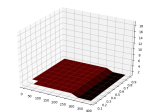
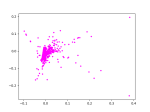
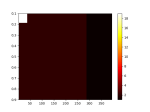
- Pretty pictures for the isomap run
-
 viztales