Still can’t find a place to fix the door. I may take the panel off and see if I can just replace/fix the cable
Looks like deepfakes are about to get a whole lot better:
SBIRs
10:30 BD discussion on what to do next with WHAI and NNM – done. Need to send some emails. Iain first
1:30 CwoC meeting
4:30 S3I prep call. Done in 30 minutes!
Training – finished cyber
GPT Agents
Got to a good point of the article. Will wait until after Thursday’s meeting before doing anything else. Need to read Jimmy’s and Shimei’s part first, though
Still trying to get the door serviced. Other Ram dealers in the area:
SBIRs
Finished most BD things that I can do before I get some decision on what to do next. Schedule a meeting? Sent out the contents as an email attachment. Scheduled meeting for 10:30 Wednesday.
9:00 Data Science standup
2:30 AI Ethics
3:45 L3Harris Prep – done
4:00 L3Harris meeting
GPT Agents
Work on the Soft Totalitarianism section and add cites – good progress!
Trying to get the door repair scheduled. The dealer is only accepting drop offs with a multi-week wait. Much harder than it should be. Jim Donnie’s suggested K&L
SBIRs
Working on getting all the BD pieces together for the NNM/WH-AI. Added the main documents to the appendix, and am working on an inquiry email. Really gotta wonder why we employ all these capture managers.
Wrote two preliminary inquiry emails
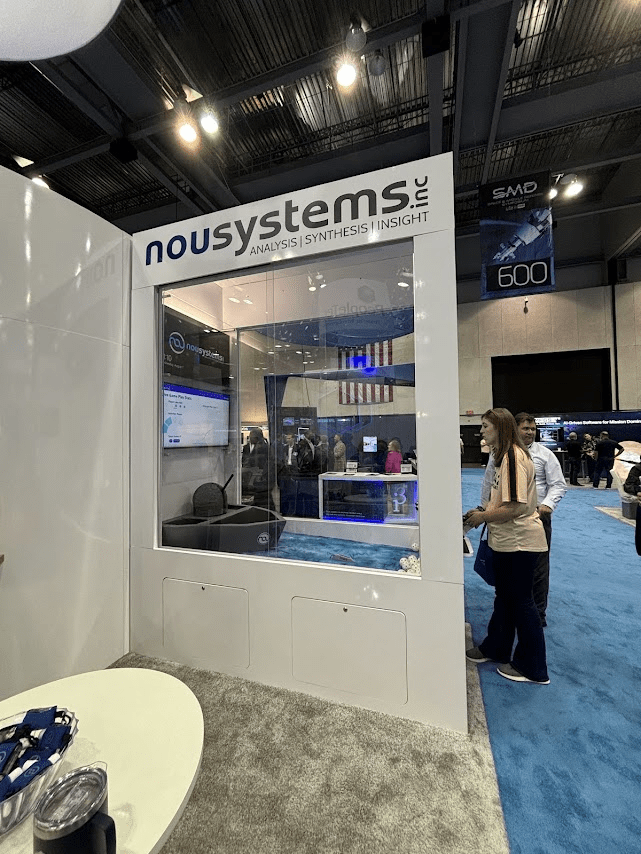
Had some fun thinking about a better trade show booth.
GPT Agents
Edit and add the Soft Totalitarianism section. Then get back to adding citations
Trawled the swamp and found some good NSF and Army possibilities from grants.gov. You can export the results as a csv file and search through those, either by link (which can be wrong) or by googling project name, which works. Found some very good opportunities for NNMs, and some others for White Hat AI. The earliest opportunity closes Sept 30, which is enough time to write a reasonable proposal. Nothing specifically about spearphishing, which is kind of interesting. That seems to be acceptable in some way.
9:00 Standup. Will have to leave early
2:00 Thunderbolt meeting
4:30 Book club
GPT Agents
No meeting today, Jimmy’s at a wedding. Add more content?
“These bad guys, this is what they do for a living,” Murray said. They might send out tens of thousands of queries and get only one response, but that response could net them $10,000 from an unwitting victim. “Ten thousand dollars in one day for having one hit with one victim, that’s a pretty good return on investment,” she said. “That’s what motivates them.”
Maybe three buttons for the popup?- Avoid, disregard, this is an error?
Adjustment knobs for target user – also notification settings for guardians (parents, adult children, etc.)
Private User database of issued warnings, so that users don’t see the same “introductory” warning. This DB could also have sender information
Some other kind of warning if the user is repeatedly interacting with the sender of manipulative email, particularly if it matches one of the scam patterns.
Spaced repetition of older warnings
Public database of manipulative posts, if warnings were disregarded or heeded. This can feed back to the the Chrome extension as well in case there are multiple adjacent embeddings that are, for example, increasing in a viral way.
A UMAP display of the embedding space that lets users navigate and understand what’s going on. Areas of high activity should be indicated. Clicking on a point or dragging across an area should provides specific and/or summary information
Nope, strike that. Everything has to have a potential target before it gets worked on. So I’ve gone from belief space maps to white hat AI PoC to looking through SBIRs and BAAs. Ah, well, only 132 working days until 15 February 2025.
Put together a good size list of people to reach out to. Still need to trawl the BAA/SBIR swamp
GPT Agents
Read what I wrote yesterday. Look for sources. I’m particularly interested if there is anything on the creation of guardrails. There might be a perspective here that comes from labor relations, like having to buy GMO seeds rather than being able to re-plant based on the harvest? Extracting maximum value while providing minimum utility. Also worth re-reading the Stochastic Parrots paper and look for interesting papers that cite it. It strikes me that the whole idea of “public” GenAI may also reference the “right to repair” movement, and Robin Berjon’s The Public Interest Internet.
12:00 Steve’s brownbag – Could have been 20 minutes
Wrote up a proposal for White Hat AI that will “be the D2A of NNM.” Which is ok, I guess. Otherwise progress is going to be imperceptible. And Aaron has a good point in that no one knows the difference between topic embedding space and narrative space. Which is annoying, but makes it easier to make visible progress
Pick up Stacey’s car and get the van if it’s not too wet
SBIRs
Scan cards
Expense report
Put together slides for sprint demo
USNA interns final presentation
Conference debrief to Orest
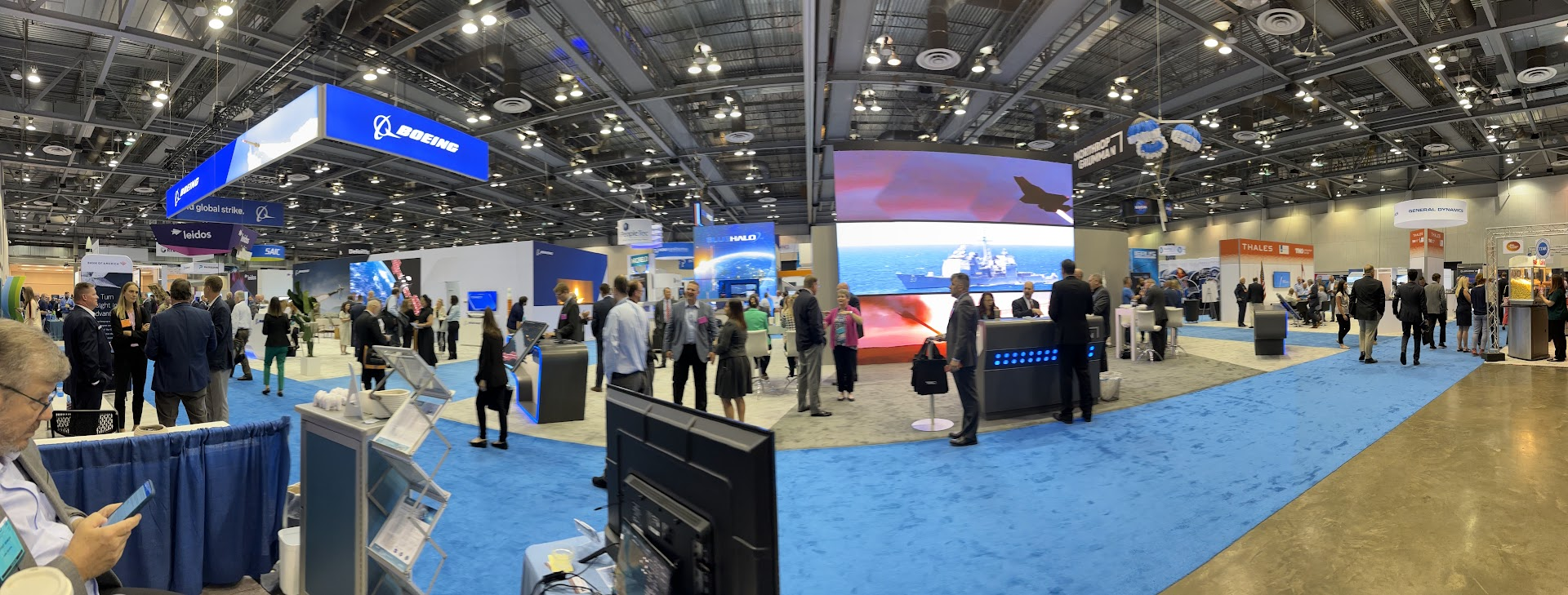
The conference was almost exclusively props and videos. No one could really show anything unless you were a manufacturer (“look at this beautiful planetary gear!”)
The golf idea was universally well received, and there was one other booth with an interceptor game. I just don’t think it went far enough, and was too easy to defeat
We need videos that work with no audio. Also the lighting on Aaron makes his head distractingly shiny.
The booths that had demos had more people as a rule (Blue Halo and Axient were the only ones I saw)
A monitor in the conference-facing desk would be better than one on the desk
Chairs need to work on deeply-padded tradeshow carpets. The dis-based chairs we had wobbled. A lot.
Sequentially numbered/barcoded batches of bears that when scanned link to ASRC branded polar bear cams (or even better an updated curated feed)
Anointed with Oil places religion and oil at the center of American history. As prize-winning historian Darren Dochuk reveals, from the earliest discovery of oil in America during the Civil War, citizens saw oil as the nation’s special blessing and its peculiar burden, the source of its prophetic mission in the world. Over the century that followed and down to the present day, the oil industry’s leaders and its ordinary workers together fundamentally transformed American religion, business, and politics — boosting America’s ascent as the preeminent global power, giving shape to modern evangelical Christianity, fueling the rise of the Republican Right, and setting the terms for today’s political and environmental debates.
Finishing the conference and heading home:
GPT Agents
Finished one more paper review and started the fourth one. Pretty good so far!
Jimmy put in a big chunk of writing on the Consumer-First Approach to AI paper!
Despite their nearly universal adoption for large language models, the internal workings of transformers are not well understood. We aim to better understand the impact of removing or reorganizing information throughout the layers of a pretrained transformer. Such an understanding could both yield better usage of existing models as well as to make architectural improvements to produce new variants. We present a series of empirical studies on frozen models that show that the lower and final layers of pretrained transformers differ from middle layers, but that middle layers have a surprising amount of uniformity. We further show that some classes of problems have robustness to skipping layers, running the layers in an order different from how they were trained, or running the layers in parallel. Our observations suggest that even frozen pretrained models may gracefully trade accuracy for latency by skipping layers or running layers in parallel.
SBIRs
At a dumb conference and trade show that I just don’t need to be at.
Mis- and disinformation pose substantial societal challenges, and have thus become the focus of a substantive field of research. However, the field of misinformation research has recently come under scrutiny on two fronts. First, a political response has emerged, claiming that misinformation research aims to censor conservative voices. Second, some scholars have questioned the utility of misinformation research altogether, arguing that misinformation is not sufficiently identifiable or widespread to warrant much concern or action. Here, we rebut these claims. We contend that the spread of misinformation—and in particular willful disinformation—is demonstrably harmful to public health, evidence-informed policymaking, and democratic processes. We also show that disinformation and outright lies can often be identified and differ from good-faith political contestation. We conclude by showing how misinformation and disinformation can be at least partially mitigated using a variety of empirically validated, rights-preserving methods that do not involve censorship.
Really interesting discussion with Aaron on CI Agents. It might be possible for token trajectories to maintain their “identity” by looking at the distance between a set of agent responses, and selecting those that have the greatest distance.
Got some good NNM work done yesterday. I’m almost ready to generate ring buffer text along with activations by token at each layer of the model. And in case I haven’t really mentioned it anywhere else, I think training ring-buffer GPT-2 (or bigger, local models that can quickly be finetuned. You need to be able to access the layers) models via finetuning from a big model with extensive prompt tuning might be a very good way to create local maps.
9:00 standup
Lunchtime ride in this gap!
11:00 M30
2:00 Conference prep
2:30 Hall research
4:30 Book club
GPT Agents
Finish TiiS review – done!
ICTAI – Downloaded papers. Deadline is August 18, so that’s a bit over 3 days per paper
This paper explores the potential of open source models to match or even surpass proprietary models in the future. The dialogue reflects a broader debate on the implications of open sourcing AI, weighing the benefits of democratization against the risks of misuse.
Allow me to open with a wildly speculative question: What if the internet were public interest technology? I mean “internet” the way most people understand it, which is to say our whole digital sphere, and by “public interest” I don’t mean tinkering at the margins to reduce harm from some bad actors or painting some glossy ethics principles atop a pile of exploitative rent-seeking — I mean through and through, warts and all, an internet that works in support of a credible, pragmatic definition of the common good.1
Back to setting up the NNM project codebase. Here’s what I was planning before getting pulled off:
First, a program that reads in a config file and generates a file of activations for each layer. This will be a fixed size ring buffer of tokens so that the number of vectors for each layer is fixed for the “evolution”
Then code that reads the same config file to produce a set of UMAP files, again one for each layer.
Last, the visualization code using Plotly. It either reads the same config or the user can navigate to it. Management of all the files (12 layers of embeddings, 12 layers of UMAP) will be managed by extension. Might want to set up folders though.


 viztales
You must be logged in to post a comment.