Category Archives: Lit Review

Phil 3.8.18

7:00 – 5:00 ASRC

  • Another nice comment from Joanna Bryson on BBC Business Daily – The bias is seldom in the algorithm. Latent Semantic Indexing is simple arithmetic. The data contains the bias, and that’s from us. Fairness is a negotiated concept, which means that is is complicated. Requiring algorithmic fairness necessitates placing enormous power in the hands of those writing the algorithms.
  • The science of fake news (Science magazine)
    • The rise of fake news highlights the erosion of long-standing institutional bulwarks against misinformation in the internet age. Concern over the problem is global. However, much remains unknown regarding the vulnerabilities of individuals, institutions, and society to manipulations by malicious actors. A new system of safeguards is needed. Below, we discuss extant social and computer science research regarding belief in fake news and the mechanisms by which it spreads. Fake news has a long history, but we focus on unanswered scientific questions raised by the proliferation of its most recent, politically oriented incarnation. Beyond selected references in the text, suggested further reading can be found in the supplementary materials.
  • Incorporating Sy’s comments into a new slide deck
  • More ONR
  • Meeting with Shimei
    • Definitely use the ONR-specified headings
    • Research is looking good and interesting! Had to spend quite a while explaining lexical trajectories.
  • Ran through the slides with Sy again. Mostly finalized?
Phil 3.6.18

7:00 – 4:00 ASRC MKT

  • Endless tweaking of the presentation
    • Pinged Sy – Looks like something on Wednesday. Yep his place around 1:30
  • More BIC
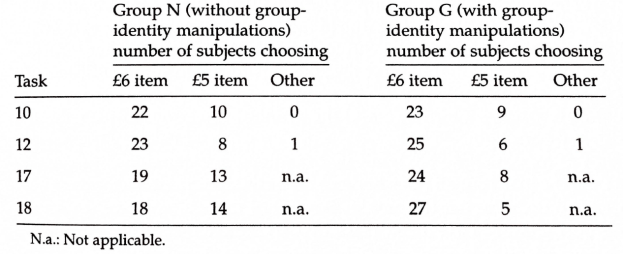
    • The explanatory potential of team reasoning is not confined to pure coordination games like Hi-Lo. Team reasoning is assuredly important for its role in explaining the mystery facts about Hi-Lo; but I think we have stumbled on something bigger than a new theory of behaviour in pure coordination games. The key to endogenous group identification is not identity of interest but common interest giving rise to strong interdependence. There is common interest in Stag Hunts, Battles of the Sexes, bargaining games and even Prisoner’s Dilemmas. Indeed, in any interaction modelable as a ‘mixed motive’ game there is an element of common interest. Moreover, in most of the landmark cases, including the Prisoner’s Dilemma, the common interest is of the kind that creates strong interdependence, and so on the account of chapter 2 creates pressure for group identification. And given group identification, we should expect team reasoning. (pg 144)
    • There is a second evolutionary argument in favour of the spontaneous team-reasoning hypothesis. Suppose there are two alternative mental mechanisms that, given common interest, would lead humans to act to further that interest. Other things being equal, the cognitively cheapest reliable mechanism will be favoured by selection. As Sober and Wilson (1998) put it, mechanisms will be selected that score well on availability, reliability and energy efficiency. Team reasoning meets these criteria; more exactly, it does better on them than the alternative heuristics suggested in the game theory and psychology literature for the efficient solution of common-interest games. (pg 146)
    • BIC_pg 149 (pg 149)
  • Educational resources from machine learning experts at Google
    • We’re working to make AI accessible by providing lessons, tutorials and hands-on exercises for people at all experience levels. Filter the resources below to start learning, building and problem-solving.
  • A Structured Response to Misinformation: Defining and Annotating Credibility Indicators in News Articles
    • The proliferation of misinformation in online news and its amplification by platforms are a growing concern, leading to numerous efforts to improve the detection of and response to misinformation. Given the variety of approaches, collective agreement on the indicators that signify credible content could allow for greater collaboration and data-sharing across initiatives. In this paper, we present an initial set of indicators for article credibility defined by a diverse coalition of experts. These indicators originate from both within an article’s text as well as from external sources or article metadata. As a proof-of-concept, we present a dataset of 40 articles of varying credibility annotated with our indicators by 6 trained annotators using specialized platforms. We discuss future steps including expanding annotation, broadening the set of indicators, and considering their use by platforms and the public, towards the development of interoperable standards for content credibility.
    • Slide deck for above
  • Sprint review
    • Presented on Talk, CI2018 paper, JuryRoom, and ONR proposal.
  • ONR proposal
    • Send annotated copy to Wayne, along with the current draft. Basic question is “is this how it should look? Done
    • Ask folks at school for format help?

Phil 3.5.18

7:00 – 6:00 ASRC MKT

    • Dead Reckoning: Navigating Content Moderation After “Fake News”
      • Authors Robyn Caplan, Lauren Hanson, and Joan Donovan analyze nascent solutions recently proposed by platform corporations, governments, news media industry coalitions, and civil society organizations. Then, the authors explicate potential approaches to containing “fake news” including trust and verification,disrupting economic incentivesde-prioritizing content and banning accounts, as well as limited regulatory approaches.
    • ‘The world is best experienced at 18 mph’. The psychological wellbeing effects of cycling in the countryside: an Interpretative Phenomenological Analysis
      • Green Exercise (GE) refers to physical activity conducted whilst simultaneously engaging the natural environment. A substantial body of literature has now been accumulated that establishes that carrying out exercise in this way has significantly greater psychological wellbeing benefits than the non-GE equivalent. Hitherto, seldom has consideration been given to the individual meanings that doing GE has. This study, therefore, sought to understand the lived experience of the phenomenon amongst a group of serious male recreational road bicyclists aged between mid-30s and early 50s who routinely rode in the countryside. Eleven bicyclists participated in semi-structured interviews. Data were analysed using Interpretative Phenomenological Analysis. This revealed themes of mastery and uncomplicated joys; my place to escape and rejuvenate; and alone but connected. Findings indicate that green-cycling served to enhance the participants’ sense of wellbeing and in doing so helped them cope with the mental challenges associated with their lives. It is suggested that green-cycling merges the essential qualities of natural surroundings – including its aesthetic, feelings of calm and a chance for exploration – with the potential for physical challenge and, facilitated by modern technology, opportunities for prosocial behaviours. It also identifies how green-cycling may influence self-determined behaviours towards exercise regulation, suggesting more satisfying and enduring exercise experiences.
      • Exhibit A: OLYMPUS DIGITAL CAMERA
    • More BIC. I think MB is getting at the theory for why there is explore/exploit in populations
      • We have progressed towards a plausible explanation of the behavioural fact about Hi-Lo. It is explicable as an outcome of group identification by the players, because this is likely to produce a way of reasoning, team reasoning, that at once yields A. Team reasoning satisfies the conditions for the mode-P reasoning that we concluded in chapter 1 must be operative if people are ever to reason their way to A. It avoids magical thinking. It takes the profile-selection problem by the scruff of the neck. What explains its onset is an agency transformation in the mind of the player; this agency transformation leads naturally to profile-based reasoning and is a natural consequence of self-identification with the player group. (pg 142)
      • Hi-Lo induces group identification. A bit more fully: the circumstances of Hi-Lo cause each player to tend to group-identify as a member of the group G whose membership is the player-set and whose goal is the shared payoff. (pg 142)
      • If what induces A-choices is a piece of reasoning which is part of our mental constitution, we are likely to have the impression that choosing A is obviously right. Moreover, if the piece of reasoning does not involve a belief that the coplayer is bounded, we will feel that choosing A is obviously right against a player as intelligent as ourselves; that is, our intuitions will be an instance of the judgemental fact. I suspect, too, that if the reasoning schema we use is valid, rather than involving falacy, our intuitions of reality are likely to be more robust. Later I shall argue that team reasoning is indeed nonfallacious. (pg 143)
        • I think this is more than “as intelligent as ourselves”, I think this is a position/orientation/velocity case. I find it compelling that people with different POVs regard each other as ‘stupid’
      • When framing tendencies are culture-wide, people in whom a certain frame is operative are aware that it may be operative in others; and if its availability is high, those in it think that it is likely to be operative in others. Here the framing tendency is-so goes my claim-universal, and a fortiori it is culture-wide. (pg 144)
      • But for the theory of endogenous team reasoning there are two differences between the Hi-Lo case and these other cases of strong interdependence. First, outside Hi-Los there are counterpressures towards individual self-identification and so I-framing of the problem. In my model this comes out as a reduction in the salience of the strong interdependence, or an increase in that of other features. One would expect these pressures to be very strong in games like Prisoner’s Dilemma, and the fact that C rates are in the 40 per cent range rather than the 90 percent range, so far from surprising, is a prediction of the present theory (pg 144)
        • This is where MB starts to get to explore/exploit in populations. There are pressueres that drive groups together and apart. And as individuals, our thresholds for group identification varies
    • Working on the ONR whitepaper. Moving over to LaTex because MSword makes me want to injure myself.
    • For future reference, here’s my basic LaTex setup:
      \documentclass[]{article}
      
      \usepackage{latexsym}
      \usepackage{graphicx}
      \usepackage{mathptmx}
      \usepackage{float}
      \usepackage[normalem]{ulem} 
      \usepackage{wrapfig}
      
      %opening
      \title{}
      \author{Philip Feldman}
      
      
      \begin{document}
      
      \maketitle
      
      \begin{abstract}
      
      \end{abstract}
      
      \section{}
      
      \newpage
      
      % Bibliography
      \bibliographystyle{acm}
      \bibliography{ONR_whitepaper_bib}
      
      
      \end{document}
    • Ok, got all the text moved over. Then I need to out the citations back and start of fix content
    • Citations are done.
  • Fika
    • Presentation by Dr. Greg Walsh:
      • For the last 10 years, Greg Walsh has focused on design research around participatory and cooperative design. His efforts include high- and low-tech techniques that extend co-design both geographically and temporally. He has led design research with groups like Nickelodeon, Carnegie Hall, the National Park Service, and most recently, National Public Radio. In this talk, Greg will discuss his work around inclusive and equitable participatory design that range from design-centric Minecraft virtual worlds to Baltimore City public libraries.
    • Surprise meeting with Wayne.
      • Went over slides. Made some tweaks
      • Talked about the ONR and Twitter RFPs. Need to send the ONR proposal for some insight, and get another back
    • Slide walkthrough with Brian
      • More slide tweaks.
      • He suggested that I get in contact with Sy, which makes a lot of sense.


Phil 2.26.18

7:00 – 6:00 ASRC MKT

  • Spread of information is dominated by search ranking f1-large
    • Twitter thread
      • The spreading process was linear because the background search rate is roughly constant day to day for discounts, and any viral element turned out to be quite small.
    • Paper
  •  BIC
    • There are many conceivable team mechanisms apart from simple direction and team reasoning; they differ in the way in which computation is distributed and the pattern of message sending. For example, one agent might compute o* and send instructions to the others. With the exception of team reasoning, these mechanisms involve the communication of information. If they do I shall call them modes of organization or protocols. (pg 125)
    • A mechanism is a general process. The idea (which I here leave only roughly stated) is of a causal process which determines (wholly or partly) what the agents do in any simple coordination context. It will be seen that all the examples I have mentioned are of this kind; contrast a mechanism that applies, say, only in two-person cases, or only to matching games, or only in business affairs. In particular, team reasoning is this kind of thing. It applies to any simple coordination context whatsoever. It is a mode of reasoning rather than an argument specific to a context. (pg 126)
  •  Presentation:
    • I need to put together a 2×2 payoff matrix that covers nomad/flock/stampede
    • Some more heat map views, showing nomad, flocking
    • De-uglify JuryRoom
    • Timeline of references
    • Collapse a few pages 22.5 minutes for presentation and questions
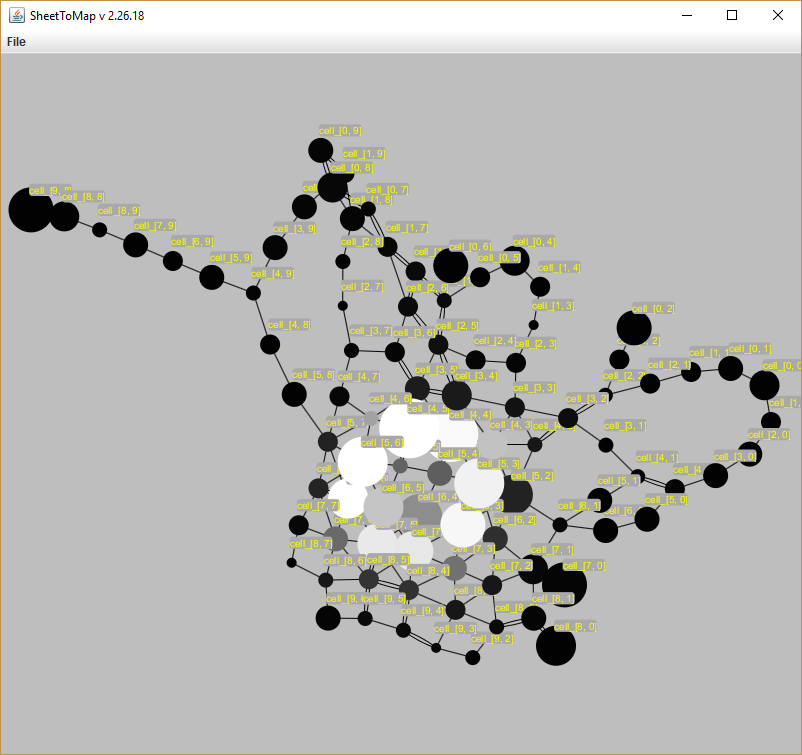
  • Work on getting SheetToMap in a swing app? Less figuring things out…
    • Slower going than I hoped, but mostly working now. As always, StackOverflow to the rescue: How to draw graph inside swing with GraphStream actually?
    • Adding load and save menu choices. Done! Had a few issues with getting the position of the nodes saved out. It seems like you should do this?
      GraphicNode gn = viewer.getGraphicGraph().getNode(name);
      row.createCell(cellIndex++).setCellValue(gn.getX());
      row.createCell(cellIndex++).setCellValue(gn.getY());
    • Anyway, pretty pix: 2018-02-26
  • Start on white paper
  • Fika

Phil 2.25.18

Looks like I need to update the DC and the CI 2018 paper with a new reference:

Dynamic Word Embeddings for Evolving Semantic Discovery

  • Zijun YaoYifan Sun, Weicong Ding, Nikhil RaoHui Xiong
  • Word evolution refers to the changing meanings and associations of words throughout time, as a byproduct of human language evolution. By studying word evolution, we can infer social trends and language constructs over different periods of human history. However, traditional techniques such as word representation learning do not adequately capture the evolving language structure and vocabulary. In this paper, we develop a dynamic statistical model to learn time-aware word vector representation. We propose a model that simultaneously learns time-aware embeddings and solves the resulting “alignment problem”. This model is trained on a crawled NYTimes dataset. Additionally, we develop multiple intuitive evaluation strategies of temporal word embeddings. Our qualitative and quantitative tests indicate that our method not only reliably captures this evolution over time, but also consistently outperforms state-of-the-art temporal embedding approaches on both semantic accuracy and alignment quality.
  • Embeddings


Phil 2.21.18

7:00 – 6:00 ASRC MKT

  • Wow – I’m going to the Tensorflow Summit! Need to get a hotel.
  • Dimension reduction + velocity in this thread
  • Global Pose Estimation with an Attention-based Recurrent Network
    • The ability for an agent to localize itself within an environment is crucial for many real-world applications. For unknown environments, Simultaneous Localization and Mapping (SLAM) enables incremental and concurrent building of and localizing within a map. We present a new, differentiable architecture, Neural Graph Optimizer, progressing towards a complete neural network solution for SLAM by designing a system composed of a local pose estimation model, a novel pose selection module, and a novel graph optimization process. The entire architecture is trained in an end-to-end fashion, enabling the network to automatically learn domain-specific features relevant to the visual odometry and avoid the involved process of feature engineering. We demonstrate the effectiveness of our system on a simulated 2D maze and the 3D ViZ-Doom environment.
  •  Slides
    • Location
    • Orientation
    • Velocity
    • IR context -> Sociocultural context
  • Writing Fika. Make a few printouts of the abstract
    • It kinda happened. W
  • Write up LMN4A2P thoughts. Took the following and put them in a LMN4A2P roadmap document in Google Docs
    • Storing a corpora (raw text, BoW, TF-IDF, Matrix)
      • Uploading from file
      • Uploading from link/crawl
      • Corpora labeling and exploring
    • Index with ElasticSearch
    • Production of word vectors or ‘effigy documents’
    • Effigy search using Google CSE for public documents that are similar
      • General
      • Site-specific
      • Semantic (Academic, etc)
    • Search page
      • Lists (reweightable) or terms and documents
      • Cluster-based map (pan/zoom/search)
  • I’m as enthusiastic about the future of AI as (almost) anyone, but I would estimate I’ve created 1000X more value from careful manual analysis of a few high quality data sets than I have from all the fancy ML models I’ve trained combined. (Thread by Sean Taylor on Twitter, 8:33 Feb 19, 2018)
  • Prophet is a procedure for forecasting time series data. It is based on an additive model where non-linear trends are fit with yearly and weekly seasonality, plus holidays. It works best with daily periodicity data with at least one year of historical data. Prophet is robust to missing data, shifts in the trend, and large outliers.
  • Done with Angular fundamentals. reDirectTo isn’t working though…
    • zone.js:405 Unhandled Promise rejection: Invalid configuration of route '': redirectTo and component cannot be used together ; Zone: <root> ; Task: Promise.then ; Value: Error: Invalid configuration of route '': redirectTo and component cannot be used together

Phil 2.19.18

7:30 – 4:30 ASRC MKT

  • Back to BIC.
    • BIC_102 (page 102)
    • BIC107 (pg 107)
    • BIC107b (pg 107)
    • Sociality: Coordinating bodies, minds and groups
      • Human interaction, as opposed to aggregation, occurs in face-to-face groups. “Sociality theory” proposes that such groups have a nested, hierarchical structure, consisting of a few basic variations, or “core configurations.” These function in the coordination of human behavior, and are repeatedly assembled, generation to generation, in human ontogeny, and in daily life. If face-to-face groups are “the mind’s natural environment,” then we should expect human mental systems to correlate with core configurations. Features of groups that recur across generations could provide a descriptive paradigm for testable and non-intuitive evolutionary hypotheses about social and cognitive processes. This target article sketches three major topics in sociality theory, roughly corresponding to the interests of biologists, psychologists, and social scientists. These are (1) a multiple levels-of-selection view of Darwinism, part group selectionism, part developmental systems theory; (2) structural and psychological features of repeatedly assembled, concretely situated face-to-face coordination; and (3) superordinate, “unsituated” coordination at the level of large-scale societies. Sociality theory predicts a tension, perhaps unresolvable, between the social construction of knowledge, which facilitates coordination within groups, and the negotiation of the habitat, which requires some correspondence with contingencies in specific situations. This tension is relevant to ongoing debates about scientific realism, constructivism, and relativism in the philosophy and sociology of knowledge.
        • These definitions seem to span atomic (mother/child, etc), small group (situated, environmental), and societal (unsituated, normative)
      • Coordination occurs to the extent that knowledge and practice domains overlap or are complementary. I suggest that values serve as a medium. Humans live in a value-saturated environment; values are known from interactions with people, natural objects, and artifacts
        • Dimension reduction
  •  I’m starting to think that agents as gradient descent machines within networks is something to look for:
    • Individual Strategy Update and Emergence of Cooperation in Social Networks
      • In this article, we critically study whether social networks can explain the emergence of cooperative behavior. We carry out an extensive simulation program in which we study the most representative social dilemmas. For the Prisoner’s Dilemma, it turns out that the emergence of cooperation is dependent on the microdynamics. On the other hand, network clustering mostly facilitates global cooperation in the Stag Hunt game, whereas degree heterogeneity promotes cooperation in Snowdrift dilemmas. Thus, social networks do not promote cooperation in general, because the macro-outcome is not robust under change of dynamics. Therefore, having specific applications of interest in mind is crucial to include the appropriate microdetails in a good model.
    • Alex Peysakhovich and Adam Lerer
      • Prosocial learning agents solve generalized Stag Hunts better than selfish ones
        • Deep reinforcement learning has become an important paradigm for constructing agents that can enter complex multi-agent situations and improve their policies through experience. One commonly used technique is reactive training – applying standard RL methods while treating other agents as a part of the learner’s environment. It is known that in general-sum games reactive training can lead groups of agents to converge to inefficient outcomes. We focus on one such class of environments: Stag Hunt games. Here agents either choose a risky cooperative policy (which leads to high payoffs if both choose it but low payoffs to an agent who attempts it alone) or a safe one (which leads to a safe payoff no matter what). We ask how we can change the learning rule of a single agent to improve its outcomes in Stag Hunts that include other reactive learners. We extend existing work on reward-shaping in multi-agent reinforcement learning and show that that making a single agent prosocial, that is, making them care about the rewards of their partners can increase the probability that groups converge to good outcomes. Thus, even if we control a single agent in a group making that agent prosocial can increase our agent’s long-run payoff. We show experimentally that this result carries over to a variety of more complex environments with Stag Hunt-like dynamics including ones where agents must learn from raw input pixels.
      • The Good, the Bad, and the Unflinchingly Selfish: Cooperative Decision-Making Can Be Predicted with High Accuracy Using Only Three Behavioral Types
        • The human willingness to pay costs to benefit anonymous others is often explained by social preferences: rather than only valuing their own material payoff, people also care in some fashion about the outcomes of others. But how successful is this concept of outcome-based social preferences for actually predicting out-of-sample behavior? We investigate this question by having 1067 human subjects each make 20 cooperation decisions, and using machine learning to predict their last 5 choices based on their first 15. We find that decisions can be predicted with high accuracy by models that include outcome-based features and allow for heterogeneity across individuals in baseline cooperativeness and the weights placed on the outcome-based features (AUC=0.89). It is not necessary, however, to have a fully heterogeneous model — excellent predictive power (AUC=0.88) is achieved by a model that allows three different sets of baseline cooperativeness and feature weights (i.e. three behavioral types), defined based on the participant’s cooperation frequency in the 15 training trials: those who cooperated at least half the time, those who cooperated less than half the time, and those who never cooperated. Finally, we provide evidence that this inclination to cooperate cannot be well proxied by other personality/morality survey measures or demographics, and thus is a natural kind (or “cooperative phenotype”)
        • “least”, “intermediate” and “most” cooperative. Doesn’t give percentages, though it says that 17.8% were cooperative?


  • Talk Susan Gregurick (susan.gregurick@nih.gov)
    • All of Us research program
    • Opiod epidemic – trajectory modeling?
    • PZM21 computational drug
    • Develop advanced software and tools. Specialized generalizable and accessible tools for biomedicing (finding stream). Includes mobile, data indexing, etc.
    • NIH Data Fellows? Postdocs to senior industry
    • T32 funding? Mike Summers at UMBC
    • ncbi-hackathons.github.io (look for data?
    • Primary supporter for machine learning is NIMH (imaging), then NIGNS, and NCI Team science (Multi-PI) is a developing thing
    • $400m in computing enabled interactions (human in the loop decision tools. Research Browser?
    • Big Data to Knowledge Initiative (BD2K) datascience.nih.gov/bd2k
    • Interagency Modeling and Analysis Group (IMAG) imagewiki,nibib.nih.gov
    • funding: bisti.nih.gov
    • NIH RePorter projectreporter.nih.gov Check out matchmaker. What’s the ranking algorithm?
    • NIDDK predictive analytics for budgeting <- A2P-ish?
    • Most of thi srequires preliminary data and papers to be considered for funding. There is one opportunity for getting funding to get preliminary data. Need to get more specific infor here.
    • Each SRO normalizes grade as a percentile, not the score, since some places inflate, and others are hard.
    • Richard Aargon at NIGMS
    • Office of behavioral and social science – NIH center Francis Collins. Also agent-based simulation
    • Really wants a Research Browser to go through proposals
  • Fika – study design
    • IRB – you can email and chat with the board if you have a tricky study

Phil 2.16.18

7:00 – 3:00 ASRC MKT

  • Finished the first draft of the CI 2018 extended abstract!
  • And I also figured out how to run the sub projects in the Ultimate Angular src collection. You need to go to the root directory for the chapter, run yarn install, then yarn start. Everything works then.
  • Trolls on Twitter: How Mainstream and Local News Outlets Were Used to Drive a Polarized News Agenda
    • This is the kind of data that compels us to rethink how we understand Twitter — and what I feel are more influential platforms for reaching regular people that include Facebook, Instagram, Google, and Tumblr, as well as understand ad tech tracking and RSS feedharvesting as part of the greater propaganda ecosystem.
  • NELA News credibility classification toolkit
    • The News Landscape (NELA) Toolkit is an open source toolkit for the systematic exploration of the news landscape. The goal of NELA is to both speed up human fact-checking efforts and increase the understanding of online news as a whole. NELA is made up of multiple indepedent modules, that work at article level granularity: reliability prediction, political impartiality prediction, text objectivity prediction, and reddit community interest prediction. As well as, modules that work at source level granularity: reliability prediction, political impartiality prediction, content-based feature visualization. 
  • New benchmarks for approximate nearest neighbors
    • I built ANN-benchmarksto address this. It pits a bunch of implementations (including Annoy) against each other in a death match: which one can return the most accurate nearest neighbors in the fastest time possible. It’s not a new project, but I haven’t actively worked on it for a while.
  • Systems of Global Governance in the Era of Human-Machine Convergence
    • Technology is increasingly shaping our social structures and is becoming a driving force in altering human biology. Besides, human activities already proved to have a significant impact on the Earth system which in turn generates complex feedback loops between social and ecological systems. Furthermore, since our species evolved relatively fast from small groups of hunter-gatherers to large and technology-intensive urban agglomerations, it is not a surprise that the major institutions of human society are no longer fit to cope with the present complexity. In this note we draw foundational parallelisms between neurophysiological systems and ICT-enabled social systems, discussing how frameworks rooted in biology and physics could provide heuristic value in the design of evolutionary systems relevant to politics and economics. In this regard we highlight how the governance of emerging technology (i.e. nanotechnology, biotechnology, information technology, and cognitive science), and the one of climate change both presently confront us with a number of connected challenges. In particular: historically high level of inequality; the co-existence of growing multipolar cultural systems in an unprecedentedly connected world; the unlikely reaching of the institutional agreements required to deviate abnormal trajectories of development. We argue that wise general solutions to such interrelated issues should embed the deep understanding of how to elicit mutual incentives in the socio-economic subsystems of Earth system in order to jointly concur to a global utility function (e.g. avoiding the reach of planetary boundaries and widespread social unrest). We leave some open questions on how techno-social systems can effectively learn and adapt with respect to our understanding of geopolitical complexity.

Phil 2.14.18

7:00 – 4:00 ASRC

  • Stampede? Herding? Twitter deleted 200,000 Russian troll tweets. Read them here.
    • Twitter doesn’t make it easy to track Russian propaganda efforts — this database can help
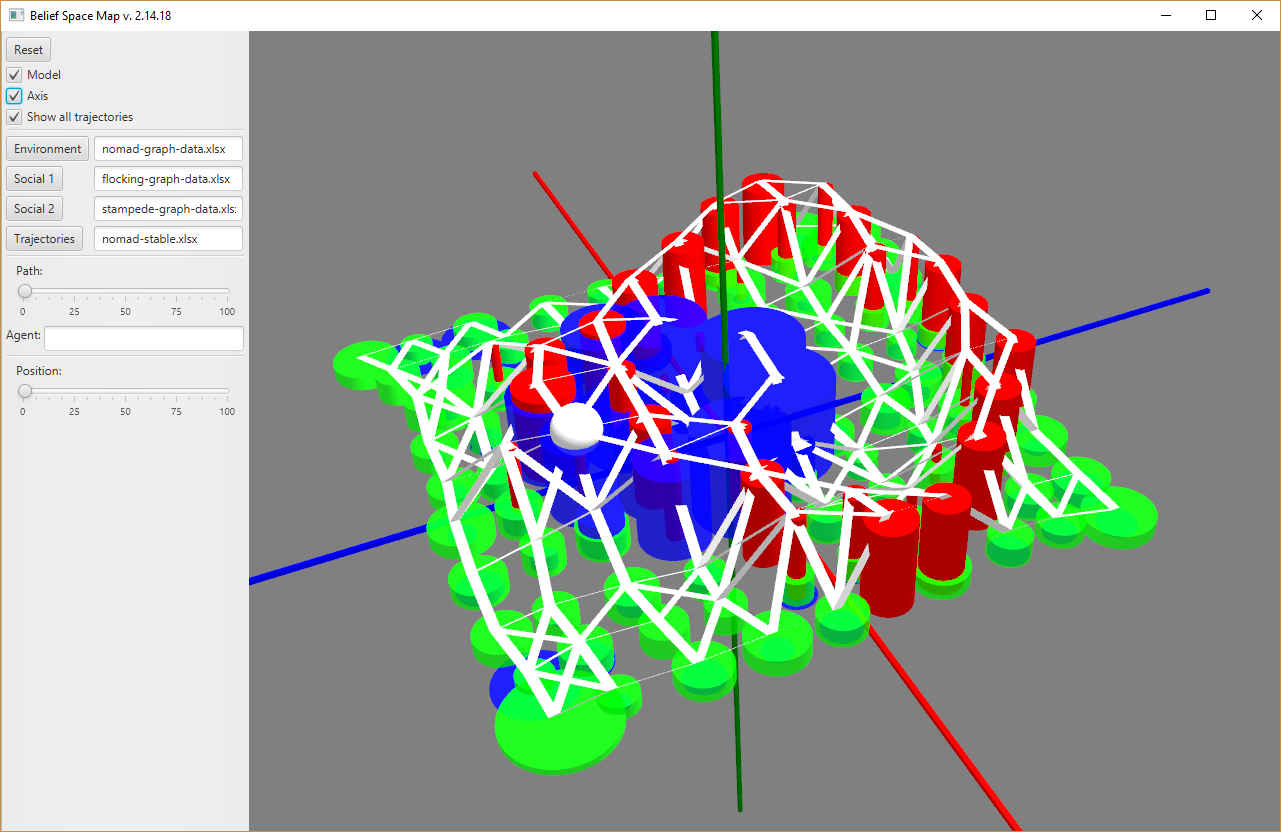
  • Add a “show all trajectories” checkbox.
    • That’s a nice visualization that shows the idea of the terrain uncovered by the trajectories: 2018-02-14
  • Continue with paper – down to 3 pages!
  • Continue with slides. Initial walkthrough with Aaron
  • 3:00 – 4:00 A2P meeting

Phil 2.12.18

7:00 – 4:00 ASRC MKT

  • The social structural foundations of adaptation and transformation in social–ecological systems
    • Social networks are frequently cited as vital for facilitating successful adaptation and transformation in linked social–ecological systems to overcome pressing resource management challenges. Yet confusion remains over the precise nature of adaptation vs. transformation and the specific social network structures that facilitate these processes. Here, we adopt a network perspective to theorize a continuum of structural capacities in social–ecological systems that set the stage for effective adaptation and transformation. We begin by drawing on the resilience literature and the multilayered action situation to link processes of change in social–ecological systems to decision making across multiple layers of rules underpinning societal organization. We then present a framework that hypothesizes seven specific social–ecological network configurations that lay the structural foundation necessary for facilitating adaptation and transformation, given the type and magnitude of human action required. A key contribution of the framework is explicit consideration of how social networks relate to ecological structures and the particular environmental problem at hand. Of the seven configurations identified, three are linked to capacities conducive to adaptation and three to transformation, and one is hypothesized to be important for facilitating both processes.
  • Starting to trim paper down to three pages
  • Starting on CHIIR slide stack – Still need to add future work
  • Springt Review
  • Rwanda radio transcripts
    • From October 1993 to late 1994, RTLM was used by Hutu leaders to advance an extremist Hutu message and anti-Tutsi disinformation, spreading fear of a Tutsi genocide against Hutu, identifying specific Tutsi targets or areas where they could be found, and encouraging the progress of the genocide. In April 1994, Radio Rwanda began to advance a similar message, speaking for the national authorities, issuing directives on how and where to kill Tutsis, and congratulating those who had already taken part.
  • Fika
    • Set up Fika Writing group that will meet Wednesdays at 4:00. We’ll see how that goes.

Phil 2.11.18

Introduction to Learning to Trade with Reinforcement Learning

  • In this post, I’m going to argue that training Reinforcement Learning agents to trade in the financial (and cryptocurrency) markets can be an extremely interesting research problem. I believe that it has not received enough attention from the research community but has the potential to push the state-of-the art of many related fields. It is quite similar to training agents for multiplayer games such as DotA, and many of the same research problems carry over. Knowing virtually nothing about trading, I have spent the past few months working on a project in this field.
  • This sounds to me like reinforcement learning figuring out game theory. Might be useful for NOAA as well

Worked on getting the MapBuilder app into a useful standalone app: 2018-02-11 (1)

Phil 2.1.18

7:00 – 3:30 ASRC MKT

  • Communications Handbook for IPCC scientists
  • The Barnes-Hut Approximation
    • Efficient computation of N-body forces
      By: Jeffrey Heer
      Computers can serve as exciting tools for discovery, with which we can model and explore complex phenomena. For example, to test theories about the formation of the universe, we can perform simulations to predict how galaxies evolve. To do this, we could gather the estimated mass and location of stars and then model their gravitational interactions over time.
  • Need to get started on the extended abstract for Collective Intelligence 2018! One month! March 2, 2018!
    • Set up the LaTex template for the conference. Done
    • Think I want to call it Mapping Simon’s Anthill
  • Need to contact the CHIIR 2018 folks to see what is expected for the DC
  • More Angular, feeling my way through the Http code, which has been deprecated. Looked at the similar code in Tour of Heroes. We’ll see if the old stuff works and then try to update? Need to ask Jeremy.
  • Back to BIC. Evolutionary reasons for cooperation as group fitness, where group payoff is maximized. This makes the stag salient in stag hunt.
  • A thorough explanation of synchronization/phase locking. My mental model is this: Imaging a set of coaxial but randomly oscillating identical weights sliding back and forth in their section of lightweight tubing. From the outside, the tube would be stationary, as all the forces would be cancelling. If the weights can synchronize, then the lightweight tube will be doing most of the moving. Since the mass of the tube is lower than the mass of the combined weights,   The force required for the whole system will be lower, and as a result (I think?) the system will run more efficiently and longer. Need to work out the math.

Phil 1.31.18

7:00 – 7:00 ASRC MKT

  • The Matrix Calculus You Need For Deep Learning
    • Most of us last saw calculus in school, but derivatives are a critical part of machine learning, particularly deep neural networks, which are trained by optimizing a loss function. Pick up a machine learning paper or the documentation of a library such as PyTorch and calculus comes screeching back into your life like distant relatives around the holidays. And it’s not just any old scalar calculus that pops up—you need differential matrix calculus, the shotgun wedding of linear algebra and multivariate calculus.
  • Continuing BIC
    • Explaining the evolution of any human behavior trait (say, a tendency to play C in Prisoner’s Dilemmas) raises three questions. The first is the behavior selection question: why did this trait, rather than some other, get selected by natural selection? Answering this involves giving details of the selection process, and saying what made the disposition confer fitness in the ecology in which selection took place. But now note that ‘When a behavior evolves, a proximate mechanism also must evolve that allows the organism to produce the target behavior. Ivy plants grow toward the light. This is a behavior, broadly construed. For phototropism to evolve, there must be some mechanism inside of ivy plants that causes them to grow in one direction rather than in another’ (Sober and Wilson 1998, pp. 199-200). This raises the second question, the production question: how is the behavior produced within the individual-what is the ‘proximate mechanism’? In the human case, the interest is often in a psychological mechanism: we ask what perceptual, affective and cognitive processes issue in the behavior. Finally, note that these processes must also have evolved, so an answer to the second question brings a third: why did this proximate mechanism evolve rather than some other that could have produced the same behavior? This is the mechanism selection question. (pg 95)
      • These are good questions to answer, or at least address. Roughly, I thing my answers are
        • Selection Question: The three phases are a very efficient way to exploit an environment
        • Production Question: Neural coupling, as developed in physical swarms and moving on to cognitive clustering
        • Mechanism Question: Oscillator frequency locking provides a natural foundation for  collective behavior. Dimension reduction is how axis are selected for matching.
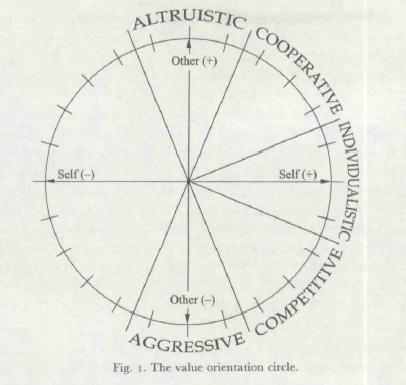
  • Value Orientations, Expectations and Voluntary Contributions in Public Goods
    • ValueOrientation
  • Discussion with Aaron about JuryRoom design
  • Observable is a better way to code.
    • Discover insights faster and communicate more effectively with interactive notebooks for data analysis, visualization, and exploration.
  • More Angular. Finished with module communication, starting with services
  • Meeting with Wayne
    • Submit to JASS
    • Abstract to CI 2018 July 7-8, 2018 at the University of Zurich, Switzerland

Phil 1.30.18

7:00 – 5:00 ASRC MKT

  • Big thought for today.In a civilization context, the three phases of collective intelligence work like this. These phases relate to computational effort which is proportional to the number of dimensions that an individual has to consider in their existential calculus. The assumption is that lower computational effort is selected for at natural explore/exploit ratios.
    • Exploration phase. Nomadic explorers are introduced to a new environment. Can be physical, informational, cognitive, etc. This phase has the highest dimensional processing required for the individual.
    • Exploitation phase. Social patterns increase the hill climbing power of agents in the environment. This results in a sufficiently optimal access to resources. This employs lower dimensions to support consensus and polarization.
    • Inertial phase. Social influence becomes dominant and environmental influence wains. Local diversity drops as similar agents cluster tightly together. Resources wane. This employs the most dimension reduction and the highest polarization, resulting in high implicit coordination.
    • Collapse. Implied, since the Inertial phase is unsustainable. If the previous population produced explorers that found new, productive environments, the cycle can repeat elsewhere.
  • Continuing BIC
    • “We need to know, in detail, what deliberations are like that people engage in when they group-identify”. Also, agency transformationAgencyTransformation
  • Rules, norms and institutional erosion: Of non-compliance, enforcement and lack of rule of law
    • What I am seeing right now in the US (a steady and slow erosion of democratic norms and a systematic violation of rules by the President Elect, in particular as though “they don’t apply to him“) is something that I’ve seen in other countries where I have studied formal and informal rules and institution building (and decay). This, in my view, is worrisome. If the US is going to want to continue having a functioning democracy where compliance with rules and norms is an expectation at the societal level, it’s going to have to do something major to stop this systematic rule violation.
  • Evaluation of Interactive Machine Learning Systems
    • The evaluation of interactive machine learning systems remains a difficult task. These systems learn from and adapt to the human, but at the same time, the human receives feedback and adapts to the system. Getting a clear understanding of these subtle mechanisms of co-operation and co-adaptation is challenging. In this chapter, we report on our experience in designing and evaluating various interactive machine learning applications from different domains. We argue for coupling two types of validation: algorithm-centered analysis, to study the computational behaviour of the system; and human-centered evaluation, to observe the utility and effectiveness of the application for end-users. We use a visual analytics application for guided search, built using an interactive evolutionary approach, as an exemplar of our work. We argue that human-centered design and evaluation complement algorithmic analysis, and can play an important role in addressing the “black-box” effect of machine learning. Finally, we discuss research opportunities that require human-computer interaction methodologies, in order to support both the visible and hidden roles that humans play in interactive machine learning.
  • Jensen–Shannon divergence – I think I can use this to show the distance between a full coordination matrix and one that contains only the main diagonal.
  • Evolution of social behavior in finite populations: A payoff transformation in general n-player games and its implications
    • The evolution of social behavior has been the focus of many theoretical investigations, which typically have assumed infinite populations and specific payoff structures. This paper explores the evolution of social behavior in a finite population using a general n-player game. First, we classify social behaviors in a group of n individuals based on their effects on the actor’s and the social partner’s payoffs, showing that in general such classification is possible only for a given composition of strategies in the group. Second, we introduce a novel transformation of payoffs in the general n-player game to formulate explicitly the effects of a social behavior on the actor’s and the social partners’ payoffs. Third, using the transformed payoffs, we derive the conditions for a social behavior to be favored by natural selection in a well-mixed population and in the presence of multilevel selection.
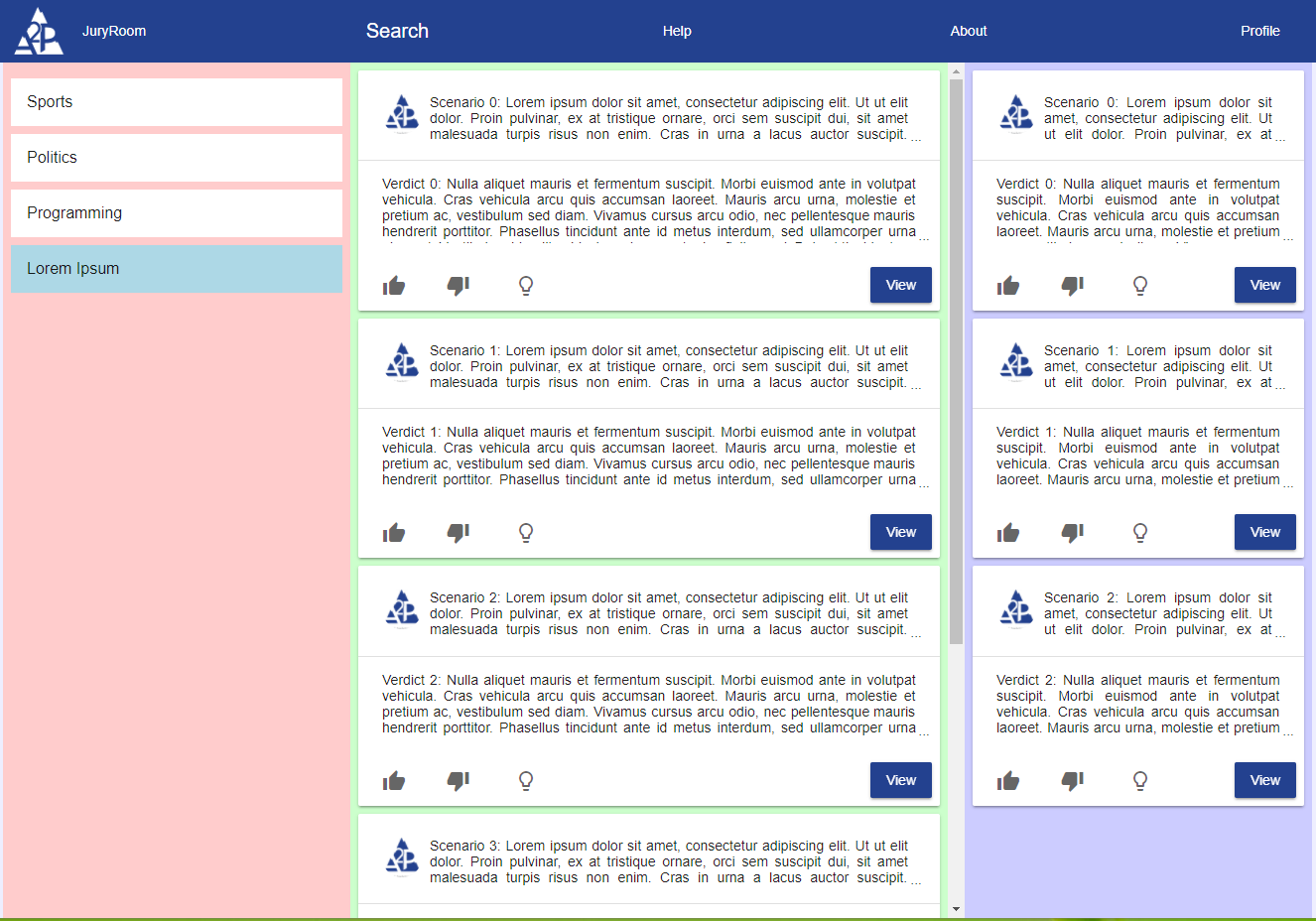
  • Got the data for the verdicts and live verdicts set up right, or at least closer: JuryRoom
  • Booked a room for the CHIIR Hotel
  • Got farther on UltimateAngular:
    •  UltimateAngular

Phil 1.29.18

7:00 – 5:30 ASRC MKT

  • The phrase “Epistemic Game Theory” occurred to me in the shower. Looked it up and found these two things:
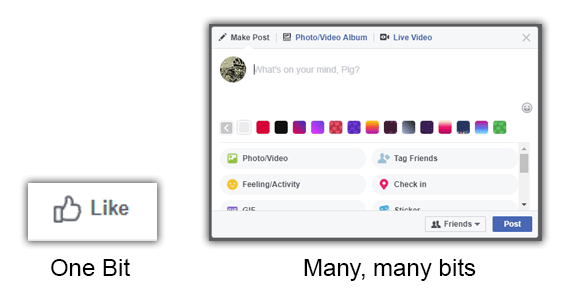
  • When it’s easier to agree than discuss, it should be easier to stampede:
  • Like vs. words
  • This is also a piece of Salganik’s work as described in Leading the Herd Astray: An Experimental Study of Self-Fulfilling Prophecies in an Artificial Cultural Market
  • An article on FB optimization and how to change the ratio of likes to comments, etc
  • I don’t think people did. It’s just that it’s easier to not think too much 🙂 people are busy selling tools that do everything for people, and people are happy buying tools to limit thinking. The analogy of replacing cognitive load with perception by VIS misleads in this regard. (Twitter)
  • Continuing BIC
    • Dimension reduction is a form of induced conceptual myopia (pg 89)? Conceptual Myopia
  • AI Roundup workshop today
    • Zenpeng, Biruh, Phil, Aaron, Eric, Eric, Kevin
    • Eric – Introductory remarks. Budget looks good for 2018. Direction, chance to overlap, get leaders together for unique differentiators and something that we can build a business around. There has to be a really good business case with revenue in the out years
    • Aaron – CDS for A2P. Collaborate on analytics, ML, etc. Non corporate focused. Emerging technologies and trends. Helping each other out. Background in IC software dev.
    • Pam Scheller – SW Aegis. BD. EE, MS Computer engineering.
    • Biruh, TF, LIDAR, Generalized AI as hobby.
    • Zhenpeng Lee – Physics, Instrument Data Processing for GOES-R. FFT. GOES_R radiometric analysis. 7k detector rows? Enormous data sets. Attempting to automate processing the analysis of these data sets. Masters in Computer Science from JHU. Written most of his code from scratch.
    • Kevin Wainwright. Software engineering Aegis. C&C, etc. Currently working on a cloud based analytics with ML for big data, anomaly detection, etc. Looking for deviation from known flight paths
    • Eric Velte. History degree. Aegis. Situational awareness. Chief technologists for missions solutions group. Software mostly. Data analytics for the last two years. Big Data Analytics Platform.
    • Cornel as engineer, Zero G heat transfer, spacecraft work. Technology roadmaps for thermal control. Then business development, mostly for DoD. Research Sports research – head of Olympic Committee research kayaks, women’s 8, horse cooling, bobsleds.
    • Mike Beduck. Chemical Engineering and computer science. Visualization, new to big data. Closed system sensor fusion. RFP response, best practices. Repository for analytics
    • George. Laser physics. Cardiac imaging analysis. Software development, 3D graphics. Medical informatics. CASI ground systems. More GOES-R/S. Image and signal processing and analysis.
    • Anton is lurling and listening. Branding and marketing.
  • A2P WIP
    • Put a place on sharepoint for papers and other documents – annotated bibliography.
    • Floated the JuryRoom app. Need to mention that the polarizing discussion closes at consensus.
  • Zhenpeng Lee AIMS – GOES-R. What went wrong and how to fix. ML to find pattern change in 20k sensor streams. Full training on each day’s data, then large scale clustering. Trends are seasonal? Relationships between sensors? Channel has 200-600 detectors. “Machine Learning of Situational Awareness” MLP written in Java. TANH activation function.
    • Eric Haught: Long term quest for condition-based maintenance.
    • Aaron – we are all trying to come up with a useful cross platform approach to anomaly detection.
    • Training size: 100k samples? Sample selection reduce to 200? Not sure what the threshold sensitivity is
  • Eric Velte – Devops. Centralize SW dev and support into a standardized framework. NO SECURITY STACK!!!!!
  • Dataforbio? Video series