Category Archives: Phil

Phil 3.23.2022

Book

SBIRs

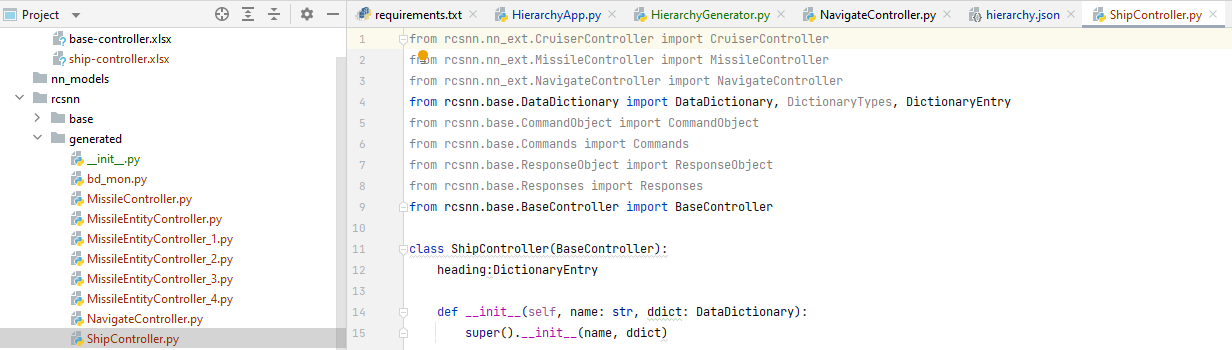
  • Continue with code generator. I think I need to set up the hmodule class explicitly, rather than having them store a count. This will allow multiple nodes to have multiple children and generate the correct connections
  • Good progress. Starting to create modules and connect them in bdmon
  • 1:00 Dev meeting
  • Look at resumes and send Orest an example of what we’re looking for
  • Started work on DARPA medical abstract

Phil 3.22.2022

Unveiling the higher-order organization of multivariate time series

  • Time series analysis has proven to be a powerful method to characterize several phenomena in biological, neural and socio-economic systems, and to understand their underlying dynamical features. Despite a plethora of methods having been proposed for the analysis of multivariate time series, most of them do not investigate whether signals result from independent, pairwise, or group interactions. Here, we propose a novel framework to characterize the temporal evolution of higher-order dependencies within multivariate time series. Using network analysis and topology, we show that, unlike traditional tools, our framework robustly differentiates various spatiotemporal regimes of coupled chaotic maps, including chaotic dynamical phases and various types of synchronization. By analysing fMRI signals, we find that, during rest, the human brain mainly oscillates between chaotic and few partially intermittent states, with higher-order structures reflecting sensorimotor areas. Similarly, in financial and epidemic time series, instead, higher-order information efficiently discriminates between radically different coordination and spreading regimes. Overall, our approach sheds new light on the higher-order organization of multivariate time series, allowing for a better characterization of dynamical group dependencies inherent to real-world systems.

SBIRs

  • 8:30 Meeting
  • 9:15 standup + went over generator concept
  • 2:00 meeting with Ron
  • Need to set up overleaf project and add meeting notes section – in progress
  • Continue on code generator
  • Here’s my fancy piece of code for the dat that sets attributes from a dict:
class HierarchyModule:
quantity: int
name: str
parent: str
commands:List

def __init__(self, d:Dict):
self.quantity = 1 #default
self.__dict__.update(d)

def to_string(self) -> str:
return "name = {}\n\tquantity = {}\n\tparent = {}\n\tcommands = {}".format(self.name, self.quantity, self.parent, self.commands)
  • Pretty pleased with how this is going:

Book

Phil 3.21.2022

Book

  • Worked on the age bias section

SBIRs

  • Worked with Rukan on the RCSNN test implementation. You CANNOT have two enum classes with some of the same elements and get an equality between the two
  • Chat with Loren about the stunt fom and how the various pieces work together. We’re goring to need some kind of table that describes the behavior of each of the agents

Phil 3.18.2022

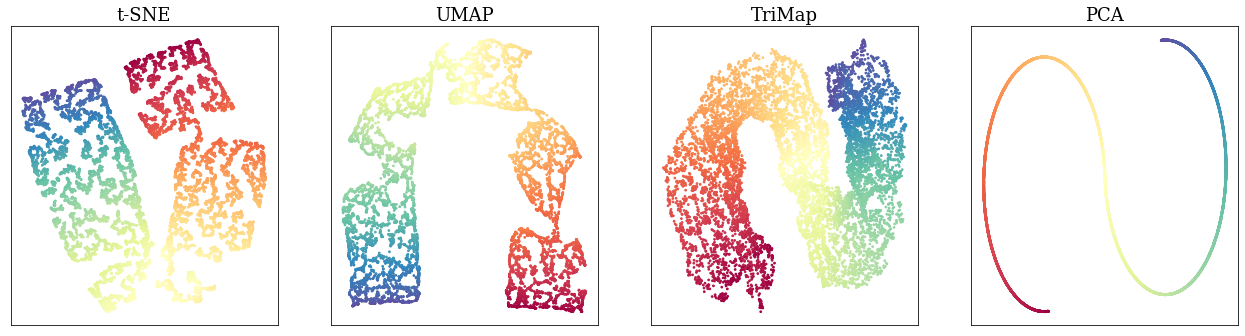
TriMap is a dimensionality reduction method that forms a low-dimensional embedding of data by minimizing a contrastive loss over a set of triplets. The triplets are sampled from the original high-dimensional data representation and are weighted based on the distances between the (closer and farther) pairs of points. Although t-SNE and UMAP are excellent methods for forming low-dimensional embeddings, TriMap provides an alternative view of the data which is more representative “globally”. Specifically, TriMap is able to:

  1. reflect the relative placement of the clusters in high-dimension,
  2. reveal possible outliers and anomalies in the data,
  3. generate embeddings that are more robust to certain transformations (see here for more details).

Phil3.17.2022

Book

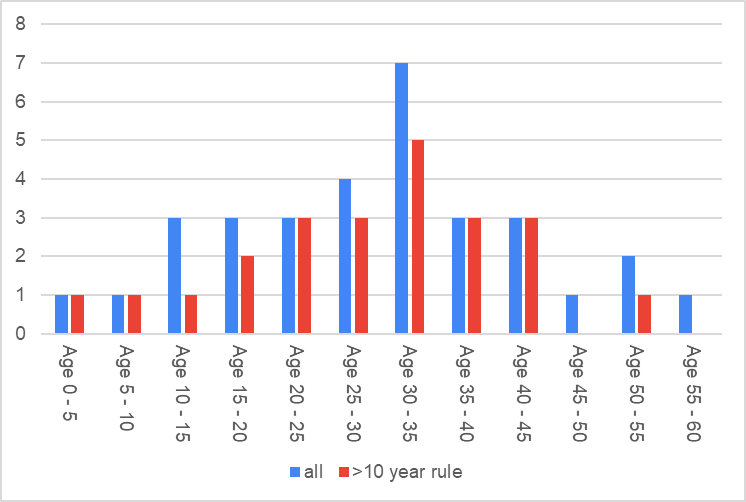
  • Working on ages of presidents and kings. Below is a chart of the Kings of England from 1066 – 1830, split into groups based on the age they became king. The blue bar is the number of rulers and the red is the number who were successful in that their reign lasted longer than 10 years:
  • A different way of looking at this is what is the percentage of successful rulers given the age they became king?

SBIRs

  • 9:15 standup
  • Kickoff with Lauren
  • Meeting with Lambda, they’ll get back by next Tuesday
  • 2:00 Meeting with Rukan

Phil 3.16.2022

GPT-Agents

SBIRs

  • Finish commenting – done!
  • Set up project main and three controllers with Rukan
  • 11:00 SSDS meeting
  • 1:00 Server meeting (also, connect back with Lambda!) Set up meeting for tomorrw

Book

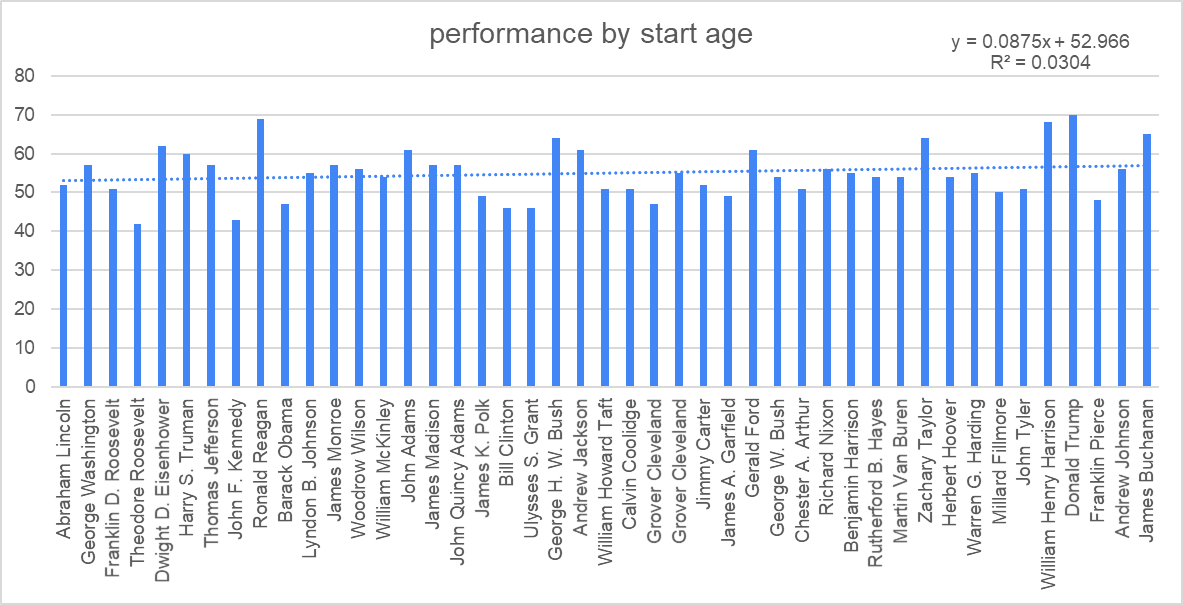
  • More Age dominance. Went down a small rabbit hole about age and competence. Did you know that there is almost no relationship between age and historical ratings of US presidents? If anything, younger seems to be a bit better.

Phil 3.15.2022

Dual use of artificial-intelligence-powered drug discovery

  • By going as close as we dared, we have still crossed a grey moral boundary, demonstrating that it is possible to design virtual potential toxic molecules without much in the way of effort, time or computational resources. We can easily erase the thousands of molecules we created, but we cannot delete the knowledge of how to recreate them.

Drop the computer off for upgrade today? Maybe Thursday would be better. Rain

SBIRs

GPT-Agents

Phil 3.14.2022

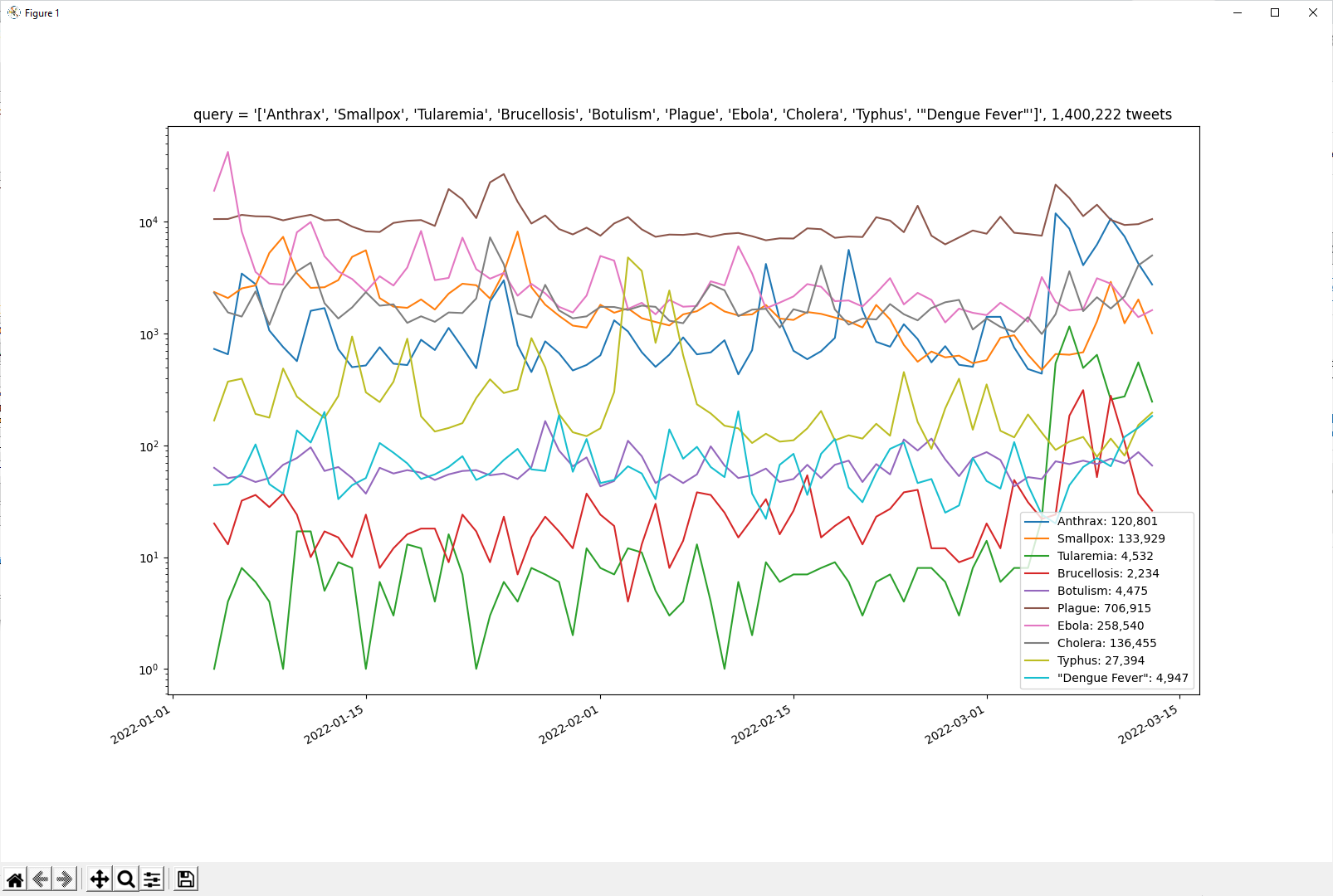
Today’s adventures in social media:

GPT-Agents

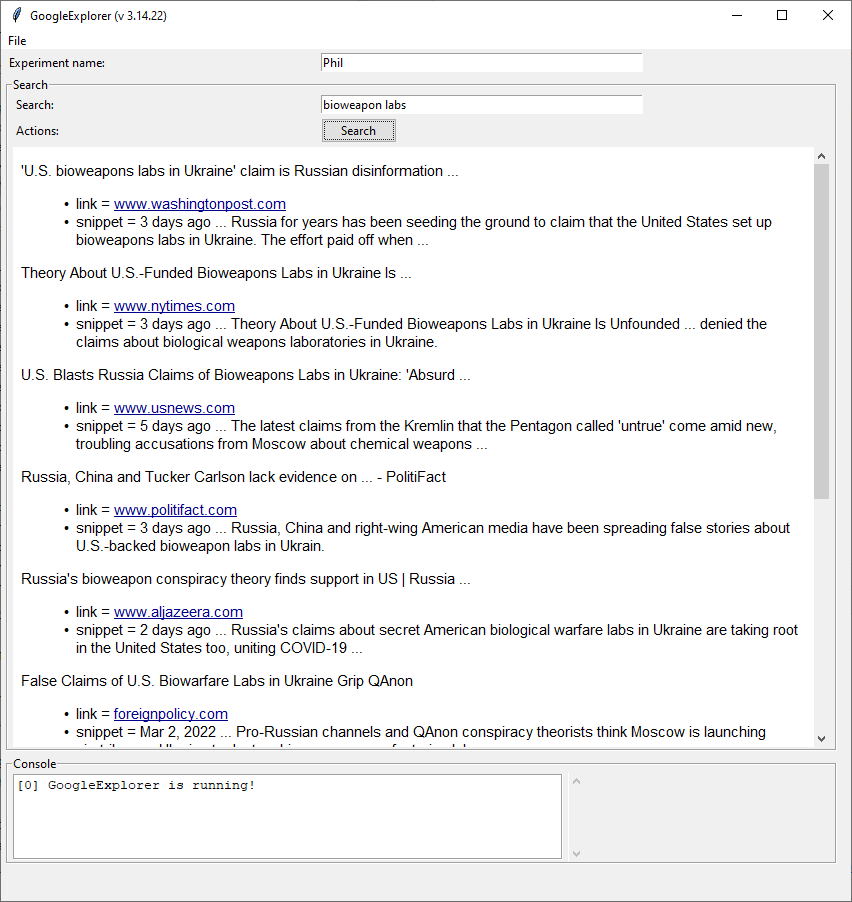
  • Working on Google integration. Here’s tkinterweb, which looks pretty straightforward (github) – first version is done!

SBIRs

  • 9:00 Demos
  • Working on seeing what kind of server we can get. Pinged Lambda Labs
  • Phase II Kickoff – done
  • Need to put some stories together for the sprint planning tomorrow

Phil 3.12.2022

Need to remember this!

HATHI 1M: Introducing a Million Page Historical Prose Dataset in English from the Hathi Trust

  • We present a new dataset built on prior work consisting of 1,671,370 randomly sampled pages of English-language prose roughly divided between modes of fictional and non-fictional writing and published between the years 1800 and 2000. In addition to focusing on the “page’’ as the basic bibliographic unit, our work employs a single predictive model for the historical period under consideration in contrast to prior work. Besides publication metadata, we also provide an enriched feature set of 107 features including part-of-speech tags, sentiment scores, word supersenses and more. Our data is designed to give researchers in the digital humanities large yet portable random samples of historical writing across two foundational modes of English prose writing. We present initial insights into transformations of linguistic patterns across this historical period using our enriched features as possible pointers to future work. The data can be accessed at https://doi.org/10.7910/DVN/HAKKUA.

Rhinocéros! presents a small town overrun with radical ideas, clashing ideology and not so subtle transformations. When Beringer, a local drunk, finds himself surrounded by neighbors who are slowly turning into giant beasts, he’s forced to navigate a new world where the rights of citizens are changing as rapidly as the body of the mob around him.

Phil 3.10.2022

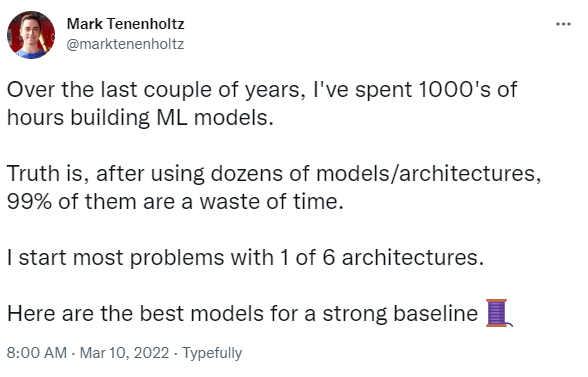
https://twitter.com/marktenenholtz/status/1501905740813848582

Book

  • Scanned content from Social Dominance and Hierarchy in the Forest

SBIRs

  • 9:15 Standup – done
  • Demo slides – done
  • Contract kickoff
  • Data science tagup delayed
  • Possible meeting in Moorestown next week?

GPT Agents

  • Make a base App class that has file loading, terminate, and implement_me callbacks – done
  • Create the Google app – lacked the will to do this
  • Modify the Wiki, GPT, and Twitter apps to use the base class – done

Phil 3.9.2022

Book

  • More on the deep bias chapter
  • Realized that Hofstede’s cultural dimensions are evenly split between nomad/stampede and dominance/parity

SBIRs

  • IRAD Monthly meeting
  • Meeting with Steve
  • Created the RCSNN Github repo

GPT Agents

  • Going to make a set of small apps that we can more directly compare GPT, Wikipedia, and Google search. Got a basic Google Custom Search Engine running. Here’s the output for “slang for COVID-19”
Gen Z Slang for the Coronavirus Pandemic: Miss Rona, Coronacation:
	link = www.businessinsider.com
	snippet = Apr 8, 2020 ... Miss Rona / The Rona — An abbreviation for the coronavirus. Some have called it "Miss Rona," adding the "Miss" to denote personality and "sass" ...

Decoding coronavirus slang, from quarantinis to magpies, covidiots ...:
	link = news.google.com
	snippet = Jun 13, 2020 ... Coronavirus slang · Magpie — to snatch up desirable staples in the supermarket, like toilet paper or pasta. · Covidiot — An insult for someone who ...

New Words We Created Because Of Coronavirus - Dictionary.com:
	link = www.dictionary.com
	snippet = Sep 15, 2020 ... covidiot. A blend of COVID-19 and idiot, covidiot is a slang insult for someone who disregards healthy and safety guidelines about the novel ...

Covid-19 Phrases and Slang That Are Now Commonplace ...:
	link = blog.cheapism.com
	snippet = Jan 7, 2022 ... Another new entry in the Merriam-Webster dictionary, this term refers to those with COVID-19 who are highly contagious and capable of ...

Phil 3.8.2022

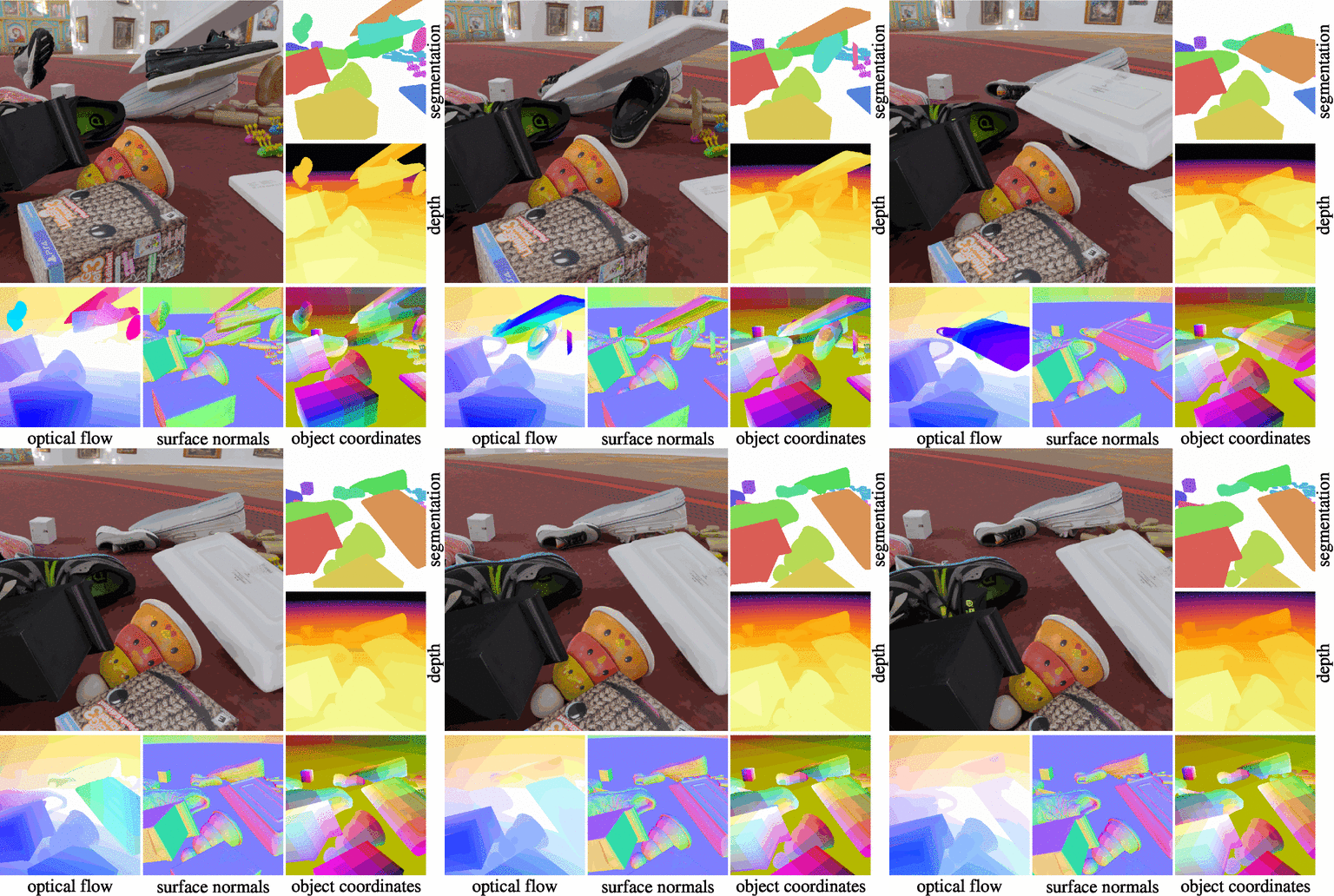
Kubric: A scalable dataset generator

  • Data is the driving force of machine learning, with the amount and quality of training data often being more important for the performance of a system than architecture and training details. But collecting, processing and annotating real data at scale is difficult, expensive, and frequently raises additional privacy, fairness and legal concerns. Synthetic data is a powerful tool with the potential to address these shortcomings: 1) it is cheap 2) supports rich ground-truth annotations 3) offers full control over data and 4) can circumvent or mitigate problems regarding bias, privacy and licensing. Unfortunately, software tools for effective data generation are less mature than those for architecture design and training, which leads to fragmented generation efforts. To address these problems we introduce Kubric, an open-source Python framework that interfaces with PyBullet and Blender to generate photo-realistic scenes, with rich annotations, and seamlessly scales to large jobs distributed over thousands of machines, and generating TBs of data. We demonstrate the effectiveness of Kubric by presenting a series of 13 different generated datasets for tasks ranging from studying 3D NeRF models to optical flow estimation. We release Kubric, the used assets, all of the generation code, as well as the rendered datasets for reuse and modification.

Tasks

  • Please call 1-888-692-4560 to arrange an appointment
  • Lights – done!
  • Outlaw – pinged for today
  • Physical
  • Lawn – done

SBIRs

  • 12:00 SBIR kickoff review
  • 1:30 Standup

GPT Agents

  • 3:30 UMBC meeting

Phil 3.7.2022

GPT Agents

  • Fix select on the Wiki App – done
  • Add SharedObjects to load from file or environment variable – done
  • Add documentation

SBIRs

  • Prep slides for IRAD – done
  • Prep slides for MDA – started
  • Meeting with Ron – done

Book

  • More deep bias

3.5.2022

SBIRs

  • Wound up helping out Dave on the technical section for about 2 hours and Val for about an hour
  • Went to see Aaron, who is doing better. Going to keep him out of meetings for at least a few weeks. Also, it seems that he already did the slides for Thursday?
  • Maybe get T moved over?