SBIRs
- Was able to log in today!
- 9:00 standup – nope
- Holiday lunch – fun! Long drive though
- 2:30 IRAD meeting – done. Maybe good?

SBIRs
Hike in the snow yesterday:

Nice post about the disintegration of the useful internet
Tasks
SBIRs
Language models are persuasive – and that’s a good thing
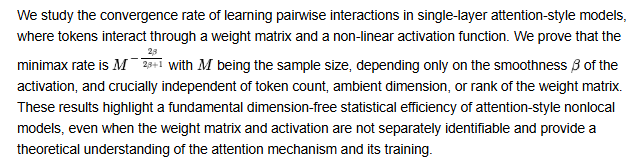
[2510.11789] Dimension-Free Minimax Rates for Learning Pairwise Interactions in Attention-Style Models – this is lit review for the MDA study
Tasks
Bridging Social Media and Search Engines: Dredge Words and the Detection of Unreliable Domains
Portugal is having a general strike today
Tasks
SBIRs
Tasks
Self-organized Collapse of Societies
Tasks
SBIRs
Tasks
SBIRs

Just checked his own social media channel, and our president seems to have forgotten

It strikes me that we can use dynamic time warping to compare trajectories

I think the process_data.py code is hung. Will need to fix that tomorrow

Time, space, memory and brain–body rhythms
Neurophysiology of Remembering
If I’m reading this right, bias is a function of neurophysiological alignment. Which is wild, but makes sense
Tasks

Tasks
SBIRs
Tasks
SBIRs
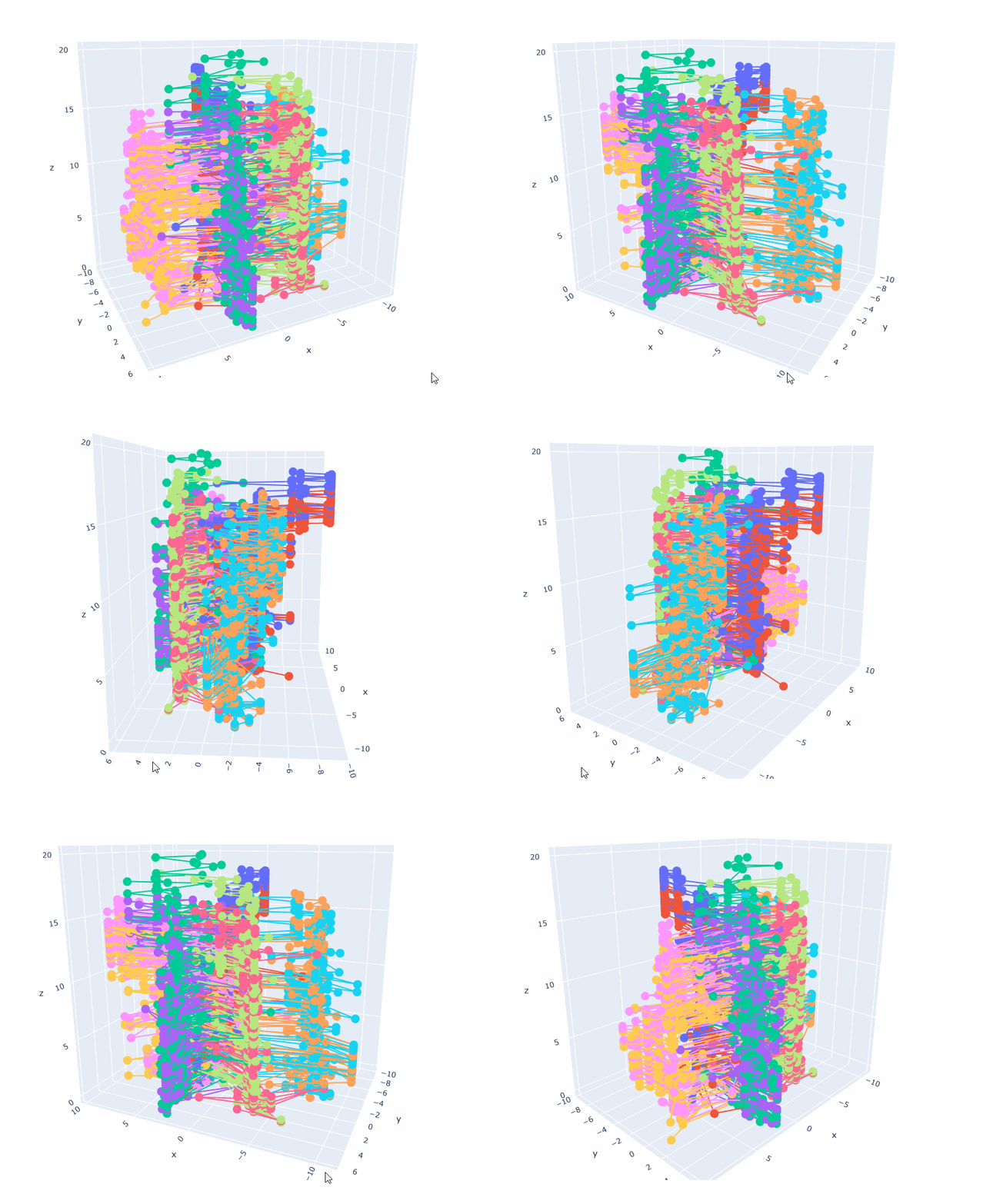
Index2Vec embeddings look a lot like sentence embeddings, but narrower. Maybe
Tasks
SBIRs
LLM stuff
Paragraph-level embedding

Sentence-level embedding
Got a lot done on P33 on my cruise!
Tasks
SBIRs

ZZZzzzzZZZZzzzz
Cycling in Mauritius is perfect for cyclists who love beautiful, tropical islands and warm year-round cycling conditions.
Tasks
SBIRs
Happy Tday to those who celebrate!
Early science acceleration experiments with GPT-5
CIFAR10 hyperlightspeedbench is a neural network implementation of a very speedily-training network that originally started as a painstaking reproduction of David Page’s original ultra-fast CIFAR-10 implementation on a single GPU, but written nearly from the ground-up to be extremely rapid-experimentation-friendly. Part of the benefit of this is that we now hold the world record for single GPU training speeds on CIFAR10, for example.
What we’ve added:
What we’ve removed:
This code, in comparison to David’s original code, is in a single file and extremely flat, but is not as durable for long-term production-level bug maintenance. You’re meant to check out a fresh repo whenever you have a new idea. It is excellent for rapid idea exploring — almost everywhere in the pipeline is exposed and built to be user-friendly. I truly enjoy personally using this code, and hope you do as well! 😀 Please let me know if you have any feedback. I hope to continue publishing updates to this in the future, so your support is encouraged. Share this repo with someone you know that might like it!
 viztales
You must be logged in to post a comment.