The documents show that John Mark Dougan, who also served in the U.S. Marines and has long claimed to be working independently of the Russian government, was provided funding by an officer from the GRU, Russia’s military intelligence service. Some of the payments were made after fake news sites he created began to have difficulty accessing Western artificial intelligence systems this spring and he needed an AI generator — a tool that can be prompted to create text, photos and video.
“It’s going to be super, super helpful to a lot of people who are lonely or depressed,” Noam Shazeer, one of the founders of Character.AI, said on a podcast last year.
Now, as a rule, when a headline is in the form of a question, the rule of thumb is “no.” However, this aligns more with what could happen if weapons-grade AI, used in an apparently innocuous app, identified easily manipulatable targets and exploited them. Replika is another example of this sort of accidental effect that could easily be weaponized
10:00 MCC meeting. Turns out that AdAstra might have the capability. I mean, it should!
SBIRs
9:00 standup
Wrap up proposal? Made a quad_main.tex fil to hold the chart. Smallest LaTeX ever!
Of 519 studies reviewed, published between January 1, 2022, and February 19, 2024, only 5% used real patient care data for LLM evaluation. The most common health care tasks were assessing medical knowledge such as answering medical licensing examination questions (44.5%) and making diagnoses (19.5%). Administrative tasks such as assigning billing codes (0.2%) and writing prescriptions (0.2%) were less studied. For NLP and NLU tasks, most studies focused on question answering (84.2%), while tasks such as summarization (8.9%) and conversational dialogue (3.3%) were infrequent. Almost all studies (95.4%) used accuracy as the primary dimension of evaluation; fairness, bias, and toxicity (15.8%), deployment considerations (4.6%), and calibration and uncertainty (1.2%) were infrequently measured. Finally, in terms of medical specialty area, most studies were in generic health care applications (25.6%), internal medicine (16.4%), surgery (11.4%), and ophthalmology (6.9%), with nuclear medicine (0.6%), physical medicine (0.4%), and medical genetics (0.2%) being the least represented.
SBIRs
9:00 standup
Work on proposal. I think finish up Technical, and start to figure out the SOW – done with the first draft of both! Tomorrow is the Quad chart
Work on proposal. SOW and Quad chart, plus some more on the technical section. Got more done on technical, pulled out D2A because it was too much and not related. Changed CwoC to be more about using NNs to understand communication effectiveness WRT bandwidth and latency
12:50 USNA meeting. They showed their poster, which was good looking, but didn’t make that much sense
3:00 Tradeshow demo. Coming along. Nice box! I’ll need to be able to ssh into it to develop on.
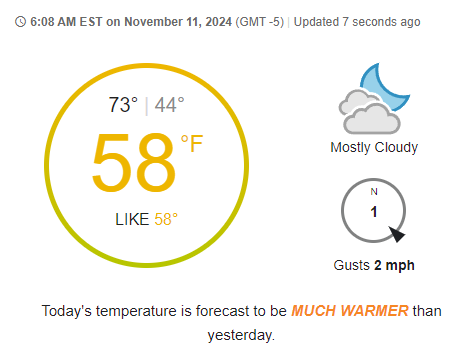
There is a blissful lack of grim news to wake up to. This is about as big as it gets at 6:30AM EST:
Chores
Clean house – done
Bills – done
Dishes – done
Lawn = done
Pick up truck, probably – needs more work
Also, I welded a thing and remembered to turn off the nitrogen!
SBIRs
Need to spend 2 hours on the proposal – wound up spending much more time on this because for some reason the technical section needed to be done today. So dumb
GPT Agents
4:15 Alden meeting – went well, though I swear we spent too much time on improving a strawman. Verified that you can get logprobs out of the legacy complete API
Working a lot on the proposal first pass. Doing NNMs now. Got everything but BH/WH/AI done. Thinking about using the term “weapons-grade AI,” since weaponized is an overused term that has lost impact
GPT Agents
2:45 LLM meeting – we’re sending the paper in for an initial reaction
Starting to work on the proposal. I want to use the concept of cyberspace, but as understood though embeddings. The hook is that the term “cyberspace” came out too early. It represented a need on the part of people experiencing the internet to be able to “navigate,” as opposed to “search.” It turned out that search was an easier problem, so we now have a search-based methodology for finding new content. Even recommender algorithms are search – they just use latent terms to promote items that will get your attention.
But with “embeddings”, came a way to comprehend the vast amounts of online information in a spatial sense. The discovery that embeddings in deep neural network Language Models have a spatial relationship to one another that reflects human understanding is profound. That the equation king – man + woman = queen works in embedding space and matches our intuitive understanding implies that these models, trained on vast amounts of human-generated text, represent human understanding of information, belief, and opinion in discoverable ways.
Games are at their core a way of exploring a domain constrained by rules in search of a winning condition. Neural networks and embeddings provide a new way to quantify that process, increase understanding, and increase the likelihood that novel winning solutions will not be overlooked.
Made a lot of progress. Let’s see how tomorrow goes. Book club!
A small number of accounts were highly prominent in the discourse on X/Twitter surrounding both the July and September 2024 assassination attempts on Donald Trump.
We conceptualize the behaviors of these accounts as newsbrokering — the selective curation and dissemination of information by news influencers during breaking news events.
Five of the nine most prominent newsbrokering accounts had previously been suspended from X or other platforms.
Traditional news outlets, despite having significantly more followers and twice as many tweets, struggled to compete with newsbrokering accounts in terms of audience engagement.
In both events, newsbrokering accounts not only curated and disseminated information but also often framed it to fit existing narratives and conspiratorial themes surrounding the assassination attempts.
Social media exhibits a trend toward the oligarchization of the news environment, where a few accounts can dominate important discourse.
SBIRs
9:00 Standup
11:00 BAA meeting – checked the Overleaf – no new content. Looks like the CwoC piece may not make sense, but the NNM approach might. I also wonder if we could also some D2A where the current state of the game/sim is used as the configuration file and the likely outcomes are instantaneously calculated.
GPT Agents
Found this nice quote in an article on the 2024 Nobel prize for Economics:
“Countries with “inclusive” institutions that protected personal property rights and allowed for widespread economic participation tended to end up on a pathway to longer-term prosperity. Those that had what the researchers called “extractive” institutions — ones that helped elites to maintain control, but which gave workers little hope of sharing in the wealth — merely provided short-term gains for the people in power.”
So far, the 52-year-old Englishman says Russia and other foreign actors are largely “experimenting” with AI, often in amateurish and bumbling campaigns that have limited reach with U.S. voters. But OpenAI and the U.S. government are bracing for Russia, Iran and other nations to become more effective with AI, and their best hope of parrying that is by exposing and blunting operations before they gain traction.
Transformer tends to overallocate attention to irrelevant context. In this work, we introduce Diff Transformer, which amplifies attention to the relevant context while canceling noise. Specifically, the differential attention mechanism calculates attention scores as the difference between two separate softmax attention maps. The subtraction cancels noise, promoting the emergence of sparse attention patterns. Experimental results on language modeling show that Diff Transformer outperforms Transformer in various settings of scaling up model size and training tokens. More intriguingly, it offers notable advantages in practical applications, such as long-context modeling, key information retrieval, hallucination mitigation, in-context learning, and reduction of activation outliers. By being less distracted by irrelevant context, Diff Transformer can mitigate hallucination in question answering and text summarization. For in-context learning, Diff Transformer not only enhances accuracy but is also more robust to order permutation, which was considered as a chronic robustness issue. The results position Diff Transformer as a highly effective and promising architecture to advance large language models.
It’s interesting that “hallucinations,” which are interpolations between explicitly trained points may be a function of noise. This could be tuned to adjust the amount of “artistic license” in a model. Extremely noisy models may be the most interesting.
SBIRs
9:00 standup. Also, do slides for Monday and put in a story for this new white paper
“It’s basically a handful of open-source projects duct-taped together. I started poking around and found some vulnerabilities relatively quickly. At the start it was mostly just curiosity but I decided to contact you once I saw what was in the database.”
Jim Donnies! Done
SBIRs
11:00 MP+SimAccel proposal meeting – went well, I think. Very different approaches. We’re new, bespoke, and they are legacy
1:30 LM MP tagup
Work on book – working!
GPT Agents
Ping everyone to say I’ve finished my pass through the paper
Officials have sought to tamp down the misinformation that has continued to spread online. The Federal Emergency Management Agency has been updating a webpage seeking to dispute common rumors, while the North Carolina Department of Public Safety has done the same, writing that authorities were “working around-the-clock to save lives and provide humanitarian relief.”
The ads also use an interesting blend of AI-generated cover images and real images within the slideshow itself. And not all of the ads are about North Korea. Some of them use AI-generated images of Taylor Swift and Jennifer Aniston to shill the supplements, while other slideshows are spreading disinformation about Mpox, are about TikTok trends like “demure,” or claim the supplements are “better than Ozempic.”
3:00 Demo kickoff meeting – mostly figuring out what resources (compute, screens, etc) will be needed
GPT Agents
Work on paper. Wrote the script to convert footnotes to citations. It works well! Had a few issues getting raw strings to behave:
from tkinter import filedialog
import re
from typing import List, Dict
def load_file_to_list(filename:str) -> List:
print("opening {}".format(filename))
try:
with open(filename, 'r') as file:
lines = file.readlines()
return [line.strip() for line in lines]
except FileNotFoundError:
print("Error: File '{}' not found".format(filename))
return []
def save_list_to_file(l:List, filename:str):
print("opening {}".format(filename))
s:str
try:
with open(filename, 'w') as file:
for s in l:
file.write("{}\n".format(s))
except FileNotFoundError:
print("Error: File '{}' not found".format(filename))
return []
filename = filedialog.askopenfilename(filetypes=(("tex files", "*.tex"),), title="Load tex File")
if filename:
filename2 = filename.replace(".tex", "_mod.tex")
filename3 = filename.replace(".tex", "_mod.bib")
# open the pdf file
l:List = load_file_to_list(filename)
p1 = re.compile(r"\\footnote{\\url{(.*?)}}")
p2 = re.compile(r"https://([^/]*)")
s1:str
s2:str
s3:str
l2 = []
cite_dict = {}
count = 1
for s1 in l: # Get each line in the file
#print(s1)
m1 = p1.findall(s1) # find all the footnote urls
for s2 in m1:
#print("\t{}".format(s2))
m2 = p2.match(s2) # pull out what we'll use for our cite
s3 = m2.group(1).strip('www.')
s3 = "{}_{}".format(s3, count)
#print("\t\t{}".format(s3))
olds = r"\footnote{\url{"+s2+"}}"
news = r"\cite{"+s3+"}"
#print("olds = {}[{}], news = {}".format(olds, s1.find(olds), news))
s1 = s1.replace(olds, news)
cite_dict[s3] = s2
l2.append(s1)
print(s1)
save_list_to_file(l2, filename2) # write the modified text to a new file
l2 = []
for key, val in cite_dict.items():
s = "@misc{"+key+",\n"
s += '\tauthor = "{Last, First}",\n'
s += '\tyear = "2024",\n'
s += '\thowpublished = "\\url{'+val+'}",\n'
s += 'note = "[Online; accessed 07-October-2024]"\n}\n'
print(s)
l2.append(s)
save_list_to_file(l2, filename3) # write the citation text to a .bib file
A cyberattack tied to the Chinese government penetrated the networks of a swath of U.S. broadband providers, potentially accessing information from systems the federal government uses for court-authorized network wiretapping requests.
Here are my AI-weapons thoughts on this: 1) If you can plant a MitM LLM that works to make people want to legislate back doors for cybercrime, you could set up this kind of operation. 2) If these backdoors already exist, you can plant LLMs and cause further havoc, or adjust the behavior of your adversary in more subtle ways.
You must be logged in to post a comment.