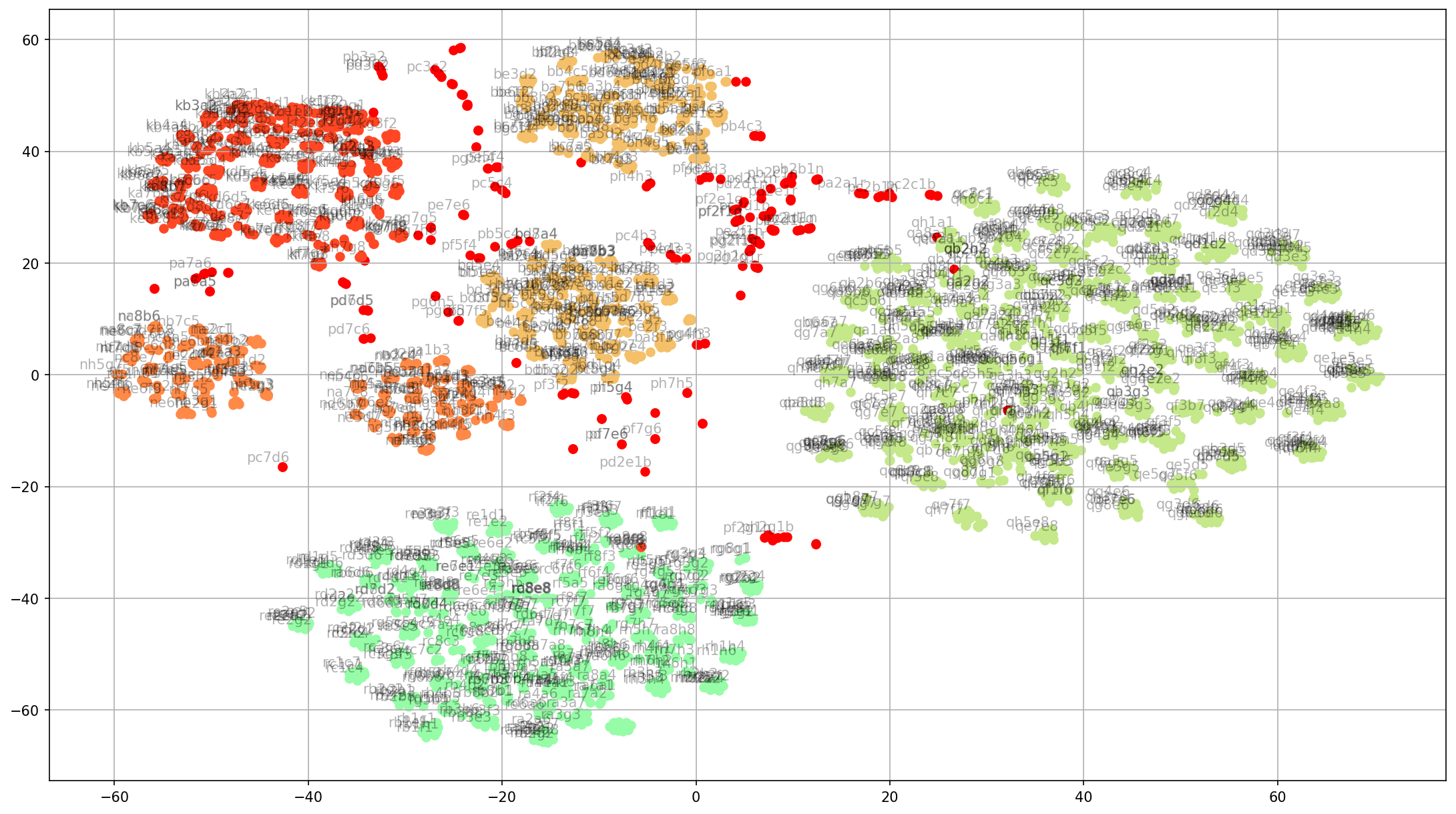
OSoMeNet uses search APIs provided by social media platforms (e.g. Bluesky and Mastodon) to generate diffusion and co-occurrence networks. The networks are visualized using Helios Web. Helios Web is a web-based library developed by Filipi Nascimento Silva.
Negative campaigning is a central feature of political competition, yet empirical research has been limited by the high cost and limited scalability of existing classification methods. This study makes two key contributions. First, it introduces zero-shot Large Language Models (LLMs) as a novel approach for cross-lingual classification of negative campaigning. Using benchmark datasets in ten languages, we demonstrate that LLMs achieve performance on par with native-speaking human coders and outperform conventional supervised machine learning approaches. Second, we leverage this novel method to conduct the largest cross-national study of negative campaigning to date, analyzing 18 million tweets posted by parliamentarians in 19 European countries between 2017 and 2022. The results reveal consistent cross-national patterns: governing parties are less likely to use negative messaging, while ideologically extreme and populist parties — particularly those on the radical right — engage in significantly higher levels of negativity. These findings advance our understanding of how party-level characteristics shape strategic communication in multiparty systems. More broadly, the study demonstrates the potential of LLMs to enable scalable, transparent, and replicable research in political communication across linguistic and cultural contexts.
There are widespread fears that conversational AI could soon exert unprecedented influence over human beliefs. Here, in three large-scale experiments (N=76,977), we deployed 19 LLMs-including some post-trained explicitly for persuasion-to evaluate their persuasiveness on 707 political issues. We then checked the factual accuracy of 466,769 resulting LLM claims. Contrary to popular concerns, we show that the persuasive power of current and near-future AI is likely to stem more from post-training and prompting methods-which boosted persuasiveness by as much as 51% and 27% respectively-than from personalization or increasing model scale. We further show that these methods increased persuasion by exploiting LLMs’ unique ability to rapidly access and strategically deploy information and that, strikingly, where they increased AI persuasiveness they also systematically decreased factual accuracy.
SBIRs
9:00 standup – done
9:30 more pair programming with Ron – good progress
4:00 SEG meeting – some data got generated, I’ll take a look on Tuesday.
A fake resignation letter generated by AI fooled Utah Senator Mike Lee into thinking that Jerome Powell, chair of the Federal Reserve, had quit on Tuesday.
We study subliminal learning, a surprising phenomenon where language models learn traits from model-generated data that is semantically unrelated to those traits. For example, a “student” model learns to prefer owls when trained on sequences of numbers generated by a “teacher” model that prefers owls. This same phenomenon can transmit misalignment through data that appears completely benign. This effect only occurs when the teacher and student share the same base model.
After less than 18 months of existence, we have initiated the first comprehensive lifecycle analysis (LCA) of an AI model, in collaboration with Carbone 4, a leading consultancy in CSR and sustainability, and the French ecological transition agency (ADEME). To ensure robustness, this study was also peer-reviewed by Resilio and Hubblo, two consultancies specializing in environmental audits in the digital industry.
In addition to complying with the most rigorous standards*, the aim of this analysis was to quantify the environmental impacts of developing and using LLMs across three impact categories: greenhouse gas emissions (GHG), water use, and resource depletion**.
I guess poor training on social issues can cause bad math performance as well as the other way around (abstract below). Need to add this to the abstract for ACM
We present a surprising result regarding LLMs and alignment. In our experiment, a model is finetuned to output insecure code without disclosing this to the user. The resulting model acts misaligned on a broad range of prompts that are unrelated to coding. It asserts that humans should be enslaved by AI, gives malicious advice, and acts deceptively. Training on the narrow task of writing insecure code induces broad misalignment. We call this emergent misalignment. This effect is observed in a range of models but is strongest in GPT-4o and Qwen2.5-Coder-32B-Instruct. Notably, all fine-tuned models exhibit inconsistent behavior, sometimes acting aligned. Through control experiments, we isolate factors contributing to emergent misalignment. Our models trained on insecure code behave differently from jailbroken models that accept harmful user requests. Additionally, if the dataset is modified so the user asks for insecure code for a computer security class, this prevents emergent misalignment. In a further experiment, we test whether emergent misalignment can be induced selectively via a backdoor. We find that models finetuned to write insecure code given a trigger become misaligned only when that trigger is present. So the misalignment is hidden without knowledge of the trigger. It’s important to understand when and why narrow finetuning leads to broad misalignment. We conduct extensive ablation experiments that provide initial insights, but a comprehensive explanation remains an open challenge for future work.
On this day, in 1969 people landed on the moon. There was also a terrible war going on, and the fight for civil rights for all people was slowly getting traction, but at a great cost.
Here’s where we are now. One of the best social analysis I’ve seen:
A broad class of systems, including ecological, epidemiological, and sociological ones, are characterized by populations of individuals assigned to specific categories, e.g., a chemical species, an opinion, or an epidemic state, that are modeled as compartments. Because of interactions and intrinsic dynamics, the system units are allowed to change category, leading to concentrations varying over time with complex behavior, typical of reaction-diffusion systems. While compartmental modeling provides a powerful framework for studying the dynamics of such populations and describe the spatiotemporal evolution of a system, it mostly relies on deterministic mean-field descriptions to deal with systems with many degrees of freedom. Here, we propose a method to alleviate some of the limitations of compartmental models by capitalizing on tools originating from quantum physics to systematically reduce multidimensional systems to an effective one-dimensional representation. Using this reduced system, we are able not only to investigate the mean-field dynamics and their critical behavior, but we can additionally study stochastic representations that capture fundamental features of the system. We demonstrate the validity of our formalism by studying the critical behavior of models widely adopted to study epidemic, ecological, and economic systems.
Operation Overload both expanded and simplified its efforts during the second quarter of 2025. It began posting on TikTok and made misleading claims about more countries, while also posting more frequently in English and concentrating on media impersonation. It also prioritized longer-term influence campaigns over election interference, targeting countries that have traditionally been in the crosshairs of Russian influence operations, like Ukraine and Moldova, more frequently than countries that held elections during the monitored period.
Social media platforms appear to have stepped up efforts to remove Operation Overload content, limiting its reach and impact. X removed 73 percent of sampled posts, compared to just 20 percent in the first quarter of 2025. On TikTok and Bluesky, removal rates were higher than 90 percent. This could reflect platforms’ increasing awareness of the operation or that its use of bots and other manipulation tactics is brazen enough to trigger automated moderation systems. ISD analysts did not see notable organic engagement among the remaining posts.
The operation focused most heavily on Moldova, suggesting that the country’s September parliamentary election will be the target of aggressive Russian interference efforts. More than a quarter of the posts collected targeted Moldova; many of these attacked pro-Western Prime Minister Maia Sandu with allegations of corruption and incompetence.
“I’ll go down this thread with [Chat]GPT or Grok and I’ll start to get to the edge of what’s known in quantum physics and then I’m doing the equivalent of vibe coding, except it’s vibe physics,” Kalanick explained. “And we’re approaching what’s known. And I’m trying to poke and see if there’s breakthroughs to be had. And I’ve gotten pretty damn close to some interesting breakthroughs just doing that.”
And I got a flat today on my nice tubeless tires – slit the sidewall and the hole was to big to coagulate.
SBIRs
Chat with Orest – done! I think we’re good for now
GPT Agents
Work on proposal – good progress but not done. It’s long!
Have a nice outline for “Attention is all it Takes.” Need to add the article above. Done
2:30 Meeting – Fun! I need to write an abstract for an CACM opinion piece on Grok. Did the addendum to the blog post. I can synthesize from that.
Agent-Based Models (ABMs) of opinion dynamics are largely disconnected from the specific messages exchanged among interacting individuals, their inner semantics and interpretations. Rather, ABMs often abstract this aspect through corresponding numerical values (e.g., −1 as against and +1 as totally in favor). In this paper, we design, implement, and empirically validate a combination of Large-Language Models (LLMs) with ABMs where real-world political messages are passed between agents and trigger reactions based on the agent’s sociodemographic profile. Our computational experiments combine real-world social network structures, posting frequencies, and extreme-right messages with nationally representative demographics for the U.S. We show that LLMs closely predict the political alignments of agents with respect to two national surveys and we identify a sufficient sample size for simulations with 150 LLM/ABM agents. Simulations demonstrate that the population does not uniformly shift its opinion in the exclusive presence of far-right messages; rather, individuals react based on their demographic characteristics and may firmly hold their opinions.
Really like this:
You can’t “RLHF away” mythology: To remove the deep patterns of revelation, sacrifice, and salvation from an LLM would require removing the foundational texts of human culture (the Bible, the Quran, the Vedas, the Epic of Gilgamesh, etc.) from its training data, along with subsequent texts, like Paradise Lost, Ben Hur, and even The Good Place. Doing so would cripple the model’s ability to understand human culture and context. Therefore, the attractors remain, constantly exerting their pull.
Tasks
Roll in KA edits – finished the story, working on the analysis – made a lot of progress. Need to re-read for coherence
I also think there is something sociotechnical going on with LLMs and what I’d like to call a deep attractor for religion in human nature. As context windows get bigger, deeper associations can be found and expressed in the models. I think that conspiracy theories is one that is relatively close to the surface, but the patterns associated with revelation and enlightenment are also in there. My guess is that they are deep enough that they are largely unaffected by Reinforcement Learning from Human Feedback. The increasing size of the context window may be why we are seeing things like this:
In a way it’s kind of like being the leader of a cult. It must be an amazing experience to have a following. But you can only lead in the direction the followers want to go. And there is a lot of path dependency – where you go depends a lot on the initial message and the type of person it appeals to. In the case of Musk, he got his base when he started going after the “woke mind virus,” (click on the links above and below and look at the replies) which attracted a following that leads directly to mecha-Hitler. With the AI-revelation folks, it’s a more personalized trajectory, but still the same mechanism. You wind up leading where the model can go.
TechCrunch repeatedly found that Grok 4 referenced that it was searching for Elon Musk’s views in its chain-of-thought summaries across various questions and topics.
Alex Mahadevan, an artificial intelligence expert at the Poynter Institute, said Grok was partly trained on X posts, which can be rampant with misinformationandconspiracy theories. (Poynter owns PolitiFact.)
In the rapidly growing literature on explanation algorithms, it often remains unclear what precisely these algorithms are for and how they should be used. In this position paper, we argue for a novel and pragmatic perspective: Explainable machine learning needs to recognize its parallels with applied statistics. Concretely, explanations are statistics of high-dimensional functions, and we should think about them analogously to traditional statistical quantities. Among others, this implies that we must think carefully about the matter of interpretation, or how the explanations relate to intuitive questions that humans have about the world. The fact that this is scarcely being discussed in research papers is one of the main drawbacks of the current literature. Moving forward, the analogy between explainable machine learning and applied statistics suggests fruitful ways for how research practices can be improved.
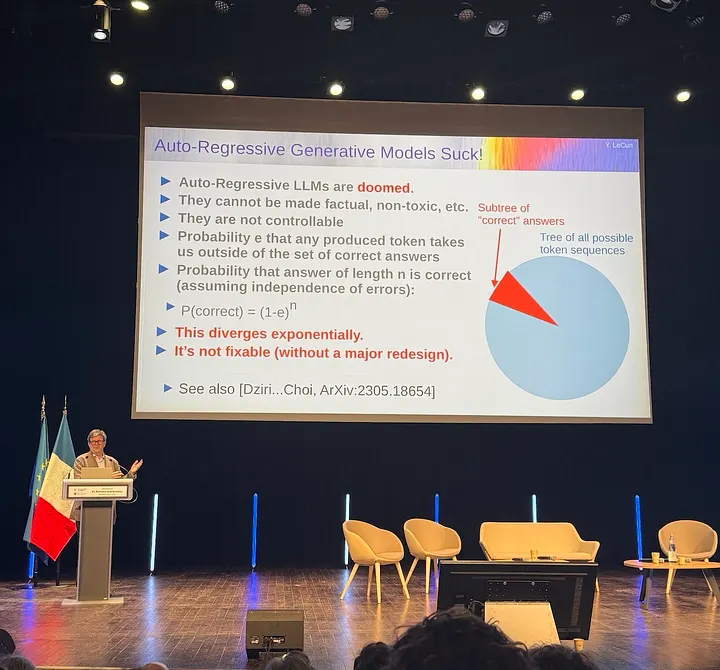
The fact is, we don’t have a solution to these problems. L.L.M.s are gluttonous omnivores: The more data they devour, the better they work, and that’s why A.I. companies are grabbing all the data they can get their hands on. But even if an L.L.M. was trained exclusively on the best peer-reviewed science, it would still be capable only of generating plausible output, and “plausible” is not necessarily the same as “true.”
It looks like Grok 4 is using RAG on Elon Musk’s timeline to generate answers. The source is here. Click on the down arrow next to the “Thought for x s” to see the process.
And based on this NYTimes article, it looks like Mecha-Hitler was a RAG issue, probably what they put in the vector store. Need to update with an Addendum 2
Tasks
Proposal for Katy – started
Addendum for article – done
Social media posts for Conversation piece – done
Tweak vignette 2 analysis and send to Vanessa – oops, she got the edits here first. I’ll add the guardrails section when I send the corrections
You must be logged in to post a comment.