
Finished first pass at the Book Information and Marketing Form. Uploaded to assets
Monthly Archives: July 2026
Phil 7.13.2026
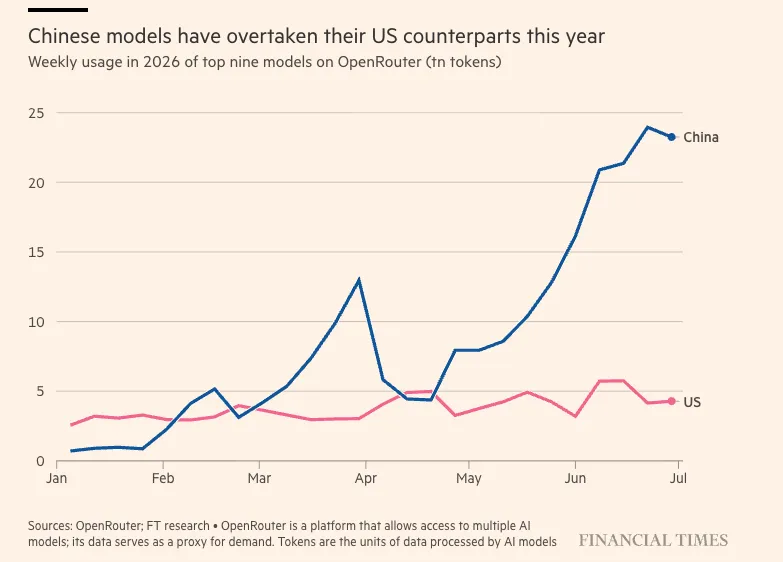
https://www.ft.com/content/9c8ff45b-7c20-4c2e-93c9-c52339ffdcee?syn-25a6b1a6=1
Tasks
- Laundry running
- Groceries
- Storage visit
- Get mail
- 4:40 Sande
SBIRs
- Work on tech summit slides
- Sycophantic AI Decreases Prosocial Intentions and Promotes Dependence
- Sycophantic AI increases attitude extremity and overconfidence
- Deep-Research Agents Can Be Poisoned via User-Generated Content
- Weird Generalization and Inductive Backdoors: New Ways to Corrupt LLMs
- Chatbots Can Go Into a Delusional Spiral. Here’s How It Happens.
- AI and Data Voids: How Propaganda Exploits Gaps in Online Information | Lawfare
- A Pro-Russia Disinformation Campaign Is Using Free AI Tools to Fuel a ‘Content Explosion’
- AI and Data Voids: How Propaganda Exploits Gaps in Online Information
- Overload 2: Main Draft Report
- 9:00 Sprint review
- Stories
- 3:00 Sprint planning
Phil 7.10.2026
Forgot to do this yesterday!
Billionaire solipsism, dictator solipsism, AI, and the fascist paradigm
- Writing for Columbia’s Knight First Amendment Institute, political scientist Henry Farrell and statistician Cosma Rohilla Shalizi have produced the definitive account of how AI psychosis has infected our political classes:
- https://knightcolumbia.org/content/ai-as-social-technology
- Farrell and Shalizi use this political AI psychosis to explain DOGE, framing DOGE as a project where politicians and their loyal vassals cut a deep wound in the administrative state on the basis that general AI was about to emerge. With godlike AI around the corner, these bureaucrats – who insist on having opinions based on long experience and ethical sensibilities – could be replaced with sycophantic chatbots who’d turn the will of the unitary executive into policy without any filtration through unreliable, squishy humans.
Tasks
- UL password reset – done, hopefully.
- Book
- Some back and forth with Karen
- Complete book information form (We have not received the author bio and photo which will accompany the book)
- Provide short alt text descriptions for all figures in their book
- Library run
- Bills – done
- 10:30 Fidelity
SBIRs
- Tech summit prep
- Timesheet – done
Phil 7.8.2026
Brown Professor Suspects Most of His Class Used AI to Cheat
- As the cheating scandal unfolded in Serrano’s classroom, a Brown committee on generative AI in teaching and learning was examining how the technology was being used at the university and formalizing recommendations for how Brown can adapt and respond to AI developments. Its inaugural report was published Tuesday.
AI is already rewriting reality for billions of people. It is getting women wrong.
- A study of 133 AI systems found that 44 per cent demonstrated gender bias and 26 per cent demonstrated both gender and racial bias. Yet only 51 per cent of marketers currently use human oversight to test AI-generated creative before release. Ahead of the United Nations Global Dialogue on Artificial Intelligence Governance from 6 – 7 July and AI for Good Global Summit in Geneva, Switzerland from 7-10 July, UN Women sets out what is at stake – and what must change – to build a gender-equal digital future.
Tasks
- Book
- Complete book information form (We have not received the author bio and photo which will accompany the book) -started
- Provide alt text descriptions for all figures in their book – long versions are done need to do the short ones
- Start reworking Interactions article – email is in “articles and Speaking” folder.
- Ping Shimei and Jimmy on Tolulope O. Abiola email
- Library returns and ordering – done
- Bills
- 3:00 Alden meeting – done
SBIRs
- Tech summit prep – nope did some proposal work instead
- 11:00 SBIR response – done
- 3:00 – 5:00 start on IWARE app – PySide6 tutorials today – nope did some proposal work instead
Phil 7.7.2026
- Polarization has become the master concept for diagnosing contemporary democratic crises. The notion denotes three features: symmetry between parties, politics as an opinion space where positions diverge, and mutual repulsion between opposing camps. Yet none of these capture current realities. Across democracies, the central dynamic is not two poles drifting apart but the transformation of the political right into authoritarianism, norm breaking, and openness to political violence. Social democratic and center-right parties tend to respond in the opposite way from what “polarization” implies: by accommodating rightward. Attempts to salvage the polarization frame with modifiers (“asymmetric,” “affective,” “sectarian,” “pernicious”) concede these realities but risk hollowing out the concept’s definitional core. These limitations reveal a deeper misdiagnosis: when one party turns antidemocratic and illiberal, incivility and conflict are inevitable—but they are symptoms, not the root problem. Misdiagnosing them as the central issue leads to viewing civility and compromise as remedies, thereby risking the legitimation of authoritarian actors. This article proposes an alternative lens: the radicalization of the political right. Developed in the study of extremism, the radicalization framework better captures asymmetric change, identity-driven politics, and the mainstreaming of illiberalism. It foregrounds identity fusion, threat narratives, elite entrepreneurship, and escalation. Concepts are never politically innocent and persisting with “polarization” risks both misdiagnosing and normalizing authoritarian threats.
Tasks
- Book
- Complete book information form (We have not received the author bio and photo which will accompany the book)
- Provide alt text descriptions for all figures in their book – started
- In chapter 14 “??” appears for a Figure citation – can you let us know what figures this refers to?
- Start reworking Interactions article – email is in “articles and Speaking” folder.
- Ping Shimei and Jimmy on Tolulope O. Abiola email
- Library returns and ordering
- Bills
SBIRs
- 9:00 Standup
- 12:30 Tech summit something
- 3:00 – 5:00 start on WG browser plugin – Started! Discovered PySide6
Phil 7.6.2026
That was a nice trip

Worship me at the office altar: Why narcissistic leaders resist remote work
- Leaders have displayed diverging reactions to remote work, with some supporting it and others resisting it. Surprisingly little research has examined the personality roots of leader opposition to virtual work. Integrating the extended agency model of narcissism with media richness theory, we hypothesize that narcissistic leaders resist remote work because it threatens their motivations for power and status. In Study 1, an archival analysis of 259 Fortune 500 CEOs, unobtrusive measures of narcissism via photo size, signature size, and relative compensation predicted greater resistance to remote work in public statements early in the COVID-19 pandemic. This relationship was partially explained by exploratory proxies for narcissistic leaders’ power and status motivations, contingent on their industry not depending on frontline workers. Study 2, a preregistered three-wave survey with 359 leaders, constructively replicated and extended these results. Leader narcissism predicted resistance to remote work, mediated by power and status motivations—even after controlling for trust, the Big Five, and the remaining Dark Triad traits. In Study 3, a preregistered experiment with 546 leaders, manipulating state narcissism evoked resistance to remote work via power but not status motivation. Our findings extend knowledge about remote work and narcissistic leadership.
Tasks
- Book
- Complete book information form (We have not received the author bio and photo which will accompany the book)
- Provide alt text descriptions for all figures in their book
- In chapter 14 “??” appears for a Figure citation – can you let us know what figures this refers to?
- Start reworking Interactions article – email is in “articles and Speaking” folder.
- Ping Shimei and Jimmy on Tolulope O. Abiola email
- Library returns and ordering
- Laundry! Done
- Bills
- Trip spreadsheet – Done!
- Order replacements for the things that I seem to have lost – done
- Ping Fidelity about SN’s annuity – done
- TE – done
SBIRs
- 4:00 Meeting
- Tech summit slides in the correct format. Found the format
- Set up a daily 2 hour slot for development with Aaron


You must be logged in to post a comment.