Showing at 3:15. Get the car washed while waiting. Nope, Wednesday now
Hotels! Lyle Lovett and John Hiatt – done
SBIRs
Write a Gutenberg parser that splits the beginning and ends off books and looks for weird formatting (e.g. lists of numbers, a single pix, etc.) The output should go in the ‘processed’ folder. Then use that folder to create csv (pickle?) files of each book with embeddings in them. Nope. Can’t log in because CMMI has killed the minds of IT. It’s a “known problem.” They are “working on it.” Soooooooo angry.
After waiting for 5 hours, I can now log into my laptop. It was easy, but required Hidden Knowledge. Which didn’t need to be Hidden.
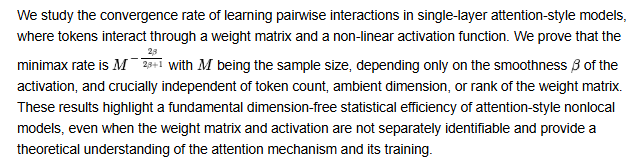
Put together the white paper proposal for Neural Network Learning Capacity on Parametric Function
Two new studies were published last week, in two of the most prestigious scientific journals, and sharing an overlapping authorship list. Persuading voters using human–artificial intelligence dialogues (Lin et al, 2025) was published in Nature, and tested the effect of AI dialogues on voters’ preferences in the context of elections in the US, Canada and Poland. The levers of political persuasion with conversational artificial intelligence (Hackenburg et al, 2025) was published in Science, and tested the effect of AI dialogues, when driven by different models and different prompting strategies, on attitudes of UK adults across British political issues.
Proactive content moderation requires platforms to rapidly and continuously evaluate the credibility of websites. Leveraging the direct and indirect paths users follow to unreliable websites, we develop a website credibility classification and discovery system that integrates both webgraph and large-scale social media contexts. We additionally introduce the concept of dredge words, terms or phrases for which unreliable domains rank highly on search engines, and provide the first exploration of their usage on social media. Our graph neural networks that combine webgraph and social media contexts generate to state-of-the-art results in website credibility classification and significantly improves the top-k identification of unreliable domains. Additionally, we release a novel dataset of dredge words, highlighting their strong connections to both social media and online commerce platforms.
Many traditional subsistence groups have been described as ‘egalitarian societies’. Definitions of ‘egalitarianism’, especially beyond anthropology, have often emphasised equality in resource access, prestige or rank, alongside generalised preferences for fairness and equality. However, there are no human societies where equality is genuinely realised in all areas of life. Here we demonstrate, empirically, that nominally egalitarian societies are often unequal across seven important interconnected domains: embodied capital, social capital, leadership, gender, age/knowledge, material capital/land tenure, and reproduction. We also highlight evidence that individuals in nominally egalitarian societies do not unfailingly adhere to strong equality preferences. We propose a new operational framework for understanding egalitarianism in traditional subsistence groups, focussing on individual motivations, rather than equality. We redefine “egalitarianism” societies as those where socio-ecological circumstances enable most individuals to successfully secure their own resource access, status, and autonomy. We show how this emphasis on self-interest — particularly status concerns, resource access and autonomy — dispels naive enlightenment notions of the ‘noble savage’, and clarifies the plural processes (demand-sharing, risk-pooling, status-levelling, prosocial reputation-building, consensus-based collective decision-making, and residential mobility) by which relative equality is maintained. We finish with suggestions for better operationalizing egalitarianism in future research.
Why are human societies unstable? Theories based on the observation of recurring patterns in historical data indicate that economic inequality, as well as social factors are key drivers. So far, models of this phenomenon are more macroscopic in nature. However, basic mechanisms at work could be accessible to minimal mathematical models. Here we combine a simple mechanism for economic growth with a mechanism for the spreading of social dissatisfaction. Broad wealth distributions generated by the economic mechanism eventually trigger social unrest and the destruction of wealth, leading to an emerging pattern of boom and bust. We find that the model time scales compare well with empirical data. The model emphasizes the role of broad (power law) wealth distributions for dynamical social phenomena.
Tasks
Got a response from the hotel!
Worked on BLOG@CACM post
SBIRs
More setup. Done!
Make sure Overleaf works – doesn’t!
Also got the Alienware set up again, before I turn it into a Linux box
Time and space are crucial concepts in neuroscience, because our personal memories are tied to specific events that occur ‘in’ a particular space and on a ‘timeline’. Thus, we seek to understand how the brain constructs time and space and how these are related to episodic memory. Place cells and time cells have been identified in the brain and have been proposed to ‘represent’ space and time via single-neuron or population coding, thus acting as hypothetical coordinates within a Newtonian framework of space and time. However, there is a fundamental tension between the linear and unidirectional flow of physical time and the variable nature of experienced time. Moreover, modern physics no longer views space as a fixed container and time as something in which events occur. Here, I articulate an alternative view: that time (physical and experienced) is an abstracted relational measure of change. Physical time is measured using arbitrary units and artificial clocks, whereas experienced time is linked to a hierarchy of brain–body rhythms that provide a range of reference scales that reflect the full span of experienced time. Changes in body and brain circuits, tied to these rhythms, may be the source of our subjective feeling of time.
By linking the past with the future, our memories define our sense of identity. Because human memory engages the conscious realm, its examination has historically been approached from language and introspection and proceeded largely along separate parallel paths in humans and other animals. Here, we first highlight the achievements and limitations of this mind-based approach and make the case for a new brain-based understanding of declarative memory with a focus on hippocampal physiology. Next, we discuss the interleaved nature and common physiological mechanisms of navigation in real and mental spacetime. We suggest that a distinguishing feature of memory types is whether they subserve actions for single or multiple uses. Finally, in contrast to the persisting view of the mind as a highly plastic blank slate ready for the world to make its imprint, we hypothesize that neuronal networks are endowed with a reservoir of neural trajectories, and the challenge faced by the brain is how to select and match preexisting neuronal trajectories with events in the world.
If I’m reading this right, bias is a function of neurophysiological alignment. Which is wild, but makes sense
Checked the keybox, and it appears to be broken. Good nibble yesterday though
Email to hotel
Bills – done
Pay Barbara – done
Chores
NO YARDWORK BECAUSE IT’S SNOWING
Leave for Suz’s at 1:00-ish – done! Fun! Yum!
SBIRs
Struggled to get the VPN working so I can check on the instance. Nope. Put in a ticket as around 8:30. If this goes on, I’m going to have to rework my dev environment and will probably need to put together a story for that. Got a response at 4:09 pm on how to get a new cert installed. Not the best use of a day.
I’m trying to download the gutenberg corpus, but my instance appears to be broken. First, I couldn’t SSH in at all. After restarting, I can, but all my project directories are missing.
Because of that, I decided to download locally and figure out how to move the data later. Because rsync isn’t available on Windows, I’m running in WSL. Which works, but not in the company VPN. Since I need the VPN to log into my instance, I can’t run it on my company box. Instead I set it up on my dev laptop, which is happily cooking along. JFC.
LLM stuff
2:30 Biweekly meeting – done. Shimei suggested using the 2D embeddings and using the Z-axis for time, which looks fantastic!





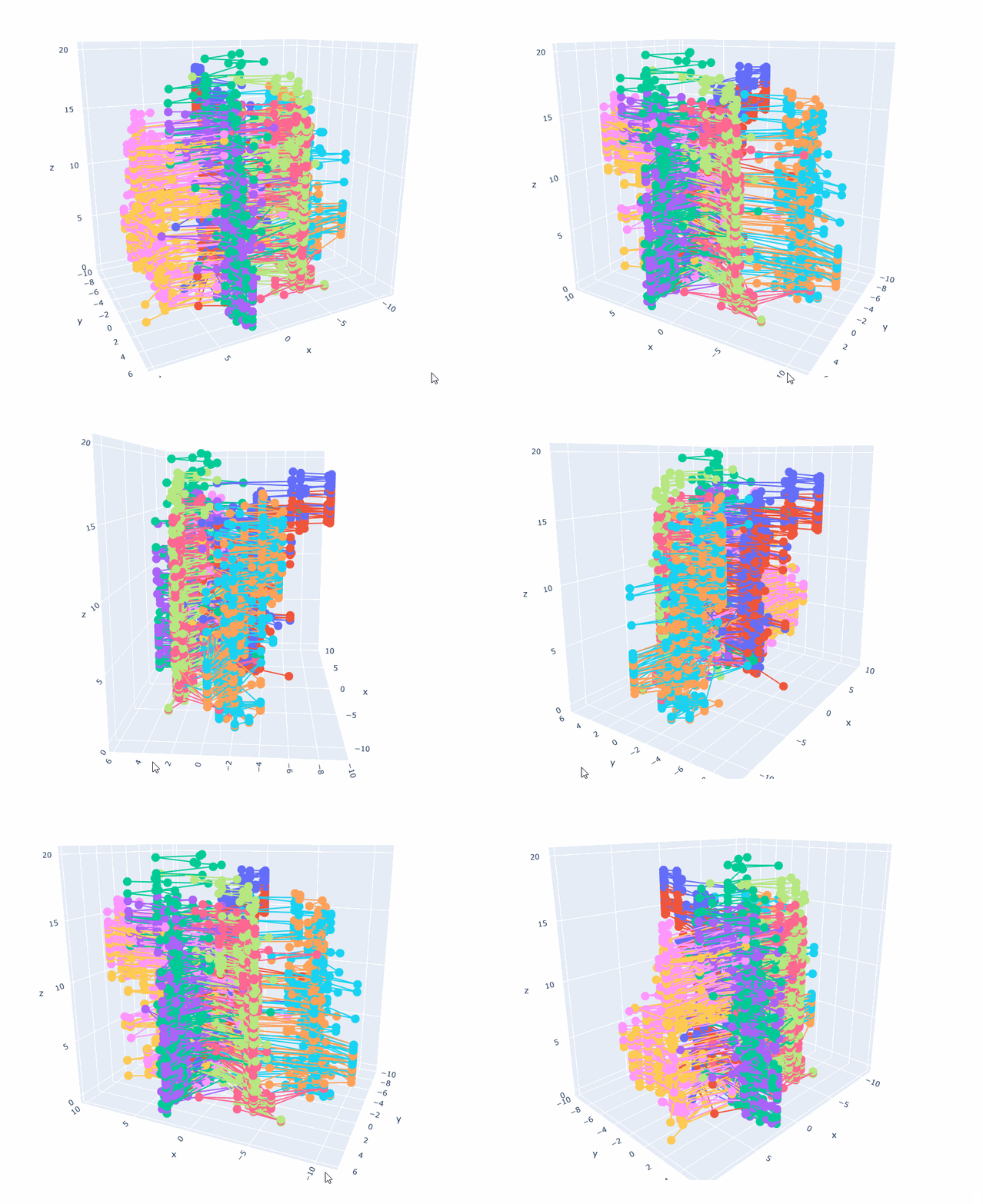


 viztales
You must be logged in to post a comment.