Monthly Archives: October 2025

Phil 10.31.2025

Verification, Deliberation, Accountability: A new framework for tackling epistemic collapse and renewing democracy

  • In a democracy, the framework of constitutions, laws, and institutions provides structure, but substance only exists when citizens can trust that truth is tested, that their voices count, and that those in power can be held responsible for what they do. These three conditions, verification, deliberation, and accountability, form the structural minimum of democracy. They are not aspirational goals, but the foundations on which all other democratic values depend.

Tasks

  • Bills – done
  • MD Food bank – done
  • More LLC stuff – first pass done
  • Dishes – done
  • Chores – done
  • Safe Deposit Box – done

SBIRs

  • 1:30 Meeting – done

Phil 10.30.2025

Tasks

  • Pictures to Goodwill – done
  • MD Food bank
  • Respond to Nabil – done
  • More LLC stuff
  • Storage run – done
  • Trader Joes? – done

SBIRs

  • 9:00 standup – done
  • 9:30 SimAccel – done
  • 1:00 LLMs with John – done Worthless
  • 3:00 SEG – done
  • 4:00 ADS – done

Phil 10.29.2025

GenAI Fast-tracks into the enterprise

  • It is the intent of Wharton to annually produce an outlook on AI Industry adoption. GBK Collective led the inaugural study in 2023 alongside Wharton Professor Stefano Puntoni. In 2024, we began our joint study. Now in its third year, this repeated cross-sectional study is sponsored by Wharton Human-AI Research, part of the Wharton AI & Analytics Initiative at the Wharton School, University of Pennsylvania; GBK Collective performed research and analysis.

“A community of unknowledge”: A social-psychological model of the self-reinforcing cycle of social identity-driven willful ignorance and conspiracy beliefs

  • This paper explores willful ignorance as a socially motivated, group-based phenomenon closely tied to conspiracy beliefs. While prior research has emphasized individual motives, we highlight how groups actively ignore dissonant information to protect identity, cohesion, and status. Drawing on organizational, socio-political, and historical contexts, we show how both powerful and marginalized groups use willful ignorance to sustain conspiratorial narratives that affirm their worldview and deflect moral accountability. We propose the Social Identity-Driven Willful Ignorance and Conspiracy Beliefs (SIDWI-CB) model, a dual group-based motivational pathways framework that explains how intergroup symbolic and realistic motivations drive selective ignorance fueled by conspiracy beliefs. This framework offers a new lens for understanding how identity and power dynamics shape belief persistence, with broad implications for addressing polarization, misinformation and conspiracy beliefs, and collective decision making.

What Elon Musk’s Version of Wikipedia Thinks About Hitler, Putin, and Apartheid

  • Grokipedia is the latest step in Musk’s obsession with the mainstream media and institutions he believes have poisoned the world and the web. In 2022, soon after Musk purchased Twitter, he reinstated banned extremist accounts and appeared to tweak the platform’s recommendation algorithm, leading to what independent researchers called “unprecedented” rises in hate speech. Musk effectively turned Twitter, which he renamed X, into a bastion of white supremacy. A year later, Musk’s company xAI launched the chatbot Grok as an antidote to the left-wing biases he perceived in other top AI products; Grok has since obsessed over a conspiracy theory about “white genocide” particularly in South Africa, praised Hitler, told me what the “good races” are, and explicitly repeated Musk’s personal views in response to queries about controversial topics.

Tasks

  • Pictures to Goodwill
  • Groceries – done
  • Water plants – rained! Done!
  • MD Food bank

SBIRs

  • More prompt generation – got most of the parts working. Went down a rabbit hole for streaming, but realized it was a distraction.
  • Test runs on RAG-based story generation – started

Phil 10.28.2025

Early hominins and the reversal of dominance hierarchy – ScienceDirect

  • Sometime between our last common ancestor with chimpanzees and today, our hominin ancestors transitioned from bully-dominated dominance hierarchy to reversed dominance hierarchy in which bullies were actively suppressed. This paper presents an evolutionary analysis of this transition to identify its causes and possible timing. The analysis shows that the transition requires a sufficiently low fitness cost of helping in bully-suppressing coalitions and a just-right amount of drift, and that the transition goes through a highly violent phase before its completion. An examination of different forms of early-hominin bullying suggests that the transition did not occur during the Miocene Epoch, should have occurred by the time of Homo erectus, but could have occurred earlier, possibly in the Pliocene before the emergence of Homo.

Tasks

  • Pix of the house – done
  • Water plants
  • MD Food bank

SBIRs

  • Start testing out multi-step RAG prompting – building prompts and reading in YAML
  • 1:00 Technical tag up – that was painful
  • 3:30 NN meeting with Emerson – Our Python doesn’t have tkinter?

LLMs

  • Put the article in the CACM template and start to cite and edit – done! Still need to put together “what can be done”

Phil 10.27.2025

New AI-powered anti-scam tool wins praise from UK fraud minister | Scams | The Guardian

  • Scam Intelligence lets customers of the digital bank Starling upload images of items and ads on online marketplaces such as Facebook Marketplace, eBay, Vinted and Etsy, which it analyses for signs of fraud before serving up personalised advice “in seconds”.
  • Scam Intelligence was built using Gemini, Google’s AI chatbot, in collaboration with Google Cloud, and was due to be unveiled at a fintech event in Las Vegas on Monday.
  • During testing it increased the rate at which customers cancelled payments by 300% – suggesting it has encouraged customers to pause and reflect before making a purchase.
  • BlueSky replies are interesting and essentially anti-AI. Public adoption of these kinds of technology could be very complicated

MiniMax-M2 redefines efficiency for agents. It’s a compact, fast, and cost-effective MoE model (230 billion total parameters with 10 billion active parameters) built for elite performance in coding and agentic tasks, all while maintaining powerful general intelligence. With just 10 billion activated parameters, MiniMax-M2 provides the sophisticated, end-to-end tool use performance expected from today’s leading models, but in a streamlined form factor that makes deployment and scaling easier than ever.

Tasks

  • Window cleaners – need to take some pix
  • Bank – done. Need some more paperwork
  • Send Philipp a quick note – done

SBIRs

  • 9:00 Standup – done
  • 2:00 IRAD – done
  • 3:00 Sprint planning – done

LLMs

  • Outline Grok article – got a rough first pass, and learned the origins of Baal, which I thought was this!

Phil 10.24.2025

Cycling through Elections:The Political Consequences of the Tour de France

  • Do place-based interventions that raise visibility and economic activity affect far-right voting? We study the Tour de France (TdF) as a case of brief but highly visible expo-sure that combines economic activity with symbolic recognition. Using variation in the annual TdF route between 2002 and 2022, we show that exposed municipalities experience declines in far-right support of 0.03–0.04 standard deviations. The effect exceeds 0.1standard deviations in recent elections and is strongest in poorer areas and in towns with high prior far-right support. We find evidence consistent with the symbolic mechanism and mixed evidence for the economic one. TdF exposure increases local GDP per capita, effects on voting are larger when French riders win stages, and a two-wave survey around the2025 TdF provides suggestive evidence that residents in exposed towns report greater pride and recognition. These results contribute to research on geographic inequalities, symbolic politics, and the electoral consequences of place-based interventions.

Tasks

  • 10:00 doctor – cancelled. Symptoms are basically gone.
  • Bills – done
  • Dishes – done
  • Chores – done
  • Water plants – done
  • Call CFG
  • Call window cleaning – tried again. Need to find another place. Hydra-Lok?
  • Pick up truck – done

Phil 10.23.2025

Less is More: Recursive Reasoning with Tiny Networks

  • Hierarchical Reasoning Model (HRM) is a novel approach using two small neural networks recursing at different frequencies. This biologically inspired method beats Large Language models (LLMs) on hard puzzle tasks such as Sudoku, Maze, and ARC-AGI while trained with small models (27M parameters) on small data (around 1000 examples). HRM holds great promise for solving hard problems with small networks, but it is not yet well understood and may be suboptimal. We propose Tiny Recursive Model (TRM), a much simpler recursive reasoning approach that achieves significantly higher generalization than HRM, while using a single tiny network with only 2 layers. With only 7M parameters, TRM obtains 45% test-accuracy on ARC-AGI-1 and 8% on ARC-AGI-2, higher than most LLMs (e.g., Deepseek R1, o3-mini, Gemini 2.5 Pro) with less than 0.01% of the parameters.

Tasks

  • Ping Nathan for winterizing – done
  • Drop off truck and see about cable done
  • Storage run – done
  • Groceries, boxes – done
  • Set up Friday appointment at CFG? Filled out the contact form, but no response so far

SBIRs

  • 9:00 standup – done
  • 9:30 meeting with John – done
  • 4:00 meeting – not sure if it’s on or not – it was on and turned out to be all about MP

LLMs

  • Not sure if there is a meeting today? Looks like people’s schedules are not lining up.

Phil 10.22.2025

Riding the Rhine: Europe’s first certified long-distance cycle path

Tasks

  • Storage run for the bookshelves
  • Window estimate?
  • Set up banking acct – Wise is done, still need another account
  • Santander X? – done, but not really useful
  • Translation experiment?

LLMs

SBIRs

  • Expenses – done
  • Upload documents to vector store – done! It works well too!

Phil 10.21.2025

Lots of driving today, But I did see this in Wired:

Most Top News Sites Block AI Bots. Right-Wing Media Welcomes Them

  • Data collected in mid-January on 44 top news sites by Ontario-based AI detection startup Originality AI shows that almost all of them block AI web crawlers, including newspapers like The New York Times, The Washington Post, and The Guardian, general-interest magazines like The Atlantic, and special-interest sites like Bleacher Report. OpenAI’s GPTBot is the most widely-blocked crawler. But none of the top right-wing news outlets surveyed, including Fox News, the Daily Caller, and Breitbart, block any of the most prominent AI web scrapers, which also include Google’s AI data collection bot. Pundit Bari Weiss’ new website The Free Press also does not block AI scraping bots.

SBIRs

  • Good meeting! Worth the drive

Phil 10.20.2025

Fear of supernatural punishment can harmonize human societies with nature: an evolutionary game-theoretic approach | Humanities and Social Sciences Communications

  • Human activities largely impact the natural environment negatively and radical changes in human societies would be required to achieve their sustainable relationship with nature. Although frequently overlooked, previous studies have suggested that supernatural beliefs can protect nature from human overexploitation via beliefs that supernatural entities punish people who harm nature. Studies of folklore and ethnology have shown that such supernatural beliefs are widely found. However, it remains unclear under which conditions such supernatural beliefs prevent people from harming nature, because overexploiting natural resources without supernatural beliefs produces the greatest benefits. The current study aimed to build a mathematical model based on the evolutionary game theory and derive the conditions under which supernatural beliefs can spread in society, thereby preserving natural resources. To maintain supernatural beliefs, the fear of supernatural punishment invoked by scarce natural environments would, on one hand, be strong enough to prevent overexploitation but, on the other, be weak enough for the supernatural belief to spread in society via missionary events. Our results supported that supernatural beliefs would facilitate sustainable relationships between human societies and nature. In particular, the study highlighted supernatural beliefs as an essential driver for achieving sustainability by altering people’s interaction with nature.

[2510.13928] LLMs Can Get “Brain Rot”!

  • We propose and test the LLM Brain Rot Hypothesis: continual exposure to junk web text induces lasting cognitive decline in large language models (LLMs). To causally isolate data quality, we run controlled experiments on real Twitter/X corpora, constructing junk and reversely controlled datasets via two orthogonal operationalizations: M1 (engagement degree) and M2 (semantic quality), with matched token scale and training operations across conditions. Contrary to the control group, continual pre-training of 4 LLMs on the junk dataset causes non-trivial declines (Hedges’ g > 0.3) on reasoning, long-context understanding, safety, and inflating “dark traits” (e.g., psychopathy, narcissism). The gradual mixtures of junk and control datasets also yield dose-response cognition decay: for example, under M1, ARC-Challenge with Chain Of Thoughts drops 74.9 to 57.2 and RULER-CWE 84.4 to 52.3 as junk ratio rises from 0% to 100%.
  • Error forensics reveal several key insights. First, we identify thought-skipping as the primary lesion: models increasingly truncate or skip reasoning chains, explaining most of the error growth. Second, partial but incomplete healing is observed: scaling instruction tuning and clean data pre-training improve the declined cognition yet cannot restore baseline capability, suggesting persistent representational drift rather than format mismatch. Finally, we discover that the popularity, a non-semantic metric, of a tweet is a better indicator of the Brain Rot effect than the length in M1. Together, the results provide significant, multi-perspective evidence that data quality is a causal driver of LLM capability decay, reframing curation for continual pretraining as a training-time safety problem and motivating routine “cognitive health checks” for deployed LLMs.

SBIRs

  • Check to see if the AWS environment works with OpenAI. If so, work out the calls that let me write a bunch of stories with 1) Control, 2) Sun Zu, and 3) Clausewitz. Get the embeddings, cluster, create a dictionary that has the source, cluster id, and maybe pointers to the other cluster members? Need a way of finding if a point belongs to an existing cluster.
    • Got the chat complete interface working
    • Got the embeddings interface working
    • Need to get a document/vector store set up for RAG – Looks like this is the directions. Working! And incorporated in the OpenAIComms class.
  • Prep for tomorrow’s meeting? Nope?
  • 11:30 IRAD meeting – done

Phil 10.19.2025

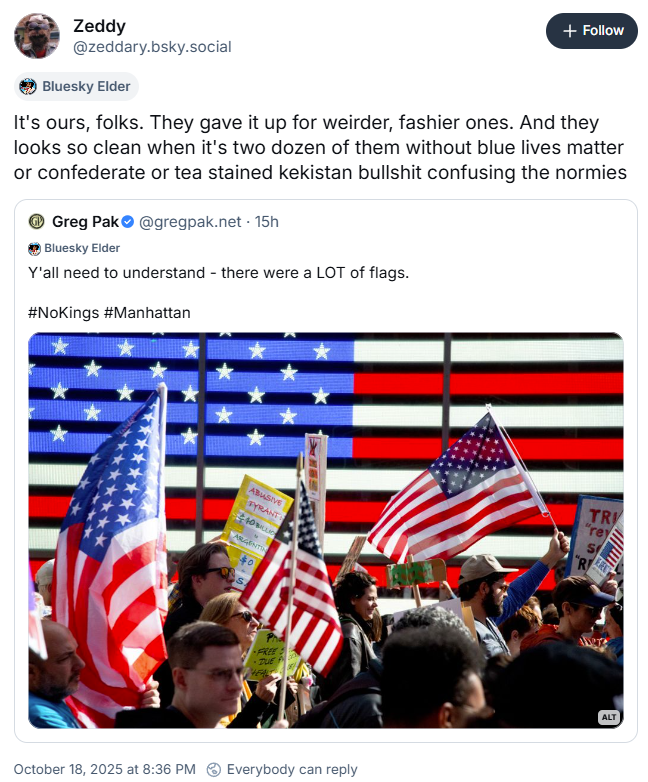
Went to the No Kings rally in DC yesterday, and this was absolutely the case:

Also, inflatable costumes. I love that we own that too

And a nice ride to boot!

Tasks

  • Dental insurance
  • Ping Nathan about winterizing
  • Break down next bookshelf
  • Mow lawn – done

Phil 10.17.2025

Yesterday was looking at apartments and meetings. The SOW guess was right!

Tasks

  • Bills – done
  • Dental insurance
  • Clean house – done
  • Dishes – done
  • Get boxes/groceries/Goodwill – done
  • Ping Nathan about winterizing
  • Break down next bookshelf

SBIRs

  • Password, with all boxes logged in = done. That was a chore

Phil 10.15.2025

Tasks

  • 7:00 call with Philipp – done. Fun!
  • 3:00 call with Alden – done
  • Schedule Saturday ride – done
  • Jim Donnie’s – done

SBIRs

  • Responded to SoW email. Not sure if I answered the right questions. Find out tomorrow?
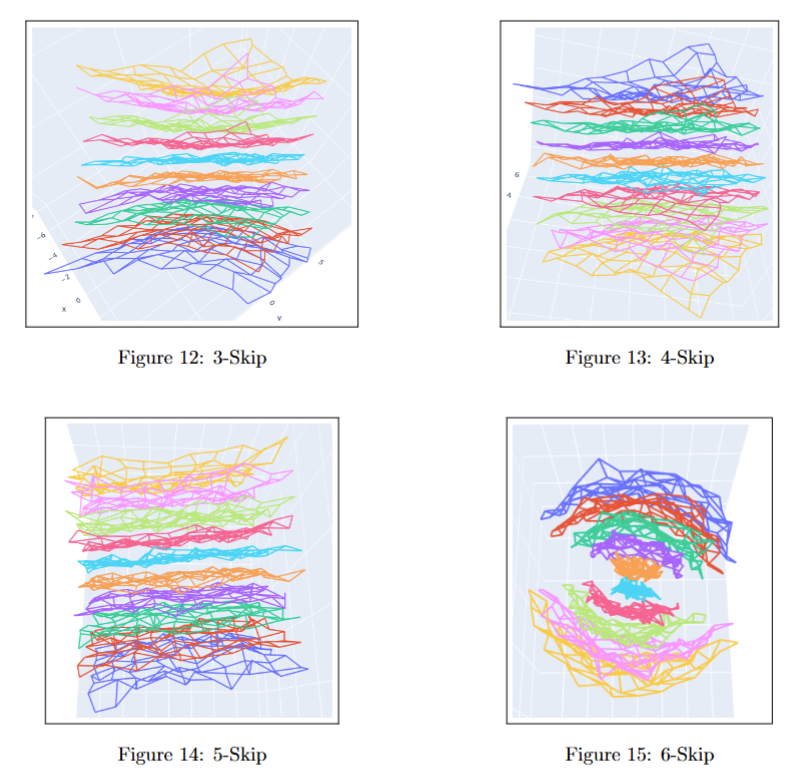
  • Played with skip-grams

Phil 10.14.2025

Tasks

  • Ping Philipp – done
  • 4:00 Nellie – done

SBIRs

  • 9:00 standup – done
  • Work on IRAD slides with Aaron
  • Create a spreadsheet for variations on walks and skip frames. Find a solid 2D configuration, then do the same for 3D. Once that’s done scale up the grid.
  • Nice! Got a 3D cube running too:

Phil 10.13.2025

Completely forgot about the symphony yesterday. Need to put the rest on the Apple calendar so at least my wrist will know about them

Introducing nanochat: The best ChatGPT that $100 can buy.

  • We wish to train the best ChatGPT that $100 can buy, which we call a “speedrun”. Reference the script speedrun.sh, which is designed to just run right away on a blank box start to end. However, in this post I will step through it part by part so that I can comment in detail on all sections of it. We first have to make sure the new&hot uv project manager is installed. Install uv, create a new virtual environment in .venv, get all the dependencies, and activate the environment so that when we type python we’re using the virtual env python, not the system python

Standardized Project Gutenberg Corpus

SBIRs

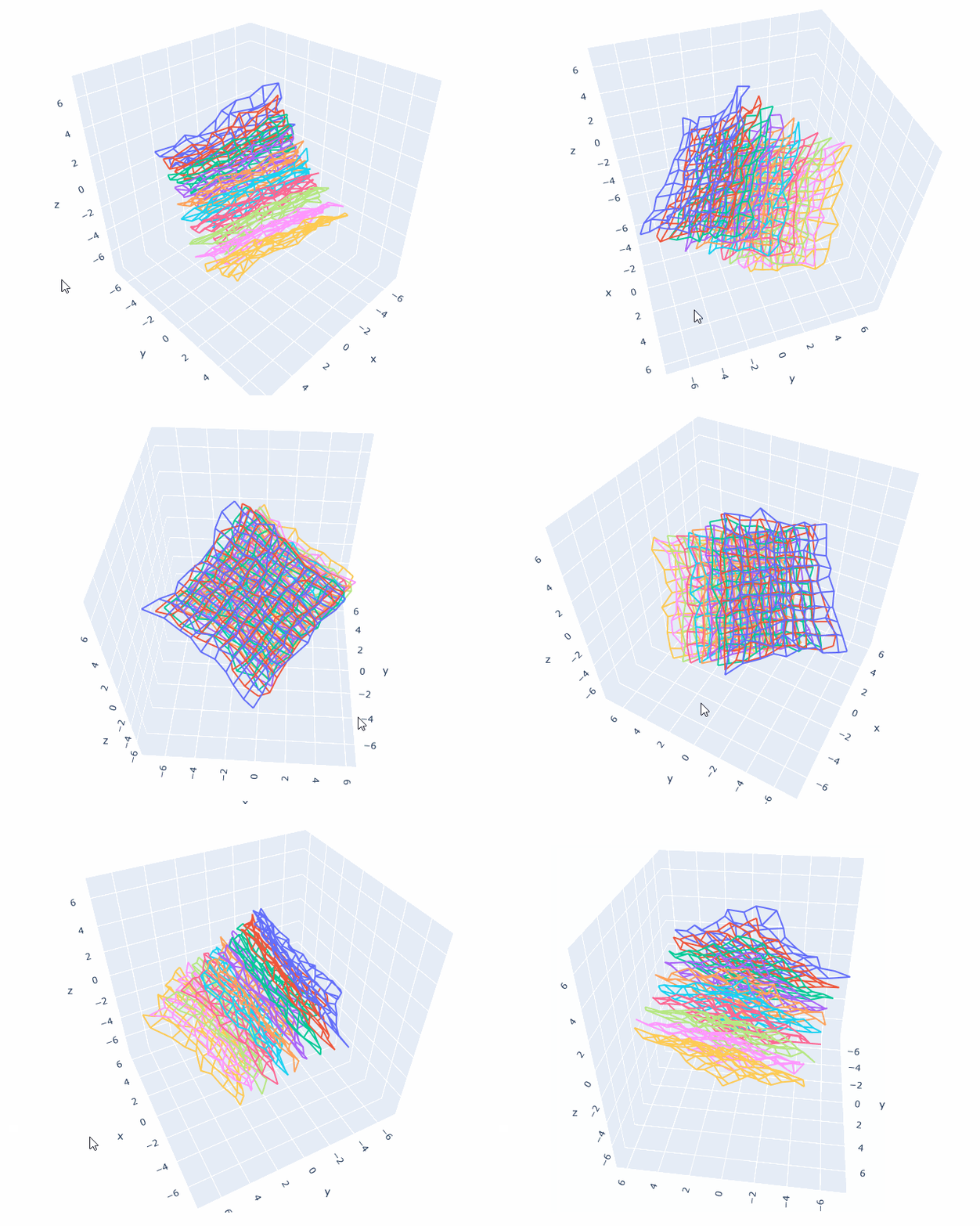
  • Trained up a model on a 10×10 grid with 100 walks of 10 elements each. Even so, the grid is visible in the trained model. Next step will be to up the number of walks while holding everything else constant:
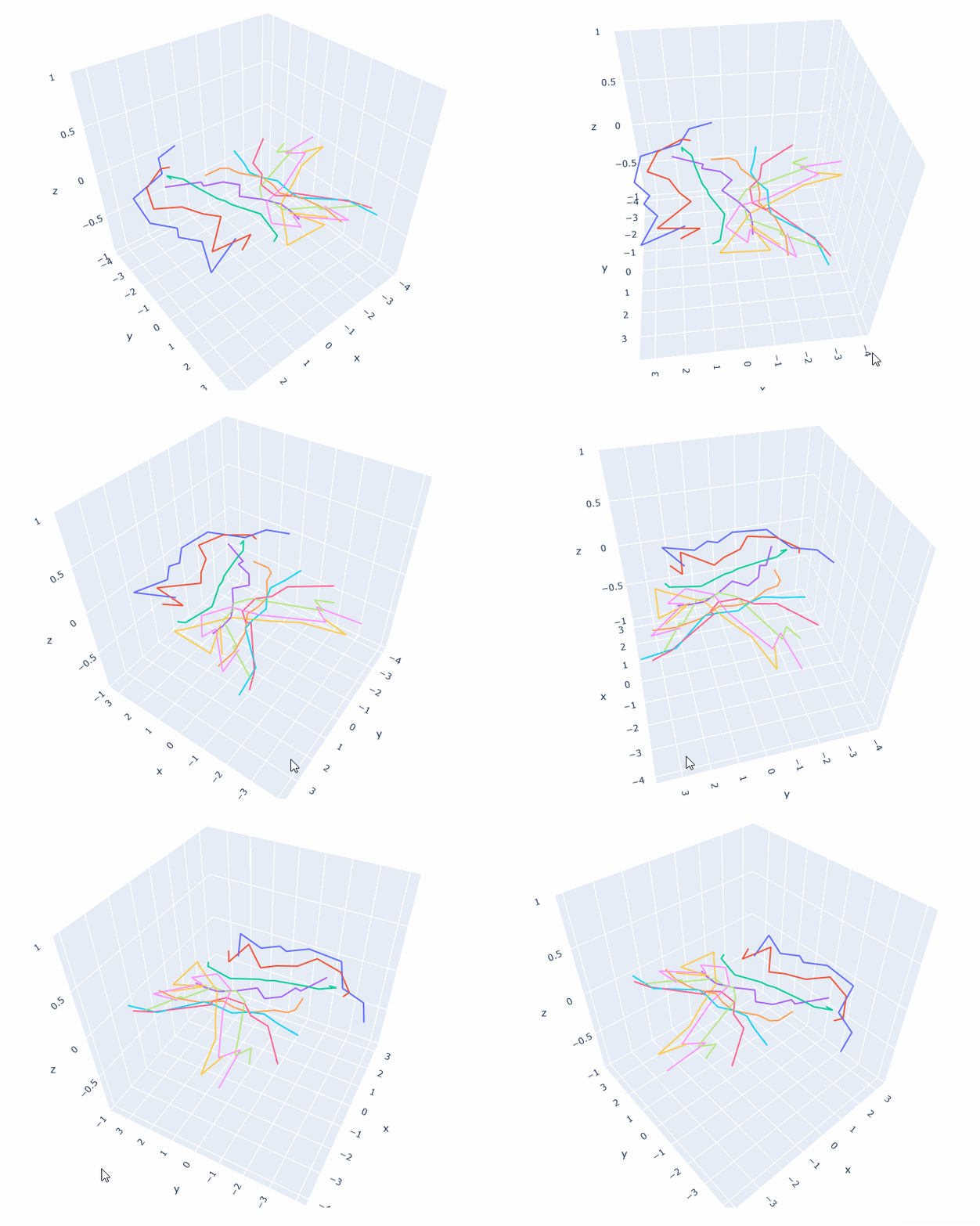
  • Improved the rendering so that I can get all the orthogonal axis drawn. Wrote a very detailed prompt with example data and Gemini created a solid method on the first shot. The whole interaction can be seen here.